
Why Isn’t the ARK OF THE COVENANT in the New Testament?
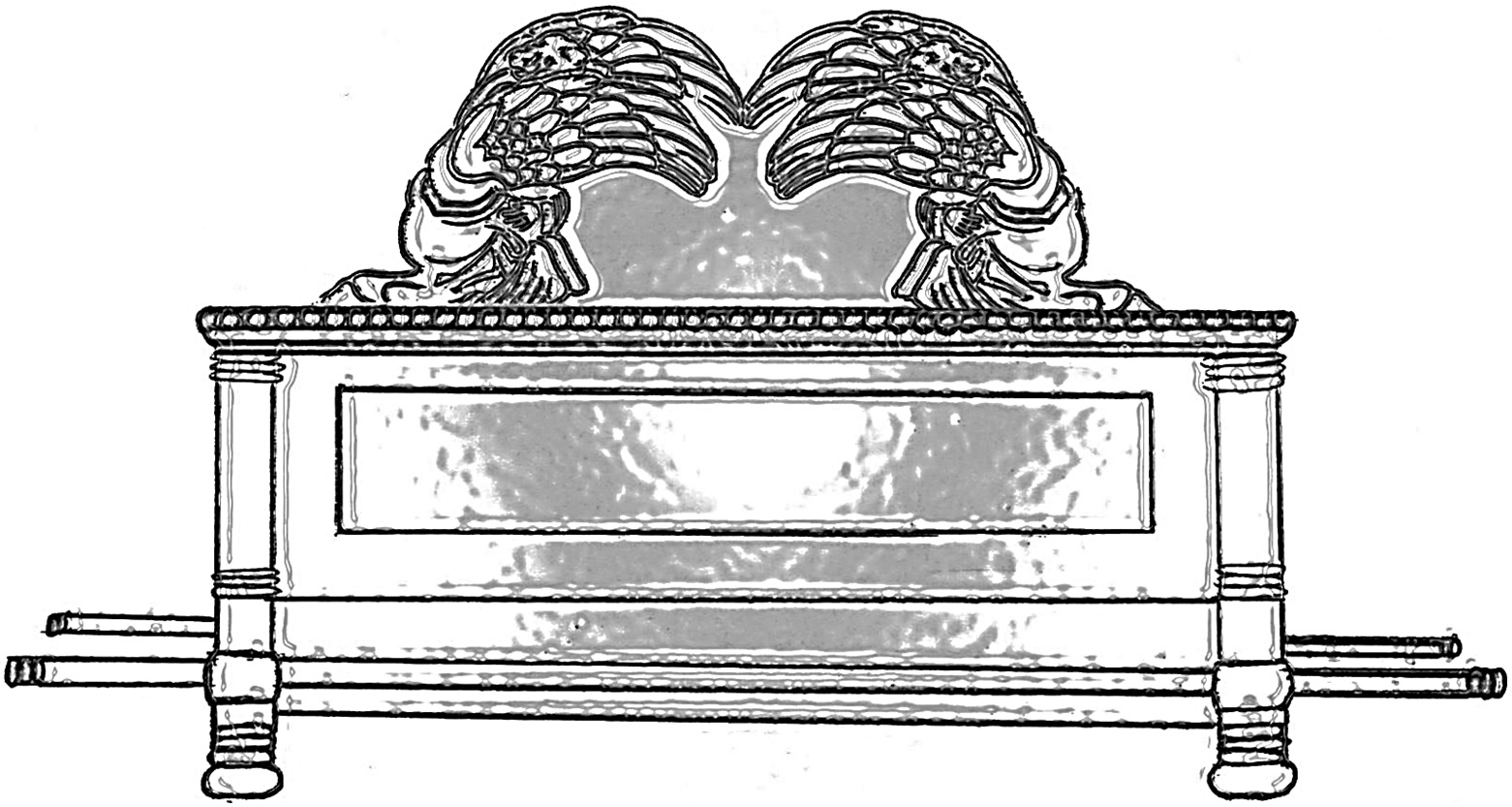
The Ark of the Covenant was a sacred chest during the Old Testament period (Exodus 25:10-22). If you’ve seen the popular movie Raiders of the Lost Ark then you’re familiar with this chest. The “lost Ark” in that film is the Ark of the Covenant; a cinematic replica, that is.
The Ark was made of acacia wood overlaid with gold.
According to Hebrews 9:4 the Ark contained:
- The stone tablets on which the Ten Commandments were written (Deuteronomy 10:2).
- A pot of manna, the miraculous food that God provided for the Israelites in the wilderness after being rescued from slavery in Egypt (Exodus16).
- Aaron’s rod that budded (Numbers 17).
The lid of the chest was made of pure gold and dubbed the “Mercy Seat,” which will be explained in a moment. Two gold-sculptured cherubim—angels—were mounted on the Mercy Seat facing each other. And the LORD’s presence dwelt above the Mercy Seat between the cherubim (Exodus 25:22).
The Ark was housed in the innermost chamber of the Temple (and, previously, the Tabernacle) known as the Holy of Holies.
Once a year, on the Day of Atonement, the High Priest entered the Holy of Holies and sprinkled blood on the Mercy Seat for the sins of the nation of Israel. But the blood of bulls and goats could only cover their transgressions year-to-year; it could not cleanse them of their sins. This reveals one of the many reasons the New Covenant is superior to the old one: Christ didn’t offer the blood of animals on an earthly copy of the Ark, but rather offered his own blood, sprinkling it on the true Ark of the Covenant in Heaven (Hebrews 10:1-4 & 9:23-28).
This explains the name of the Mercy Seat: The spilling of innocent blood on the lid of the Ark would cover the Law of God contained in the Ark, represented by the tablets. This is important because the Law “kills” due to the fact that “the wages of sin is death” (2 Corinthians 3:6 & Romans 6:23). With the Law covered by the blood of a substitute the LORD’s mercy was able to flow to those in covenant with God, the Israelites.
The Total Sinfulness of Humanity
Interestingly, the three articles in the Ark represented the total sinfulness of the human race before the Creator:
- The Two Tablets represented humanity’s rejection of the Law of God (Exodus 32).
- The Manna represented humanity’s rejection of God’s provision (Numbers 11:4-6).
- Aaron’s Staff represented humanity’s rejection of God’s human leadership (Numbers 16-17).
Since cherubim are associated with the presence of God as guardians and servants (Ezekiel 1 & Genesis 3:24), the two sculptured cherubs on the lid of the Ark flanked the presence of the Almighty. The Mercy Seat was made of pure gold and was comparable to God’s throne on Earth during the Old Covenant since He literally dwelt above the Mercy Seat between the cherubim (Psalm 99:1). Since God is absolute righteousness and perfect justice and “the wages of sin is death,” the sinfulness of humanity—wholly represented in the Ark—incurs the LORD’s just penalty of death. This is why “the letter kills” and why all humanity is under a death sentence.
Thankfully, the blood of Christ was sprinkled on the Mercy Seat in Heaven by Christ Himself, as noted above, and so mercy flows to those who approach God through the blood of Christ. They are saved from death and obtain eternal life. As it is written:
“For God so loved the world that he gave his one and only Son, that whoever believes in him shall not perish but have eternal life.”
John 3:16
“Whoever believes in the Son has eternal life. Whoever rejects the Son will not see life. Instead, the wrath of God remains on him.”
John 3:36
The Christ Symbolism of the Ark
Just as interesting, every aspect of the Ark pointed to the Messiah, Jesus Christ, and his work:
- The acacia wood symbolized Jesus’ humanity while the gold symbolized his deity.
- The Ten Commandments inside the ark symbolized the Law of God. Christ was/is the Living Word (John 1:1-3,14) and so perfectly obeyed the Law, the written Word.
- The pot of manna spoke of Yeshua as the Bread of Life, our life-sustainer (John 6:47-51).
- Aaron’s staff that budded represented Christ’s resurrection, as the rod was dead wood that miraculously came to life; it not only budded, it blossomed and produced almonds (Numbers 17:1-8).
- The Mercy Seat also pointed to the Messiah in that Jesus’ blood was sprinkled on the heavenly Mercy Seat and, as such, believers receive mercy from the effects of the Law—death.
The Ark of the Covenant Was Lost
The last time the Ark is mentioned in the Old Testament is 2 Chronicles 35:3, which was during righteous King Josiah’s reign in Judah. Unfortunately, the subsequent kings led Israel back into utter apostasy and thus the LORD allowed Babylon to sack Jerusalem and take the apostate Hebrews into exile.
No one really knows what happened to the Ark, but there are theories, including:
- Many believe it was simply destroyed when the Temple was burned (2 Kings 24:13).
- Jewish tradition suggests that it was hidden in a vault underneath the Temple Mount.
Why Isn’t the Ark Mentioned in the New Testament?
There’s interestingly no mention of the earthly Ark of the Covenant in the New Testament. Why? Simply because there was no more need for the Ark; Jesus fulfilled all that it stood for, as noted above.
This fact is pictured in an amazing verse that shows events shortly after Jesus’ bodily resurrection. Mary Magdalene peaked into the tomb where Christ’s body was laid to rest and notice what she sees:
and [she] saw two angels in white, seated where Jesus’ body had been, one at the head and the other at the foot.
John 20:12
Is this not reminiscent of the Mercy Seat—two angels facing each other with the presence of the LORD between them? In other words, this is the New Testament Mercy Seat.
Why is this significant? Because the Ark was linked to the presence of God in the Old Covenant. As such, the Israelites had to go to the Temple (and, earlier, the Tabernacle) where the Ark was located in order to encounter God during Old Testament times.
In the New Testament, however, born-again believers are the temple of God and the Spirit of Christ dwells within us! (Romans 8:9).
And this explains the mystery of the gospel: “Christ IN YOU, the hope of glory” (Colossians 1:27). This doesn’t just refer to the Holy Spirit indwelling you—as awesome as that is—it refers to the fact that your spirit has been born anew of the seed of Christ and is a “new creation” “created to be like God in true righteousness” (2 Corinthians 5:17 & Ephesians 4:22-24). Chew on that mind-blowing tidbit.
View our related video…
Related Topics:
SPIRITUAL WARFARE — Do You Know What You’re Fighting For?

NOTE: It is recommended that you read Armor & Weaponry of God before this article.
What good is it to know about the armor & arms of God if you don’t know when the enemy is attacking you or someone else? You must understand that the devil & his loser minions aren’t going to manifest as cartoony red characters with cloven hooves and pitch forks. They’re spiritual beings and therefore invisible to the human eye. The way they attack is by trying to put one or more curses on you and those linked to you.
I don’t mean “curse” like in those old horror flicks, e.g. The Curse of the Mummy’s Tomb, but rather in a biblical sense. In this article we’re going to define the five general curses of the Law that the enemy uses to attack believers. We’re also going to look at five other curses which threaten believers’ spiritual blessings, ten curses in all.
Let’s first establish that…
Jesus Christ Was Your Substitutionary Curse
Most believers know that Christ suffered substitutionary death for them. In other words, the Messiah died in our place—the innocent for the guilty—that we might have the benefit of eternal life. However, the majority of Christians don’t know that Jesus was their substitutionary curse period. Notice what the Bible says on this point:
Christ redeemed us from the curse of the law by becoming a curse for us, for it is written: “Cursed is everyone who is hung on a pole.”
Galatians 3:13
Christ redeemed us from the curse of the law. ‘Redeem’ means to release from the power of something through purchasing. What was the price for our redemption? The blood of Christ; that is, the very life of the Mighty Lord. In short, Jesus suffered & died for you to be redeemed.
How did Christ redeem us from the curses of the law? The text says “by becoming a curse for us”! In other words, he suffered being cursed so that we don’t have to be cursed. How exactly was he cursed? Paul cites Deuteronomy 21:23 in reference to Christ’s crucifixion: “Cursed is everyone who is hung on a pole.” So when the Messiah suffered and died during his last 12 hours he became our substitutionary curse—an innocent human being cursed so that the guilty might be blessed. That’s you & me and all people.
The Five General Curses of the Law
The text specifies that “Christ redeemed us from the curse of the law.” What precisely is the curse of the Law? This phrase refers to the five general curses detailed in Deuteronomy 28:15-68: 1. physical ailments, 2. mental maladies, 3. defeat to human enemies, 4. premature death and 5. financial lack. Jesus suffered all these curses in his last hours so that you can be released from the power of them. This is different than saying you won’t be attacked by them, because the enemy will certainly try to oppress you with them.
Observe how the Anointed One suffered each of these curses:
- Christ suffered severe physical wounds to purchase health & healing for the believer: “by his wounds you have been healed” (1 Peter 2:24 & Isaiah 53:5). Precisely what kind of wounds did the Messiah suffer? Read on…
- Christ suffered extreme mental anguish to redeem us from mental illness. This suffering includes the psychological distress of the various tortures he experienced during his final hours on Earth: Severe scourging that ripped his flesh to pieces, unjust mocking & physical blows, a crown of thorns rammed on his head, his hands & feet literally nailed to a huge stake and the corresponding agony of crucifixion, which is arguably the most painful execution ever conceived and is where we get our term “excruciating.” This form of execution, by the way, was reserved for the worst of criminals, as well as foreign enemies. On top of all this there was the mental anguish of being utterly separated from God wherein the Son cried out to the Father: “My God, my God, why have you forsaken me?” (Matthew 27:45-54). Lastly, the phrase “by his wounds you have been healed” refers to both physical and mental healing.
- Christ suffered defeat to his human enemies, which heretofore never happened. While Jesus was attacked by people throughout his 3½ years of ministry on Earth, they were never victorious over him. He always eluded them or stumped them, one way or another; in other words, he was always ultimately triumphant. For instance, he refused to allow his opponents to unjustly apprehend and kill him on multiple occasions, as documented in Luke 4:28-30, John 7:30,44, 8:59 and 10:31,39. The only time he submitted his life to the hands of his enemies was when he was arrested in Gethsemane because it was God’s will that he suffer and die for the redemption of humanity. We have to get away from this ludicrous religious idea that the Messiah was some kind of timid doormat when he was anything but (Mark 11:15-18).
- Christ suffered premature death by obediently dying at 33 years of age. The Bible promises 70-80 years minimum (Psalm 90:10 & 2 Corinthians 1:20). The only God-approved exception to this promise is if a believer is called to martyrdom for the advancement of the kingdom of God, like Stephen (Acts 7:54-8:4). In such cases, the Spirit will reveal this to the believer and give him/her the grace to handle it, as was the case with Stephen. It should be stressed that even with this exception the believer has the victory, as shown in Philippians 1:21-23.
- Christ “became poor, so that you through his poverty might become rich” (2 Corinthians 8:9). Christ wasn’t poor during his lifetime on Earth; he was a carpenter who attracted business due to his honesty, diligence and superb craftsmanship (Proverbs 22:29). Nor was he poor during his 3½ years of ministry because his team had a treasury, which Judas regularly stole from without the disciples even detecting it (John 12:6). The Messiah only “became poor” during his last 12 hours when he was arrested, tortured, stripped of his very clothing and literally nailed to a huge stake, i.e. “cross,” not to mention literally forsaken by the Father. This was the depth of poverty—physically, mentally and spiritually.
As you can see, “Christ redeemed us from the curse of the law by becoming a curse for us” (Galatians 3:13). He released us from the power of the five general curses by willfully suffering these curses in one form or another in our place. He was our substitutionary curse.
The “Hour When Darkness Reigns”
Those last horrible hours of Christ’s life on Earth were when Satan & his devils were released to assault Him. Notice what they hit him with—all five of the general curses of the Law. Is it any wonder that Jesus referred to this time period as the “hour when darkness reigns” (Luke 22:53)?
What did he mean by that? Simply that it was the window of opportunity for the devil & his evil spirits to freely assault him, as permitted by the Sovereign LORD. And how did they attack him? Through the five general curses of the Law.
When Satan Attacks He Uses One of the Five General Curses
Let’s now observe further scriptural evidence that the kingdom of darkness uses one or more of the five general curses of the Law when they attack a person. We just witnessed the example of Christ, so let’s consider the examples of two righteous men from the Old and the New Testaments respectively, Job and Paul.
God was compelled to allow Satan to attack Job in order to test him and observe if he would forsake the LORD once the devil stripped him of his many blessings. Observe how Job suffered the five general curses of the Law when the devil was released to assault him:
- Physical ailments: Job was stricken with painful boils from head to toe (Job 2:7).
- Mental illness: Job was thrust into dire mental anguish after the satanic assaults to the point of craving death and hurling audacious accusations at the Almighty (Job 3, 10:1-3 & 30:31).
- Human attack and defeat: The neighboring Sabeans and Chaldeans, who up to that point lived peacefully by Job, unjustly attacked and killed almost all his employees and stole his wealth (Job 1:14-15 & 17). Keep in mind that this curse does not refer to simply human attack, but rather human attack and defeat, which is why I also describe it as ‘defeat to human enemies.’
- Premature death: Job’s ten children and nearly all his employees were killed (Job 1:14-19). Job’s life was not at stake because the LORD wouldn’t permit it (although in the second round God allowed his body to be attacked). So Satan struck down the next “best” thing—Job’s offspring.
- Financial attack: Job’s great wealth consisted of numerous employees and thousands of sheep, camels, oxen and donkeys; all but four of his workers were killed and all his animals were stolen or destroyed (Job 1:14-17).
Job passed his great test because he turned to God rather than away from Him. He severely vented to God and accused Him of crimes against humanity based on his limited understanding of reality, but he never cursed his Creator or forsook Him.
Venting, by the way, is a healthy practice in which the Bible describes as “casting your cares on the Lord” (Psalm 55:22). We’re instructed to do this because the LORD cares about us and doesn’t want immaterial burdens to weigh us down or limit us, which will inevitably happen if we don’t vent in some manner. To “cast all your anxiety on him” (1 Peter 5:7) means to literally go to the LORD in prayer and hurl your burdens on him. This is what Job did. The burdens you are to hurl on God include unjust offenses and the sense of violation & anger they produce, which can tempt you to become bitter. Why cast your cares on the LORD? Because we can’t handle them. Just as we must remove physical waste from our bodies so we must remove emotional waste. Venting is as vital to our spiritual-mental health as the large intestine is to our physical health—the waste must be removed. No wonder venting is strongly encouraged in the Bible (Psalm 62:8) and we observe example after example of it (Psalm 142:1-3 & Jeremiah 20:7-18).
So Job passed his test and the LORD restored him and blessed him doubly (Job 42:10). Keep in mind that Job was presumably under the covenant of the Patriarchal Age,* which refers to the covenants the LORD made with Abraham, Isaac and Jacob (Acts 3:25 & Exodus 6:4-5). The terms of this covenant were obedience to God’s revealed Law at the time, which included circumcision (Genesis 17:1-14,23) and, of course, keeping with repentance, which Job devoutly followed. This explains why God boasted of him as “blameless” (Job 1:8 and 2:3), which is not the same as sinless. The only sinless human being who ever lived was Jesus Christ.
* See Job 1:5, for instance.
Now let’s consider Paul, who was under the New Covenant wherein the terms are faith working in love (Galatians 5:6):
- Physical maladies: Paul was stricken with some type of physical ailment according to Galatians 4:13, which provided the opportunity for him to preach the gospel to the Galatians. The word for “illness” in this text could also be translated as “weakness” as it does in Matthew 26:41, which reads: “The spirit is willing but the body is weak.” If it does refer to physical weakness, some theorize that it could apply to Paul after he was stoned and left for dead in the Galatian city of Lystra (Acts 14:8-20). They speculate that Paul would surely need time for his body to fully heal from the abuse, which may be why he referred to the situation as a trial for the Galatian believers (Galatians 4:14). But this seems unlikely since Paul received an immediate healing and walked right back into the city (!), not to mention he left to preach in another city the very next day (!!). Other possibilities include malaria, which was common in the area, or an eye disease in light of Paul’s statement, “If you could have done so, you would have torn out your eyes and given them to me” (verse 15), although this could simply be a figure of speech. Regardless of what Paul’s physical problem was, he resisted the attack in faith & perseverance, received healing and lived over another decade to fulfill God’s apostolic assignment from Jerusalem to Rome and all points between, not to mention write many other important epistles by the Spirit, like Romans and Ephesians, etc.
- Mental ailments: The apostles went through many hardships as they determined to advance the kingdom of God. Second Corinthians 11 details Paul’s numerous sufferings, including being thrown into prison multiple times, severely flogged five times (typically 39 lashes!), beaten with rods three times, stoned and left for dead, shipwrecked three times, and more. Not to mention all his labor, sleepless nights and the pressure of all the churches he oversaw (verses 23-29). Facing such horrendous attacks, trials and pressures, Paul and the other ministers were understandably assaulted by negative emotions at times, like fear, doubt, frustration, anxiety and wanting to quit. This is why Paul said they were “sorrowful, yet always rejoicing” (2 Corinthians 6:10); he also mentioned “fears within” and being “downcast” (2 Corinthians 7:5-6). But they never allowed such dark emotions to take root in their hearts and derail their faith and mission for God. There’s no evidence of this in Scripture. They withstood in faith & patience and overcame. Take, for example, when Paul was about to be shipwrecked due to a great storm in Acts 27:21-26; instead of caving-in to the fear and despair of the situation—e.g. “We’re all gonna die!!”—he received instruction from the LORD and boldly spoke in faith.
- Human attack and defeat: Paul was attacked by a man named Alexander the metalworker who caused him “a great deal of harm” (2 Timothy 4:14-15), but Paul overcame and wasn’t defeated or dead. He was able to warn Timothy and believed that the Lord would pay Alexander back for what he had done. Another good example is from Acts 16:22-34 where we observe Paul and Silas being unjustly attacked in Philippi after exorcizing a demon from a slave girl. They were beaten, flogged and thrown in prison. This was a serious attack indeed, but Paul and Silas withstood in faith and perseverance. At midnight they were praying and singing hymns in their gloomy, smelly jail cell (!). They refused to be defeated. They refused to give-in to doubt, frustration and despair. They knew that victory was theirs no matter how bad the situation appeared. The next thing you know there was an earthquake and the cell doors flew open! God clearly responds to such stubborn, fervent faith. Not only did they escape, the jailer and his family were saved and baptized! Paul and Silas even stayed at their house that night and dined.
- Premature death: Paul healed a crippled man in Lystra, which was a powerful testimony to the people there, but some Jews came and stirred the crowd against him. As noted above, they stoned Paul and dragged him outside the city, supposing him to be dead. But Paul received an incredible healing after the disciples gathered around him and he went right back into the city! The next day he was well enough to leave for another town to preach, which indicates a total healing (Acts 14:8-20). Another example would be when Paul sailed to Rome as a captive in Acts 27. A great storm came and seriously threatened all their lives. Keep in mind that, according to Job 1:16,19, Satan has the ability to utilize nature for his own diabolic purposes. The devil didn’t want Paul to fulfill his divine commission of carrying the gospel to gentile kings; hence, he tried to kill him on the open sea via the storm, but it didn’t work because Paul received divine instruction and stood in faith (verses 21-26). Yet the devil didn’t stop there. No sooner was Paul shipwrecked on the island of Malta then a deadly viper bit him (Acts 28:1-10). The islanders expected the apostle to drop dead at any moment but he withstood in faith—meaning he utilized his “sword of the spirit,” which is the word of God spoken in bold faith—and ended up having a powerful healing revival!
- Financial lack: Paul pointed out in Philippians 4:12-13 that he knew what it was like to be in need and also to have plenty; he knew what it was like to be hungry and to be well fed. He also testified to his brushes with financial attack in 2 Corinthians 6:10. So we know Paul went through experiences where physical resources were seriously limited. Yet, in the Philippians passage he shared his secret of being content in any situation, whether living in plenty or in want: He said he could do all things through the Lord Jesus Christ who strengthened him. In other words, he stood in faith. He didn’t give-in to worry or despair in times of need and cry, “God has forsaken us—we’re not gonna make it!” Likewise, in the Corinthians passage he admitted to having nothing, but countered it with an expression of faith, “yet possessing everything.” Consequently, he always made it through times of lack with a peaceful contentment. He fully understood that blessings come via faith & patience in our covenant, and faith works in love. Jehovah Jireh always eventually provided and Paul fulfilled his many missionary assignments. Late in his life, when Paul was in custody in Caesarea, Governor Felix frequently went to him hoping Paul would offer him a bribe (Acts 24:26). This indicates that even under house arrest Paul was financially blessed since wealthy politicians don’t try to milk people who are impoverished and have no money.
A good example from the life of Christ would be when, out of nowhere, tax collectors required Peter and Jesus to pay the annual Temple tax, which amounted to about $500 each (Matthew 17:24-27). Jesus wasn’t taken off guard and, interestingly, didn’t even ask Judas to take the money from their ministry earnings. He had faith that God provides the power to get wealth (Deuteronomy 8:18) and knew precisely where to get the amount they needed by the Spirit. Hence, the LORD provided.
Christ, Job and Paul are our examples. When any of the five general curses of the Law show up in your life it means you are under satanic attack.
When this happens, the first thing you need to do is determine if the assault is a Self-Inflicted Trial (SIT), a Discipline-Intended Trial (DIT) or a Maturity-Intended Trial (MIT). Here’s an explanation of each:
- SITs are obvious; the result of one’s own folly, like being injured due to reckless driving and the resulting wreck or suffering physically due to a junk food diet. In both cases the person’s travails are not due to some satanic plot, but simply his/her foolish choices. The answer to SITs is learning wisdom.
- A DIT means the curse is hitting you due to disobedience, whether a sin of commission or a sin of omission. If this is the case, immediately ’fess up and God will dismiss the charge (1 John 1:8-9); then take up your weapons and fight the good fight of faith until the curse departs.
- An MIT means that the curse is striking you for righteousness’ sake and the LORD is allowing the enemy to assault you in order to test your character and, once your character is proven, turn the negative situation around to your good (Romans 8:28). That’s the genius of MITs: God takes something in which the enemy intends to destroy you with—or, at least, hinder you—and ultimately turns it around to your good, making you “strong, firm and steadfast” “after you have suffered for a little while” (1 Peter 5:8-10). Of course, this is providing you fulfill your role by fighting the good fight of faith and enduring. (Remember: the LORD is your “helper,” not your do-everything-for-you-so-you-don’t-have-to-do-anything-at-all-er). This is precisely what happened with Joseph (Genesis 50:20).
The reason this data is essential is so that you know with certainty when you’re under satanic attack. After all, what good is the armor & arms of God if you can’t even recognize when you’re being assaulted?
This material is also essential so you don’t mistake a satanic attack for “God’s will.” For instance, a genuine Christian woman was diagnosed with life-threatening cancer and concluded that, whether she lived or died from the cancer, it was God’s will. No, it’s Satan’s will to take out fruit-bearing believers prematurely.
The obvious problem with this woman’s type of fatalistic reasoning is that, if you think something’s God’s will, you won’t fight it. You’ll accept it and suffer the consequences. But if you recognize something as a satanic attack you’ll fight it tenaciously.
Needless to say, don’t accept any curse of the Law on the mistaken grounds that it’s “God’s will”! If a curse shows up in your life due to your own folly or rebellion, you’re evidently undergoing an SIT or DIT; simply repent and proceed to fight the good fight of faith. The curse will flee from you as you persevere in faith.
If, however, you’re walking blamelessly before the LORD, keeping with repentance, you’re obviously undergoing an MIT. Don’t embrace the curse as “God’s will.” Tenaciously fight the good fight of faith and don’t give up. The curse will eventually depart and the LORD will turn around the negative situation for your good.
Handing an Unrepentant Believer Over to Satan
Speaking of Discipline-Intended Trials (DITs), this type of trial explains something curious Paul said to the Corinthian believers. It concerned an unrepentant man in their assembly who was having sexual relations with his father’s wife. Paul instructed the church to “hand this man over to Satan” (1 Corinthians 5:5). What did he mean by this? Simply that the man must be excommunicated from the fellowship since he was unwilling to repent of his sin. The hope was that he’d be spurred to repentance whereupon he’d be forgiven and warmly welcomed back. Thankfully, this is precisely what panned out, as revealed in Paul’s subsequent letter (2 Corinthians 2:6-11).
To explain, a dis-fellowshipped believer is removed from the protective covering of the church assembly and placed outside where the “god of this world” is at liberty to have his way with him/her, so to speak. The enemy will thus assault the individual with one or more of the curses of the Law because this is how Satan & evil spirits attack people. They don’t manifest as spooky boogeymen, they attack through one or more of the curses of the Law.
Let me emphasize: the purpose for “handing a person over to Satan” is to win him/her back. Paul’s goal was in line with God’s love, in this case tough love. The hope was that banishment from the church community and suffering one or more of the curses of the Law would humble the man, provoke desperation, and ultimately shock him back to his spiritual senses, at which point he would be warmly welcomed back into the fellowship just like the prodigal son humbly returned to his father (Luke 15:11-32). So handing a person over to Satan is one-and-the-same as handing him/her over to a Discipline-Intended Trial.
God Motivates People Through the Attraction of Blessings
The blessings of the Law are naturally the opposite of the curses of the Law; they are:
- Physical health.
- Mental health (e.g. peace of mind, faith, hope, love, etc.).
- Victory over human enemies and their unjust attacks.
- Long life.
- Financial provision.
Every sane person on Earth wants these five general blessings operating in his or her life. They’re intrinsic to our spiritual/mental DNA. After all, no one wants sickness & disease, mental illness, defeat to enemies, premature death or poverty—no one! If someone says otherwise they’re either a liar, a fool or cracked.
Is it any wonder, therefore, that the LORD used these blessings to motivate Israel to obey His Laws? Read Deuteronomy 28. It’s a long chapter, but it establishes “the terms of the covenant” that God had with the Israelites (Deuteronomy 29:1,9). In modern lingo ‘covenant’ means agreement or contract. Every contract has terms. If you hire a company to provide a new roof for your abode the terms are x amount of money for a new leak-proof roof. The LORD’s terms for the covenant (contract, agreement) that He had with the Israelites were: Blessings for obedience to the Law and curses for disobedience. In short, God used humanity’s natural attraction to the five general blessings and our aversion to the five general curses to inspire compliance and discourage transgression.
Yet the entire Old Testament is testimony to the fact that the Israelites couldn’t comply with these terms. Why? Because something was seriously wrong with their “spiritual DNA.” The condition of spiritual death—which is the state of being dead to God—and their sinful natures rendered them incapable of fulfilling the simple terms of their covenant.
For Israel—and people in general—to fulfill such terms they would have to have a spiritual regeneration whereby they acquire a new spiritual nature that’s united with God and, even more, indwelt, empowered and guided by the Holy Spirit. The attainment of eternal life is an awesome “fringe benefit.” This is what the New Covenant is all about and explains why…
The New Covenant Is Superior to the Old Covenant
The New Covenant that believers have with God is superior to the Old Testament that the Israelites had. Notice what the Bible blatantly says on this point:
But in fact the ministry Jesus has received is as superior to theirs as the covenant of which he is mediator is superior to the old one, since the new covenant is established on better promises.
7 For if there had been nothing wrong with that first covenant, no place would have been sought for another.
Hebrews 8:6-7
For the New Covenant to be superior to the Old Covenant it would have to contain all the benefits of the Old Covenant plus more. For instance, if I buy a new car that’s superior to my old one it would have to have everything the old one had plus be new and likely have additional benefits, otherwise it wouldn’t be superior. If the Old Testament promised the five blessings of the Law under the condition of obedience how could the New Testament be superior if it doesn’t, at least, provide these blessings?
The New Covenant does provide them because the New Testament expressly assures us that “For no matter how many promises God has made, they are ‘Yes’ in Christ” (2 Corinthians 1:20). “In Christ” is a covenant phrase, meaning in covenant (in contract) with God through spiritual regeneration via the gospel of Christ. No matter how many promises God made in the Old Testament they are ‘Yes’ to those in covenant with God through Yeshua. In other words, a believer can claim any of the general blessings provided in the Old Covenant by faith.
For further proof, notice how the New Testament promises the five general blessings to believers:
- Physical health/healing: 1 Peter 2:24 and 3 John 1:2
- Mental wellness: John 14:27, Philippians 4:6-9 and 3 John 1:2
- Victory over unjust human attack: 2 Timothy 4:17-18 & Luke 18:1-8
- Long life (with the exception of cases where God calls the believer to martyrdom for the advancement of His Kingdom): 1 Peter 3:9-12 *
- Financial blessing: Mark 10:30, 2 Corinthians 8:9 & 9:11 and Philippians 4:19
* The Old Testament was more concerned with long life on this Earth (Deuteronomy 5:33, Psalm 91:16 & Proverbs 10:27) whereas the New Testament is more concerned with acquiring eternal life period (John 3:36, 11:26 & 1 John 5:11-12). Nevertheless, with the exception of Holy Spirit-directed martyrdom for the advancement of God’s Kingdom, the New Testament promises long life with conditions.
While these blessings are promised to New Testament believers, the terms of our Covenant are different than the Old Covenant. The terms are not obedience to the Old Testament Law because 1. the dietary and ceremonial laws were fulfilled in Christ and are not applicable to New Testament believers (Colossians 2:16-17); and 2. the moral laws—also fulfilled by Christ—are fulfilled in our lives by simply living according to our new nature, “created to be like God in true righteousness,” with the help of the Holy Spirit (Ephesians 4:22-24). The terms of the New Covenant are faith working in love (Galatians 5:6), which the Amplified Bible reads as faith being activated by love. As such, anyone who fulfills the first and second greatest commands of the Law automatically fulfills all of the moral law (Matthew 22:36-40 & Romans 13:8-10). These two simple commands have three applications: LOVE GOD and LOVE PEOPLE as you LOVE YOURSELF.
Do you want these five general blessings supernaturally operating in your life on a regular basis? Of course you do. They manifest through faith working in love—love for God and love for people as you love yourself.
Yet you must understand that the kingdom of darkness is going to attack you through the five general curses of the Law, just as the enemy did with Job, Jesus and Paul, which is why it’s necessary to learn how to “fight the good fight of faith” (1 Timothy 6:12). If there’s a fight to faith that means there are enemies to faith. You must know your enemy and how assaults from your enemy will manifest in order to be victorious in your fight. That’s one of the purposes of this article.
So you operate in the five blessings of the Law simply by walking in faith, which includes “fighting the good fight of faith.” And faith is activated by love—loving God and loving people as you love yourself—which includes tough love when appropriate.
There are some things you need to keep in mind, however; let’s start with…
Spiritual Laws Work in Conjunction With Natural Laws
Spiritual laws work in union with natural laws not in exemption from them. For instance, faith being activated by love is a spiritual law that works in conjunction with common sense principles. Consider these examples:
- The Bible promises physical health/healing, but if you consume unhealthy food on a regular basis, allow yourself to become obese or develop the habit of smoking, you’ll naturally imperil your health.
- The Bible promises peace of mind, but this blessing will elude you if you choose to use your mind to dwell on negative, sinful things.
- The Bible promises deliverance from unjust attacks by enemies, but if you’re an arrogant, contentious person who never prays for your enemies I wouldn’t bank on it.
- The Bible promises long life but if you choose to be a careless daredevil or obstinate chain-smoker your life could be cut short.
- The Bible promises financial provision within the framework of your calling, season and environmental context, but if you’re lazy (2 Thessalonians 3:10), stingy (2 Corinthians 9:6) or stubbornly unrepentant (Proverbs 28:13) don’t count on it.
You see? Spiritual laws and parallel natural laws work in conjunction. It’s a matter of simple wisdom.
You probably know unbelievers who operate in some of the five general blessings of the Law simply by observing the corresponding natural laws. For instance, someone could be a staunch atheist and yet prosper financially because he or she is diligent and rises to levels of authority in his/her occupation (Proverbs 12:24). Yet, without the Lord’s guiding hand, there can be a price to such “success,” like the loss of one’s marriage or mental/physical breakdown. For those in covenant with God, however, “The blessing of the Lord makes one rich, And He adds no sorrow with it” (Proverbs 10:22 NKJV).
Financial Blessing Is Determined by Season, Calling & Environmental Context
Financial provision is the blessing that tends to upset some Christians, as if they want to fight for their right to be impoverished. While there have been problems with dubious ministers who essentially make Christianity out to be a get-rich-quick scheme or have used the gospel as a means to get rich (1 Timothy 6:9), we shouldn’t throw out God’s conditional promises of financial blessing with the proverbial bathwater. Disregarding the false teachings of greed-loving “ministers,” the problem some believers have with the concept of financial blessing begins with an erroneous image of what it means to be financially blessed of God in a fallen world. Moreover, their criticisms do not take into account issues like the season the believer’s in, divine purpose or environmental context. Let’s look at these:
An Erroneous Image of Financial Blessing in a Fallen World
Someone wrote to rebuke me in response to one of our teaching videos where he mistook my references to “the good life.” He evidently envisioned it to mean living like Hugh Hefner, as if true prosperity is all about owning a huge mansion and sipping cocktails while lounging at an in-ground pool with myriad half-naked women prancing around, etc. (I’m not saying, by the way, that a believer can’t own a mansion or have an in-ground pool). For one thing, this is a decidedly worldly image of “prosperity.” Secondly, the video itself defined the “good life” as being hooked up with God’s will and fulfilling the objectives He gives you, whatever they may be, which includes having the resources to carry out these objectives. An objective or purpose like this could be any number of things, including moving to a third-world country and being a missionary. God’s objectives — His courses — for each believer are exciting and good because they’re in line with your Creator’s will who knows you inside out and therefore how you’re “wired.” Living in accordance with the LORD’s purposes is “the good life,” regardless of what that purpose is. There will be hardships and persecutions, of course, but God knows what you can handle and can’t handle and will provide the grace to get through as you wisely fight the good fight of faith.
The Season You’re In
You might be in God’s perfect will and yet the season you’re in will determine your prosperity to an extent. For instance, prosperity at 18 years-of-age is different than prosperity at 50. Consider the example of Joseph, who was a type of Christ: He was unjustly sold into slavery by his jealous brothers when he was 17 and became a slave, and then a prisoner, before eventually living in the palaces of Egypt many years later as second-in-command of the nation. This journey entailed about 13 years. When he was a slave in Potiphar’s house the LORD blessed Joseph and he prospered in that context, but he was still a slave (Genesis 39:2-6). Obviously, there are limitations to how much you can prosper as a slave. Likewise Joseph prospered while an inmate in prison, but he was still a prisoner (39:21-23). You see? The season you are in determines the extent of your prosperity.
Your Divine Purpose
Your God-given calling will also determine the scope of your prosperity. This is similar to the previous one: Joseph was called to be a slave for a season, and then a prisoner, before becoming second-in-command of Egypt. He prospered as a slave and prisoner, but it certainly limited his prosperity. Why would God possibly call Joseph to be a slave and prisoner for so many years? Because Joseph was being groomed to be second-in-command of one of the most powerful nations on Earth at the time. The way up is down. People are more apt to be quality leaders if they have personally experienced humiliating circumstances, unjust suffering and corrupt non-leadership.
Your Environmental Context
A brother-in-the-Lord I know came from the more modest sections of Youngstown, Ohio, and as he became increasingly successful his fiancé wanted him to move to a better area before marrying. Yet he insisted that he was called to stay in that community to reach the people there. The LORD heavily put them on his heart. Whether he knew it or not, this corresponded to Paul’s exhortation to the Corinthian believers: Generally speaking, they should remain in the situation they were in when they were called in order to reach the people thereof, as directed by the Holy Spirit (1 Corinthians 7:17-24). After all, who better to reach a group of people than those from that community and culture? This was a general instruction and not an ironclad law. Obviously if a person is led of the Spirit to move outside of such a context then that’s what he or she should do. The brother who felt led to stay in a modest area of Youngstown would indeed prosper there, but it would be a different expression of prosperity than if he were called to, say, Hollywood or the jungles of the Amazon. What if your environmental context is a communistic country where the ruling elite ensure that everyone stays at an equally modest level (except for them, of course)? (What hypocrisy, by the way).
Obviously, there’s some overlap between the season you’re in, your divine calling and your geographical setting.
In any case, when you grasp these things, it helps set you free of envy and facilitates contentment in your God-given assignment.
What Is “Prosperity” Anyway?
This all brings us to the definition of prosperity. What exactly is prosperity for the believer? It’s having enough resources for your needs and righteous desires in order to fulfill your God-given calling, which depends on the season you’re in, your specific assignment and the environment to which you’re called. Righteous desires are, of course, not the same as unrighteous desires, like greed, hedonism and pomposity.
People who lust after material things for the purpose of being greater than so-and-so (the proverbial Jones) and looking down on others are walking in eye-rolling carnality. Yet there’s nothing wrong with having a spirit-of-excellence and wanting what you have to reflect the glory of God. I Praise the LORD for my neighbors who maintain a great home & yard rather than let things get rundown.
Nor is merely being rich evil, as Abraham, Job, Solomon and David were (or became) quite wealthy. When Paul instructed the young pastor Timothy on rich people in the congregation he didn’t tell Timothy to rebuke them for being wealthy, he simply exhorted Timothy to tell them not to be arrogant, but to put their hope in God rather than their riches and “to be rich in good deeds and to be generous and willing to share” (1 Timothy 6:17-18). Why did Timothy have to tell them not to be arrogant? Because the attainment of material wealth tends to feed the fleshly ego and tempts people to look down on those with less. This is a form of greed, which Christ blatantly condemned (Luke 12:15); so is putting on airs to impress others. Needless to say, if you’re wealthy don’t let it go to your head. Instead, develop the spirit of a giver; giving is the antidote to greed (Romans 12:8). Yet don’t become arrogant of your giving and look down on those you presume don’t give as much and condemn them as not truly saved or what have you.
Lastly, it’s not money that’s the root of all evil, but rather the love of money (1 Timothy 6:10). It’s fine to have money; it’s just not fine for money to have you.
Objections to the Blessing of Health/Healing
It’s astonishing, but there are genuine Christians who sincerely love the LORD who will fight tooth & nail for the right to be sick & diseased and prematurely perish. Yet a third of Jesus’ earthly ministry was focused on physical health/healing:
Jesus went throughout Galilee, teaching in their synagogues, proclaiming the good news of the kingdom, and healing every disease and sickness among the people.
Matthew 4:23
Jesus went through all the towns and villages, teaching in their synagogues, proclaiming the good news of the kingdom and healing every disease and sickness.
Matthew 9:35
Christ’s ministry was threefold: 1. He taught the Word of God, 2. He evangelized by preaching the Good News and 3. He healed people of every disease and sickness. So His ministry consisted of teaching, preaching & healing. (Memorize that: teaching, preaching & healing; teaching, preaching & healing; teaching, preaching & healing).
One of the things he taught was that health/healing is a God-given right in covenant with the LORD. This explains how people whom Yeshua healed had the faith to be healed in reaction to his teaching & preaching (whether they heard the Word directly or indirectly):
Jesus turned and saw her. “Take heart, daughter,” he said, “your faith has healed you.” And the woman was healed at that moment.
Matthew 9:22
“Go,” said Jesus, “your faith has healed you.” Immediately he received his sight and followed Jesus along the road.
Mark10:52
Then he said to him, “Rise and go; your faith has made you well.”
Luke 17:19
These verses are from three different occasions taken from three different Gospel accounts. Christ regularly taught and preached the truth of health/healing and thus these people had the faith to receive healing, each from three different physical maladies—a bleeding problem, blindness, and a skin disease. Jesus was the conduit of God’s power, but it was their faith that made them well. Everything in our covenant is by faith & perseverance, including salvation (Hebrews 6:12). *
* Faith that gives up isn’t true faith, only faith that perseveres (Colossians 1:22-23 & 1 Corinthians 15:2).
By “conduit” I mean the channel through which God’s power flows to an individual, or an article that inspires faith, or both. This could be a person, like Jesus or Paul (Acts 20:7-12), or a thing, like Peter’s shadow (Acts 5:15-16), a handkerchief (Acts 19:11–12) or anointing oil (James 5:14-15). The LORD uses conduits like these because people obviously need them to inspire faith and it’s their faith that ushers in healing via God’s power. So it’s not the conduit that heals the individual, but the power of God, which is appropriated through the believer’s faith. But you actually don’t need a conduit to receive a healing or any miracle; you can receive directly from the LORD, as Jesus said: “Whatever you ask for in prayer, believe that you have received it, and it will be yours” (Mark 11:24). Of course, it takes spiritual growth to receive directly from God like this, which is one of the reasons Fountain of Life focuses on cultivating spiritual maturity (Ephesians 4:11-13).
“But Paul left a man sick in Miletus,” someone might point out, based on 2 Timothy 4:20. Obviously this man didn’t have the faith to receive healing at the time, despite Paul’s teaching & preaching, which shows that the conduit itself doesn’t heal. However, if the man kept drawing near to God and feeding on the message of faith & healing he would eventually have the faith to receive healing. We don’t know if this ever happened because the Bible doesn’t say.
If you want health/healing you’re going to have to fight the good fight of faith for this God-given right in Christ. This is regardless of whether or not the problem is the result of simple wear & tear on your body, including age, or if it’s demonic in nature (Luke 13:11,16). Only a fool would fight for the right to be sick & diseased and die prematurely.
Don’t Be Like Job’s “Friends”!
None of this means, by the way, that we should negatively judge believers who are suffering some physical malady or any other curse, like Job’s “friends” did with him (1 Corinthians 4:5). Rather, we should do our part to help hurting believers receive their healing or blessing, which may include walking in tough love by correcting a sin issue that, on some occasions, opened the door to the enemy (which would be a DIT—a Discipline-Intended Trial). For instance, Jesus saved an adulterous woman from the curse of premature death, yet he also corrected her sinful behavior which opened the door to this curse in the first place (John 8:1-11). True love corrects when appropriate, but don’t presumptuously judge & condemn, like Job’s “friends.”
Many physical and mental maladies are passed down in one’s family from generation to generation. The people suffering these ailments didn’t do anything to incur it. But, if they want to walk free, they’re going to have to learn to fight the good fight of faith; and fight it tooth & nail because the enemy is going to do everything in their power to keep a person bound up so as to not be a threat to their kingdom. This is why I’m sharing the material in this article and the linking one.
The Five Main Blessings of Your Covenant
Now that you understand the five general curses of the Law and the corresponding five blessings of the law, let’s examine the five main spiritual blessings that are yours through Christ being your substitutionary curse:
-
- The apprehension of eternal life (John 3:16 & 2 Timothy 1:10). The Son of God suffered the wages of sin—death—so that you might have eternal life (Romans 6:23).
- Reconciliation with God wherein you can have a relationship with your Creator (2 Corinthians 5:18-20). ‘Reconciliation’ means to turn from enmity to friendship. Christ suffered separation from God on the cross so that you can be united with your Creator and have intimate fellowship (Matthew 27:46).
- Spiritual regeneration where you’re born righteous in your spirit (Ephesians 4:24). Jesus Christ never sinned when he was on Earth, but he suffered the curse of being “made sin” on the cross so that you “might become the righteousness of God” (2 Corinthians 5:21). ‘Become’ is translated from the Greek word ginomai (GHIN-oh-may), which means to “come into being, to be born.” This means that your spirit was made pure and in-right-standing with God when you came to Christ. And explains why God sees you as holy—because you are holy, spiritually speaking (Colossians 1:22).
- Freedom from bondage to sin. This blessing is a natural outflow of the previous one: Since Christ suffered being made sin on your behalf so that you can be born righteous & holy in Christ, you can walk free of bondage to the flesh simply by learning to live out of your new nature. The Bible calls this walking in the spirit (Galatians 5:16-17) or “participating in the divine nature” (2 Peter 1:4). Humbly “keeping with repentance” is a strategic key to maintaining this blessing (Matthew/Luke 3:8 & 1 John 1:8-9).
- A meaningful life with God-given purpose. When Christ was forsaken by the Father on the cross he suffered the utter meaninglessness of life for the first time in his life so that you can have a meaningful life of Divine-purpose (Matthew 27:46).
The Blessing of a Meaningful Life With God-Given Purpose
Allow me to elaborate on that last blessing: The LORD provided for us an entire book in the Holy Scriptures to illustrate the curse of the meaninglessness of life. I’m talking about the book of Ecclesiastes, which isn’t a long book so I encourage you to check it out if you’re not familiar with it. Ecclesiastes happened to be the favorite book of an unbeliever I met who regularly read the Bible. Actually, this wasn’t surprising because Ecclesiastes is the one book in Scripture that focuses on the human perspective “under the sun,” a phrase repeatedly used in its twelve chapters.
This “under the sun” perspective refers to the mundane viewpoint, which is limited to the outlook perceived through the five physical senses. It’s a viewpoint of life without the benefit of the divine, eternal perspective, which explains why Solomon—the writer—constantly laments the meaningless of life in Ecclesiastes. I’ve experienced this curse even after becoming a believer, yet only when I allowed myself to become distant from God for one reason or another, whether falling into sin or spiritual apathy. The good news is that Christ suffered this curse of mundane futility so that you can have the blessing of a purposeful life with God-given drive! *
* For a biblical 3-point plan on how to discern God’s will for your life and fulfill His purposes see my teaching How to Obtain Your Desires and the corresponding video. Or check out Chapter 6 of my book The Four Stages of Spiritual Growth.
This blessing, along with knowing the LORD—that is, having an actual relationship with your Creator—will become the driving force in your life as you mature in Christ. Why is this important? Because these two blessings will enable you to endure the discomfort of the enemy’s increasing attacks as you mature and increasingly engage in spiritual warfare (as they say: “Higher levels, bigger devils”). For instance, how was Paul possibly able to face the incredible satanic attacks on his life and endure? (See 2 Corinthians 11:23-29). Because his main goal in life was not mundane peace, prosperity, pleasure and the avoidance of pain, but rather pleasing God through fulfilling the works He called him to fulfill. Doing so produces far greater peace, riches and joy because they’re spiritual in nature.
I should add that the LORD and His will should be our first priority, but not our only priority (Matthew 6:33).
Reflect on these things and the Spirit will give you insight.
The Enemy WILL Attack These God-Given Blessings
Just as the kingdom of darkness will try to stop the five blessings of the Law manifesting in your life by trying to put one or more of the five curses of the Law on you, evil spirits will attack these five spiritual blessings, whether in your life or in the lives of those for whom you’re interceding:
- The enemy will attack your eternal salvation (I’ll show you how in a moment, don’t freak out).
- The enemy will attack your relationship with God.
- The enemy will try to prevent you from living out of your new nature, which is righteous, and get you back into the flesh.
- The enemy will try to get you stuck in life-dominating sin bondage.
- The enemy will try to prevent you from fulfilling your God-given purpose(s).
Let me elaborate on each of these:
The enemy will attack your eternal salvation
The Bible certainly teaches that your salvation is secure (John 10:28-29), yet it’s obviously contingent on continuing in faith (Colossians 1:22-23 & 1 Corinthians 15:2). Numerous passages clearly show that Christians can abort their salvation if they choose to neglect their faith (e.g. Hebrews 6:4-9, 2 Peter 2:20-21, 2 Timothy 2:11-13 and Titus 1:16). This is just common sense; after all, if it takes faith to be saved it naturally follows that people cannot be saved if they come to a point where they no longer believe. So the Bible supports the doctrine of eternal security, but not the doctrine of unconditional eternal security.
Since it takes faith to be saved (Ephesians 2:8) and salvation is secure as one continues in faith, the only way the enemy can successfully attack a believer’s salvation is by deceiving him/her with doctrines of demons in an effort to get them to come to the point where they no longer believe. This is done through corrupt noémas—erroneous indoctrination (explained in full in Chapter 17 & 18 of my book ANGELS) (you can read a web-version here). Let me give you a recent example: A man I know, who was an evangelizing Christian for 25 years, foolishly read a book which championed atheism and he eventually publicly confessed that he no longer believed (!) and even encouraged people to read the book (!!). How did the enemy rob this man of his eternal salvation? Through false teachings that corrupted his mindset and therefore ripped off his faith.
Of course, this man’s relationship with God must have been pretty feeble and his theology shallow for a mere atheistic book to derail his faith, but this just goes to show the importance of two pieces of the Armor of God—the gospel of peace shoes and the belt of truth, as covered in this article. Without these vital pieces of armor the devil can rob you wholesale!
The enemy will attack your relationship with God
Did you notice that when the devil attacked Job his stated goal was to get him to curse the Almighty to His face? Make no mistake, the enemy’s primary objective is to break the believer’s relationship with God, with the first order of business being to break the fellowship. In short, evil spirits are obsessed with destroying your communion with the LORD.
The enemy will try to prevent you from living out of your new nature, which is righteous, and get you back into the flesh
Since any believer who learns to walk according to their new righteous nature will produce the fruit of the spirit—the very character traits of God—he or she naturally becomes a threat to the kingdom of darkness. As such, evil spirits will seek to keep believers from living according to their new nature, i.e. walking in the spirit.
The enemy will try to get you into the bondage of life-dominating sin
Since sin breaks fellowship with God and hinders believers from participating in the divine nature, the kingdom of darkness will do everything in their power to get believers in bondage to a particular sin wherein it becomes life-dominating. Some obvious examples include alcoholism, pharmakeia (drug-oriented sins), porn bondage, greed, fornication, homosexuality and pathological lying (1 Corinthians 6:9-11). When a person is captive to a particular sin—living it as a lifestyle—he or she is no threat to the devil’s kingdom; in fact, s/he inadvertently supports it.
The enemy will try to prevent you from fulfilling your God-given purpose(s)
Since any fulfillment of a God-given assignment is a direct threat to the kingdom of darkness, evil spirits will do everything they can to prevent believers from fulfilling their divine calling in whatever season they’re in, however big or small.
Master the Ten Curses and Contrasting Blessings
Altogether there are ten curses and ten contrasting blessings—five curses of the Law and five spiritual curses; five blessings of the Law and five spiritual blessings.
- The five curses of the Law and the five blessings of the Law have to do with mundane things corresponding to your life on Earth.
- The five spiritual curses and the five spiritual blessings have to do with God, eternity and the things of the spirit (which, of course, affect your life on Earth).
This article was devoted to detailing these ten curses and ten blessings so that you’ll readily recognize when you’re under demonic attack and hence fight the good fight of faith accordingly. After all, how can you conduct spiritual warfare if you’re not even aware you’re being attacked? This goes for people you’re interceding for as well.
You Must Fight the Good Fight of Faith for Your Rights!
The five blessings of the Law and the five spiritual blessings are yours in Christ. In other words, these ten blessings are yours by right in covenant (contract) with God through Christ. Remember, you are a co-heir in Christ through spiritual regeneration wherein you’re born of the Messiah’s seed, that is, the Anointed One’s spiritual sperm (Romans 8:17 & 1 John 3:9).
Here, again, are the ten blessings:
The Five Blessings of the Law
- Physical health/healing.
- Mental health.
- Victory over unjust human attack.
- Long life till you’re satisfied (minimum 70-80 years).
- Financial provision/blessing (not a get-rich-quick scheme).
The Five Spiritual Blessings
- Eternal life.
- Reconciliation and relationship with the LORD.
- Spiritual regeneration wherein you’re spiritually born righteous and can live by this new nature.
- Freedom from bondage to sin via walking in the spirit.
- Meaningful life with God-given purpose.
These ten blessings are your rights (‘10’ is incidentally the number of completion in the Bible). But they are attained and maintained through faith & perseverance. This includes your eternal salvation, as explained above. Like I said earlier, faith that gives-up is not true faith. That’s why faith and perseverance/patience/endurance are often spoken of in the same breath in the New Testament (e.g. Hebrews 6:12).
These ten blessings are your earthly “Promised Land.” To explain, the Israelites were promised the land of Canaan and victory over the inhabitants thereof, which were their enemies; yet they still had to get their swords out and take the land. Similarly, these ten blessings are promised to you, the believer, but you must put your armor on, get your weapons out and fight the fight of faith in order to walk in them. Unlike with the Israelites, however, your enemies aren’t flesh and blood (Ephesians 6:12). Your enemies are spiritual in nature and their attacks manifest through one (or more) of the ten curses above, which explains why it requires spiritual armor and spiritual weapons to overcome them.
I’ve heard Christians speak of the Promised Land as if it were a type of eternal life in the new Heavens and new Earth (typically referred to as “Heaven”). This is true as far as our eternal Promised Land is concerned. Even the Old Testament saints looked forward to the eternal Promised Land (Hebrews 11:10,16). Yet, just as they had an earthly Promised Land, so New Covenant believers have an earthly Promised Land, although it’s not a piece of real estate. It’s walking in the ten promised blessings above. This includes fulfilling whatever mission or dream the Lord gives you. In other words, the Hebrews’ Promised Land is a type of your inheritance during your temporal life on this Earth.
The Hebrew’s earthly Promised Land was Canaan where there were enemy nations that they had to conquer in order to obtain their Promised Land. Just as they had to put their armor on and take up their weapons in order to inhabit their Promised Land, we believers have to put on our armor and take up our weapons to inhabit ours.
Needless to say, get your armor on & your weapons out and fight the good fight of faith—conquer your Promised Land!
‘What About Hebrews 11:39?’
Before closing this article we need to clear up an objection based on this passage:
These were all commended for their faith, yet none of them received what had been promised,
Hebrews 11:39
To properly interpret this passage both the hermeneutical laws Context is King and Scripture interprets Scripture must be applied. First, who is the subject of the text? Second, what specific promise(s) didn’t they receive while on Earth? As far as the first goes, the writer is contextually referring to various Old Testament saints who, albeit flawed individuals, were commended for their faith as they endured great challenges and persecutions.
As far as the promise(s) they didn’t receive on Earth goes, the context shows that it’s referring to their eternal Promised Land:
By faith he [Abraham] made his home in the promised land like a stranger in a foreign country; he lived in tents, as did Isaac and Jacob, who were heirs with him of the same promise. 10 For he was looking forward to the city with foundations, whose architect and builder is God.
Hebrews 11:9-10
All these people were still living by faith when they died. They did not receive the things promised; they only saw them and welcomed them from a distance, admitting that they were foreigners and strangers on earth. 14 People who say such things show that they are looking for a country of their own. 15 If they had been thinking of the country they had left, they would have had opportunity to return. 16 Instead, they were longing for a better country—a heavenly one. Therefore God is not ashamed to be called their God, for he has prepared a city for them.
Hebrews 11:13-16
So the promise they didn’t receive while on Earth is the new Jerusalem and, by extension, the new Heavens (Universe) and new Earth (2 Peter 3:13). The new Jerusalem is currently in Heaven but will “come down out of heaven from God” to rest on the new Earth in the eternal age to come (Revelation 3:12 & 21:2,10).
New Covenant believers are also looking forward to this promise and, like the Hebrews, will not receive it as long as we’re on this Earth:
For here we do not have an enduring city, but we are looking for the city that is to come.
Hebrews 13:14
Someone might understandably point out that verse 13 (of Hebrews 11, above) infers more than one promise, as it says: “They did not receive the things promised; they only saw them and welcomed them from a distance.” Answer: While the “promise” the Old Testament saints didn’t receive on Earth mainly concerns the new Jerusalem and, by extension, the new Heavens and new Earth, it also naturally includes the foundational promises on which these future blessings are based: 1. the promised prophet, Jesus Christ (Deuteronomy 18:15), and 2. the New Covenant established through his death and resurrection (Jeremiah 31:31,33). Every Old Testament saint listed in the Hall of Faith Chapter of Hebrews 11 died before these promises came to pass.
Of course New Covenant believers have received these two promises, otherwise we wouldn’t be New Covenant believers; and this ties into something noted in verse 40:
These were all commended for their faith, yet none of them received what had been promised, 40 since God had planned something better for us so that only together with us would they be made perfect.
Hebrews 11:39-40
This distinguishes the Old Testament saint from the New Testament saint. The spirits of New Covenant believers were “made perfect” through spiritual regeneration when they accepted the gospel of Christ (Hebrews 10:14, 12:23 & Ephesians 4:24). Yet deceased Old Testament saints won’t receive this promise until their resurrection. At that time “together with us” they will “be made perfect.”
Lastly, twice previously in the book of Hebrews believers are encouraged to walk in faith & patience to inherit their promised blessings (Hebrews 6:12 & 10:36) so Hebrews 11:39 cannot be interpreted to discourage this. Not to mention, we have the entire rest of the New Testament. Scripture interprets Scripture.
This article was edited from chapter 20 of…
- You can purchase the book here for a special low-price (345 pages).
- Or pick up the Kindle eBook for only $2.99!
Both links allow you to LOOK INSIDE the book.
Related Topics:
Spiritual Development — The Four Stages
Spiritual Growth is Like Climbing a Mountain
Spirituality — How to be Spirit-Controlled Rather than Flesh-Ruled
What Is the ARMOR & WEAPONRY of God?
Anyone who regularly takes advantage of the armor & arms of God will automatically 1. draw closer to God, 2. activate angels on your behalf and 3. deter evils spirits. Those who don’t won’t. Thus it’s imperative to have a basic understanding of God’s armor & weaponry.
We’ll first look at what each piece of the armor & arms is and then observe how to use each of these spiritual tools throughout your day. I encourage you to utilize either of the two 7-item breakdowns as a checklist until you can “put on” the armor & weaponry without even referencing a list. I do this daily as soon as I wake.
Speaking of which, the armor & arms of God are not things you “put on” and that’s it. They’re obviously not literal pieces of armor & weaponry, but rather figurative of spiritual things YOU DO, and continue to DO, throughout any given day. Because of this, it’s possible for a believer to be using the armor & arms of God without even knowing you’re doing so. If this doesn’t make sense, it will once you understand what each piece is.
You’ve no doubt heard sermons or read books/articles on this topic and that’s great. But I encourage you not to limit your view of the armor & arms of God to the way you first heard it. I’m not saying that what you were taught was wrong, but simply encouraging you to be open to new insights. The armor & weaponry of God are instrumental to successful spiritual warfare and a proper understanding of them is vital to a victorious walk with the Lord.
Let’s start by reading the relevant text:
Finally, be strong in the Lord and in his mighty power. 11 Put on the full armor of God, so that you can take your stand against the devil’s schemes. 12 For our struggle is not against flesh and blood, but against the rulers, against the authorities, against the powers of this dark world and against the spiritual forces of evil in the heavenly realms. 13 Therefore put on the full armor of God, so that when the day of evil comes, you may be able to stand your ground, and after you have done everything, to stand.
14 Stand firm then, with the belt of truth buckled around your waist, with the breastplate of righteousness in place, 15 and with your feet fitted with the readiness that comes from the gospel of peace. 16 In addition to all this, take up the shield of faith, with which you can extinguish all the flaming arrows of the evil one. 17 Take the helmet of salvation and the sword of the Spirit, which is the word of God.
18 And pray in the Spirit on all occasions with all kinds of prayers and requests. With this in mind, be alert and always keep on praying for all the Lord’s people.
Ephesians 6:10-18
The first paragraph is simply an introduction to God’s armor & weaponry wherein several important points are stressed:
- God wants you to be strong in Him and walk in his mighty power. The way you do this is by putting on the armor of God and using the weapons he provides. Speaking of which…
- Use the FULL armor. Twice we’re encouraged to put on the full armor, not part of it, which shows that every piece is necessary to effectively withstand the enemy’s attacks.
- The identity and nature of the enemy. Your enemy is not flesh & blood—that is, people—but rather “the spiritual forces of evil in the heavenly realms.” This refers to the evil spirits commissioned to assault you & yours.
- Your need for God’s armor & weaponry. Since evil spirits are spiritual in nature, and therefore invisible, it requires intangible protection & arms to overcome them.
- The “day of evil.” This refers to when you are attacked by the kingdom of darkness. You are not attacked every second of every day (although, of course, you have to constantly contend with the evil desires of the flesh, but that’s a different issue). There are specific times when the enemy will assault you. This is the “day of evil.” The Bible is warning every believer that the enemy will attack. It’s not a question of if you will be attacked, but rather a matter of when.
- The purpose of God’s armor & weaponry: Your victory. The LORD wants you to be victorious when the enemy attacks; He wants you to withstand the assault. This is the very reason he provides these defenses & arms. You must get it through your head that God is on your side: He’s for you and not against you (Romans 8:31).
When Paul wrote the epistle to the Ephesians he was under house arrest in Rome and so there were Roman soldiers constantly in his vicinity. As such, he was able to get a good look at their armor & weaponry and drew parallels, by the Spirit, to the intangible armor & arms God provides for every believer, which includes YOU.
Here are the seven pieces of the armor & arms of God and an explanation of each:
1. The Belt of Truth (verse 14)
This is the first piece of armor because truth is essential for victory in a world governed by the father of lies (John 8:44). Truth is alétheia (ah-LAY-thee-ah) in the Greek meaning “reality” or “the way it really is.” The belt of truth is simply devotion to seeking and finding the truth and living according to it, utilizing the sources of truth that God has provided. The other pieces of the armor & weaponry of God are dependent on this piece of armor, which explains why it’s the first one.
There are two main sources of truth: 1. The Living Word, who is truth (John 14:6), and 2. The written Word, which is truth, assuming it’s interpreted soundly, balancing out truth with truth (John 17:17). Both sources are essential: The first refers to seeking the Living Word so that you are led by the Spirit of truth (John 16:13) while the second refers to feeding from the written Word and acquiring truth through “rightly dividing” it (2 Timothy 2:15). The way you do the second is twofold—receiving from sound ministers of God (Ephesians 4:11-13) and receiving through personal study (1 John 2:27).
Be careful to pursue the truth above loyalty to a particular sect. Otherwise you’ll fall into the pitfall of sectarianism, which is a work of the flesh. Go here for details on sectarianism.
2. The Breastplate of Righteousness (verse 14)
This piece of armor refers to accepting the gift of righteousness the LORD has provided you in Christ (Romans 5:17) and living out of your new nature—your spirit—because it was born righteous when you accepted the gospel and underwent spiritual regeneration (Titus 3:5). This is your “new self, which was created to be like God in true righteousness” (Ephesians 4:22-24). As you learn to walk according to this new nature with the help and guidance of the Holy Spirit you’ll naturally walk in practical righteousness. So putting on your breastplate of righteousness is one-and-the-same as walking in the spirit (Galatians 5:16).
Of course, as a human being with a flesh, you’ll inevitably sin; this includes the more common sins like envy, jealousy, rivalry, hatred, gossip, lying, greed or lust. Those who have their “breastplate” on will humbly ’fess up and receive God’s forgiveness, which “purifies you from all unrighteousness” (1 John 1:8-9). Doing this is “keeping with repentance” (Matthew & Luke 3:8). The repentance/forgiveness dynamic is essential to spiritual growth because it ensures God’s grace continually flowing in your life and your ongoing progress. It keeps your spiritual arteries clear of the clog-up of unconfessed sin. *
* Incredibly, there’s this widespread false teaching amongst Evangelicals today which suggests that believers never have to repent of anything, ever. Jesus must have been walking in gross error when he instructed the Ephesian Christians to repent in Revelation 2:5 (sarcasm).
A Roman soldier’s breastplate guarded his heart and other vital organs. Just so, the breastplate of righteousness guards your figurative heart—your mind—and prevents it from being corrupted by things that would eventually destroy you (Proverbs 4:23).
3. The Gospel of Peace Shoes (verse 15)
The “gospel of peace” refers to the message of Christ, which is the “message of reconciliation” (2 Corinthians 5:18-21). ‘Reconciliation’ means “to turn from enmity to friendship.” It’s through the gospel that you have peace with your Creator and are born His beloved son & daughter (Romans 5:1 & 1 John 3:2,9). It’s through this gospel that you become Christ’s friend (John 15:14-15).
The Roman soldier’s footwear was designed for firm-footing, which was a life-or-death matter in combat. When you face spiritual attack, your peace with God is likewise a matter of life and death—success or victory. The text says that the gospel of peace shoes grant the believer “readiness.” This is the Greek word hetoimasia (het-oy-mas-EE-ah), which means “foundation” or “firm-footing” without which you won’t be ready or prepared for battle.
Putting this all together, your relationship with the Lord is foundational to withstanding spiritual attack. Having your gospel of peace shoes on means developing a close relationship with God and maintaining it. Someone might say that this sounds similar to the belt of truth, but the belt refers specifically to acquiring truth from both The Living Word and the written Word. The gospel of peace shoes, by contrast, are focused on your relationship with God period. In other words, the belt of truth concerns procuring the truth from the Living Word and the written Word whereas the gospel of peace shoes concern your rapport with the Person of God. The belt has to do with learning the principles of God’s kingdom whereas the shoes have to do with knowing the Person of God.
Make no mistake, without this vital relationship the enemy will chew you up and spit you out, one way or another. One of the Enemy’s favorite strategies is to mislead believers into the pit of sterile religiosity where they know about God, but don’t know Him. People like this have “a form of godliness but deny its power” (2 Timothy 3:5). They’re akin to the lifeless Pharisees.
If the gospel of peace shoes—that is, your relationship with God—is foundational to your spiritual walk, why isn’t it the first piece of armor to put on? Why do truth (the belt of truth) and walking in the spirit (the breastplate of righteousness) take precedence? Because the gospel of peace shoes relate to communion with God and therefore worship. And Jesus said “God is spirit, and his worshipers must worship in the spirit and in truth” (John 4:24). Think about it: Without the belt of truth we can’t worship God properly and our communion would be prone to error. Similarly, without the breastplate of righteousness we would fall into worshipping God out of our flesh rather than out of our spirit. So both the belt of truth and breastplate of righteousness come first.
4. The Shield of Faith (verse 16)
The Roman soldier’s shield was huge and would easily cover his whole body when he knelt behind it, protecting him from arrows, spears and the like. Just the same, the shield of faith protects the believer by “extinguishing all the flaming arrows of the evil one.” But you have to put this faith shield up or you’ll get hit. Think about it in terms of the space crafts on Star Trek: If the Enterprise doesn’t have its invisible shields up, the opponent could destroy them with phaser fire, photon torpedoes, etc. So it’s imperative that you have your faith shield up to protect yourself from enemy attacks.
How do you do this? Simple: Regularly release your faith by speaking according to the promises of God in the five general areas of satanic attack. Remember, your tongue has the power of life and death (Proverbs 18:21). As you give voice to God’s Word your angels will be employed to serve you accordingly. They’ll erect a “hedge of protection” around you. What are these five areas of attack? They are 1. physical ailments, 2. mental maladies, 3. defeat to human enemies, 4. premature death and 5. financial attack. Consider the first one as an example: If you use the power of your tongue to speak death by confessing something like “There’s a flu bug going around so I’ll probably get sick” you just threw your shield out the window and opened yourself up to attack. This foolishly prevents your angels from doing their job of protecting you. Instead, erect your shield and activate your guardian angels by saying “That virus that’s going around is under my feet and has no authority on my body; by the torture of Christ, who redeemed me from all curses (Isaiah 53:5), I’m free of all sicknesses & diseases.” If you do this and believe,* whatever virus that’s going around will hit your invisible shield and not harm you whatsoever. Never ever talk sickness & disease. Speak health and blessing.
* If you don’t believe then you’ll need to feed on the applicable Word of God, which is how faith comes (Romans 10:17), as well as pray in the spirit (Jude 20), which is the 7th piece of the armor. Every believer has a “measure of faith” when he or she comes to the Lord, but faith can grow (Romans 12:3) and these are two of the main ways to do it, as well as spending more time in God’s presence, of course. Paul observed in 2 Thessalonians 1:3 that the faith of the Thessalonian believers was growing. Your faith can likewise increase, but it’s dependent on YOU.
You must understand that every blessing in the New Covenant is attained and maintained by faith, including your salvation (Romans 10:9-10). What is faith? Faith is not belief in fantasies or fantastical things, like Leprechauns, but rather belief based on the knowledge of truth (reality) that you acquire; which is released through the power of your tongue.
How is this invisible “shield” erected and maintained around you as you walk in faith? By the angels assigned to you, who obey the voice of God’s Word (Psalm 103:20). This is covered in detail in my book ANGELS.
The text says that the shield of faith “can extinguish all the flaming arrows of the evil one.” In other words, if you have your faith defenses up, no curse will be able to hit you. For instance, Carol & I always have our shields up concerning sickness & disease and so we’re hardly ever hit. I say “hardly ever” because there are three kinds of exceptions, which we’ll look at below when we cover the sword of the spirit.
5. The Helmet of Salvation (verse 17)
The helmet protected the Roman soldier’s head. Likewise, the helmet of salvation protects the believer’s mind from distress when undergoing satanic attack. As you apply the wisdom principles of God’s Word and “fight the good fight of faith” as led of the Holy Spirit (1 Timothy 6:12), it’s guaranteed that the LORD will deliver you (2 Peter 2:9). This assurance grants you peace of mind that transcends understanding in the midst of attack. In short, the helmet of salvation prevents your mind from going squirrelly when experiencing demonic assault.
As an example, I underwent a serious attack last Fall, but I had peace of mind about it and therefore had the grace to endure the ramifications of the assault, which lasted exactly 40 days, the biblical number of perfection in testing or judgment (go here for evidence).
The helmet of salvation is the absolute assurance that God will deliver you when you suffer attack as you walk in faith & perseverance and don’t give up.
This certainty of salvation includes the most important salvation—eternal salvation. Your eternal salvation is guaranteed as you continue in faith and endure (John 10:29 & Colossians 1:22-23).
The last two pieces of the armor of God are notable in that they’re not solely defensive in nature, but offensive as well. That’s because they’re not actually armor, but rather weaponry…
6. The Sword of the Spirit (verse 17)
This weapon is defined as “the word of God.” How does this piece differ from the belt of truth, which refers to the truth of the rightly divided word of God? Simple: The sword of the spirit does not refer to the pursuit of truth, as does the belt of truth, but rather to the word of God spoken in bold faith as a weapon. To do this, of course, you have to first acquire the word of truth by “putting on” the belt. This shows that the belt of truth is a foundational piece of the armor & arms of God, which is why it’s the first one you don.
How does this differ from the shield of faith which is erected by speaking the word of God in faith? Simple: The shield is strictly designed for defense whereas the sword is intended for both defense and offense. Since believers are ambassadors of the kingdom of God and function on Earth as enemies in enemy territory it’s necessary to have your shield of faith up at all times to protect yourself from unforeseen attacks. (Think of it in terms of potential sniper fire when soldiers are in war zones). The sword of the spirit, by contrast, isn’t pulled from its figurative “scabbard” until there’s evidence of enemy attack in one of the five general ways noted above, whether concerning you or someone for whom you’re interceding. Similarly, Roman soldiers wouldn’t pull out their swords until the enemy assaulted them or if they went to the enemy to attack them. Either way, the enemy must be in sight to use the sword.
Speaking of which, devils obviously won’t manifest in your life in the form of red cartoony figures with pitchforks. When evil spirits attack it will manifest via one of the five general curses noted above—physical maladies, mental illnesses, unjust human attack, premature death and financial lack. We observe this in the Enemy’s attacks on Job (Job 1-2). When one or more of these curses show up in your life you are under enemy assault and it’s time to get your sword out and start swinging! If you don’t, you’ll be defeated. There are also five other kinds of enemy attack, which apply to spiritual things and are addressed in this article.
We’ll further differentiate the sword of the spirit from the shield of faith below and elaborate on when and how to use both.
7. Praying in the Spirit (verses 18-20)
Most ministers omit this last article when teaching on the armor of God, but it’s a vital piece of spiritual weaponry. Paul instructed us to “pray in the Spirit on all occasions with all kinds of prayers and requests.” What does it mean to “pray in the spirit”? Notice how the Bible defines it:
For if I pray in a tongue, my spirit prays, but my mind is unfruitful. 15 So what shall I do? I will pray with my spirit, but I will also pray with my understanding; I will sing with my spirit, but I will also sing with my understanding.
1 Corinthians 14:14-15
As you can see, God’s Word defines praying in the spirit as praying in another tongue via your spirit by the Spirit. This is different than typical prayer, of course, which is to “pray with your understanding,” meaning to pray with your mind using the language with which you’re most familiar. In my case it would be English. Paul said he did both: He prayed (and sang) with his spirit and he also prayed (and sang) with his understanding. We need to do both as well; Paul was our example. And please notice that he lists praying in the spirit before praying with your understanding, which implies that it’s at least as important.
Also observe that he instructs us to “pray in the Spirit on all occasions with all kinds of prayers and requests.” In other words, we should include praying in the spirit every time we pray; and with every type of prayer! The different types of prayer include communion, praise & worship, binding & loosing, intercession, petition, venting & forgiving, which you can read about here. Get in the practice of praying in the spirit with all these different kinds of prayers on “all occasions.”
Speaking of which, I encourage you to go on the offensive with this spiritual weapon. In other words, don’t simply use it when you discern you’re being attacked. Use this awesome gift on “all occasions” day and night. Evils spirits will run away screaming in all directions!
If you don’t yet have the baptism of the Holy Spirit, then make it a priority to receive it. This awesome gift is available to all believers. Unfortunately, most of Christendom is either ignorant of this gift or is deceived about it, erroneously insisting that it “passed away” when the biblical canon was completed. Don’t buy the lie. God’s Word encourages us to eagerly desire spiritual gifts, not eagerly deny them (1 Corinthians 12:1,31 & 14:1,39). These gifts include the gift of personal tongues, otherwise known as glossolalia (gloss-ah-LAY-lee-ah).
Paul didn’t provide a metaphor for praying in the spirit as he did with the other pieces of God’s armor, like “belt,” “shield” and “sword.” I suspect this was because there was no Roman armament that could compare to the weapon of praying in the spirit. I like to refer to it as the missiles of praying in the spirit because you can pray for people and situations on the other side of the planet; in fact, you can pray for situations you’re not even cognizant of because when you pray in the spirit you bypass the limitations of your mind—your understanding—through your spirit with the help of the Holy Spirit.
For details on this awesome piece of weaponry and its benefits please see Baptism of the Holy Spirit.
Differentiating the Shield of Faith and Sword of the Spirit
Now that you understand what each piece of the armor & weaponry of God is, let’s go into a little more detail on distinguishing the shield of faith from the sword of the spirit.
A question might have occurred to you: If the shield of faith “extinguishes all the flaming arrows of the evil one” why is the sword of the spirit necessary? In other words, how does a curse that’s assaulting you get past your shield and require you to get out your sword? There are four possible reasons:
- If you don’t have your belt of truth on your faith won’t be effective as a shield because faith comes through first being exposed to the truth (Romans 10:17). In short, if you don’t have the truth you won’t have the faith. This, again, reveals why the belt of truth is the first piece of armor that you “put on.”
- For one reason or another, your shield wasn’t up. For instance, you canceled your shield by speaking doubt and unbelief. This, of course, deactivates your protective angels because angels are commissioned to obey the voice of God’s Word (Psalm 103:20).
- You opened the door to the enemy through unrepentant disobedience, whether a sin of commission or sin of omission. (A sin of commission is something you do, like slander someone through gossip, whereas a sin of omission is something you didn’t do that you should’ve done, like give a poor person some money as the Spirit led you).
- You’re undergoing a Maturing-Intended Trial (MIT), which means that you’re suffering attack for righteousness’ sake. In this type of trial the LORD is permitting the assault for the purpose of testing your motivations and spurring growth through actively confronting challenges and working your faith muscles. Consider Job’s trials detailed in Job 1-2: It is clearly established from the get-go that Job was blameless and upright so we know he didn’t open the door to the Enemy through disobedience. Nowhere does it state that Job opened the door to the devil through fear or disobedience; in fact, God praised Job to the devil as blameless! However, the LORD was compelled to allow Satan to attack Job to test his motivations: Was Job’s piety a charade for the sake of acquiring God’s blessings? Would Job curse the Almighty or deny God’s existence if his many blessings were removed? Although the rest of the book of Job shows him struggling greatly and seriously venting to the LORD during his long trial (e.g. Job 10:1-3), Job didn’t turn away from his Creator, but rather went directly to Him, which takes faith; not to mention he persevered. Job therefore passed the test and God restored him and doubly blessed him (Job 42:10).
When one or more of the five general curses manifests in your life you need to search your spirit and discern how it got past your shield (assuming your shield is up) and respond accordingly:
- If your words had no power when you spoke in faith because you failed to don your belt of truth, then put on your belt by going to God’s Word and feeding on the truths relevant to your trial (Matthew 4:4). Then start speaking in bold faith accordingly.
- If you either failed to put up your faith shield in the first place or canceled out your shield by using your tongue to speak unbelief, you need to repent and do as above: Feed on God’s Word in the relevant area and then speak it in authoritative faith. Remember: Your enemy is spiritual in nature, so defeating demonic assaults requires spiritual warfare, not physical. This and the previous point could be filed under Self-Inflicted Trials (SITs) because you’re only being attacked due to your spiritual negligence or unbelief.
- If you are convicted of a sin immediately ’fess up and God will forgive you; and then start swinging your sword as necessary. This is a Discipline-Intended Trial (DIT) where you opened the door to the enemy through unrepentant sin (Ephesians 4:27). Hence the attack is a disciplinary measure on God’s part. Just a few days ago Carol said she felt sickness trying to come on her at work and, upon searching her heart, she was convicted of walking out of love with a contentious baby Christian (remember, “faith works in love,” so if you walk out of love you walk out of faith). Carol swiftly repented and started swinging her sword and the sickness withdrew. By the time she arrived home there was zero evidence of sickness.
- If you know your shield was up and you’re walking in obedience according to the terms of your Covenant—“faith working in love” (Galatians 5:6)—then you can be sure that you’re undergoing a Maturity-Intended Trial (MIT). Simply resist in faith and the enemy will flee like a pathetic cur with his tail between his legs (James 4:7); in the meantime stand and endure. As was the case with Job, God will “restore you and make you strong, firm and steadfast” “after you have suffered a little while” (1 Peter 5:8-10). You will experience greater maturity and favor with God as a result, just as Job did. Now, someone might complain that spiritual warfare is complicated by the fact that it requires you to determine if the malady is a disciplinary measure on God’s part due to unrepentant disobedience or an attack from the kingdom of darkness for righteousness’ sake, permitted by the Sovereign LORD. Well, that’s just the way it is and it’s this very factor that calls for an actual relationship with God through “the fellowship of the Holy Spirit” (2 Corinthians 13:14). Relationship is what true Christianity is about and this separates it from mere human religion. What do I mean? If a believer has a genuine relationship with God s/he will be able to discern fairly easily if the curse that’s assaulting him/her is due to a Self-Inflicted Trial (SIT), a Discipline-Intended Trial (DIT) or a Maturity-Intended Trial (MIT). On the other hand, believers who fail to cultivate communion with God will have a harder time distinguishing SITs, DITs and MITs, particularly DITs and MITs (as SITs are always obvious). So this is a spur to go deeper in your walk with God. *
* See this article for further details on the three types of trials (particularly the section When Satan Attacks He Uses One of the Five General Curses and the following section).
“Putting On” the Armor of God on Any Given Day
As noted earlier, the armor & arms of God are figurative of the spiritual tools the LORD has provided us in order to overcome spiritual attack. “Putting on” the armor is not something you do at the beginning of the day and that’s the end of it. The armor & weaponry of God are spiritual principles to be practiced throughout your day and week. They empower you, shield you from satanic attack, activate your angels and guarantee victory.
I’ve gotten in the habit of going over the armor & arms in my prayer time when I wake up every morning (with the exception of a day of rest). It’s basically a spiritual checklist that keeps me conscious of these seven vital articles and therefore regularly practicing them.
Let’s succinctly rundown all seven pieces as you would practice them on any given day (since each is explained above I’m going to limit scriptural references to additional insights):
- The Belt of Truth: Make a genuine effort to seek the truth—reality—through the two main sources of spiritual truth: A. The Living Word via the Spirit of truth. B. The written Word via the balanced teachings of sound ministers and your own studies in God’s Word.
- The Breastplate of Righteousness: Endeavor to live out of your new nature, which was “created to be like God in true righteousness.” The Bible calls this “participating in the divine nature” (2 Peter 1:4). Cultivate a pliable, humble heart that’s quick & willing to ’fess up if you succumb to the corrupt desires of the old nature. God is faithful to dismiss the sin and “purify you from all unrighteousness.” Guard your heart as the wellspring of life by regularly rooting-out negative, destructive thoughts & desires (Proverbs 4:23).
- The Gospel of Peace Shoes: Put on your gospel shoes by cultivating a prayer life, regularly communing with the LORD. Your relationship with God is foundational and offers you sure-footing when facing spiritual attack.
- The Shield of Faith: Use the power of your tongue to erect a shield around you by speaking in faith concerning the blessings that are yours in Christ. Do not speak doubt & unbelief or you will cancel out your shield and deactivate your angels. Every blessing provided in your covenant comes through faith & perseverance. So never ever give up.
- The Helmet of Salvation: Guard you mind by being conscious of God’s promises of deliverance as you walk in faith & endurance. This assurance of salvation—including eternal salvation—will keep your mind from going batty during an attack.
- The Sword of the Spirit: Use the Word of God as a defensive and offensive weapon by speaking it in bold faith when discerning an attack by the enemy on you or yours. Use it in intercession.
- Praying in the Spirit: Pray in the spirit on all occasions with each type of prayer noted in the Lord’s prayer outline (Matthew 6:9-11). This weapon is especially useful in situations where you don’t know what to pray with your understanding or have limited knowledge concerning what to pray. Pray and sing in the spirit! Get in the habit of praying in the spirit full blast for five-ten minutes or so when you get up in the morning. It will get your day off to an awesome start.
The reason it’s necessary to understand and utilize the armor & arms of God is because donning the armor and taking up your weapons empowers you by protecting you from evil spirits and their schemes; it activates angels on your behalf and guarantees your victory.
Someone might say, “But it’s so simple.” Yes, it is. Victory in Christ is easy as pie. That’s the beauty and genius of it. There is a yoke and burden to serving the LORD, but the yoke is easy and the burden is light (Matthew 11:28-30). But religious people evidently want a hard yoke and heavy burden, speaking of which…
An Erroneous Reaction to the Armor & Arms of God
It boggles my mind when I come across sincere believers who respond negatively to the purpose of the armor & weaponry of God, as detailed above. Such people embrace the sickness, defeat, death & poverty gospel. They basically fight for their right to be downtrodden by curses, like physical maladies, mental illness, defeat to enemies, premature death and poverty/lack. They have a sick masochistic martyr complex.
I want to make it clear that every believer will be attacked in these areas. That’s how the kingdom of darkness manifests, not as quaint red devils with pitchforks! Even if you have your shield up, which “extinguishes all the flaming arrows of the evil one,” you’ll have to get your sword out and fight the good fight of faith and persevere, as explained above. When this occurs, you’re going to “suffer for a little while,” as Peter put it, but the LORD will restore you and make you strong, firm and steadfast (1 Peter 5:8-10).
Consider the example of Paul, the great apostle, who undertook several missionary journeys to reach the world for Christ. Notice what he said:
I am not saying this because I am in need, for I have learned to be content whatever the circumstances. 12 I know what it is to be in need, and I know what it is to have plenty. I have learned the secret of being content in any and every situation, whether well fed or hungry, whether living in plenty or in want. 13 I can do all this through him who gives me strength.
Philippians 4:11-13
Paul starts off by insisting that he wasn’t in need—a “positive confession” for sure—but admits that he experienced times of need in his ministry travels, as well as times of plenty. He then unveils his secret of contentment in every situation “whether well fed or hungry, whether living in plenty or in want”: He can do all things through Christ who gives him strength. In short, Paul’s resources—his finances, in essence—were assuredly attacked at times, but he endured in faith knowing that he was rich in Christ (2 Corinthians 8:9). As such, he knew the resources would come as he persevered in faith. And they always did. He could “do all things through Christ who strengthens him” (KJV). That’s the secret to contentment during satanic attack and the suffering thereof.
You see Paul had his helmet of salvation on. He had his shield of faith up. He didn’t cancel out his shield by giving-in to doubt and speaking unbelief, like “I don’t think God’s going to come through this time; I’m not going to make it.” No, he held on in faith and endured; and the resources always came. Praise God!
A Personal Example
In the winter of 2013 my left knee swelled up and I could hardly bend it. Simply walking across the room or climbing stairs was painful. This was a malady that obviously got past my shield of faith. It was a Maturity-Intended Trial (MIT), an attack by the enemy for righteousness’ sake. I needed surgery, but decided instead to claim healing and stand in faith. It took over three long months but my healing finally manifested and by Christmas time I was snow skiing. Needless to say, it wasn’t fun during those 3½ months that I was suffering. Sometimes squirrelly thoughts would cross my mind, like “Why are you allowing this to happen, God?! I’m seeking you and serving you more than ever!” But I rejected the victim mentality and the corresponding verbiage. I refused to blow money on doctors, take meds and get surgery. I stood in faith, swinging my sword. Carol & I kept laying hands on my knee, praying and believing. And the healing eventually manifested! Before the year was over I was skiing down huge hills in New York! God is Good!
By the way, I’m not saying that you shouldn’t go to the doctor. Do what you have the faith to do as led of the Holy Spirit. Luke was a physician and I encourage regular check-ups. During my trial I was simply led to receive healing from the Great Physician rather than blow time & money on earthly doctors. In order to do this you have to develop stubborn faith regarding the benefits that Christ bought for you. Speaking of which, see this article for details.
This article was edited from chapter 19 of…
Both links allow you to LOOK INSIDE the book.
Related Topics:
The Breastplate of Righteousness
Spiritual Warfare — Do You know What You’re Fighting For?
SATAN (the Devil) — Liar, Slanderer, Thief, Murderer

Satan is the leader of the fallen angels. His name is a Hebrew word (originally pronounced saw-TAWN) that simply means “adversary” or “enemy.” As such, when you hear believers talk about “the enemy” it’s a reference to Satan and, by extension, his kingdom. This is the perfect name for the ultimate loser seeing as how he’s the willful enemy of the Creator and all that is good or life-giving.
Scripture shows that he is a created being who’s in opposition to the LORD, but he’s not equal to the Almighty and is actually no threat to God’s supreme reign (Isaiah 45:5-7). Note, for instance, how easily God defeats Satan’s final rebellion in Revelation 20:7-10.
Interestingly, the word ‘satan’ in the Hebrew is made up of the three letters of the Hebraic alphabet—shin/tet/nun:
- Shin is a picture of two front teeth meaning “sharp or destructive.”
- Tet is a picture of a basket meaning “surrounding, enclosing or containing.”
- Nun is a picture of a seed meaning “life or the continuation of life.”
The point? The letters of Satan’s very name define his prime directive—the destruction of anything that contains life and any continuation of it. Is it any wonder that Christ described the Enemy as a “thief” who “comes to steal and kill and destroy”? This is the express opposite of the LORD’s purpose, which is to give life and give it to the full (John 10:10). You see, God is the Fountain of Life (Psalm 36:9): Just as a mighty geyser gushes forth water, so the LORD gushes forth life into the lives of all who come near to Him (James 4:8). The Enemy, by contrast, works to steal or destroy life. Yahweh is the Creator while Satan is the de-creator. God only justly destroys as a last resort based on the incorrigible will of the individual (Ezekiel 18:30-32). Satan destroys indiscriminately because that’s his mission; he thrives on it.
Slanderer, Liar, Murderer
Satan is also known as the devil, which is translated from the Greek diabolos (dee-AB-ol-os), meaning “slanderer.” The term comes from the verb diaballó (dee-ab-AL-loh), meaning “to slander, accuse, defame, complain.” Moreover, Christ called the devil a “murderer from the beginning” and “the father of lies” (John 8:44).
These are the bad fruits of the devil and the satanic nature, which is the flesh — slandering, defaming, complaining, lying and murdering. Needless to say, if you know people, groups or organizations that regularly operate in such tactics it tells you everything you need to know—they’re “of the devil.” The libertine party of choice in the USA, the Demoncraps, is Exhibit A.*
* Speaking as someone who’s politically independent. No doubt more conservative parties are also guilty of such transgressions on occasion, but the Demoncraps—and hedonism in general—are out of hand in the US today.
How did Satan—the Enemy—come to be this way? Let’s look at…
Lucifer: Before He Became “the Enemy”
Many details about the Enemy are relayed in prophecies that have two applications. Theologians refer to this as the law of double reference, which is the tendency of biblical prophets to prophesy two things simultaneously—one relevant to the general time of the prophecy and the other relating to the distant past or far-flung future. A good example can be observed in the first two chapters of Isaiah where the prophet jumps from the restoration of Jerusalem to the future Millennium and the new Earth. From a warning to the people of Jerusalem of looming judgment to a notice of God’s Day of Judgment of all unredeemed souls throughout history (see 2:12-22). What was about to take place in Jerusalem was just a prefiguring of what will happen to the entire Earth. Just as Jerusalem was restored, so the Earth will be restored after God’s reckoning.*
* Why did the LORD hide prophecies concerning the distant future or past in ones that had a more immediate application? In other words, why is there a “Law of Double Reference” at all? Perhaps because the prophecies of Old Testament prophets had to be 100% accurate. If their words were proven to be false, they were to no longer be regarded as prophets and, in fact, were to be put to death (Deuteronomy 18:20-22). As such, their prophecies had to have a more immediate application.
With the law of double reference in mind, let’s consider a prophecy from Ezekiel 28 that concerns the king of Tyre, Ithobaal II. Tyre was (and still is) a city just north of Israel along the coast of the Mediterranean. The great wealth that Ithobaal II had amassed resulted in pride to the point that he perceived himself as god (verse 2). Such pomposity drew righteous judgment as the LORD said he would send foreign nations to humble the king by drawing “their swords against his beauty and wisdom,” bringing him “down to the pit” through a “violent death” (verses 7-8). God’s judgment ends with this humbling pronouncement:
9 Will you then say, “I am a god,”
in the presence of those who kill you?
You will be but a mortal, not a god,
in the hands of those who slay you.
10 You will die the death of the uncircumcised
at the hands of foreigners.
Ezekiel 28:9-10
The LORD’s judgment on Ithobaal II was to die prematurely, which is in line with the biblical axiom “the wages of sin is death” (Romans 6:23).
The next nine verses are another prophecy against the same king, but this time it is paralleled with the fall of Satan and his banishment from Heaven to the Underworld:
This is what the Sovereign Lord says:
“ ‘You were the seal of perfection,
full of wisdom and perfect in beauty.
13 You were in Eden,
the garden of God;
every precious stone adorned you:
carnelian, chrysolite and emerald,
topaz, onyx and jasper,
lapis lazuli, turquoise and beryl.
Your settings and mountings were made of gold;
on the day you were created they were prepared.
14 You were anointed as a guardian cherub,
for so I ordained you.
You were on the holy mount of God;
you walked among the fiery stones.
15 You were blameless in your ways
from the day you were created
till wickedness was found in you.
16 Through your widespread trade
you were filled with violence,
and you sinned.
So I drove you in disgrace from the mount of God,
and I expelled you, guardian cherub,
from among the fiery stones.
17 Your heart became proud
on account of your beauty,
and you corrupted your wisdom
because of your splendor.
So I threw you to the earth;
I made a spectacle of you before kings.
18 By your many sins and dishonest trade
you have desecrated your sanctuaries.
So I made a fire come out from you,
and it consumed you,
and I reduced you to ashes on the ground
in the sight of all who were watching.
19 All the nations who knew you
are appalled at you;
you have come to a horrible end
and will be no more.’ ”
Ezekiel 28:12-19
Why would God parallel Lucifer’s fall with the king of Tyre’s doom? Because the devil was the evil spiritual authority who pulled the strings of this pagan king. With this understanding, Ezekiel 28:12-19 is speaking of either Satan or the king of Tyre, and sometimes both, depending on the verse. It’s our responsibility to “rightly divide” God’s Word to discern which.
Verses 12-17 refer to Lucifer and could only be applied to the king of Tyre in a figurative sense. After all, the person addressed is described as “the seal of perfection… and perfect in beauty” (verse 12) who dwelled in “Eden, the garden of God” (verse 13). On top of this he’s called a “guardian cherub”—an angel (verses 14 & 16). Needless to say, none of these descriptions are literally applicable to a flawed human monarch.
Take another look at the final part of verse 13:
Your settings and mountings were made of gold;
on the day you were created they were prepared.
Ezekiel 28:13
Notice that it says “on the day you were created” and not “on the day you were born.” This indicates that it’s talking about Lucifer and not the king of Tyre. Secondly, it says that Lucifer’s gold “settings” and “mountings” were prepared on the day he was created. What’s this talking about? A couple of other translations shed insight:
the workmanship of thy tabrets and of thy pipes was prepared in thee in the day that thou wast created.
Ezekiel 28:13 (KJV)
Gold work of tambourines and of pipes was in you. In the day that you were created they were prepared.
Ezekiel 28:13 (WEB)
Not only was Lucifer created “full of wisdom and perfect in beauty” and a “guardian cherub,” it also appears that he was created with built-in instrumentation—tambourines and musical pipes—the very day he was created. This is where theologians get the idea that Lucifer was in charge of worship in Heaven.
If you compare various translations you’ll see that there is some speculation concerning the Hebrew word translated as “pipes,” which is used in Scripture this sole time. The NIV translates it as “mountings” and another version as “engravings.” However, the word translated as “tabret” or “tambourine” literally refers to a timbrel or tambourine. It appears 16 other times in the Hebrew Scriptures where the King James Version and the New American Standard Bible unanimously cite it as a musical instrument, whether “tambourine,” “timbrel” or “tabret” (i.e. a tabor). Seeing as how the first word definitely refers to a musical instrument—a tambourine or tabor—it stands to reason that the second word refers to an instrument as well. And, since a tabor is a small drum used to accompany a pipe or drum, it’s reasonable that the word refers to pipes or fifes of some sort.
This intrinsic musical anointing that Lucifer had explains how the devil uses music to mislead people, particularly the youth. Like the Pied Piper, Satan will utilize music to lead astray whole generations. And I’m not talking about a specific style of music, but rather the content of it, regardless of style. Consider, for example, the Beatles hit song from late 1963 “I Want to Hold Your Hand,” which debuted at the beginning of so-called Beatlemania. It’s a catchy ditty about innocent youthful romance and had no ill effect on the teen and tween-ager masses. Yet less than 14 years later the band Queen released the sexually explicit “Get Down, Make Love” aimed at the same audience. It was a bait-and-switch tactic using the power of music to mislead a generation and its descendants into sexual hedonism.
In any case, Lucifer was more likely to have such wealth, beauty, wisdom, perfection and musical instruments at his creation than some ancient earthly king at his birth.
“Anointed Guardian Cherub”
As noted, verses 14 and 16 show that Lucifer was “anointed” a “guardian cherub.”
‘Anoint’ means “to dedicate to the service of God” and indicates the LORD’s favor. This explains why Jesus is called Christ (from the Greek christos) or Messiah (from the Hebrew mashach), both of which mean “anointed one.” So Lucifer was handpicked by God for the privilege of guarding—i.e. covering—the LORD’s throne, similar to the cherubim who were assigned to guard the Garden of Eden after Adam & Eve were banished (Genesis 3:24).
This is evidence that Lucifer had regular access to the glorious presence of the Almighty.
“You Were Perfect in Your Ways”
Let’s read verse 15 from a different translation:
You were perfect in your ways from the day that you were created, until unrighteousness was found in you.
Ezekiel 28:15 (WEB)
Lucifer was perfect in angelic beauty before his fall and thus was praised as “the seal of perfection… and perfect in beauty” (verse 12). This obviously wasn’t wholly true of Ithobaal II, but it was true of Satan when he was Lucifer, before iniquity was found in him.
The first part of the passage shows how proud God was of Lucifer: This magnificent cherub was God’s pattern of perfection and beauty. Yet the second half resonates with disappointment, even mourning.
Lucifer’s Fall
What was it that led to Lucifer’s rebellion and fall from Heaven? Verse 17 shows that Lucifer’s root transgression was pride:
Your heart became proud
on account of your beauty, and you corrupted your wisdom
because of your splendor.
So I threw you to the earth;
I made a spectacle of you before kings.
Ezekiel 28:17
This is a great warning against allowing our blessings to go to our heads. Lucifer became arrogant because of his great beauty, wisdom and splendor. His inherent blessings puffed up his ego to the point that he thought he was all that and a bag of chips, so to speak. The New Testament corroborates this (1 Timothy 3:6). The root of sin is always traced to what’s going on in one’s heart.
Understandably, the LORD throws this archangel out of Heaven to the Earth in disgrace. We know this isn’t referring to Ithobaal II because he never left the Earth in the first place.
Verses 18-19, however, more clearly apply to the earthly king of Tyre because they show his body being “reduced to ashes” in the sight of spectators as he comes to “a horrible end” and is “no more.” Since we know from other passages that Lucifer wasn’t reduced to ashes when he fell to the Earth and didn’t become “no more,” these statements obviously refer to Ithobaal II and not Satan. The latter’s alive and not-well on planet Earth to this day.
The main point about Lucifer rings loud and clear: This blessed archangel was corrupted by pride due to his incredible beauty and other endowments, which resulted in his foolish rebellion and ousting from glory.
Thus the LORD threw Lucifer to the Earth or, more specifically, the Underworld, which is the spiritual dimension that underpins the Earth and Universe. Isaiah paralleled Satan’s fall with the king of Babylon’s doom:
12 How you have fallen from heaven,
morning star [Lucifer], son of the dawn!
You have been cast down to the earth,
you who once laid low the nations!
13 You said in your heart,
“I will ascend to the heavens;
I will raise my throne
above the stars of God;
I will sit enthroned on the mount of assembly,
on the utmost heights of Mount Zaphon.
14 I will ascend above the tops of the clouds;
I will make myself like the Most High.”
15 But you are brought down to the realm of the dead [Sheol],
to the depths of the pit.
16 Those who see you stare at you,
they ponder your fate:
“Is this the man who shook the earth
and made kingdoms tremble,
17 the man who made the world a wilderness,
who overthrew its cities
and would not let his captives go home?”
Isaiah 14:12-17
This is another example of the law of double reference where two things are simultaneously prophesied—one relevant to the general time of the prophecy and the other relating to the distant past or far-off future. In this case, Isaiah prophesies Sennacherib’s doom* and parallels it with the much earlier fall of Lucifer, who became Satan.
* FYI: Assyrian king Sennacherib (suh-NAK-uh-rib) conquered Babylon and hence dubbed himself the King of Babylon.
Verse 12, for instance, is an obvious reference to Lucifer and could only be applied to the king of Babylon in a figurative sense. After all, did Sennacherib literally fall from Heaven down to the Earth, like the devil? Was he nicknamed “morning star,” aka “Lucifer” (which is how the King James and New King James translate the Hebrew word for “morning star”)? Furthermore, Jesus partially cites verse 12 as a reference to the devil:
“I saw Satan fall like lightning from heaven.”
Luke 10:18
This is reinforced by Revelation 12:7-10 (covered in this article).
Why would the LORD draw a parallel between the king of Babylon and Satan? The same reason Jesus rebuked Peter as “Satan” in Matthew 16:23 for being a mouthpiece for the devil’s ungodly agenda. Just as Satan was the spiritual force behind Peter’s rash words, so he was the diabolic authority behind Sennacherib’s oppressive reign.
Whereas verses 12-14 obviously refer to the devil and only figuratively to Sennacherib, verses 15-17 solely relate to the earthly king (although verses 16-17 may refer to the devil by extension). Verse 15 shows Sennacherib’s soul being housed in “the pit” after his death, which is Sheol, the “realm of the dead” located in the heart of the Earth.* The point is that death awaits those who arrogantly presume to be God.
* See my book SHEOL KNOW for details or, for something shorter and free, this article.
Lucifer’s Pride Wouldn’t Allow Him to Serve God or People
We observed last chapter that angels already existed when the Earth and Universe were created, as shown in God’s humbling response to the venting Job:
“Where were you when I laid the earth’s foundation?
Tell me, if you understand.
5 Who marked off its dimensions? Surely you know!
Who stretched a measuring line across it?
6 On what were its footings set,
or who laid its cornerstone—
7 while the morning stars sang together
and all the angels shouted for joy?”
Job 38:4-7
The angels “sang together” and “shouted for joy” when the Almighty created the Earth. Satan’s rebellion occurred sometime after this because there had to be an Earth and the corresponding Underworld for him to fall to and inhabit. As explained in this article, the “underworld” is simply the spiritual dimension that undergirds the Earth. Not being physical beings, the devil and his fallen angels operate from this spiritual realm to negatively influence the physical world.
Notice that verse 7 says “all the angels shouted for joy” when the Earth was created. The word ‘all’ is kol (kohl) in the Hebrew, meaning “the whole.” As noted last chapter, the Hebrew for ‘angels’ in this verse literally means “the sons of God,” the same words used to describe angels elsewhere in Scripture, including the devil & his filthy angels (e.g. Genesis 6:2,4 & Job 1:6, 2:1). My point is that all the angels rejoiced when God created the Heavens and the Earth (Genesis 1:1), which would include Lucifer and his subordinates before their rebellion and ouster from Heaven.
Yet in Genesis 3:1-15 we observe Satan, after his fall, possessing a serpent-with-legs in order to tempt the first woman. This shows that Lucifer and his cohorts rebelled and were cast from Heaven sometime after the creation of the Earth & Universe, but before the devil’s duping of Eve, which means sometime between Genesis 1:31 and Genesis 3:1.* We don’t know the exact expanse of time between the two, but it could’ve been years. In any case, this shows that Satan’s rebellion occurred shortly after the creation of human beings.
* This is the young Earth perspective, which I believe is the most biblically faithful position on the age of the Earth/Universe. Gap theorists, who embrace the old Earth model, place the fall of Lucifer & his fallen spirits sometime between Genesis 1:1 and 1:2. For details, see How Old is the Earth? (The Gap Theory vs. Young Earth Creationism).
We know from the previous section that Lucifer’s insurgency was due to pride:
13 You said in your heart,
“I will ascend to the heavens;
I will raise my throne
above the stars of God;
I will sit enthroned on the mount of assembly,
on the utmost heights of Mount Zaphon.
14 I will ascend above the tops of the clouds;
I will make myself like the Most High.”
Isaiah 14:13-14
These five “I will” statements reveal Satan’s arrogance—he wanted to be God rather than be God’s servant. This was the first sin ever committed. And notice, again, that sin is traced to what’s going on in one’s heart, which is corroborated by Christ in the New Testament (Mark 7:20-23). No wonder Jesus emphasized this in the Sermon on the Mount (Matthew 5:21-22, 27-28).
We saw earlier in Ezekiel 28 that Lucifer was an exceptionally beautiful angel, God’s guardian cherub with an intrinsic musical anointing who dwelt in the presence of the Almighty. But he was not satisfied with his extraordinary blessings and privileges. Instead, Lucifer wanted to be God and so, after his defeat, he naturally tempted Adam & Eve with the same basic sin that led to his downfall (Genesis 3:1-5).
Now here’s an important point: Lucifer was no doubt having problems with the concept of serving before God created Adam & Eve, but once they were created and he caught wind of the fact that angels were commissioned to serve people (Hebrews 1:14) his pride couldn’t handle it, particularly when he found out human beings were created in the likeness of God. And, worse, that they were expressly created to be co-heirs with Christ, seated with Him at the right hand of the Father, a privilege and position not granted to angels (Romans 8:17, Hebrews 1:13 & Ephesians 2:6). Lucifer’s envy went into overdrive and thus he orchestrated his doomed revolt.
Humankind’s Slavery to Satan
Incredibly, the Bible teaches that unredeemed humanity is in slavery to Satan. The rest of this article we’re going to look at what this means, how it happened, and what are its ramifications. The good news—the awesome news—that God has ingeniously provided a way of escape for anyone who wants it, as detailed in this article.
What is the evidence that humanity is in slavery to Satan? Let’s start with John 8 where we observe Christ having a discussion with the Pharisees and likeminded Jews. The Pharisees were the staunchly legalistic religious leaders of Israel at the time. While they were respected conservatives, Jesus frankly told them that they were slaves to sin, which they adamantly denied on the grounds of their Hebrew stock (Abraham being their forefather). The Messiah responded that, if they were truly Abraham’s offspring, they would walk righteously as Abraham did. And if they were God’s children they would love him—Jesus—since he came from God. Instead, they were trying to murder him. Christ went on to candidly tell them that the reason they wanted to kill him was because they were acting in accordance with their father’s desire. He was talking about the devil, who was a murderer from the beginning (verses 33-44). So Jesus was saying that the devil was their spiritual father.
Of course, no one likes to be called a child of Satan—especially respected religious folk—and so they proceeded to call Jesus names and even attempted to stone him to death. But the Mighty Christ miraculously slipped from their clutches, no doubt assisted by angels (verses 48-59).
The reason I bring this particular occasion up is because Christ was talking to conservative religious people whom he said were slaves to sin and children of the devil. These were people who knew the Scriptures like the backs of their hands. This shows that conservativism and religion cannot set us free from sin and make us children of God.
Notice what the Bible point blank says about humanity’s slavery to the devil:
We know that we [believers] are children of God, and that the whole world is under the control of the evil one.
1 John 5:19
…the devil, or Satan, who leads the whole world astray.
Revelation 12:9
The devil is able to mislead humanity because he’s the legal ruler of this world; the Bible even calls him the “god of this world” (2 Corinthians 4:4). Some translations render this as “the god of this age,” which shows that Satan’s dictatorship is limited to “this present evil age” and is not forever (Galatians 1:4).
Christ testified to humanity’s slavery to Satan when he commissioned Paul “to open [people’s] eyes so that they may turn from darkness to light and from the dominion of Satan to God” (Acts 26:18).
But when and how did Satan become humanity’s slave master? Let’s look at…
The Fall of Humanity
As noted earlier, after Satan’s plunge from Heaven he possessed a serpent-with-legs for the purpose of tempting Eve in the Garden of Eden and, through Eve, seduced Adam into outright rebellion against the Almighty. Here’s the account:
Now the serpent was more crafty than any of the wild animals the Lord God had made. He said to the woman, “Did God really say, ‘You must not eat from any tree in the garden’?”
2 The woman said to the serpent, “We may eat fruit from the trees in the garden, 3 but God did say, ‘You must not eat fruit from the tree that is in the middle of the garden, and you must not touch it, or you will die.’”
4 “You will not certainly die,” the serpent said to the woman. 5 “For God knows that when you eat from it your eyes will be opened, and you will be like God, knowing good and evil.”
6 When the woman saw that the fruit of the tree was good for food and pleasing to the eye, and also desirable for gaining wisdom, she took some and ate it. She also gave some to her husband, who was with her, and he ate it. 7 Then the eyes of both of them were opened, and they realized they were naked; so they sewed fig leaves together and made coverings for themselves.
8 Then the man and his wife heard the sound of the Lord God as he was walking in the garden in the cool of the day, and they hid from the Lord God among the trees of the garden.
Genesis 3:1-8
Let’s start our analysis of this pivotal passage by grasping these four points:
- While Satan could have manifested himself in the physical realm like the “sons of God” later did (Genesis 6:1-4) (see this article for details) he obviously wanted to present his temptation to Eve as a harmless creature in order to be successful. This corresponds to something the New Testament says about him—“Satan himself masquerades as an angel of light” (2 Corinthians 11:14). So he possessed a serpent, but this reptile was hardly the slithering serpentine creatures with which we’re familiar. This reptile had legs and it did not have the negative connotation that snakes have had ever since (Genesis 3:14). Remember, after God created the Universe and all living things the entire creation was called “very good” and this would include the serpent (Genesis 1:31). So this was a striking, shining animal. It was as threatening to Eve as the GEICO gecko would be to us.
- Someone mocked this event to me on the grounds that Eve was tempted by “a talking snake.” But A. it wasn’t a snake as we know it, as explained above; and B. Adam & Eve were clearly used to communicating with animals in the Garden of Eden before their fall because Eve wasn’t shocked when the serpent spoke to her. She reacted as if conversing with such an animal was a normal thing. If this sounds strange to you, keep in mind that most of us communicate with animals every day. For instance, my cats let me know when they want something to eat, when they want affection, when they want outdoors and when they want in the house; they even give thanks! They may not speak English, but they certainly talk verbally and bodily; and I understand them. Now imagine how heightened such communion would be before the fall of creation when the world was perfect. Then add the fact that the serpent was said to be the smartest of the animals God made (Genesis 3:1). This is where the serpent is called “crafty” or “clever,” which is translated from the Hebrew word arum (aw-ROOM), which means prudent, shrewd or sensible.
- Eve appears to have been alone with the serpent when she was tempted, but this seems to be contradicted by Genesis 3:6 where it says she gave some of the forbidden fruit to Adam “who was with her,” which he ate. This explains the traditional Judaic position that Adam was present with Eve the whole time and he heard the entire conversation of the temptation. However, saying Adam “was with her” could simply mean that he was with her when she offered him the fruit. According to this scenario, Eve had the discussion with the serpent, believed his lies, partook of the fruit, and then went to Adam—who was likely nearby—and offered him some of it once he “was with her.” This interpretation helps make sense of the New Testament’s point that Eve was deceived by the devil while Adam was not; and death came to humankind through Adam’s sin rather than Eve’s (1 Timothy 2:13-14 & Romans 5:14-21). Satan obviously knew that Adam would be more open to embracing his deception if it came via the fairer sex. In other words, he knew that women were men’s weakness.
- Eve’s actions could perhaps be excused on the grounds that she was deceived by the serpent. Not to mention she was clearly confused in light of her embellishing of God’s prohibition against eating from the tree of the knowledge of good and evil wherein she added “and you must not touch it” (verse 3). God never said this and it reveals Eve’s muddled mental state. For Adam, however, there was no such excuse: He willfully opted to go with Eve, his “hot babe,” rather than continue with God. It was a clear-minded decision. Simply put, he rejected the LORD and chose the way of the “ancient serpent” (Revelation 12:9 & 20:2).
Now let’s consider the bigger picture from Satan’s perspective: After his humiliating expulsion from Heaven he & his minions were utterly defeated and devastated, living meaningless lives separate from God in the “dark heavenlies.” So the purpose of the devil’s diabolic enticement of Adam & Eve was fourfold:
- To get back at God somehow.
- To ruin the only beings created in God’s image and destined to be co-heirs with Christ, of whom he was furiously envious. This ruin would, of course, extend to their descendants and therefore all humanity.
- To usurp the authority and power that Adam & Eve had over the Earth and Universe. As such, Satan would attain lawful control of God’s physical creation.
- Perhaps the most important reason was to possibly win an acquittal with the LORD, which is explored here. This no doubt is Satan’s ultimate goal.
As far as usurping the authority of our primeval parents goes, what power did Adam & Eve possess that Satan craved? God originally blessed the primordial couple — and, by extension, all humankind — to “be fruitful and multiply,” to “subdue” and “have dominion” over all the Earth:
Then God blessed them, and God said to them, “Be fruitful and multiply; fill the earth and subdue it; have dominion over the fish of the sea, over the birds of the air, and over every living thing that moves on the earth.”
Genesis 1:28 (NKJV)
This blessing was equally a directive, showing that the LORD put humanity in charge of the Earth and its animal inhabitants. No stipulations were given on how to govern except that they were not to eat of the tree of the knowledge of good and evil (Genesis 2:15-17). In short, Adam & Eve had power-of-attorney to manage physical creation in God’s place. The Creator obviously trusted them because they were created in His likeness and they didn’t have a sin nature (Genesis 1:27).
Power mad, Satan craved this authority and so masqueraded as a harmless creature in order to, first, deceive Eve and, second, convince Adam through her to make a ruinous decision for them and all humanity, which was in their loins.
Satan’s “Power of Suggestion”
Did you notice, by the way, that Satan’s strategy in duping Eve was simply the “power of suggestion”? He didn’t approach her with a blatant denial of God’s Word, which would’ve shocked her and sent her running. Instead, he worked with her natural curiosity. He knew Eve was already curious about the forbidden fruit and so he waited until she “just happened” to be in the area of the tree before conveying his suggestion: “Did God really say, ‘You must not eat from any tree in the garden’?” The question was designed to get her focused on the sole thing restricted to her & Adam and thus to doubt God’s goodness. The Enemy insinuated doubt concerning God’s will — His Word — to mislead her to the supposed true interpretation, which was a lie. And she believed it because of the innocuous way Satan approached her, masquerading as a harmless, beautiful creature, which she received as a credible messenger due to the devil’s cunning.
Beware: The kingdom of darkness will use these same tactics today to mislead you away from God and His will. In order for the Enemy to not outwit you, you must be aware of his schemes (2 Corinthians 2:11).
The Consequences of Sin
The consequence of eating the forbidden fruit was death. God warned Adam “when you eat of it you will surely die” (Genesis 2:17). The original text contains the Hebrew word for ‘death’ twice and so it should be rendered “in dying you will die.” * In other words, Adam & Eve would die spiritually when they transgressed, which would eventually lead to physically death and, ultimately, eternal death, unless they were redeemed at some point. As such, they lost their eternal life.
* See Young’s Literal Translation.
The condition of spiritual death, by the way, does not mean that the human spirit is dead, but rather that it’s dead to God because it lacks the eternal life necessary to function properly. In short, spiritual death kills the human capacity to know the Creator. This can be observed in the fact that Adam & Eve hid from the LORD immediately after suffering spiritual death. It robbed humanity of guilt-free access into the presence of God and the precious communion thereof.
Something else devastating happened: Since Adam & Eve willingly believed and obeyed the word of Satan over the Word of God they became slaves to a new master through the acquisition of a sinful nature, which is the satanic nature.
Moreover, they gave their God-given power-of-attorney over to their new spiritual master. In essence, Satan acquired the legal right to govern the Earth & Universe, including the legal control of all people born from Adam’s seed, meaning humanity was now in bondage to the Enemy.
Somehow a lawful transfer of power from Adam to Satan occurred. But why wouldn’t the Sovereign LORD simply take this control back from the devil? Because God is perfectly just and it would be unjust to take away authority that Satan legally obtained. A lawful means of reversing this legal transference would have to be implemented and this is what the gospel of Christ is all about, which is why it’s the “good news.”
All of this explains why the Bible says “the whole world is under the control of the evil one” who “leads the whole world astray” (1 John 5:19 & Revelation 12:9). It’s because Satan possesses legal authority over physical creation. How else would he be able to tempt Christ with the offer of “all the kingdoms of the world” if they weren’t legally his to give? See Matthew 4:8-9.
The English Standard Version translates 1 John 5:19 as “the whole world lies in the power of the evil one.” The word ‘world’ in the Greek refers to the Earth and Universe but, more literally, “an ordered system, like the universe and creation.” In short, the devil is legally in control of physical creation and therefore calls the shots, which is why God’s Word refers to him as “the god of this world” who is able to blind the minds of those who don’t believe (2 Corinthians 4:4). See Chapter 17 and 18 of my ANGELS book for enlightening details on how exactly the kingdom of darkness blinds people’s minds.
The Ramifications of Satan’s Rule
The fact that Satan is the god of this world can be observed every day all over the planet—war, crime, disease, suffering, immorality, corruption, injustice, abuse, perversion, slander, lies, etc.
One of the favorite arguments of atheists against the idea of an Almighty Creator is that, if there was an all-righteous God, why does He allow all these horrible things to happen? Why doesn’t He stop it? God’s Word tells us precisely why: An evil spiritual being usurped authority from our primeval parents and he’s been running the show ever since, with the assistance of his filthy underlings.
Thankfully, the LORD in his ingeniousness devised a legal way to take control back from Satan. This transfer of power is already in motion and will culminate with “a new heaven and a new earth, the home of righteousness” (2 Peter 3:13). When this takes place, God’s dwelling will be with the redeemed “and he will dwell with them. They will be his people, and God himself will be with them and be their God. ‘He will wipe every tear from their eyes. There will be no more death’ or mourning or crying or pain, for the old order of things has passed away” (Revelation 21:3-4).
So, for anyone who’s upset about the world being so messed up, the LORD’s on top of it. His awesome plan of redemption for humanity, and all creation, is in motion. In fact, he foreknew we were going to fall and already had a plan of action (Ephesians 1:4-5).
What is this plan and how can people make sure they’re on board? See this article.
This article was edited from Chapter 11 of…
- The book is available here for a special low-price (345 pages).
- Or get the eBook version for only $2.99!
Both links allow you to LOOK INSIDE the book.
Related Topics:
ANGELS — What Are They? What’s Their Purpose?
Evil Spirits (Demons) — What Are They? What’s Their Purpose?
What Are EVIL SPIRITS (Demons)? What’s Their Purpose?

Fallen angels refer to the angels that fell from Heaven after their failed coup. These disgraced angels are one-and-the-same as evil spirits, which are demons, as witnessed here:
…Jesus traveled about from one town and village to another, proclaiming the good news of the kingdom of God. The Twelve were with him, 2 and also some women who had been cured of evil spirits and diseases: Mary (called Magdalene) from whom seven demons had come out; 3 Joanna the wife of Chuza, the manager of Herod’s household; Susanna; and many others.
Luke 8:1-3
As you can see, fallen angels are described as evil spirits. The Greek word for “evil” is ponéros (pon-ay-ROSS), meaning “bad, wicked, malicious.” This shows that evil spirits are the opposite of heavenly angels, which are good spirits. The latter function in submission to the LORD and therefore serve people (Hebrews 1:14) whereas evil spirits are “bad” and so do the precise opposite—they seek to hurt people one way or another. This is in line with their leader’s mandate “to kill, steal and destroy” (John 10:10).
Speaking of their leader, Satan is the “father of lies” (John 8:44) and so his wicked minions constantly try to deceive people. Take ‘ghosts,’ for example, which are supposedly the disembodied souls of the dead stuck on this plane and haunting a particular environment. Isn’t it possible or even likely that this type of paranormal phenomena is the deceptive activity of demons?
Unclean (Filthy) Spirits
Evil spirits are also referred to as unclean or impure spirits:
Jesus called his twelve disciples to him and gave them authority to drive out impure spirits and to heal every disease and sickness.
Matthew 10:1
The Greek word for “impure” here is akathartos (ak-ATH-ar-tos), which simply means unclean or impure. It reveals that evil spirits are filthy. This makes sense in light of the fact that ‘holy’ refers to absolute purity, the natural result of being separated unto God. The LORD is absolutely pure—holy—and so anyone consecrated unto Him must be pure. Thus anyone who rejects the Almighty and is cast from his presence becomes the opposite—unholy, impure. Since you can’t get further from God than the irredeemable fallen angels, they’re utterly unholy—unclean, impure, filthy.
Being filthy, there’s a stench to unclean spirits in the spirit realm. This explains why one spiritually-sensitive minister said he could always recognize someone who was walking in sexual perversion, like homosexuality, when they came up for prayer at his meetings. He said there was a foul odor in the spirit.
One of my relatives married a wicked witch (seriously) and she wasted no time in getting her new husband to totally separate from his family. My nephew met her when he was a child and he kept curiously asking “What’s that smell? Something stinks!” He was just a little kid at the time and said the odor smelled like vomit. No one present knew what he was talking about, so he was obviously picking something up in the spirit. Children are more sensitive to the spiritual realm and are therefore apt to pick up things that hardened adults can no longer perceive. Consider the typical scenario where kids think there’s a “monster” under the bed or in the closet. Is it simply their imagination or are they picking up an evil spirit in the vicinity?
All this explains why the Bible instructs us:
Therefore, get rid of all moral filth and the evil that is so prevalent and humbly accept the word planted in you, which can save you.
James 1:21
While believers are born holy in their spirits when they receive spiritual regeneration (Titus 3:5), practical holiness only occurs as you learn to put off your flesh—the “old self ”—and live according to your new righteous nature—the “new self ”—with the help of the Holy Spirit (Ephesians 4:22-24). This is what theologians refer to as the process of sanctification—purification—and part of this process includes doing what James instructed: “get rid of all moral filth and the evil that is so prevalent.”
How does this tie-in to our topic? Simple: Impure spirits are naturally attracted to that which is morally impure. Just as flies are attracted to dog doo-doo and rats are drawn to garbage, so filthy spirits are attracted to that which is morally filthy. So get rid of all moral filth and you’ll stop attracting filthy spirits! It’s just common sense.
Getting back to Luke 8:1-3, notice what verse 2 says:
…some women who had been cured of evil spirits and diseases: Mary (called Magdalene) from whom seven demons had come out;
Luke 8:2
Some women were cured of evils spirits through Christ’s ministry and one of these was Mary Magdalene, who was exorcized of seven demons. This shows that…
Evil Spirits Are Demons
Evil spirits are one-and-the-same as demons. We see this above and also in Jesus’ encounter with the demon-possessed man in the region of Gerasenes (JAIR-ah-seens). The man is described in Scripture as being possessed by multiple evil spirits that spoke to Jesus through him:
The demons begged Jesus, “Send us among the pigs; allow us to go into them.” 13 He gave them permission, and the impure spirits came out and went into the pigs.
Mark 5:12-13
This is further evidence that demons are synonymous with filthy spirits.
I said earlier that evil spirits are fallen angels. While I think this is obvious, some people have brought this into question with highly creative (to be nice) alternative views. In order to prove that evils spirits are fallen angels let’s first establish that…
Satan Was a “Cherub” Who Fell From Heaven
Jesus said he “saw Satan fall like lightning from heaven” (Luke 10:18). This monumental event is chronicled in the Old Testament using the kings of Babylon and Tyre as types (Isaiah 14:12 & Ezekiel 28:12-17). The passage in Ezekiel shows that Satan was once a “cherub,” an angel (28:14,16).
The New Testament offers a fascinating flashback to Satan’s fall from Heaven:
Then another sign appeared in heaven: an enormous red dragon with seven heads and ten horns and seven crowns on its heads. 4 Its tail swept a third of the stars out of the sky and flung them to the earth…
7 Then war broke out in heaven. Michael and his angels fought against the dragon, and the dragon and his angels fought back. 8 But he was not strong enough, and they lost their place in heaven. 9 The great dragon was hurled down—that ancient serpent called the devil, or Satan, who leads the whole world astray. He was hurled to the earth, and his angels with him.
Revelation 12:3-4,7-9
This prophecy is actually a double reference and therefore has two applications: It refers to the devil’s last gasp attempt to conquer Heaven during the mid-point of the future seven-year Tribulation (Revelation 6-19), but it’s also a flashback to his original fall. Verse 4 figuratively indicates that a third of the angels fell with the devil—the “red dragon”—to the Earth. Keep in mind that “stars” are a metaphorical reference to angels (Job 38:7).
The notion that this passage is a “double reference” is in line with the law of double reference, which is the tendency of biblical prophecies to have two applications—one relevant to the general time of the prophecy and another far-flung, whether the distant future or past.
By the way, the fact that the devil & his filthy spirits again attempt to conquer Heaven shows that they’re hopelessly incorrigible. They never learn from their mistakes. It’s reminiscent of the saying: “Insanity is doing the same thing over & over again expecting different results.” If this is accurate, Satan & his minions are decidedly insane.
The Devil & His Angels Dwell in the Underworld
So Satan is described as a cherub—an angel—who was kicked out of Heaven, along with a third of the subordinate angels who rebelled with him.
Jesus said that the lake of fire was “prepared for the devil and his angels” (Matthew 25:41) as their eternal tormenting prison, but they currently roam the Earth, not in the physical realm, but the spiritual:
For our struggle is not against flesh and blood, but against the rulers, against the authorities, against the powers of this dark world and against the spiritual forces of evil in the heavenly realms.
Ephesians 6:12
The “spiritual forces of evil” dwell in “the heavenly realms.” This refers to the Underworld, which is the dark spiritual dimension that underpins the Earth & Universe (Philippians 2:9-11 & Revelation 5:2-3). This is where the devil & his fallen angels operate. They don’t dwell in hell because the lake of fire is hell and no one has been cast there yet. They inhabit the dark realm of the Underworld and operate from this plane—“roaming the earth, going back and forth in it,” as Satan put it (Job 1:7 & 2:2). This explains something Peter said:
Be alert and of sober mind. Your enemy the devil prowls around like a roaring lion looking for someone to devour.
1 Peter 5:8
All this biblical data helps us conclude with confidence that demons or evil spirits are fallen angels.
Addressing an Alternative View
Some people have challenged this by suggesting that evil spirits are the spirits of a mysterious “pre-Adamic” race who were wiped out in a worldwide flood that occurred sometime between Genesis 1:1 and 1:2.
The reason such people argue that demons aren’t fallen angels is because of two New Testament verses which show that fallen angels are imprisoned in tartaroó (tar-tar-OH), awaiting judgment from God (2 Peter 2:4 & Jude 1:6). However, these passages don’t refer to all fallen angels because, after all, the chief fallen angel, Satan, is still roaming about (1 Peter 5:8).
The idea that demons are the spirits of some ambiguous “pre-Adamic race” is creative, to be nice. The small number of people who embrace this odd theory are gap theorists who suggest that Satan ruled nations of a pre-Adamic race—a race that they won’t call human because the Bible clearly refers to Adam as the “first man” (1 Corinthians 15:45,47). If they weren’t actually human, then what exactly were they? Sasquatches maybe? Cha-Ka’s cousins perhaps? (I’m being humorous, of course). Whatever the case, this issue is addressed here (scroll down to the section A Pre-Adamic Race?).
Hierarchies and Territories of Evil Spirits
Returning to Ephesians 6:12, notice what the text says about fallen angels:
For our struggle is not against flesh and blood, but against the rulers, against the authorities, against the powers of this dark world and against the spiritual forces of evil in the heavenly realms.
Ephesians 6:12
The “spiritual forces of evil” are comprised of three different categories—“the rulers,” “the authorities” and “the powers.” This reveals a hierarchy in the spiritual realm with the devil as the wicked despot of his dark kingdom with “rulers,” “authorities” and “powers” under his command.
These demonic authorities are assigned regions on Earth in which they negatively influence political powers and the corresponding populace. For instance, in Daniel we observe “the prince of Persia” and “the prince of Greece,” both demonic authorities consigned to these areas (Daniel 10:13,20). Additional evidence can be observed when a conglomerate of demons named “Legion” begged the Mighty Christ not to send them out of the region (Mark 5:10). Why? Obviously because it was their assigned territory, their ‘home.’ Also, the glorified Lord said Pergamum was where Satan’s throne was located (Revelation 2:13).
This data corresponds to the fact that the devil is “the god of this world” and thus “the whole world is under the control” of the kingdom of darkness to one degree or another (2 Corinthians 4:4 & 1 John 5:19). Some places, like Pergamum in the 1st century, are subject to greater satanic control than others. San Francisco, Hollywood and New York City are prime examples in modern America.
Why Do Demons Desire to Possess People (and Sometimes Even Animals)?
Evil spirits seek to possess men & women in order to operate more concretely in the physical realm. Being spiritual in nature, they’re limited to the spiritual plane and only operate in the physical realm in an indirect manner, unless they can totally take possession of a person, which they can only do with the person’s consent, conscious or subconscious (we’ll address this shortly). This explains why they seek to possess people.
The afore-cited Mark 5:12-13 shows that demons sometimes even seek to possess animals, but they can only do this with authorization from the Sovereign LORD. Why do they need Christ’s permission? Obviously because animals lack the ability to grant or reject consent.
That said, Genesis 6:1-4 shows that demons have the power to operate in the physical realm in a more direct manner. On this occasion fallen angels—the “sons of God”—copulated with women, which gave birth to people with demonically tainted DNA. God considered this a great transgression and so imprisoned these evil spirits in tartaroó to be held for judgment (2 Peter 2:4 & Jude 1:6). As such, the rest of the fallen angels presumably have never again sinned in this manner and, therefore, the height of their manifestation in the physical realm is through possession of a person or animal.
For more on the nature of these “sons of God” from Genesis 6:1-4 and their earthly offspring, as well as why some fallen angels were imprisoned in tartaroó go here.
Keep in mind that evil spirits naturally hate human beings because:
- People are created in the image of God.
- Angels lack the privilege and position granted redeemed people; that is, being co-heirs with Christ and thus seated with Him at the right hand of the Father in a positional sense (Romans 8:17, Hebrews 1:13 & Ephesians 2:6).
- Unlike them, people are redeemable. (Fallen angels are irredeemable because they had full knowledge of the consequences of their rebellion whereas Adam & Eve did not. This is covered in this article and this one).
- Angels are commissioned to serve people, and since arrogant angels didn’t want to do this they rebelled, which resulted in their ouster from Heaven.
The Prime Directive of Evil Spirits
As noted earlier, Christ encountered a man in the area of the Gerasenes:
They went across the lake to the region of the Gerasenes. 2 When Jesus got out of the boat, a man with an impure spirit came from the tombs to meet him. 3 This man lived in the tombs, and no one could bind him anymore, not even with a chain. 4 For he had often been chained hand and foot, but he tore the chains apart and broke the irons on his feet. No one was strong enough to subdue him. 5 Night and day among the tombs and in the hills he would cry out and cut himself with stones.
6 When he saw Jesus from a distance, he ran and fell on his knees in front of him. 7 He shouted at the top of his voice, “What do you want with me, Jesus, Son of the Most High God? In God’s name don’t torture me!” 8 For Jesus had said to him, “Come out of this man, you impure spirit!”
9 Then Jesus asked him, “What is your name?”
“My name is Legion,” he replied, “for we are many.” 10 And he begged Jesus again and again not to send them out of the area.
Mark 5:1-10
This demon-possessed man* had great strength, to the point that no one could subdue him. People in the area were understandably scared of him. Yet notice that the spirits who possessed him were terrified of the Mighty Christ (more on this here).
* Luke’s account of these events also records only one demon-possessed man (Luke 8:26-39) whereas Matthew’s rendition cites two possessed men (Matthew 8:28-34). How do we explain this seeming discrepancy? Obviously one of the demoniacs was much more prominent, likely due to the myriad demons possessing him, and so Mark & Luke simply disregarded the secondary man in their accounts.
The man’s great strength can be attributed to the numerous wicked spirits that possessed him. They interestingly referred to themselves in a composite sense as “Legion,” which is a Latin word for a division of the Roman army, 5120 infantry with additional cavalry at the time of Christ. In general terms, the word refers to a very large number and so we can assume that there were hundreds or even thousands of demons in this man. Think of it in terms of a snake pit where hundreds of snakes writhe together. The name of this group of demons—“Legion”—is akin to the names delinquent gangs adopt, like The Bloods, The Warriors or The Mecca Knights.
Notice what these evil spirits compelled the man to do—he wandered amongst the tombs and hills crying out in torment day & night, regularly cutting himself with stones. Today we call this type of behavior self-harm or self-injury. People who do this are being harassed by demonic spirits. They may not necessarily be possessed (yet), but they’re definitely being oppressed to the point of harming themselves. Anytime you come across people bent on self-destruction you can be sure that evil spirits are involved.
A good example of this is this Swedish band that promotes suicide and self-harm in all its forms. The vocalist nonchalantly informed that there have been several cases of fans committing suicide or, at least, trying to commit suicide upon digesting the group’s music. He testified in an interview to his own struggles with depression & torment, including frequent stays at mental health facilities. Needless to say, evil spirits are attracted to this band like snakes to a snake pit; and they use this man & his music to spread mental illness and self-destruction to anyone attracted to the group.
The mass-murderer Richard Speck, who slew eight nursing students at a Chicago dorm in July, 1966, tried to commit suicide in his hotel room two days later. His senseless murder spree was obviously inspired by the kingdom of darkness. You see, wicked spirits use people to carry out their prime directive—destroy life—and then lose them, inspiring them to destroy their very selves.
Demons revel in the destruction of people because they hate us for the four reasons cited above. They’re gravely envious and mad as hell, literally, because fallen people are redeemable whereas they’re irredeemable. Thus demons do the very opposite of heavenly angels. Angels serve people (Hebrews 1:14) whereas evil spirits harass and destroy.
In fact, wicked spirits are hell-bent on destroying life period. This explains why the three Hebrew letters of Satan’s very name—shin/tet/nun—define his prime directive: the destruction of anything that contains life and any continuation of it.
The fact that filthy spirits are obsessed with destroying life can be observed by this conglomerate of demons—“Legion”—who begged Christ to allow them to possess a herd of pigs nearby, which he allowed. Thus the spirits left the man and went into the roughly 2000 swine wherein the herd promptly rushed down the steep bank and into the lake where they drowned (Mark 5:11-13). Why on Earth would they drive the pigs to do this? Because demons are hell-bent on the destruction of life in any form. They thrive on it.
How Do You Prevent Demonic Oppression or Possession?
How did this man get possessed by so many demons? (I’m not talking about cases where people are afflicted by “spirits of infirmities,” which we’ll look at momentarily). Was he just innocently walking along one day and an evil spirit suddenly possessed him and proceeded to invite his buddies to join in? No. As noted earlier, demons are impure or filthy spirits and so they’re naturally attracted to that which is morally filthy. If a person yields to fleshly thoughts and starts to dwell on them to the point of obsession and the corresponding evil behavior it’ll attract demonic spirits, which leads to oppression and, ultimately, possession. Once a person is possessed, additional demons are attracted to the wicked “party.”
This is one of the reasons why the aforementioned James 1:21 instructs us to “get rid of all moral filth and the evil that is so prevalent” and, instead, feed on the Word of God (Matthew 4:4). It’s why Paul encouraged believers to get in the habit of meditating on what is true, noble, right, pure, admirable, excellent and praiseworthy; he even stressed that this attracts the peace of God (Philippians 4:8-9). Do you want the peace of God in your life or the torment of wicked spirits? Obviously the former. Then “be careful what you think, because your thoughts run your life” (Proverbs 4:23 NCV).
This is what the Bible calls renewing the mind (Romans 12:2 & Ephesians 4:22-24). It’s simply changing your thought life from the bad and destructive to the good and productive. If we truly knew the power and life that is available to us through using our imagination for the positive we’d be so full of dynamic power we’d jump up & down with enthusiasm!
All this is linked to what theologians call the process of sanctification. ‘Sanctification’ is one of those big words of which few know the meaning. It simply refers to purification, which starts with spiritual rebirth (Titus 3:5) and continues throughout the believer’s life as you’re “transformed by the renewing of your mind.” This not only saves believers from flawed ideologies and poisonous mindsets, it protects us from demonic oppression or, worse, possession. Poisonous mindsets, by the way, are noémas (noh-AY-mahs), which are mental strongholds that develop over time and by-and-large determine a person’s actions. There are whole ideologies that are demonic in nature, like communism.
As important as it is to “get rid of all moral filth and the evil that is so prevalent” and feed on God’s Word (James 1:21), it’s just as vital to cultivate a relationship with the LORD by drawing near to Him:
Submit yourselves, then, to God. Resist the devil, and he will flee from you. 8 Come near to God and he will come near to you. Wash your hands, you sinners, and purify your hearts, you double-minded. 9 Grieve, mourn and wail. Change your laughter to mourning and your joy to gloom. 10 Humble yourselves before the Lord, and he will lift you up.
James 4:7-10
Verse 7 says to “resist the devil and he will flee from you.” This is not solely referring to Satan himself, but rather to the kingdom of darkness in general and specifically the evils spirits that are attacking the believer. How do I know? Because James was addressing multitudes of believers scattered amongst many nations, which includes us today (James 1:1), and the devil’s not omnipresent, like the Almighty (i.e. everywhere at the same time). As such, Satan can only attack one believer or a group of believers at a point in time, like he did with his temptation of Christ in the desert (Matthew 4:1-11). To attack numerous believers across the globe he has to use the network of demonic powers under him (Ephesians 6:12). Think about it in terms of one nation attacking another. We say, for instance, that “Bush invaded Iraq” when, in fact, Bush was half a planet away. It’s the same thing in the kingdom of darkness. The devil may be assaulting you, but it’s not Satan himself, but rather wicked spirits working under his perverse command.
With this understanding, notice what this passage says about deflecting the kingdom of darkness: The key to accomplishing this is to simply draw near to God, which automatically results in God drawing near to you. Coming near to the LORD includes repenting of immorality and feeding on His Word, but it’s also a matter of fostering a close relationship. This sends evil spirits fleeing!
That said, spirits of infirmities are a different issue. These types of evil spirits induce a mental or physical malady in those they assault, such as muteness/deafness (Mark 9:17-29) or a crippling condition (Luke 13:10-16). The victims of these spirits are not necessarily involved in moral filth, but rather are people who are spiritually feeble and ignorant, particularly in regards to spiritual warfare. In other words, spirits of infirmities take advantage of ignorance. Thankfully, knowledge and wisdom empower people and will protect you from such spirits (Proverbs 24:5), which is why this book exists. Spirits of infirmities are explained in this article and spiritual warfare here & here.
Evil Spirits Are Attracted to “Dry Places”
Christ taught that impure spirits naturally seek “arid places,” which means dry, waterless areas (Matthew 12:43). This isn’t referring to places that are physically dry, like deserts, but rather spaces that are spiritually dry; that is, places where God is absent. You see, the LORD is likened to Living Water in the Bible—He’s The Fountain of Life who gushes forth life (Psalm 36:9). This corresponds to what Christ said about Himself and the Holy Spirit:
…Jesus stood and said in a loud voice, “Let anyone who is thirsty come to me and drink. 38 Whoever believes in me, as Scripture has said, rivers of living water will flow from within them.” 39 By this he meant the Spirit, whom those who believed in him were later to receive.
John 7:37-39
The Lord encourages those who are spiritually thirsty—spiritually dry—to come to Him and drink. He then points out that those who receive the Holy Spirit will have “rivers of living water” flowing within them.
The key to repelling demonic spirits is to stay well-watered by cultivating a relationship with the LORD. Saturate yourself with the things of God: prayer, simple communion, Scripture reading & meditation, praise & worship, fellowship with genuine believers, mutual submission (Ephesians 5:21), etc. As you do this, you automatically stave off wicked spirits. How so? Because demons seek dry places—waterless spaces absent of God’s presence.
This reveals the danger in becoming spiritually dry. When a pastor & his assembly become spiritually arid it attracts evil spirits, who’ll start “whispering in their ears.” Spiritually-dry people are naturally susceptible to “doctrines of demons,” which gets them off track if embraced (1 Timothy 4:1). “Doctrines” refers to teachings or instructions; so “doctrines of demons” simply means teachings or instructions of demons. Take, for example, white or black fellowships that embrace racist ideology: Members of the KKK typically profess to be Christians, with some members even being church leaders. Then you have Jeremiah Wright’s hateful, crackpot false gospel. How can people of God—even fulltime ministers—go so far astray? Because they allowed themselves to become spiritually dry, which attracted evil spirits; and out of desperation they gave ear to doctrines of demons.
The “Put Off” / “Put On” Principle
Let’s read the full passage where Jesus said demonic spirits seek dry places:
“When an impure spirit comes out of a person, it goes through arid places seeking rest and does not find it. 44 Then it says, ‘I will return to the house I left.’ When it arrives, it finds the house unoccupied, swept clean and put in order. 45 Then it goes and takes with it seven other spirits more wicked than itself, and they go in and live there. And the final condition of that person is worse than the first.
Matthew 12:43-45
When a filthy spirit leaves a person it naturally seeks rest in arid places—spaces absent of God and the living waters thereof. The presence of God torments wicked spirits and so they seek succor where He’s absent. If the demon can’t find such a place it will simply go back to the “house” it left—if it can, that is.
But why wouldn’t a demon be able to find a waterless place—a space lacking God and the things of God? We can only conjecture based on the scriptural evidence. We know that evil spirits are territorial; that is, they’re assigned specific areas (Daniel 10:13,20). We also know that they’re lazy. In Jesus’ hypothetical example the demon couldn’t find anywhere in its immediate territory for rest so it lazily goes back to the person it left and finds him “swept clean and put in order” yet “unoccupied.” This reveals that the person had enough discipline to get his life in order and “cleaned up his act,” but he wasn’t occupied with God and the corresponding things of God. It was an outward change lacking inward reality. So the demon acquires seven other spirits more malevolent than itself and returns to the unoccupied “house.” Needless to say, the end state of the man is worse than before.
This is a spur to seek more than mere superficial change based on self-discipline. You can’t just “quit a habit” or “break a habit” without filling the vacuum with something positive. And God—who is The Fountain of Life (Psalm 36:9)—is the most positive ‘thing’ to fill yourself. That’s why the Bible teaches the principle of “putting off” and “putting on” (Ephesians 4:22-24). Right patterns must replace wrong ones. Good behaviors must replace sinful activities. Productive thoughts must displace destructive ones.
On a side note, this passage shows that some demons are more malevolent than others.
Evil Spirits Getting Attached to Kids or Youths
Demons can get attached to people when they’re kids or youths if they’re regularly in an unhealthy environment where there’s significant demonic activity. For instance, if a child grows up in a household where there’s substantial immoral activity (including pharisaical religiosity) or one of the parents is demon-possessed or if they get involved with libertine gangs or groups.
The reason demons are able to attach themselves to children or youths in such situations is because—being young and influence-able—they’re vulnerable. Parents and guardians have a responsibility to protect kids under their authority, not just physically, but spiritually. Why do you think Jesus took the time to bless the children (Matthew 19:13)? Yet, even in these cases, evil spirits have to have the permission of the individual—conscious or subconscious—to increasingly oppress them and ultimately possess them.
This article was edited from chapter 9 of…
Both links allow you to LOOK INSIDE the book.
Related Topics:
Satan (the Devil) — Liar, Slanderer, Thief, Murderer
ANGELS — What Are They? What’s Their Purpose?
THE ANGEL OF THE LORD — Mighty Angel or Pre-Incarnate Christ?
The Bible refers to “The Angel of the LORD” several times, but it’s clear that this is no ordinary angel and he should be differentiated from references to an angel of the LORD (e.g. Luke 1:11). In fact, it’s obvious that The Angel of the LORD is deity—the Mighty pre-incarnate Christ. Let’s look at the scriptural evidence for this powerful revelation.
The First Appearance of The Angel of the LORD
“The Angel of the LORD” first appears in Genesis 16 when the slave Hagar ran away from her home with Abram and Sarai (who are renamed Abraham and Sarah in the following chapter). The Angel of the LORD appears to Hagar at a spring and instructs her to go back home and submit to her mistress; he then encourages her about her soon-to-be-birthed son, Ishmael, and their countless descendants (verses 7-12).
But how do we know the Angel of the LORD is deity in this passage? Verse 13 makes it clear:
She gave this name to the LORD who spoke to her: “You are the God who sees me,” for she said, “I have now seen the One who sees me.”
Genesis 16:13
We are told point blank that this “angel” is the LORD. Secondly, Hagar dubs him “the-God-Who-Sees-Me” and, furthermore, testifies that she had now seen the-God-who-sees-her.
Someone might argue that no one has ever seen God based on a few clear passages, such as when Moses requested to see God’s Glory and the LORD responded: “you cannot see my face, for no one may see me and live” (Exodus 33:20). Another example is 1 Timothy 6:16 where Paul describes God as “whom no one has seen or can see.”
Here’s another passage:
No one has ever seen God, but the one and only Son, who is himself God and is in closest relationship with the Father, has made him known.
John 1:18
If no one has ever seen God then how do we explain Hagar seeing the LORD in Genesis 16 above? The answer lies within the second part of this verse: No one has ever seen God, the Father, but the Son—who also is God—has made Him known. How did the Son make God known? Two ways:
- Christ made the Father known through His incarnation, which is confirmed by Jesus’ statements: “Anyone who has seen me has seen the Father” (John 14:9), “whoever sees me sees him who sent me” (John 12:45 ESV) and “If you knew me, you would know my Father also” (John 8:19).
- Christ also made the Father known in Old Testament times before his incarnation, as illustrated above when Hagar saw God via The Angel of the LORD.
There are several other appearances of the pre-incarnate Christ—aka “the Angel of the LORD”—in the Old Testament…
The Angel of the LORD Appears to Moses in the Burning Bush
Notice what the Bible says about The Angel of the LORD in the account of the burning bush:
Now Moses was tending the flock of Jethro his father-in-law, the priest of Midian, and he led the flock to the far side of the wilderness and came to Horeb, the mountain of God. 2 There the angel of the LORD appeared to him in flames of fire from within a bush. Moses saw that though the bush was on fire it did not burn up. 3 So Moses thought, “I will go over and see this strange sight—why the bush does not burn up.”
4 When the Lord saw that he had gone over to look, God called to him from within the bush, “Moses! Moses!”
And Moses said, “Here I am.”
5 “Do not come any closer,” God said. “Take off your sandals, for the place where you are standing is holy ground.” 6 Then he said, “I am the God of your father, the God of Abraham, the God of Isaac and the God of Jacob.” At this, Moses hid his face, because he was afraid to look at God.
7 The LORD said, “I have indeed seen the misery of my people in Egypt. I have heard them crying out because of their slave drivers, and I am concerned about their suffering. 8 So I have come down to rescue them from the hand of the Egyptians and to bring them up out of that land into a good and spacious land, a land flowing with milk and honey”
Exodus 3:1-8
As you can see, The Angel of the LORD appeared to Moses in fiery flames from within the bush. When The Angel of the LORD speaks, he testifies to being God and Moses was understandably “afraid to look at God.” Then this celestial being is referred to as the “LORD” in verse 7, which is the Tetragrammaton—YHWH—the name for God, which we’ll look at shortly.
Clearly The Angel of the LORD is God, albeit not the Father, but rather the Son, who is the One who reveals the Father.
The Angel of the LORD Appears to Gideon
Here’s another occasion where the Angel of the LORD appears:
The angel of the LORD came and sat down under the oak in Ophrah that belonged to Joash the Abiezrite, where his son Gideon was threshing wheat in a winepress to keep it from the Midianites. 12 When the angel of the LORD appeared to Gideon, he said, “The Lord is with you, mighty warrior.”
13 “Pardon me, my lord,” Gideon replied, “but if the Lord is with us, why has all this happened to us? Where are all his wonders that our ancestors told us about when they said, ‘Did not the Lord bring us up out of Egypt?’ But now the Lord has abandoned us and given us into the hand of Midian.”
14 The LORD turned to him and said, “Go in the strength you have and save Israel out of Midian’s hand. Am I not sending you?”
15 “Pardon me, my lord,” Gideon replied, “but how can I save Israel? My clan is the weakest in Manasseh, and I am the least in my family.”
16 The LORD answered, “I will be with you, and you will strike down all the Midianites, leaving none alive.”
Judges 6:11-16
“The Angel of the LORD” appears to Gideon in verses 11-12 and the following verses confirm him to be the LORD, aka Yahweh (verses 14 & 16).
The Angel of the LORD Appears to the Parents of Samson
In Judges 13 The Angel of the LORD appears to the parents of Samson to announce the prophet’s birth wherein ‘The Angel’ gives them instructions on how the child is to be raised consecrated to the LORD. He is referred to as “the Angel of the LORD” several times in this chapter and “the Angel of God” as well (verse 9).
He’s also referred to as a “man” a few times (verses 6, 10 & 11), which simply shows that The Angel of the LORD appeared as a man to Manoah and his wife. Of course, they could tell that he was no ordinary person because Manoah’s wife described him as a “man of God” who “looked like an angel of God, very awesome” (verse 6).
When Manoah asked The Angel’s name he responded: “Why do you ask my name? It is beyond understanding” (verse 18) or, as the New Living Translation puts it, “It is too wonderful for you to understand.” Clearly, this was a messenger of God far greater than mighty archangels like Michael and Gabriel, who had understandable names.
Who exactly “the Angel of the LORD” is in Judges 13 is cleared up at the close when he ascends to Heaven in the flames of Manoah’s offering (verse 20). To which Manoah cries: “We are all doomed to die! We have seen God!” (verse 22).
Yes, they saw God, but not God, the Father, since He “lives in unapproachable light, whom no one has seen or can see” (1 Timothy 6:16). Rather they saw God, the Son; the One who reveals the Father.
Jacob Wrestles with God
With everything we now know about The Angel of the LORD—that he is God, the Son, who reveals Father God—let’s look at the incredible account of Jacob who wrestled with a “man” all night that turned out to be God:
That night Jacob got up and took his two wives, his two female servants and his eleven sons and crossed the ford of the Jabbok. 23 After he had sent them across the stream, he sent over all his possessions. 24 So Jacob was left alone, and a man wrestled with him till daybreak. 25 When the man saw that he could not overpower him, he touched the socket of Jacob’s hip so that his hip was wrenched as he wrestled with the man. 26 Then the man said, “Let me go, for it is daybreak.”
But Jacob replied, “I will not let you go unless you bless me.”
27 The man asked him, “What is your name?”
“Jacob,” he answered.
28 Then the man said, “Your name will no longer be Jacob, but Israel, because you have struggled with God and with humans and have overcome.”
29 Jacob said, “Please tell me your name.”
But he replied, “Why do you ask my name?” Then he blessed him there.
30 So Jacob called the place Peniel, saying, “It is because I saw God face to face, and yet my life was spared.”
31 The sun rose above him as he passed Peniel, and he was limping because of his hip.
Genesis 32:22-31
While there are a lot of potent truths you can pull from this amazing account we want to focus on the simple fact that Jacob wrestled with someone all night that appeared to be a “man” and this man turned out to be God. As Jacob exclaims at the end: “I saw God face to face.”
We know from the rest of Scripture that Jacob didn’t see Father God because no one can see the Father and live. He saw the pre-incarnate Son whose job is to reveal Father God. While this passage doesn’t refer to the Son as The Angel of the LORD, that’s who it is. Notice that Jacob asks for his name and he responds similarly to the way The Angel of the LORD did to Manoah, as shown in the previous section (Judges 13:18). Moreover, notice what the prophet Hosea says when he references the account of Jacob wrestling with this “man”:
3 In the womb he [Jacob] grasped his brother’s heel;
as a man he struggled with God.
4 He struggled with the angel and overcame him;
he wept and begged for his favor.
Hosea 12:3-4
Hosea refers to the “man” Jacob wrestled all night as God and “the angel,” meaning The Angel of the LORD, i.e. the pre-incarnate Christ. Scripture interprets Scripture.
The Commander of the Army of the LORD
The Son makes another pre-incarnate appearance before the sack of Jericho where he’s not identified as The Angel of the LORD, but rather as the Commander of the Army of the LORD:
Now when Joshua was near Jericho, he looked up and saw a man standing in front of him with a drawn sword in his hand. Joshua went up to him and asked, “Are you for us or for our enemies?”
14 “Neither,” he replied, “but as commander of the army of the Lord I have now come.” Then Joshua fell facedown to the ground in reverence, and asked him, “What message does my Lord have for his servant?”
15 The commander of the Lord’s army replied, “Take off your sandals, for the place where you are standing is holy.” And Joshua did so.
1Now the gates of Jericho were securely barred because of the Israelites. No one went out and no one came in.
2 Then the LORD said to Joshua, “See, I have delivered Jericho into your hands, along with its king and its fighting men.”
Joshua 5:13-6:2
It doesn’t take long for Joshua to realize that this mysterious man with a drawn sword isn’t merely a “man” because Joshua falls facedown to the ground in worship. Keep in mind that both the Hebrew and Greek words for ‘worship’ literally mean to prostrate oneself in adoration or reverence. This was Abraham’s response to the LORD, as observed in Genesis 17:3 and 18:1-2, which document two other appearances of the pre-incarnate Christ.
Joshua then proceeds to call this curious man “Lord” and refers to himself as his “servant” (verse 14).
Further evidence that this Commander of the Army of the LORD is deity can be observed in that he immediately commands Joshua to remove his sandals because he was standing on holy ground. This recalls what The Angel of the LORD instructed Moses at the burning bush (Exodus 3:5).
Lastly, the Commander of the LORD’s Army is identified at the end of the passage simply as “the LORD” (verse 2) wherein He supplies Joshua with the strategy he needed to conquer the pagan city. Keep in mind that there were no chapter divisions in the original manuscripts; these were added 2600 years after the book of Joshua was written.
So the Commander of the Army of the LORD is the pre-incarnate Christ.
Now, let me ask you: Does this Commander come across as a milksop or does he strike you as a mighty warrior that commands respect and awe? Notice what he says when Joshua asks him if he’s on Israel’s side or Jericho’s side: “Neither, but as commander of the army of the LORD I have come.” This response is simple and succinct, but it’s potent and speaks volumes: Jesus Christ is so magnificent, so great—so incredibly awesome—he’s above the mundane conflicts of this world and the politics thereof. Bringing this home for us today: The Mighty Christ is above the perpetual squabbling of the left-wing and right-wing factions of our governments. Enough said.
Understanding God’s Name—YHWH
All these passages reveal that The Angel of the LORD is God, with several identifying him as the “LORD,” which is YHWH in the Hebrew. This is the Tetragrammaton (teh-truh-GRAM-uh-tawn), which is the actual name of God in the Bible. YHWH is typically rendered “LORD” in English versions of Holy Scripture (all capitals).
From the 2nd or 3rd century BC The Name was considered too holy to speak in Jewish culture and therefore substitute words for YHWH were used, like Adonai (ah-doh-NAHY) and Elohim (eh-LOH-him or EL-oh-HEEM). Adonai is a title of reverence for God and Elohim simply means “God.”
Since YHWH became ineffable, the actual pronunciation was lost over time, although YAH-way is the likely pronunciation (or YAH-hoo-way for devout Hebrews). “Jehovah” is merely the English form of the Tetragrammaton (JHVH) with the vowels of Adonai inserted.
Basically, when God told Moses “I AM WHO I AM,” he was giving the translation of what Yahweh means (Exodus 3:13-14). “I AM WHO I AM” is Ehyeh Asher Ehyeh in Hebrew. He was saying in effect, “My name is the fact that I exist.”
Now, isn’t that a perfectly fitting name for the Almighty?
In response to this fascinating information someone wrote me quoting Romans 10:13, which says “Everyone who calls on the name of the Lord will be saved.” She understandably asked:
So what name exactly? Since the one mentioned is too holy and we don’t really know the correct pronunciation (and probably for the best in light of the third commandment).
To answer, let’s read Romans 10:13 with the surrounding verses:
Moses writes this about the righteousness that is by the law: “The person who does these things will live by them.” 6 But the righteousness that is by faith says: “Do not say in your heart, ‘Who will ascend into heaven?’” (that is, to bring Christ down) 7 “or ‘Who will descend into the deep?’” (that is, to bring Christ up from the dead). 8 But what does it say? “The word is near you; it is in your mouth and in your heart,” that is, the message concerning faith that we proclaim: 9 If you declare with your mouth, “Jesus is Lord,” and believe in your heart that God raised him from the dead, you will be saved. 10 For it is with your heart that you believe and are justified, and it is with your mouth that you profess your faith and are saved. 11 As Scripture says, “Anyone who believes in him will never be put to shame.” 12 For there is no difference between Jew and Gentile—the same Lord is Lord of all and richly blesses all who call on him, 13 for, “Everyone who calls on the name of the Lord will be saved.”
14 How, then, can they call on the one they have not believed in? And how can they believe in the one of whom they have not heard? And how can they hear without someone preaching to them? 15 And how can anyone preach unless they are sent? As it is written: “How beautiful are the feet of those who bring good news!”
Romans 10:5-15
Paul was quoting the prophet Joel in verse 13 and the Hebrew word translated as “LORD” in that Old Testament passage is YHWH. Hence, we are to call upon the name of YHWH. But the very next verse—Romans 10:14—implies that Paul was talking about calling upon the name of the Lord Jesus and believing in Him. “Jesus” is the Greek rendition of the Hebrew Yeshua (or Joshua), which means “Yahweh saves” or “Yahweh is salvation.”
Jesus Christ is the topic of this section of Scripture, as verified by verses 6, 7 and 9; and Jesus is even referred to as “Lord” in verse 9. This is the Greek word kurios (KOO-ree-os), which is the very same word used to translate the Hebrew YHWH from Joel 2:32 in verse 13! In other words, the same Greek word for “Lord”—kurios—is used to translate the Hebrew YHWH and is also used as a reference to Jesus Christ in the same context. So, whether Yahweh or Yeshua it’s all good. Keep in mind what Jesus said: “Anyone who has seen me has seen the Father” and “I and the Father are ONE” (John 14:9 & John 10:30).
I suggest keeping this data in mind for the next time a Jehovah’s False Witness tries to scam you about the Father and the Son who, as you can plainly see, are both YHWH. Romans 10:5-15 above is strategic in proving this.
Speaking of the Jehovah’s Witnesses, they make this big deal about referring to God by his proper name YaHWeH, which they pronounce as “Jehovah.” The problem with this is threefold:
- YHWH is actually pronounced Yahweh (YAH-way), not Jehovah, as explained above.
- The Tetragrammaton—YHWH—actually does not appear in the New Testament, at least not in any extant text. As noted above, the Greek word kurios is used to translation it (Joel 2:32 & Romans 10:13). Kurios, by the way, means “Lord, master, sir.”
- When Jesus Christ instructed us how to pray he said we are to address Yahweh as our “heavenly Father” or our “Father in heaven” (Matthew 6:9-13). This corresponds to familial relation where we’re Yahweh’s children through spiritual rebirth (1 John 3:9, 1 Peter 1:23 & Titus 3:5). As such, we are to naturally refer to Yahweh as “abba Father” (Romans 8:15 ). The Aramaic abba is a term of tender endearment by a beloved child for his/her father; it’s an affectionate, dependent word akin to “Daddy” or “Papa.” Think about your relationship with your earthly father. Do you call him by his proper name or do you use a term of endearment, like “Daddy,” “Dad,” “Pa,” “Pops” or “Father”? This is why Christ said we are to address YHWH as “Father” when we commune, which isn’t to say we can’t refer to him as Yahweh (more on this in a moment).
As to the pronunciation of YHWH, as noted above YAH–way (or YAH-hoo-way to devout Jews) is the accepted pronunciation, but proper pronunciation has nothing to do with the third Old Testament commandment—“You shall not misuse the name of the LORD your God” (Exodus 20:7)—especially in light of varying dialects. For instance, people of northern and southern Israel pronounced Adonai and Elohim differently, with the accent on different syllables. The idea that the LORD would reject someone merely because he or she put the accent on a different syllable than someone else is silly. God looks to the heart not to whether or not they pronounce a word perfectly (1 Samuel 16:7).
As far as YHWH becoming ineffable, that didn’t happen until the Hellenistic period which coincided with the inter-testamental period (i.e. “between testaments”—approximately 400 BC to the time of Christ). And it’s actually unbiblical in light of David—“a man after God’s own heart”—utilizing YHWH frequently in his prayer time, as seen throughout the Psalms, which shows that God approves of people using YHWH in our communion with Him. To exclusively use substitute names and titles on the grounds that we might severely offend God by mispronouncing YHWH is unbiblical.
Taking the LORD’s name in vain refers to the wrongful use of The Name, not mispronunciation based on one’s dialect or whatever; unless, of course, someone were to intentionally mispronounce it in a mocking sense.
If Christ is “The Angel of the LORD” Is He an Angel?
The answer to this question is an emphatic “No” for several reasons:
-
- The Angel of the LORD is constantly identified as the LORD—Yahweh—albeit the Son, not the Father. We’ve seen several examples of this (e.g. Exodus 3:1-12 & Judges 6:11-22).
- “The Angel of the LORD” is a title of the Son, Yeshua, not a name. The Hebrew word for “angel” is malak (mal-AWK), which simply means “a messenger, supernatural or human.” The word appears 213 times in the Old Testament and typically refers to supernatural messengers (Genesis 19:1) but often refers to human messengers as well (Genesis 32:3,6). Just as the “envoys” to Egypt in Isaiah 30:4 aren’t conventional angels, neither is The Angel of the LORD a conventional angel.
Why did the Father give the Son this title? Two reasons: Yeshua is called The Angel of the LORD—The Messenger of the LORD—because that’s what he does: He reveals God to people because the Father dwells in unapproachable light and no one can see Him (1 Timothy 6:16). Since no one can see Him we can’t receive from Him directly. Thus the Son is The Messenger of the LORD. The second reason is…
-
- “The Angel of the LORD” is likely the Father’s term of endearment for the Son, such as a man calling his wife or daughter his “angel.” This is akin to “abba Father,” which is how believers refer to Father God by the Spirit (Romans 8:15). As noted in the previous section, the Aramaic abba is a term of tender endearment of a child for his/her beloved father; it’s an affectionate word denoting dependence, similar to “daddy.”
- God has provided for us an entire chapter of the Bible—Hebrews 1—to prove that Jesus is not a conventional angel in the manner of Michael, Gabriel or lesser angels. If you’re not familiar with it, I encourage you to read this chapter; let’s look at some of its key statements…
Father God Speaks to People through the Son, who Created all Things!
Observe the opening two verses of the first chapter of Hebrews:
In the past God spoke to our ancestors through the prophets at many times and in various ways, 2 but in these last days he has spoken to us by his Son, whom he appointed heir of all things, and through whom also he made the universe.
Hebrews 1:1-2
In Old Testament times God spoke to people through prophets, like Moses and Isaiah, but in these “last days”—which means the time spanning from the Messiah’s arrival to His return*—the heavenly Father speaks through His Son, Jesus Christ. This doesn’t just include the actual words of Christ, as chronicled in the four Gospels, but also to those who “spoke from God as they were carried along by the Holy Spirit” since the Holy Spirit is the “Spirit of Christ” (2 Peter 1:21 & Romans 8:9).
* See Acts 2:17, James 5:3, 1 Peter 1:20, 2 Peter 3:3-4.
The fact that Father God speaks to people through the incarnated Son is a general truth and does not mean that Father God didn’t occasionally speak to people via the pre-incarnate Christ, as shown earlier. Remember the hermeneutical rule: Scripture interprets Scripture.
In any case, verse 2 verifies the main point of this chapter—that Jesus Christ is The Messenger of the LORD who speaks for the Father because the Father cannot have direct contact with people, lest they perish. This is why Yeshua has the title The Angel of the LORD—The Messenger of the LORD.
Notice in the second part of verse 2 that Jesus is designated as “the heir of all things… through whom he [Father God] made the universe.” All things in Heaven and Earth where made through Christ (John 1:3); this includes all angels:
For in him all things were created: things in heaven and on earth, visible and invisible, whether thrones or powers or rulers or authorities; all things have been created through him and for him.
Colossians 1:16
“Powers,” “rulers” and “authorities” comprise supernatural hierarchies, including the devil and his ranks of fallen angels (Ephesians 6:12). This isn’t to say, of course, that Christ created these disgraced spirits in their fallen state—He created them in a perfect condition and they later foolishly rebelled, which we’ll look at further in Chapter 9 and 11.
So Christ is superior to angels because he created them!
All I can say about this is: Wow! Jesus ain’t no conventional angel!
Jesus Christ: Superior to Angels
Let’s look at the next two verses of Hebrews 1:
The Son is the radiance of God’s glory and the exact representation of his being, sustaining all things by his powerful word. After he had provided purification for sins, he sat down at the right hand of the Majesty in heaven. 4 So he became as much superior to the angels as the name he has inherited is superior to theirs.
Hebrews 1:3-4
The fact that Christ sat down at the right hand of Father God in Heaven distinguishes Him from angels, like Michael and Gabriel who, at most, merely stand in the presence of God (Luke 1:19). This is further emphasized several verses later:
To which of the angels did God ever say,
“Sit at my right hand
until I make your enemies
a footstool for your feet”?
Hebrews 1:13
The quote is from the opening verse of this Psalm:
The LORD says to my Lord:
“Sit at my right hand
until I make your enemies
a footstool for your feet.”
Psalm 110:1
Father God is speaking to the Son here. The former is referred to by the Hebrew Tetragrammaton—YHWH—which is rendered “LORD” (all capitals) whereas the latter is a different Hebrew word for “Lord.” When Christ quotes this verse in the New Testament both words are the same Greek word, kurios (KOO-ree-os), which is the Greek word for YHWH, noted earlier (Matthew 22:44). My Point? Jesus is YHWH, albeit the Son, not the Father.
Now let’s revisit verse 4:
So he became as much superior to the angels as the name he has inherited is superior to theirs.
Hebrews 1:4
Here it is emphasized in plain language that Yeshua is superior to angels. The Greek verb translated as “became” refers to a change of state and not a change of existence because we know that the Son has existed from eternity, just as the Father:
In the beginning was the Word, and the Word was with God, and the Word was God. 2 He was with God in the beginning. 3 Through him all things were made; without him nothing was made that has been made…
14 The Word became flesh and made his dwelling among us. We have seen his glory, the glory of the one and only Son, who came from the Father, full of grace and truth.
John 1:1-3,14
This explains why both Father and Son refer to themselves as “I Am” (Exodus 3:14, John 8:58 & 18:6) and as “the first and the last” (Isaiah 44:6 & Revelation 22:13).
The reason Hebrews 1:4 says that Jesus “became” superior to angels is simply because he “was made lower than the angels for a little while” when he was incarnated (Hebrews 2:9). Notice what the Bible says about this:
…Christ Jesus:
6 Who, being in very nature God,
did not consider equality with God
something to be used to his own advantage;
7 rather, he made himself nothing
by taking the very nature of a servant,
being made in human likeness.
8 And being found in appearance as a man,
he humbled himself
by becoming obedient to death—
even death on a cross!
9 Therefore God exalted him to the highest place
and gave him the name that is above every name,
10that at the name of Jesus every knee should bow,
in heaven and on earth and under the earth,
11 and every tongue acknowledge that Jesus Christ is Lord,
to the glory of God the Father.
Philippians 2:6-11
As you can see, before Christ’s incarnation he was “in very nature God” but “made himself nothing” by “being made in human likeness.” This is when he became lower than the angels for a little while (Hebrews 2:9) and it explains why Hebrews 1:4 says that he “became” superior to the angels when he ascended to the Father and “sat down at the right hand of the Majesty in heaven” (Hebrews 1:3).
What Does it Mean that Jesus is God’s “Firstborn”
Let’s consider another verse from Hebrews 1:
And again, when God brings his firstborn into the world, he says,
“Let all God’s angels worship him.”
Hebrews 1:6
As you can see, the Son is referred to as God’s “firstborn.” This is observed in other passages as well:
The Son is the image of the invisible God, the firstborn over all creation.
Colossians 1:15
Cults like the Jehovah’s False Witnesses use these texts to support their belief that Jesus was the first created being of the LORD; and then God used Jesus to create everything else. However, Scripture interprets Scripture and we know from other passages examined in this chapter that Jesus is Yahweh (YHWH), albeit the Son, not the Father.
So what do these verses mean by describing Yeshua as the “firstborn.” The apostles, like Paul, borrowed this term from their Hebraic upbringing where “firstborn” meant especially honored. For instance, the nation of Israel was referred to as God’s “firstborn,” but this obviously didn’t mean Israel was the first nation that ever existed (Exodus 4:22). Similarly, God referred to David as His “firstborn” when he was hardly the first male God created, not to mention David was the youngest of Jesse’s eight sons (Psalm 89:20,27). Furthermore, David was the second king of Israel. In light of all this, when Christ is referred to as the “firstborn” it simply means that the Son has a place of honor before the Father, shared by no one else; as well as a place of honor over all creation.
There are several other reasons for rejecting the idea that Christ was God’s first created being. Here are two obvious ones:
-
- Jesus cannot be both “first created” and “one and only Son” (John 1:14 &18, 3:16 & 18, 1 John 4:9). Think about it.
- John 1:3 (above) says that “Through him [Christ] all things were made; without him nothing was made that has been made.” If Yeshua is the Creator of all things he cannot also be the first created. It’s simple logic.
Angels Worship Jesus
Now let’s consider the second part of verse 6:
“Let all God’s angels worship him.”
Hebrews 1:6
This is further evidence of Christ’s superiority to angels—angels worship Him. As such, if Jesus was an angel he’d have to worship himself!
Why do angels worship Yeshua? Because he’s their Creator, as shown earlier in Colossians 1:16. Furthermore, all authority in Heaven and on Earth has been given to Him (Matthew 28:18) and notice who’s submitted to Him:
Jesus Christ, who has gone into heaven and is at God’s right hand — with angels, authorities and powers in submission to him.
1 Peter 3:22
Also, the Word of God forbids the worship of angels and advocates the worship of God alone (Revelation 19:10 & 22:9); and the Messiah is clearly worshipped by people and angels alike (Matthew 2:11, 14:33, 21:9 & 28:9).
You can study the rest of Hebrews 1 for yourself. I just wanted to show that there’s an entire chapter in God’s Word that proves Jesus Christ is superior to angels.
‘Wouldn’t Calling Jesus “The Angel of the LORD” Mislead Some People?’
Some folks have been misled into concluding that Christ was merely a mighty angel in the manner of Michael, with some even believing he is Michael. All I can say is: They must not know how to read in light of the clear scriptural data that shows Yeshua is the LORD—Yahweh—albeit the Son and not the Father. Seriously, how much clearer could God be in his Word that Christ is superior to angels?
The fact that some people fall into error because Jesus is “The Angel of the LORD” (etcetera) reveals why it’s important to “rightly divide” the Scriptures, as encouraged in the Bible:
Do your best to present yourself to God as one approved, a worker who does not need to be ashamed and who correctly handles the word of truth.
2 Timothy 2:15
Who is God’s “worker who does not need to be ashamed”? Answer: The one who correctly handles the written Word. It’s only the person who incorrectly handles God’s Word that should be ashamed because he or she wrongly interpreted it. This, of course, spreads error, which naturally puts people into bondage since only the truth can set them free, not error (John 8:31-32).
In order to “rightly divide” the Scriptures we must make sure that we’re adhering to the four common-sense rules of hermeneutics, that is, Bible interpretation:
- Context is king: Meaning the surrounding text reveals the obvious meaning of each passage.
- Scripture interprets Scripture: Meaning every passage must be interpreted in light of the larger context of the entire Bible and thus the Bible itself is the best interpreter of a passage. In other words, one’s interpretation of a passage must gel with what the rest of Scripture teaches on the topic in question; the more overt and detailed passages obviously expand our understanding of the more sketchy and ambiguous ones.
- Take the Bible literally unless it’s clear that figurative language is being used: In which case you look for the literal truth that the symbolism intends to convey.
- If the plain sense makes sense—and is in harmony with the rest of Scripture—don’t look for any other sense lest you end up with nonsense: This includes the “plain sense” of the whole of Scripture on any given topic. In other words, if an individual or group comes up with an interpretation that is opposed to the plain-sense meaning that all the passages in the Bible obviously point to on a subject then it must be rejected. This fourth rule is essentially the other three combined.
These “rules” are really just common-sense guidelines for discovering truth and being set free from error, whether secular or religious. Although the Bible is simple enough that the simplest of persons can receive from it and be blessed, it’s also deep and complex, which means that as believers grow in the Lord they naturally grow in knowledge, understanding and wisdom.
Anyone who unbiasedly adheres to these four hermeneutical rules will be able to discern the truth on any given topic. The ‘truth’ is simply “the way it really is.” But we have to be honest with the Scriptures and free from the bias of sectarianism* in order to discern it.
* Sectarianism is faction-ism, which is actually cited as a work of the flesh in the Bible (Galatians 5:19-21). In the Greek it’s hairesis (HAH-ee-res-is), meaning “a religious or philosophical sect” and the resulting division it causes. As such, some translations render the word as “divisions.” It’s a “self-chosen opinion” rooted in sectarian loyalty—i.e. based on the beliefs of one’s favored sect—rather than a viewpoint rooted in the rightly-divided Word of God. The Pharisees and Sadducees were strict sectarians and their faction-ism prevented them from seeing obvious truths in Scripture, even though they diligently studied them (John 5:39-40). Sectarian ministers are essentially “yes men” to their sect (party) whereas more independent ministers who focus on God’s Word are naturally more reliable. This does not mean, by the way, that if you belong to a sect—like Baptists—you’re automatically guilty of sectarianism. You can read more on this topic here.
Something else to consider is the fact that—believe it or not—the LORD and godly characters in the Bible have been known to set out “stumbling blocks” to intentionally discombobulate proud fools, whether legalists or libertines. See, for example, Ezekiel 3:20, Romans 11:9 and Psalm 69:22.
Frankly, people who teach that Yeshua isn’t the LORD, but rather a created angel are fools who have fallen prey to this stumbling block due to their sectarianism and superficial “studies.” They should be ashamed for spreading such blatant error; and they’ll be held accountable for it when they stand before the Lord (2 Corinthians 5:10-11, Romans 14:10,12 & James 3:1).
The Angel of the LORD in the New Testament
The book of Revelation contains over 300 references to Old Testament passages, far more than any other New Testament book. Is it any wonder that The Angel of the LORD appears in it:
Then I [John] saw another mighty angel coming down from heaven. He was robed in a cloud, with a rainbow above his head; his face was like the sun, and his legs were like fiery pillars. 2 He was holding a little scroll, which lay open in his hand. He planted his right foot on the sea and his left foot on the land, 3 and he gave a loud shout like the roar of a lion. When he shouted, the voices of the seven thunders spoke.
Revelation 10:1-3
Several things point to this being The Angel of the LORD—i.e. the Mighty Christ—and not just another angel:
- The Greek word for ‘another’ in “I saw another mighty angel” is allos (AL-os), which can mean “different” as well as another of the same kind (Strong 10). And it’s clear that this angel—i.e. messenger of the LORD—is vastly different than the angels that appeared up to this point in John’s vision.
- This angel’s shout is likened to a roar of a lion and Jesus Christ is the Lion of Judah (Revelation 5:5).
- Speaking of whom, the “scroll” that this angel holds presumably refers to the scroll of Revelation 5, which only the Lion of Judah—that is, Jesus Christ, the “Lamb, who was slain”—could take from Father God and open! After all, what other scroll would it refer to? Scripture interprets Scripture.
- The context of both Revelation 5 (where only the Son could take the scroll from the Father and open it) and Revelation 10 (where the Angel holds the scroll as he descends from Heaven, planting one foot on land, one foot in the ocean and shouting a victory cry) shows that the scroll must be the title deed to the Earth. Only Christ can hold it because A. He’s the Creator of Heaven and Earth (Colossians 1:16), B. He’s “the King of kings and Lord of lords” (Revelation 17:14 & 19:16) who C. possesses “all authority in heaven and earth” (Matthew 28:18).
- The description John gives of the Angel is akin to other stunning descriptions of Deity in the Bible (Ezekiel 1:26-28 & Revelation 1:13-18):
- “a rainbow above his head” (Ezekiel 1:28).
- “his face was like the sun” (Revelation 1:16 & Ezekiel 1:27).
- “his legs were like fiery pillars” (Revelation 1:15 & Ezekiel 1:27).
- His legs being like fiery pillars, by the way, is symbolic of judgment and only the Son has authority to judge the Earth (John 5: 22).
- “When he shouted, the voices of the seven thunders spoke” (Revelation 1:15).
The evidence leads me to believe that this angel is The Angel of the LORD—i.e. Jesus Christ—and not any ol’ strong angel. For anyone who disagrees, that’s fine; it’s not something worth arguing over.
We’ll look at another interesting reference to The Angel of the LORD in the New Testament next chapter.
The Angel of the LORD distinguished from an Angel of the LORD
The Angel of the LORD understandably does not appear during Christ’s incarnation on Earth because this “Angel” is Christ. Keep in mind that the Son is the living “Word of God” because He’s everything the Father wants to say to humanity (John 1:1-3 & Hebrews 1:1-2). The Hebrew & Greek words for ‘angel’ mean “messenger.” Thus Christ—the Word of God—is The Angel of the LORD, The Messenger of the LORD. The Father conveys the “message of reconciliation” through the Son and all those born of his seed (2 Corinthians 5:18-20).
Obviously it’s imperative to distinguish The Angel of the LORD from an angel of the LORD in the Scriptures. The former is Deity whereas the latter is not. For instance, Luke 1:11 shows “an angel of the Lord” appearing to Zechariah, the husband of Elizabeth and father of John the Baptist. Several verses later this angel is identified as Gabriel (19 & 26) and is undoubtedly the same angel who appeared to the shepherds immediately following Christ’s birth, as chronicled in the following chapter (Luke 2:7-15). Scripture interprets Scripture.
It should be noted that in the original Hebrew and Greek text there’s no article in front of the words for “angel” (malak and angelos respectively) and so English translators must determine if a text refers to The Angel of the LORD or an angel of the LORD and render it accordingly. In the passages from Luke 1-2 above translators rightly rendered it “an angel of the Lord” because the context reveals the angel to be Gabriel.
Unfortunately, in the King James Version of Matthew 28:2 the translators wrongly rendered the text as “the angel of the LORD” in reference to an angel who appears to some women at Christ’s tomb. However, we know this angel is not The Angel of the LORD—God, the Son—because he informs the women that Jesus wasn’t there, but that He had risen and, in fact, had gone ahead of them to Galilee where they would find Him (verses 5-7). As they say, “Context is King.”
Incidentally, the Luke account of these events reveals that there were actually two angels at Christ’s tomb whereas the Matthew and Mark accounts only mention one. Why? Obviously because the latter two accounts focus on the angel that spoke to the women. This is further evidence that the angel was not The Angel of the LORD.
Jesus Christ—Mighty LORD, Not Milksop
No doubt this article has given you a more balanced view of Jesus Christ. The image that the world and religion offers of Jesus is that of a wimpy milksop, but nothing could be further from the truth.
Sterile religion and worldly culture has fostered this false image to the point that it’s the general perception of most people, spoken or unspoken. As such, when the average person thinks of Jesus Christ they think of “gentle Jesus meek and mild” rather than the awesome Lion of Judah or the stunning Angel of the LORD. I’m not saying that Jesus doesn’t have a gentle side—He does for those humble folks who warrant it (Matthew 11:28-30)—but how about some balance?!
Even when Jesus was on Earth and ministered for 3½ years he was anything but some effeminate weakling. Consider the proof: He was brilliant in argumentation (Matthew 22:15-22); He astonished and silenced his enemies (Luke 20:26) to the point that “no one dared ask him anymore questions” (Mark 12:34). Does this sound like an impotent milksop?
Furthermore, Christ was dynamic during his earthly ministry—full of energy, power, passion and life. He had an aura of pizzazz, not stultifying dullness. Want evidence?
- Jesus said he was life and could therefore offer abundant life to any humble soul who chose to follow him (John 14:6 & 10:10).
- Because Christ possessed abundant life he had a vibrant spirit of joy; he was not always ultra-solemn and sorrowful; and he certainly wasn’t boring.
- Yeshua had wholehearted conviction about what he knew—he truly believed what he preached and his air of authority was palpable (Matthew 7:28-29).
Jesus was incredibly bold, outspoken and had no qualms about offending pompous fools deserving of correction:
- He was invited to a dinner party with some Pharisees and immediately began insulting the host and honored guests, not because he was abusive but because they needed rebuked (Luke 11:37-54). This is tough love.
- Christ was forthright and honest—he got straight to the point when necessary and didn’t beat around the bush with overly diplomatic discourse (Matthew 15:1-20 & 18:7).
One of the most amazing examples of Jesus’ incredible boldness & power can be observed when he cleared the Temple of ungodly fools:
On reaching Jerusalem, Jesus entered the temple area and began driving out those who were buying and selling there. He overturned the tables of the money changers and the benches of those selling doves, 16 and would not allow anyone to carry merchandise through the temple courts. 17 And as he taught them, he said, “Is it not written: ‘My house will be called a house of prayer for all nations, but you have made it a den of robbers.’ ”
18 The Chief priests and the teachers of the law heard this and began looking for a way to kill him, for they feared him, because the whole crowd was amazed at his teaching.
Mark 11:15-18
Notice that Christ radically threw over tables and benches and would not allow anyone to carry merchandise through the Temple courts. Does this sound like “gentle Jesus meek and mild” or the bold Lion of Judah? Can you imagine Jesus not allowing anyone to carry goods into the Temple? And no one dared defy him! A soft pushover wouldn’t be able to do this. Of course, it wasn’t a case of Christ intimidating people with fleshly brawn & bluster, but rather his potent spiritual passion, anointing and boldness.
Believe it or not, Jesus cleared the Temple in this manner twice during his earthly ministry. This account took place near the end of his public service, but he also cleared the Temple near the beginning—three years earlier—as detailed in John 2:13-17. On this earlier occasion he made a whip and utilized it in driving out the animals, yelling and scattering coins! Why did the Messiah have to clear the Temple a second time? Obviously because the ‘snakes’ withered back in over the course of the next three years.
Now notice the response of the sterile legalists in Mark 11:18: They feared Christ! They feared him so much that they decided to kill him and remove him from the scene altogether. Let me tell you something, impotent milksops don’t inspire fear and they certainly don’t provoke VIPs to plot murder. Also, note how the people who witnessed his clearing of the Temple responded: They were amazed! Dull sissies don’t inspire amazement, but people who are dynamic, courageous and authoritative do! (And by “authoritative” I don’t mean authoritarian, which is abusive. ‘Abuse’ is the misuse of power).
All over the gospel accounts we see evidence of Christ being courageous, astonishing, amazing, authoritative and even frightening! For verification, just look up these passages: Matthew 7:28-29, 14:26, Mark 1:27, 2:10-12, 4:37-41, 7:37, Luke 5:8-11, 7:14-16, 20:20-26, 20:40 and the aforementioned John 2:13-17. Needless to say, people who insinuate that Jesus was some effeminate weakling obviously don’t know how to read!
Is it any wonder that the Bible encourages us to not provoke the Son?
This article was edited from chapter 7 of…
- The book is available here for a special low-price (345 pages).
- Or pick up the eBook version for only $2.99!
Both links allow you to LOOK INSIDE the book.
Related Topics:
Christ: “The Anointed One” — What Does it Mean? What Does “Jesus” Mean?
Seven Proofs That JESUS CHRIST IS GOD
Demons Vs. Jesus Christ — No Contest!
ANGELS — What Are They? What’s Their Purpose?
Evil Spirits (Demons) — What Are They? What’s Their Purpose?
Satan (the Devil) — Liar, Slanderer, Thief, Murderer
Trinity — Father/Son/Holy Spirit — Yes or No?
What Is ONENESS Theology—aka “JESUS ONLY”—and Is It Biblical?
Is the HOLY SPIRIT God or a Divine Force?
Does God have a Feminine side?
A Side-by-Side Comparison of ISLAM and CHRISTIANITY

This is a very informative article honestly comparing Islam with Christianity and Muhammad with Christ:
Islam and Christianity: A Side-by-Side Comparison
Related Topics:
Islamic Terrorists — Why Do They Do It?
What Are ANGELS? What’s Their Purpose?

This article could also be called Angels: The Basics because we’re going to establish the basics about these spiritual beings—good and evil ones.
The first thing we need to do is define the term. The word ‘angel’ is angelos (ANG-el-os) in the biblical Greek* and malak (mal-AWK) in Hebrew, both of which simply mean “a messenger.” While the messenger in question could be human (1 Kings 19:2), it typically refers to a supernatural courier conveying news or directives from God to people.
* Biblical Greek is koiné Greek, meaning “the common dialect” of the Greek language in the 1st century. (Koiné is pronounced KOY-nay).
Further insight can be observed in this fundamental description of angels:
Are not all angels ministering spirits sent to serve those who will inherit salvation?
Hebrews 1:14
As you can see, angels are defined as “ministering spirits.” They are not people, nor are they people who have become angels; they are spiritual beings distinct from humanity.
Angels are described as “ministering spirits,” which means they are given to serve. Whom do they serve? Their Creator first and foremost, but the verse specifies that they are “sent [by God] to serve those who will inherit salvation.” This means people because we’re the ones who are to inherit salvation. As such, angels are serving spirits who serve the LORD and are commissioned to minister to people, whether by conveying news and instructions or helping us in some other manner, like provision in time of need (1 Kings 19:5-7), ministry when we physically expire (Luke 16:22), fighting demonic spirits on our behalf (Daniel 10:12-13) and, of course, protection.
A good example of the latter can be observed in this psalm:
11 For he [God] will command his angels
concerning you
to guard you in all your ways;
12 they will lift you up in their hands,
so that you will not strike your foot
against a stone.
13 You will tread on the lion and the cobra;
you will trample the great lion and the serpent.
Psalm 91:11-13
So angels are supernatural servants of the LORD whose purpose is to serve God by serving people. With this understanding, let’s briefly consider…
Fallen Angels
The fact that angels are ministering spirits sent to serve people shows why Satan & his fallen angels do the precise opposite—they constantly try to hinder & oppress people, especially God’s people. One of their main objectives, of course, is to keep those who are lost from eternal salvation.
The rebellion and fall from Heaven of Satan & his filthy angels occurred sometime after the creation of the Universe and human beings, yet before the devil’s temptation of Eve, which means sometime between Genesis 1:31 and Genesis 3:1.* This time period could involve many years, plenty of time for Satan’s harebrained coup attempt and their subsequent ousting from Heaven (Luke 10:18 ).
* This is the young Earth perspective, which I believe is the most biblically faithful position on the age of the Earth/Universe. Gap theorists, who embrace the old Earth model, place the fall of Lucifer & his angels sometime between Genesis 1:1 and 1:2. The topic is explored in detail here.
The reason this is important to our topic is because it shows Satan’s rebellion occurring relatively soon after the creation of human beings. Could it be that one of the main reasons these angels rebelled was because they were jealous of God’s new creation—people—the only physical beings created in God’s image? Could it be that they didn’t want to spend their lives serving humans, as angels were mandated? Is it likely that their envy was further stirred when they caught wind of the fact that people were expressly created to be co-heirs with Christ, seated with Him at the right hand of the Father?* Does two plus two equal four?
* See Romans 8:17, Hebrews 1:13 and Ephesians 2:6.
The bottom line is: There are angels who work for us and fallen angels—demons—who work against us. Evil spirits are not ministering for you; they’re ministering against you.
Satan’s rebellion, by the way, shows that angels possess freewill, just as people do.
For more about fallen angels see this article.
The Difference Between the Holy Spirit and Angelic Spirits
The Holy Spirit is God* who indwells the spiritually reborn believer. This makes every genuine Christian a “temple” of God (1 Corinthians 6:19). The Holy Spirit’s function is to help, counsel, teach, comfort and lead believers (John 14:26 & 16:13).
* See this article for glaring scriptural proof; and this article for more details.
Angels, by contrast, do not dwell in you or lead you. They are here to minister for you, that is, serve you in one capacity or another.
It is the Holy Spirit’s job to “guide you into all truth” (John 16:13), which is why Romans 8:14 says “those who are led by the Spirit of God are the children of God.” Notice that it does not say “those who are led by angels are the children of God.” Why? Because angels aren’t here to lead us, the Holy Spirit is. Angels are here to serve us.
Their service includes conveying divine messages, which is why angels are also called “messengers.” However, angels do not teach us spiritual truth (reality) as the Holy Spirit does. It’s the Holy Spirit—God—who provides revelation knowledge.
You could say that the Holy Spirit ministers to believers whereas angels minister for us. If I lay hands on you and pray I’m ministering to you whereas if I catch you when you fall I’m ministering for you. Just the same, when the Holy Spirit gives you a revelation He’s ministering to you whereas when angels help you escape a trap they’re ministering for you, like when an angel helped Peter escape from prison (Acts 12:5-10).
A pastor gave a testimony of how the LORD saved him from certain death while serving as a missionary. He was about to put his luggage on a plane at a small airport in the bush when he discerned a voice telling him not to do it. He obeyed and the plane crashed on takeoff. In his testimony he wrongly attributed this voice to his guardian angel. No, it was the Holy Spirit, who indwelt him and guided him. If he had entered the plane and was miraculously saved when it crashed then that could be attributed to guardian angels. Do you see the difference?
Be Aware of Angels and Partake of Their Services, but DON’T Worship Them
Because angels are supernatural beings they’re fascinating creatures and we should appreciate them and take advantage of their services, but we must not entertain any temptation to worship them. ‘Worship’ is proskuneó (pros-koo-NAY-oh) in the Greek, which literally means “to acknowledge and adore by kissing the ground in prostration.” The apostle John was tempted to do this twice with an angel while he was receiving the revelation of Jesus Christ imprisoned on the Island of Patmos. Notice what this angel says to John on these occasions:
So I fell at his feet to worship to him. But he told me, “Do not do that! I am a fellow servant with you and your brothers who rely on the testimony of Jesus. Worship God!”
Revelation 19:10
But he said to me, “Don’t do that! I am a fellow servant with you and with your fellow prophets and with all who keep the words of this scroll. Worship God!”
Revelation 22:9
It’s important to understand this because the Bible warns us that the worship of angels stems from an “unspiritual mind” and it is a key element of those who try to mislead believers (Colossians 2:18). Cults thus put undue emphasis on either heavenly angels or fallen spirits. Do not be misled by these false teachers. Let your worship be reserved for God alone, as this particular angel instructed John.
These verses, by the way, explain why angels so seldom make themselves visible to people and, when they do, they often masquerade as humans (Hebrews 13:2). This also might explain the rather generic descriptions of angels in the Bible, at least “common angels” anyway. It’s just too tempting for us in our current state to be so awed by celestial beings that we naturally respond with worship, as John does above. If this great apostle was inclined to worship an angel who appeared to him, how much more so believers of lower stature?
The angel’s responses show that these spiritual beings are adamant about our attention being focused on the Lord, their ‘employer,’ not them. They prefer to stay in the background and let the Mighty Christ have the throne. As created beings, they know their rightful place and their purpose: To worship and serve the Creator, not be worshipped themselves.
Lastly, notice how this heavenly angel described himself in each of his responses to John: He said “I am a fellow servant with you”. We must get ahold of this fact: Angels are “ministering spirits”—serving spirits—sent by God (their ‘Boss’) to serve people. People, by contrast, do not serve angels; they serve us. In fact, we are mandated to judge angels one day, which we’ll address at the end of this article.
Angels Are Created Beings Who Witnessed the Creation of the Earth
Scripture shows that angels were created by Christ:
The Son is the image of the invisible God, the firstborn over all creation. 16 For by him all things were created: things in heaven and on earth, visible and invisible, whether thrones or powers or rulers or authorities; all things have been created through him and for him.
Colossians 1:15-16
It was implied earlier that angels were present when God created the Heavens and the Earth. We see evidence of this in the LORD’s humbling response to Job:
3 Brace yourself like a man;
I will question you,
and you shall answer me.
4 “Where were you when I laid the earth’s foundation?
Tell me, if you understand.
5 Who marked off its dimensions? Surely you know!
Who stretched a measuring line across it?
6 On what were its footings set,
or who laid its cornerstone—
7 while the morning stars sang together
and all the angels shouted for joy?
Job 38:3-7
This is a form of Hebrew poetry called synonymous parallelism where the second part of the verse restates the same thought as the first in different words. With this understanding, notice that verse 7 refers to angels as “morning stars.” Keep this in mind for future reference.
The point is that angels already existed when the LORD created the Earth and Universe. They celebrated God’s awe-inspiring work with great joy—singing and shouting.
Angels Are Watchers
Angels not only observed the formation of the physical Universe and all things in it, they’ve been watching events on Earth ever since; at least some of them anyway. This is akin to sports fans at a big game or spectators in an ancient Roman arena. The apostle Paul put it like this: “For it seems to me that God has put us apostles on display at the end of the procession, like those condemned to die in the arena. We have been made a spectacle to the whole universe, to angels as well as to human beings” (1 Corinthians 4:9).
Our cats like to gaze out our windows and so Carol & I dub the windows “cat TV.” You could say that the Earth is “angel TV.” Angels are watching us and seem to be fascinated by us; Christ pointed out that they celebrate when someone turns from sin to God (Luke 15:7,10).
The fact that at least some angels are watchers can be observed in Daniel 4 where the Chaldean Aramaic word iyr (eer) is used to describe them; the word means “a watcher; i.e. an angel as guardian” (verses 13, 17 & 23). This doesn’t mean watcher in a merely passive sense, as iyr stems from an action-oriented Hebrew word that means “on the watch.” One of their jobs is likely to record events, including our words. A minister testified that she was able to see in the spiritual realm on one occasion and saw an angel nearby chronicling the conversations. Why would an angel chronicle words? Because Christ said we’ll be acquitted or condemned by them (Matthew 12:37) and this can’t happen if they’re not somehow recorded.
Later this article we’ll observe how cherubim and “living creatures” are described as being “covered with eyes.” This is likely a figurative statement which perhaps suggests that watcher angels are of the cherub and living creature variety.
Lastly, while watcher angels observe and document what’s unfolding on Earth and take action to the degree that we allow them (more on this below), they’re not God and therefore they don’t know everything that’s going to happen; for instance, they don’t know the specific day or hour of Christ’s return (Matthew 24:35-36).
How Do Angels “Take Action as We Allow Them”?
Angels are ministering spirits sent to serve the people they’re assigned to (Matthew 18:10 & Psalm 91:11), but what is it they respond to? Observe:
Praise the Lord, you his angels,
you mighty ones who do his bidding,
who obey his word.
Psalm 103:20
Angels don’t just obey the bidding of the LORD, they obey His word period. Here’s a more literal translation of the verse:
Bless the LORD, you His angels,
Mighty in strength, who perform His word,
Obeying the voice of His word!
Psalm 103:20 (NASB)
The purpose of angels is to perform God’s Word. You could say that their occupation is obeying the voice of God’s Word. The Hebrew word for ‘voice’ is qol (kohl), which means “sound, voice.” That’s what angels obey—the sound or voice of the Word of God. But does your Bible make any sounds of itself? Does any passage make a sound when you read it or study it? No, it only makes sound if you speak it! That’s why it’s so important that you get the power of your tongue into play and start speaking the Word of God in faith (Proverbs 18:21), particularly the promises of God that apply to the New Testament believer. And, remember, all the promises of God are “yes” in Christ (2 Corinthians 1:20). This means that, if you’re in covenant with God through Christ—i.e. you are “in Christ”—you can claim by faith any general promise of God you find in the Scriptures that strikes a chord in your spirit!
Take the promises of Divine protection from Psalm 34. When facing some type of human attack, you can claim by faith verses 7, 17, 19-20 & 22, all of which promise God’s deliverance when suffering severe persecution.
Why is it that speaking God’s Word in faith is so powerful, unleashing angels to perform it? Simple: people are the only beings created in God’s likeness and called to be co-heirs with Christ:
So God created mankind in his own image,
in the image of God he created them;
male and female he created them.
Genesis 1:27
The LORD created the Heavens and the Earth simply by speaking them into existence (Genesis 1). People are created in God’s image and thus have this power as well. Of course, our words only have power corresponding to our faith, as Christ pointed out:
“Have faith in God,” Jesus answered. 23 “Truly I tell you, if anyone says to this mountain, ‘Go, throw yourself into the sea,’ and does not doubt in their heart but believes that what they say will happen, it will be done for them.”
Mark 11:22-23
The Douay-Rheims Bible translates it as “Have the faith of God.” We need to walk in faith as the LORD walks in faith. We are God’s duplicates on Earth, created in our Creator’s likeness…
Therefore, be imitators of God, as dearly loved children.
Ephesians 5:1
You are called to imitate God! And you can do it because you’re a child of God, born of God’s seed; just learn how to live out of your new nature.
In Mark 11 above, Yeshua goes on to say: “Truly I tell you, if anyone says to this mountain, ‘Go, throw yourself into the sea,’ and does not doubt in their heart but believes that what they say will happen, it will be done for them” (verse 23). He says “if anyone says.” He doesn’t even specify that the person has to be a Christian. This applies to anyone created in God’s likeness, how much more so those born-anew of the seed of Christ?
He continues: “if anyone says to this mountain.” There was a mountain nearby and the Lord used it to illustrate His point. “If anyone says to this mountain, ‘Go, throw yourself into the sea,’ and does not doubt in their heart but believes that what they say will happen, it will be done for them.” This is an example of hyperbole, which is exaggeration for effect. The “mountain” is figurative, not literal. If there is, say, an obstacle in your way you can utilize the power of words spoken in faith and remove that obstacle. But—and this is an important “but”—you have to believe that what you say will happen and not doubt in your heart.
The Messiah doesn’t go into the mechanics of how this works, just that it does. But, in view of the other passages we’ve examined, it’s safe to say that the angels appointed to you respond to your words spoken in faith because 1. they are assigned to you, 2. it’s their very purpose to serve you, and 3. you are created in the likeness of God and are a co-heir with Christ. Thus they are released to help you in your situation… or they’re released to not help you in the event that you speak words of unbelief and act accordingly.
The Population of Angels
The Bible doesn’t provide an exact count of these celestial beings, although in John’s heavenly vision he saw “many angels numbering thousands upon thousands, and ten thousand times ten thousand” encircling God’s throne (Revelation 5:11). This coincides with a vision Daniel had (Daniel 7:10). That’s over 100 million angels! Of course, this indefinite figure doesn’t take into account the billions of angels assigned to minister to people on Earth nor the fallen angels who fell from Heaven with Satan nor the angels elsewhere in Heaven. It’s simply a testimony of the myriad angels functioning around God’s throne in Heaven.
In any case, the passage offers a magnificent picture of the activity in God’s presence and suggests the number of angels to be incomprehensible. But, while the population of angels may be incredibly vast, it is a definite number; we just don’t know what it is.
Angels Are Praise & Worshipers
Speaking of Revelation 5:11, the passage goes on to show the multitudes of angels praising & worshiping the Almighty (verse 12). The “four living creatures” that John saw around the throne are a form of angel and they’re also depicted worshiping God (Revelation 4:8); not to mention many other angels (Revelation 7:11-12).
Someone might ask: Why are these angels praising the LORD so much? Why would God need or want so much adulation? Actually, it’s not a matter of the Almighty being insecure and needing praise in a fleshly sense; rather, worship is simply the natural response to God’s stunning magnificence. Think about it in terms of watching great musicians, athletes or artists: We are so marveled by their talents we react with enthusiastic applause or shouts, sometimes even jumping up & down. You can times this to the nth degree when encountering the Most High. After all, who’s greater—the created or the Creator?
When Christ was born in a stable in Bethlehem an angel appeared to some shepherds in a field nearby to inform them of this awesome event (Luke 2:8-15). They were terrified by the sighting, as is usual in Scripture, but the angel encouraged them not to be afraid and told them where to find the amazing baby. Then this happened: “Suddenly a great company of the heavenly host [angels] appeared with the angel, praising God and saying, ‘Glory to God in the highest, and on earth peace to men on whom his favor rests’ ” (verses 13-14).
Praising God is obviously a priority for angels and one of their favorite activities. It’s healthy to celebrate & adulate the LORD, not just for angels, but all creation (Psalm 103:20-22 & Psalm 148).*
* For more on the importance of praise & worship see this article.
Angels Don’t Procreate
Christ pointed out in Luke 20:34-36 that angels don’t marry, which means they don’t copulate and therefore don’t procreate. So their population is a set figure, unless God were to create more.
This doesn’t necessarily mean, however, that angels can’t copulate; just that they don’t marry and therefore don’t have sex. This doesn’t necessarily apply to the fallen angels, of course, as they are in rebellion against the Creator. In fact, a group of them manifested in the physical realm for the very purpose of having sexual relations with women and procreating, which gave birth to the giant Nephilim (NEF-ah-lim), as detailed in Genesis 6. This fascinating topic is covered here.
By the way, Jesus said that angels don’t marry; he didn’t say that there are only male angels nor did he say that angels are asexual. Whether or not there are female angels is tackled in Appendix A of ANGELS.
Neither do the Scriptures ever say that “all of the angels were created simultaneously,” as I read a couple ministers teach. While this may be likely, it’s not specifically stated. What we do know is that angels already existed when the Earth & Universe were created. We also know they possess intrinsic immortality, which means they can’t die, even if they’re fallen (Luke 20:34-36). Such immortality is only available to people who are redeemed (2 Timothy 1:10 & Romans 2:7). See this article for details.
What Is an Archangel?
The prefix ‘arch’ is a Greek term meaning “of the first order, chief.” So an archangel is a ruling angel. This word only appears twice in Scripture:
But even the archangel Michael, when he was disputing with the devil about the body of Moses, did not himself dare to condemn him for slander but said, “The Lord rebuke you!”
Jude 1:9
For the Lord himself will come down from heaven, with a loud command, with the voice of the archangel and with the trumpet call of God, and the dead in Christ will rise first.
1 Thessalonians 4:16
The first passage shows that Michael is the ruling angel in the LORD’s service. While the second passage doesn’t mention Michael by name, we can safely conclude that it refers to Michael because the verse is addressing the resurrection of the dead and other passages cite Michael as the chief angel in charge of this endeavor (Jude 1:9 & Daniel 12:1-3). Scripture interprets Scripture.
Although it’s possible that Michael is the only ruling angel, a couple of things point to the likelihood of more archangels subordinate to Michael. For one, notice how an angel speaking to Daniel describes Michael in this passage:
“Do not be afraid, Daniel. Since the first day that you set your mind to gain understanding and to humble yourself before your God, your words were heard, and I have come in response to them. 13 But the prince of the Persian kingdom resisted me twenty-one days. Then Michael, one of the chief princes, came to help me, because I was detained there with the king of Persia.
Daniel 10:12-13
This anonymous angel informs Daniel that he came in response to his prayers immediately but was detained for 21 days because the “prince of the Persian kingdom” resisted him. This “prince” was obviously a high-ranking evil spirit that ruled over Persia at the time. The messenger angel was only able to break free from this wicked spirit with the assistance of Michael. This shows that Michael is mightier than common angels, as well as fallen angels who rule over whole nations, which is befitting a chief angel or archangel.
Anyway, notice that the nameless angel describes Michael as “one of the chief princes,” which means one of the ruling angels.
Jewish tradition says that there are seven archangels, and this passage implies it:
And I saw the seven angels who stand before God, and seven trumpets were given to them.
Revelation 8:2
It stands to reason that these seven angels are chief angels—archangels—in light of the fact that they’re standing before God. Think of it in terms of top generals who get direct instructions from their king or president.
I’m not going to list the names of the seven archangels from Hebraic tradition because it’s irrelevant in a study based purely on Scripture. However, the top two archangels on this list are cited in the Bible—Michael and Gabriel. Being the only two heavenly angels cited by name in the Bible, we know this marks Michael and Gabriel as special. In light of this, plus the fact that Michael is called an archangel—a ruling angel—and “one of the chief princes,” it’s safe to conclude that Gabriel is also a chief angel.
The only other angel cited by name is Lucifer, but he foolishly rebelled against God due to pride and was thus banished from Heaven.
Michael, Gabriel and Lucifer
Being the only three angels cited by name in Scripture, let’s consider each of them and their heavenly duties:
Michael
As noted above, Michael is an archangel—the only angel specifically referred to as such—and is described by a subordinate angel as “one of the chief princes.” ‘Chief ’ in the Hebrew is rishon (ree-SHOHN), which means “first.” And ‘prince’ is sar (SAR), meaning chieftain, ruler, official, captain, prince. So “chief prince” (rishon sar) can be defined as first ruler or top official. Furthermore, Michael is also described in Daniel as a “great prince” (Daniel 12:1). ‘Prince’ is the same Hebrew word as above whereas ‘great’ is gadol (gaw-DOHL), which simply means “great.” Thus Michael isn’t just a ruling angel, he’s a great ruling angel—the top one. So, while there may likely be seven archangels, Michael is the top one.
Is it any wonder, then, that Michael will lead the fight against Satan and his angels when they strike one last time against the Almighty?
Then war broke out in heaven. Michael and his angels fought against the dragon, and the dragon and his angels fought back. 8 But he was not strong enough, and they lost their place in heaven. 9 The great dragon was hurled down—that ancient serpent called the devil, or Satan, who leads the whole world astray. He was hurled to the earth, and his angels with him.
Revelation 12:7-9
This prophetic passage is actually a double reference. There are often double references in Bible prophecy, which simply means that the prophecy has both a more immediate application and a far-flung one, whether past or future. The context of this particular prophecy in the book of Revelation shows that it refers to the devil’s last ditch effort against his Creator during the mid-point of the future seven-year Tribulation, which fails. However, this is also a flashback to the devil’s original rebellion in Heaven and his embarrassing ouster, along with “his angels” who joined his harebrained scheme. For details on the prophetic “law of double reference” see this article.
In any case, Michael is listed as the top heavenly angel in command of fighting and defeating the enemy. “The dragon” (i.e. the devil) and his loser angels are “not strong enough” and thus lose “their place in heaven” and are “hurled to the earth.”
This, plus the fact that Michael helped an unnamed angel get a message to Daniel by defeating the demonic “king of Persia” (Daniel 10:13) shows that Michael is a warrior angel—the top one, in fact. You could say that he’s the 5 Star General of angels.
He’s also in charge of the resurrection of the dead, as pointed out earlier.
Michael’s name, by the way, means “Who is like God?” which fittingly honors the LORD.
Speaking of which, Michael is decidedly submitted to the LORD (Jude 1:9), but this doesn’t negate Michael’s mightiness in the least, as testified by the above passages. This is important to grasp because wives are instructed to submit to their husbands in Scripture (Ephesians 5:22), which is interestingly related to the hierarchal ranks of angels and their submission to authority:
That is why a wife ought to have a symbol of authority on her head, because of the angels.
1 Corinthians 11:10
As such, a wife submitting to her husband does not negate her greatness or glory in the least. Chew on that.
Gabriel
This angel’s name literally means “God is my strength” (literally “God is my strong man”), but could also be rendered “devoted to God” or “hero of God.” All are fitting for this mighty angel. In the Bible Gabriel is shown delivering important messages to three different individuals:
- Daniel (Daniel 8:15-17 & 9:21-23)
- Zechariah (Luke 1:8-20)
- Mary, the mother of Jesus (Luke 1:26–38)
On the latter two occasions he announces the births of John the Baptist and Jesus Christ. As such, Gabriel is the angel of annunciation—God’s angel who announces special events or messages. He’s therefore likely the angel who will proclaim the gospel of Christ during the Tribulation, as shown here:
Then I saw another angel flying in midair, and he had the eternal gospel to proclaim to those who live on the earth—to every nation, tribe, language and people. 7 He said in a loud voice, “Fear God and give him glory, because the hour of his judgment has come. Worship him who made the heavens, the earth, the sea and the springs of water.”
Revelation 14:6-7
The angel is described as “flying in midair,” which shows that he has the power of flight and therefore perhaps wings of some sort.
When Gabriel came to Zechariah to proclaim the pregnancy of his wife, Elizabeth, and the forthcoming birth of John, Zechariah foolishly responded with unbelief. Notice Gabriel’s stern response:
“I am Gabriel. I stand in the presence of God, and I have been sent to speak to you and to tell you this good news. 20 And now you will be silent and not able to speak until the day this happens, because you did not believe my words, which will come true at their appointed time.”
Luke 1:19-20
Gabriel describes himself as one who stands in the very presence of God. Is this not reminiscent of the seven angels standing before God in John’s vision (Revelation 8:2)? This suggests that Gabriel is a chief angel—an archangel—although Michael is the top ruling angel.
Lucifer
This is the angel who pompously rebelled in Heaven and thus lost his position, falling to the Earth in defeat. Technically he fell to the “underworld,” which is the spiritual dimension that undergirds the Earth and Universe. He was fittingly renamed Satan, which means “adversary” or “the enemy,” as well as devil, which means “slanderer.”
‘Lucifer,’ by contrast, means “shining one” or “light-bearer.” He was a top cherub in Heaven, obviously an archangel and presumably in charge of worship. But he rebelled when people were created because he was envious of their nature as the only beings created in God’s image intended to be co-heirs with Christ. Not to mention he didn’t want to serve them, as angels are commissioned to do. Then there’s his utter arrogance in craving a position above the Almighty.
I say Lucifer was “obviously an archangel” because he misled a third of the angels in his imprudent revolt and they fell from Heaven with him. You can’t mislead others unless you’re leading them in the first place, which shows that Lucifer was a leading angel; and a leading angel is an archangel.
Here’s something to consider: There are only three angels named in Scripture and one of these, Lucifer, misled a third of the angels and they were kicked out of Heaven with him. Who leads the other two-thirds who weren’t banished from Heaven? Who else but Michael and Gabriel, the only other two angels cited by name?
For those who cite Abaddon, aka Apollyon, as a fourth angel named in Scripture in Revelation 9:11, since this particular angel is 1. the king over the tormenting ‘locusts’ of verses 2-11, 2. his name means “destroyer” and 3. he’s called “the angel of the Abyss, it’s likely just a pseudonym for Satan who, in verse 1, is the fallen “star… given the key to the shaft of the Abyss.”
For more details on the devil see this article.
One last thing about archangels: This verse suggests that archangels periodically report to God, including Satan:
One day the angels came to present themselves before the LORD, and Satan also came with them.
Job 1:6
Which angels came to report to the LORD? Obviously not every angel in existence and unlikely common angels. So this must refer to the ruling angels—the archangels—presenting themselves to God to give account. Job 2:1 shows this happening again, which suggests that it’s a periodic obligation, much like supervisors reporting to managers.
These verses illustrate the sovereignty of God: Even Satan, the fallen “god of this world” has to give account to the Almighty. The passages could thus be read as such: “the ruling angels came to present themselves before the LORD, and even the disgraced archangel Satan came with them.”
Angelic Hierarchies
The fact that there are archangels—ruling angels—shows that there are angelic hierarchies, just as there are hierarchies in the natural, such as in families, businesses, companies, governments, militaries, assemblies and sects. With this understanding, let’s take another look at a passage, which suggests the hierarchy of angels:
The Son is the image of the invisible God, the firstborn over all creation. 16 For by him all things were created: things in heaven and on earth, visible and invisible, whether thrones or powers or rulers or authorities; all things have been created through him and for him.
Colossians 1:15-16
This reveals that there are subordinate authorities under Christ, and they are hierarchal in nature. Hierarchies are leadership divisions. Think of it in terms of militaries where there’s a chain of command. The chain starts with 5 Star generals, then subordinate officers (lower generals, colonels, majors, captains, lieutenants), and, finally, non-commissioned officers.
While hierarchies sometimes have a negative connotation they’re necessary for order in any group. It doesn’t mean that those in the group aren’t equal in the sense of intrinsic worth as living beings; it just means that some in the group are in leadership positions and therefore have more power and thus more responsibility, which makes them more important.
Angelic Varieties
The Bible also shows that there are varieties of angels. Here are the types cited:
Seraphim
Isaiah 6:1-7 describes one of Isaiah’s visions where seraphim (SAIR-ah-fim) flew above the throne of God. This is different from cherubim, who dwell around it. Seraphim (or seraphs) are described as having six wings, two of which are used for flying. The other two sets are used to cover their faces and feet. Their faces were likely covered to protect them from God’s glory since they were so close to the throne. Their feet were probably covered because feet were considered unclean in Hebrew culture.
In any case, a seraph (SAIR-uhf) is depicted in the prophet’s vision holding a live coal with tongs, taken from the heavenly altar, which the angel uses to touch Isaiah’s lips for purification. We observe that the seraph has hands.
Seraphim are only depicted by name this one time in Scripture. The Hebrew word means “fiery ones,” likely an allusion to their burning love, readily willing to minister to the LORD or whomever. As such, they’re sometimes called the “ones of love” because their name may be derived from the Hebrew root for “love.” All this points to the idea that they’re personal attendants of God. The Hebrew saraph (saw-RAWF) is ironically used five other times in the Old Testament in reference to “fiery serpents” or “flying serpents.”
The seraphim in Isaiah’s vision are shown constantly glorifying and praising God, saying: “Holy, holy, holy is the LORD Almighty; the whole earth is full of his glory.” Using the same word three times to describe someone or something in Hebrew culture meant that the person or thing was utterly like the word. As such, the LORD is intrinsically holy; that is, absolutely pure, unlike fallen angels, which are unclean, impure or filthy.
Cherubim
In modern culture cherubs are typically depicted as pudgy children with wings, akin to Cupid in classical mythology. Scripture, however, describes them much differently. Cherubim (CHAIR-ah-bim) are an order of mighty angelic beings. The Hebrew term is probably related to the Akkadian karabu, meaning “great, powerful, mighty.” They are first mentioned in the Bible as angels whom the LORD assigns to guard the Garden of Eden after Adam & Eve fell and were expelled (Genesis 3:24).
Cherubim are associated with God’s holy presence and thus the LORD’s glory. God instructed that the pure gold cover of the Ark of the Covenant be made with two cherubim facing each other, their wings spread upward overshadowing the Ark (Exodus 25:17-22). It was between these gold-sculptured cherubs that the LORD’s very presence would dwell on Earth during the Old Covenant period (Psalm 80:1 & 99:1). While this refers to the earthly Ark, it was a reflection of the heavenly reality: The LORD is enthroned in Heaven guarded by mighty cherubim on either side.
What’s more, David described the LORD as mounting cherubim and flying to help him in a life-threatening situation (Psalm 18:10 & 2 Samuel 22:11). “LORD” in this context refers to the pre-incarnate Christ, also known as The Angel of the LORD, which is addressed here. While David may have been speaking somewhat figuratively, it nevertheless shows the Mighty Christ utilizing the services of cherubim to save his servant.
Ezekiel had an incredible vision that explains how the LORD “mounted the cherubim and flew”: God sat on a throne which rested on a huge platform that looked like sparkling ice. Underneath the platform were four living creatures—cherubim—who propelled the platform with the aid of four giant wheels within intersecting wheels (Ezekiel 1). While the passage doesn’t identify these “living creatures” as cherubim, the prophet does so in another vision in Ezekiel 10 (see verses 15 & 20 in particular). If you Google “Ezekiel’s vision” you can view several awe-inspiring depictions of this Divine craft from different artists. This is how the LORD travels by “mounting the cherubim.”
Speaking of these two visions, Ezekiel provides the most detailed description of cherubim: Unlike the seraphim, they only have four wings—two covering their bodies and two for flying. They have the form of human beings with the appearance of burning coals or torches; and they’re said to be covered with eyes (Ezekiel 1:18 & 10:12). They have arms & hands, but their feet are likened to hooves. Curiously, they have four different faces on each side of their heads—like that of a man on the front, a lion on the right, an ox on the left, and also an eagle. God gave them four faces perhaps to represent supremacy over the Earth and atmosphere: Humankind is declared the ruler over creation (Genesis 1:26); the lion is the proverbial “king of beasts”; the ox is the most powerful & useful domesticated animal; and the eagle rules the skies.
While Ezekiel’s description seems to change a bit in his later vision with the ox-like face switching to that of a cherub (Ezekiel 10:14), verse 22 verifies that he was simply referring to one of the four faces of the cherub, which his earlier vision confirmed as looking like an ox. In any case, just as humans, lions, oxen and eagles represent the greatest of their respective domain in the earthly realm, so the cherub is the greatest of angels in the celestial realm.
I should add that there’s no reason to think that every cherub looks like the ones Ezekiel described. After all, there’s a wide range of appearance in the varieties of people, right? Not all Caucasians, Africans, Asians and Australoids look alike; nor do all cherubim. The gold-sculptured ones on the Ark of the Covenant, for instance, only had one face and, evidently, two wings rather than four (Exodus 25:17-20).
Let’s also remember that Ezekiel was describing amazing otherworldly things from a 6th century BC mindset. It would be akin to a primitive native from the remotest parts of the Earth seeing a modern city for the first time and trying to describe skyscrapers and the like.
Also keep in mind that, with visions, the line between the literal and the symbolic is sometimes blurred. For instance, are the cherubs that Ezekiel saw literally covered with eyes or is this simply figurative of the fact that they’re “watchers,” as denoted earlier? Do they really have four different faces or is this also emblematic? Could they perhaps be wearing helmets with decorated faces on each side?
The hermeneutical rule is to take the Scriptures literally wherein at all possible and only figuratively when symbolism is apparent or highly suspected for one reason or another; in which case we should look for the obvious truth the symbolism intends to convey.
Living Creatures
John chronicles “four living creatures” around God’s throne in Heaven that share characteristics of both the seraphim and cherubim (Revelation 4:6-9). Interestingly, Ezekiel described the four cherubim he saw as “four living creatures” (Ezekiel 1:5,13) and, like them, the living creatures in John’s vision are said to have faces reminiscent of a man, lion, ox and eagle, except that they only have one face each, as opposed to four. Is this how they really appear or are they wearing symbolic helmets of some sort? They are also covered with eyes, which suggests they are watchers, like cherubim. But, like the seraphim in Isaiah’s vision, they have six wings and constantly say, “Holy, holy, holy is the Lord God Almighty.” So the four living creatures are modified versions of seraphim and cherubim.
Since the four faces of the living creatures are analogous to earthly beings that are the greatest in their category—human, lion, ox and eagle—it is thought that the four living creatures represent creation worshiping the Creator.
Common Angels
When heavenly angels are cited in Scripture they are most often referred to simply as angels and are not designated as seraphs, cherubs or living creatures. While they may be one of these, the Bible doesn’t distinguish this. Furthermore, they are typically described in terms of young men with shining faces wearing white, gleaming garments (e.g. Matthew 28:2-3, Mark 16:5, Luke 24:4 & Daniel 10:5-6). You’ll note that there is no reference to wings in such passages, which supports the idea that not all angels have wings. While this may mean that these angels didn’t have wings, it could also simply mean that their wings weren’t mentioned, just as their hands & feet aren’t cited. Or perhaps the way common angels appear to fallen humans isn’t exactly as they look in the spiritual realm.
In any case, are these angels a fourth classification? Whether they are or not, it’s only appropriate that we distinguish them, which is why I dub them “common angels.”
And what of archangels, that is, ruling angels? Are they a separate species of angel or are they just angels that have acquired leadership status—whether seraphim, cherubim, living creatures or (maybe) common angels? I would say the latter in light of the fact that Lucifer was referred to as a cherub before his fall. Speaking of which, it could be argued that all archangels are cherubim since, as noted above, cherubim are the “great, powerful, mighty” angels associated with God’s presence. This is not to say, of course, that all cherubim are archangels.
Consider human rulers throughout history, whether monarchs, dictators, presidents or prime ministers—are they a wholly different type of human being or are they simply people of varying races and socio-economic levels who attained ruling status one way or another? This is why I didn’t list archangels as one of the varieties of angels, but rather distinguished them as chiefs in the hierarchy of angels.
How Exactly Will We “Judge Angels”?
It was pointed out earlier that we don’t serve angels; rather they are commissioned to serve us. In fact, we’re called to judge angels. This can be observed in a rhetorical question that Paul asked the believers at Corinth:
Do you not know that we will judge angels? How much more the things of this life!
1 Corinthians 6:3
What does it mean that we will judge angels? Answer: Since believers are co-heirs with Christ and we “will reign for ever and ever” with Him (Romans 8:17 & Revelation 22:5), we will have the authority to judge angels. This makes sense in light of the fact that the job of these celestial beings is to serve us. It should be added that judging angels would include governing them since the Greek word for ‘judge’ can mean “to rule or govern.” As such, angels will serve us in the eternal age of the new Heavens and new Earth as we govern them (2 Peter 3:13).
An alternative interpretation is that we shall judge fallen angels, but this is unlikely since their judgment is already set (Matthew 25:41).
Other Facts or Insights About Angels
- Since angels are spiritual beings they are not ordinarily visible to the human eye.
- If they are seen, it’s allowed by God for a particular purpose (Luke 2:8-15). In such cases they either reveal themselves to certain people with God’s permission or the LORD allows them to be seen.
- When this occurs, they often appear simply as normal human beings (Hebrews 13:2). This obviously isn’t their real appearance because when people see angels in their true form (presumably as they appear in the spirit realm) they are either awed by them or terrified (Revelation 19:10 & Luke 1:11-12).
- Unlike God, angels are neither omniscient (know everything) nor omnipresent (present everywhere at the same time).
- The scriptural description of seraphim, cherubim and living creatures shows that they have wings. Since Lucifer was a cherub before his fall we assume that he also had wings, which suggests Satan has them. The scant evidence also points to Gabriel having wings, as noted earlier. While Michael is never described as having wings we assume that he does since he’s the chief angel. How could he be the top angel if he didn’t at least have the talents of his subordinates? While common angels aren’t said to have wings, it doesn’t say they don’t either. Yet, here’s an alternative possibility: Perhaps angels described as having “wings” is mere symbolism for the fact that they possess the power of flight.
- Jacob had a dream where he saw a stairway (or ladder) going up to Heaven with angels ascending and descending. This illustrates the incessant activity of angels going back-and-forth from Heaven to Earth in the LORD’s service (Genesis 28:12).
- Someone argued that angels don’t need wings if they can use this stairway. No, all it means is that they utilize this traveling convenience to go back-and-forth from one realm to another. It doesn’t mean they don’t have wings or cannot fly.
- Angels going back & forth from Heaven to Earth obviously refers to angels delivering messages or carrying out other services and then returning (Daniel 10:12). Perhaps angels relieve those on Earth so they can go back to the presence of God and “recharge” before returning to duty. Remember, God is the Fountain of Life (Psalm 36:9).
This article was edited from chapter 1 (plus other bits) of…
- Copies are available here for a low price (345 pages).
- Or pick up the eBook version for just $2.99!
Both links allow you to LOOK INSIDE the book.
IMMORTALITY Is Only Available Through the Gospel

The Bible plainly declares that immortality and eternal life are only available through the gospel of Christ
but it has now been revealed through the appearing of our Savior, Christ Jesus, who has destroyed death and has brought life and immortality to light through the gospel.
Immortality is something we’re called to seek and not something we intrinsically possess apart from Christ, as shown here:
To those who by persistence in doing good seek glory, honor and immortality, he will give eternal life.
Furthermore, nowhere does the Bible state that the human soul, once created, is immortal and can never die. The Hebrew word for “soul,” nephesh, appears over 750 times in the Old Testament and the Greek word for “soul,” psuche, appears over 100 times in the New Testament. These over 850 references should tell us all we need to know about the soul, yet none say anything about it being immortal by nature. If the immortal soul doctrine is true, why did God inspire hundreds of references to the soul without mentioning anything about it being inherently immortal?
On the contrary, God plainly informed Adam, who was a “living soul,” that he would “surely die” if he sinned (Genesis 2:7,17). He also pointed out in Ezekiel 18:4,20 that “the soul (nephesh) who sins… will die.” And, furthermore, Jesus plainly declared that God would “destroy both soul (psuche) and body in hell” (Matthew 10:28). A usual knee-jerk, but hollow, response is to argue that these Scriptures “are taken out of context.” I would like to use this same argument and point out that biblical references to the immortal soul are taken out of context, but I can’t because no such passages exist.
Where Did the Idea of an “Immortal Soul” Apart From Christ Originate?
From the devil, the “father of lies,” as Christ called him (John 8:44). Remember what God said to Adam and Eve would be the consequence of disobedience? He warned them that they would “surely die” (Genesis 2:17). You see, the LORD made it perfectly clear way back in the beginning that going the wrong way—the way of selfishness and rebellion—would lead to death. This is in harmony with the biblical fact that “the wages of sin is death” (Romans 6:23).
Yet when “the father of lies” tempted Eve to sin in Genesis 3:4, he contradicted what God said by saying that she would “not surely die” if she sinned. This is the very first lie recorded in the Bible. The devil was saying in essence, “What God said is a lie, you will not surely die—you have an immortal soul.” Unfortunately people have been believing this lie about the so-called immortal soul ever since; this false doctrine infiltrated Christianity early on and has gone on to become the “orthodox” view even though the Bible does not teach it, thus proving the power of religious tradition and sectarian allegiance. This long-lasting mass deception explains why I refer to the doctrine of the immortal soul as The Great Lie.
After the unfortunate fall of Adam and Eve, notice what the LORD said to Himself:
And the LORD God said, “The man has now become like one of us, knowing good and evil. He must not be allowed to reach out his hand and take also from the tree of life and eat, and live forever.”
Genesis 3:22
God would not have said this if Adam already possessed an immortal soul (i.e. unconditional immortality). Secondly, this statement makes it clear that human beings can obtain unconditional immortality if they eat of the tree of life. The obvious reason God did not want Adam to eat of the tree of life is because he was unredeemed. If Adam ate of the tree of life in his unredeemed condition he would have attained unconditional immortality and thus would have condemned himself and his descendants to live forever in a fallen, ungodly state (like the devil and his angels). The LORD is just, righteous and merciful and didn’t want such a horrible tragedy to befall humanity so he immediately banished Adam & Eve from the garden and was sure to guard the way to the tree of life (verses 23-24).
The LORD would have to redeem humankind before allowing us to eat “from the tree of life and live forever.” That’s what the gospel of Christ is all about. And this explains Jesus’ statement in Revelation 2:7: “To him who overcomes I will give the right to eat from the tree of life, which is in the paradise of God.” Notice clearly that only those who are born of God and overcome the world by faith (1 John 5:4) have the right to eat of the tree of life and live forever. That’s because eternal life and immortality are only available through the gospel (2 Timothy 1:10).
Related Topics:
Death — Does it Mean “Separation” as Religionists Claim? (No)
Hell (Human Damnation) — Questions and Answers