
Why Did Jude Quote ENOCH?
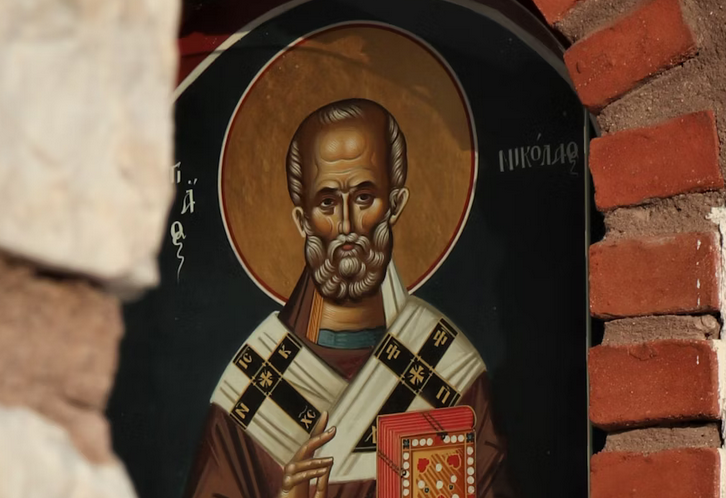
Let’s look at the passage in question:
14Enoch, the seventh from Adam, prophesied about them: “See, the Lord is coming with thousands upon thousands of his holy ones 15to judge everyone, and to convict all of them of all the ungodly acts they have committed in their ungodliness, and of all the defiant words ungodly sinners have spoken against him.”
Jude 1:14-15
(If you’re not familiar with Enoch, see Genesis 5:24).
This particular saying of Enoch was handed down through the generations in Hebrew culture and eventually included in the Book of Enoch (specifically chapter 1, verse 9), which was written in the period between the two Testaments. Jude was “carried along by the Holy Spirit” when he quoted it (2 Peter 1:21), which is why the Judeo-Christian Scriptures are called “God-breathed” (2 Timothy 3:16). In other words, Jude’s source for this information was the Holy Spirit and Judaic tradition, not the book of Enoch. The fact that it was recorded in the pseudepigraphical Book of Enoch didn’t make it false.
While this particular saying of Enoch is true and it’s recorded in the Book of Enoch, it doesn’t make the entire Book of Enoch Holy Scripture. After all, Paul quoted Cretan seer-poet, Epimenides, in Titus 1:12, but this doesn’t mean we should give authority to all of Epimenides’ writings as God-breathed Scripture.
Some suggest that Christ was partially quoting Enoch in Matthew 22:29-30, which was a prophetic word that may allude to tradition, but is not a quote from a specific text, like the Book of Enoch. For proof, compare the Lord’s words with the relevant passage from the Book of Enoch:
29Jesus replied, “You are in error because you do not know the Scriptures or the power of God. 30At the resurrection people will neither marry nor be given in marriage; they will be like the angels in heaven.
Matthew 22:29-30
But you from the beginning were made spiritual, possessing a life which is eternal, and not subject to death for ever.
Therefore I made not wives for you, because, being spiritual, your dwelling is in heaven.
1 Enoch 15:6-7
Clearly, the Messiah wasn’t quoting the Book of Enoch. As such, the passage from Jude is the only quote in Scripture from Enoch (which, again, just so happens to be cited in the Book of Enoch).
The many books in the apocrypha (ah-POK-rah-fah) & pseudepigrapha (soo-doh-PIG-rah-fah) are noncanonical writings from the intertestamental period, or “400 silent years” between the Old and New Testaments, and up to 300-400 AD. ‘Apocrypha’ means “hidden away” while ‘pseudepigrapha’ means “false writings,” mostly because the claimed author of the text is not the actual author. Some of what these books say is true, but some is questionable or false.
It’s similar to the gazillion of Christian books available today, depending on the author and their sectarian bias. Don’t get me wrong, there are many worthwhile Christian books out there, but the best ones are those that stick closely to the Scriptures and rightly-divide them (2 Timothy 2:15 & 3:16-17). In light of this, if you read any books from the apocrypha & pseudepigrapha, it’s necessary to “test them all; hold on to what is good,” as 1 Thessalonians 5:21 puts it. In other words, eat the meat and spit out the bones since they’re not Holy Scripture.
Speaking of which, stick with God’s Word in regard to Christian doctrine (belief) and practice, which explains Paul’s rule “Do not go beyond what is written” (1 Corinthians 4:6).
While there are a miniscule number of Ethiopian Jews and Ethiopian Christians who regard the Book of Enoch as Scripture, it’s considered non-canonical (non-inspired) by everyone else. What questions did leaders ask to verify which scrolls should be part of the canon of Scripture, whether Hebrew officials for the Hebraic Scriptures or Christian leaders for the New Testament? Obviously questions like:
Can the cited author be verified? Was the author closely linked to key members of the Judaic or Christian community? Does the doctrinal content correspond to already-acknowledged Scripture? Do the ethical standards comply with established Judeo-Christian morality? Was the text accepted by the Hebraic or Christian community at large up to that point? If not, why not?
The Book of Enoch was written between 300-100 BC (during the aforementioned “400 silent years,” well before the era of Christ & the early Church); it simply didn’t make the cut.
Related Topics:
Who Wrote the New Testament Books? Who Authorized Them as Scripture Canon?
What Does “Do Not Go Beyond What is Written” Mean in 1 Corinthians 4:6?
BEREAN SPIRIT — What Is It? How Do You Cultivate It?
HEBREWS / ISRAELITES / JEWS — Why Did God Choose Them?
What Did Paul Mean by “According to the Scriptures”?
What Is GLORY? Are There Different TYPES OF GLORY?
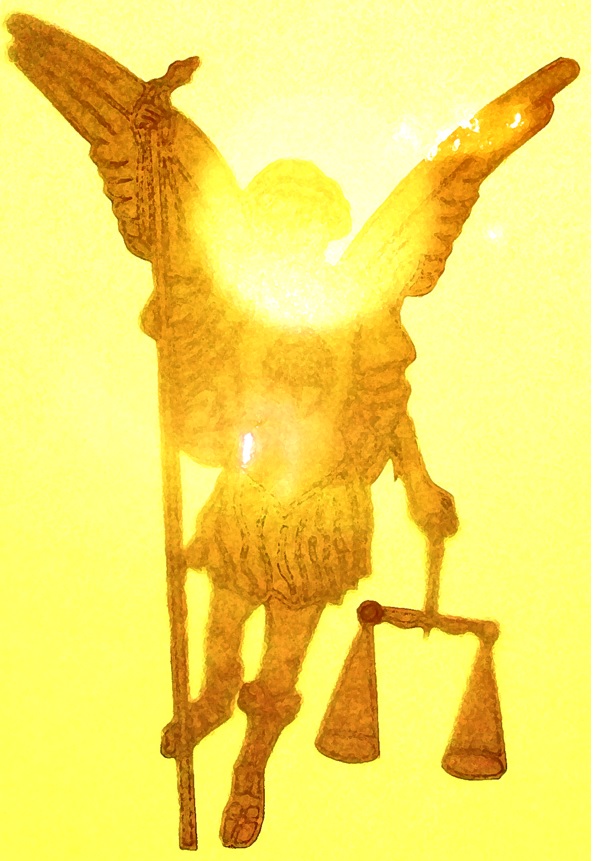
Light or splendor is what I immediately think of when I think of ‘glory.’ Both the Greek word and Hebrew word for ‘glory’ bespeak of God’s splendorous intrinsic substance or essence and the perfection or excellence thereof, whether moral or otherwise. It’s basically the opposite of darkness or sin. You could say ‘glory’ involves all the attributes related to the LORD—light, splendor, excellence, honor, perfection, truth, holiness, etc.
There are different kinds of glory depending on the context. (Remember, the hermeneutical rule “Context is King”). Here are some types of glory in the Scriptures:
- There’s the glory of God’s manifest presence, which theologians refer to as Shekinah glory (Leviticus 16:2, 2 Corinthians 3:18 & Ezekiel 43:2-5).
- There’s the residual glory of spending time in God’s presence (Exodus 34:29).
- There’s the glory of the original physical creation, before the entrance of sin and the corresponding curse (Genesis 1-3).
- Even this present fallen Earth is filled with God’s glory for anyone who opens their eyes (Isaiah 6:3, Psalm 19:1-4 & Romans 1:19-20).
- There’s the glory given to Adam & Eve and, by extension, humanity (Genesis 1:26-28, Psalm 8:4-6 & Hebrews 2:6-8).
- There’s the glory of the Old Covenant, which revealed the truth of the Creator and gave light as to what the LORD considers sin in black-and-white terms (2 Corinthians 3:7-11).
- There’s the greater light of the New Covenant (Hebrews 8:6), which made available spiritual regeneration, freedom from the flesh and eternal life thru the message of Christ (ditto).
- There’s the glory of Christ incarnated (John 1:4-5, 1:9 & 17:24).
- There’s the glory of the truth that He gave the disciples and, by extension, you & me (John 17:22).
- There’s the glory of our future resurrection bodies, which are called glorified (1 Corinthians 15:42-44 & Philippians 3:21).
- There’s the glory of the New Jerusalem and the eternal age-to-come (Revelation 21-22; see specifically 21:11 & 21:23).
Related Topics:
What Is GLORY in the Sense of God’s (Shekinah) GLORY?
ETERNAL LIFE (“Heaven”): Questions & Answers
What Is GLORY? Are There Different TYPES OF GLORY?
What Will the Believer’s GLORIFIED BODY Be Like?
Is CHRIST’S BODY After Resurrection PHYSICAL or SPIRITUAL (or Both)?
Can Believers Have TATTOOS, PIERCINGS and ODD HAIRCUTS?
Can believers have tattoos, piercings and odd haircuts and, if so, how far can they take it? How much is too much? Where do local assemblies draw the line in regard to style & dress at their services? Such questions naturally bring up connecting topics, such as the Christian’s ‘witness‘ to the culture at large, as well as subcultures within the general populace.
Let’s first consider what the Torah commanded the Hebrews on the issue:
27“ ‘Do not cut the hair at the sides of your head or clip off the edges of your beard.
28“ ‘Do not cut your bodies for the dead or put tattoo marks on yourselves. I am the Lord.
Leviticus 19:27-28
These laws were intended to prevent the Israelites from emulating the heathen practices of neighboring nations, some of which got tattoos, cut themselves or used disfiguring haircuts to illustrate humiliation and grief in order to win favor with their gods. A good example from the Bible is when Elijah faced off with the prophets of Baal on Mount Carmel. Notice what these prophets did when they desperately called upon their false god:
22Then Elijah said to them, “I am the only one of the Lord’s prophets left, but Baal has four hundred and fifty prophets. 23Get two bulls for us. Let Baal’s prophets choose one for themselves, and let them cut it into pieces and put it on the wood but not set fire to it. I will prepare the other bull and put it on the wood but not set fire to it. 24Then you call on the name of your god, and I will call on the name of the Lord. The god who answers by fire—he is God.”
Then all the people said, “What you say is good.”
25Elijah said to the prophets of Baal, “Choose one of the bulls and prepare it first, since there are so many of you. Call on the name of your god, but do not light the fire.” 26So they took the bull given them and prepared it.
Then they called on the name of Baal from morning till noon. “Baal, answer us!” they shouted. But there was no response; no one answered. And they danced around the altar they had made.
27At noon Elijah began to taunt them. “Shout louder!” he said. “Surely he is a god! Perhaps he is deep in thought, or busy, or traveling. Maybe he is sleeping and must be awakened.” 28So they shouted louder and slashed themselves with swords and spears, as was their custom, until their blood flowed. 29Midday passed, and they continued their frantic prophesying until the time for the evening sacrifice. But there was no response, no one answered, no one paid attention.
1 Kings 18:22-29
So, the LORD’s commands in Leviticus 19:27-28 were given to prevent the Hebrews from engaging in idolatry, which honored false gods above the true God, not to mention dishonored their bodies.
How do we distinguish which commands in the Mosaic Law, such as in the book of Leviticus, are applicable to believers today and which ones are not? Only the ones that apply to morality are applicable because universal moral laws are absolute, such as the prohibition against homosexuality (Leviticus 20:13), which is echoed in the New Testament (1 Corinthians 6:9-11). However, the wearing of clothes that blend two materials, like cotton and wool, is irrelevant to believers today (Leviticus 19:19), not to mention nothing about it is mentioned in the New Testament. In other words, laws concerning ceremony or irrelevant items are not applicable to the New Covenant believer, which is verified by this clear passage:
16Therefore do not let anyone judge you by what you eat or drink, or with regard to a religious festival, a New Moon celebration or a Sabbath day. 17These are a shadow of the things that were to come; the reality, however, is found in Christ.
Colossians 2:16-17
You can read details here.
Obviously, cutting yourself, which is called “self-harm” today, is a sin since it’s a case of unnecessarily harming the temple of the Holy Spirit (1 Corinthians 6:19). Meanwhile hairstyles are a cultural thing, which you can read about here.
In the New Testament, consider the example of Paul’s instructions to men concerning praying or prophesying without a head covering (a hat of some sort) wherein he exhorted women to do the opposite:
4Every man who prays or prophesies with his head covered dishonors his head. 5But every woman who prays or prophesies with her head uncovered dishonors her head—it is the same as having her head shaved.
1 Corinthians 11:4-5
Is this a moral issue applicable to all believers in the New Covenant era or was it a cultural issue only relevant to that particular region of southern Greece in the 1st century? The answer is the latter as explained here. After all, does God only hear the prayers of males who aren’t wearing hats? Does God only regard the prayers of females who are wearing hats? Answering ‘yes’ to either is ludicrous. Christ didn’t say a peep about hats in his key statements about prayer, like Matthew 7:7, Mark 11: 24 and John 16:24. On the contrary, it’s purely a matter of faith, which is belief.
As far as tattoos go, if a person with tattoos turns to the Lord and receives spiritual regeneration (Titus 3:5), he or she is pretty much stuck with the tattoos. Sure, they can be removed through surgery, but it’s very costly, not to mention risky. Why bother if the tattoos are not profane or blasphemous? Particularly since there’s no New Testament prohibition against them (assuming they’re not connected to some immoral practice, like idolatry).
Should an established believer get a tattoo? It’s between the individual and the LORD; and, more specifically, the leading of the Holy Spirit (John 16:13 & Romans 8:14). If God calls a believer to be a witness to a particular community, including subcultures, its usually necessary to “become all things” to effectively reach them (1 Corinthians 9:22). Consider Paul’s instruction:
Brothers and sisters, each person, as responsible to God, should remain in the situation they were in when God called them.
1 Corinthians 7:24
This is based on an obvious principle: The best people to reach a specific demographic are naturally those from that culture. Why? Because the people of that group can relate to them–they look the same, talk the same and so on.
This likewise applies to ear piercings and the wearing of earrings, as well as other such piercings and rings. While I have no piercings, my wife’s ears are pierced. Is this okay? In our culture, yes, assuming she follows the biblical parameters for a modest woman of God noted here.
If having tattoos, earrings, dreadlocks and other such haircuts aren’t prevalent in your area/culture then it’s a good idea not to have them or wear them if your purpose in Christ is to effectively reach as many people as possible with the truth, which would be hindered if people refuse to receive from you due to such items. However, if the LORD leads you to be a ‘witness‘ to a particular culture or subculture, do as you are led of the Spirit. This is the aforementioned “become all things” principle.
I personally don’t have tattoos and no part of my body is pierced. As for hairstyle, my head is completely shaved, so I usually wear some sort of head covering. Because I want to reach as many people as possible, I shoot for a generic, lowkey look. This brings up the approach ministries should take or not take in regards to the appearances of staff and believers in general…
Where do local assemblies draw the line in regard to style & dress at their services? Ideally, the population of any local assembly should reflect the cultural and racial demographics thereof. This was the case with a fairly large fellowship I was a member of for a decade during my youthful years as a believer. Not only did this assembly contain a good balance of people from the different ethnicities in the area, but culturally as well. For instance, subcultures were represented, such as bikers, metal/grunge aficionados and so forth. Many people dressed formally while others did not. This is healthy in light of this passage:
2Suppose a man comes into your meeting wearing a gold ring and fine clothes, and a poor man in filthy old clothes also comes in. 3If you show special attention to the man wearing fine clothes and say, “Here’s a good seat for you,” but say to the poor man, “You stand there” or “Sit on the floor by my feet,” 4have you not discriminated among yourselves and become judges with evil thoughts?
James 2:2-4
While these verses address discrimination based on income and the corresponding quality of apparel, the principle applies to our topic. We shouldn’t treat someone in fine apparel great and someone in grungy clothing contemptuously. Whether this is due to income status or cultural preference is irrelevant. The same applies to other items of appearance (again, assuming they’re not linked to immorality).
What about people dressed in too-scanty apparel? It’s a legitimate issue addressed here.
Lastly, there are some pastors who gear their ministry toward reaching a particular subculture. For instance, there’s a ministry in my area that focuses on reaching devotees of a particular style of music. Although this will naturally limit the kind of people they reach, and no doubt numbers as well, there’s nothing wrong with doing this if the Holy Spirit leads a minister thusly. A good example of this from the Bible is how Paul was led to focus on reaching the Gentiles of the eastern Mediterranean region whereas Peter concentrated on the Jews (Galatians 2:7).
Whatever the case, let’s not burden people with eye-rolling unbiblical rules, which Paul literally mocked in the Scriptures, led of the Holy Spirit:
20Since you died with Christ to the elemental spiritual forces of this world, why, as though you still belonged to the world, do you submit to its rules: 21“Do not handle! Do not taste! Do not touch!”? 22These rules, which have to do with things that are all destined to perish with use, are based on merely human commands and teachings. 23Such regulations indeed have an appearance of wisdom, with their self-imposed worship, their false humility and their harsh treatment of the body, but they lack any value in restraining sensual indulgence.
Colossians 2:20-23
Related Topics:
Law (Torah) — New Testament Believers are NOT Under the Law
Legalism — Understanding Its Many Forms
LEGALISM Creates Sheeple; CHRISTIANITY Creates Unique People
Libertinism — What’s Wrong with It and How to Walk FREE
Responding to TRAGEDIES and SUFFERING

Tragedies are a constant in “this present evil age” (Galatians 1:4). Christ commented on their reality and the difficult questions they provoke in Luke 13:1-5. C.S. Lewis said, “We can ignore even pleasure. But pain insists upon being attended to. God whispers to us in our pleasures, speaks in our conscience, but shouts in our pains: it is his megaphone to rouse a deaf world.”
Take the 4.4 magnitude earthquake in the resort city of Zihuatanejo, northwest of Acapulco, just hours after being hit by Hurricane Otis on October 25th, 2023. A concerned believer frankly wrote me:
WHAT CAN YOU SAY TO PEOPLE? CAN YOU TELL THEM “JESUS LOVES YOU?” LOL. AFTER YOU SEE THE VIDEO… IT MAKES YOU WONDER IF JESUS IS BIG ENOUGH TO HANDLE THE FUNERALS. There’s a lot of dead people who were on vacation or worked at the resorts that aren’t even smiling. IF Jesus loves them… then I wish Him and all these people good luck. Because it doesn’t look like there’s anything good coming out of this mess. Not ever.
This brother was obviously venting in the wake of the suffering and deaths of this great tragedy. It’s an understandable visceral response.
That said, I think it’s important to offer some details on the LORD’s love for the world so there’s no misunderstanding. Does God love all people in the sense of having warm fuzzies for them? Consider political mass-murderers like Mao and Stalin or corrupt LIEberal politicians. Does God look in favor on such evil people? Does He respect them? Does He have warm affection for them? Does He condone their great duplicities and crimes? No, they are “objects of wrath” (Ephesians 2:3). The Almighty is mercifully loving them with agape love—practical love—which will hopefully attract their attention and move them to repentance—changing their minds and behavior—by turning to their Creator via the message of Christ.
To explain, you can extend practical love—agape love—toward someone that you don’t respect or have affection for and it doesn’t mean you condone their corruption. Say, you meet an in-law who hates your guts at your family reunion; this is a person who actively slanders you behind your back and you always catch wind of it . While you don’t have warm feelings for this person and don’t respect him/her, you can certainly extend agape love toward them for the benefit of all involved.
Storge love, by contrast, refers to familial love while phileo love refers to friendship love. These are different from agape love. God loves all people with agape love, as observed in John 3:16, but reserves storge love for those who are spiritual children by faith and phileo love for those who come near in relationship, thus growing in the LORD’s favor (James 4:8 & 2 Peter 3:18). Yes, you can grow in God’s grace and those passages make this perfectly clear.
People make the mistake of thinking there’s only one type of love when there’s actually at least four. This article offers details for those who want to go deeper.
Someone might respond that these are “pat answers” to the great tragedies & sufferings of this world and I understand this perspective, but was Christ giving pat answers in Luke 13:1-5? The Bible says that “in all things God works for the good of those who love him, who have been called according to his purpose” (Romans 8:28). Is that a shallow answer or a deep truth about the believer’s life in this fallen world?
In response to all the horrible things that are currently happening around the world, the aforementioned person wrote me:
Right now I have a WHAT THE F*** ARE YOU DOING love for the Lord. If He can’t handle it… then He needs to know ME better.
This man is honestly venting. He’s understandably ticked off about the horrible things that are happening — like the savage Hamas attack on innocent Israelite citizens on October 7th, 2023, — and simply expressing his gut feelings. It reminds me of Job’s statement: “How painful are honest words!” (Job 6:25) or David’s question: “When the foundations are being destroyed, what can the righteous do?” (Psalm 11:3).
Venting is healthy for mental/spiritual health in this messed-up world. We might as well be totally candid and transparent since God knows everything about us anyway, even our very thoughts (Psalm 139). As such, there are several examples of godly people radically venting in the Bible, such as Jeremiah accusing the LORD of deceiving him (Jeremiah 20:7-18) or suffering Job’s railings at God, e.g. “I loathe my very life; therefore I will give free rein to my complaint and speak out in the bitterness of my soul… Does it please you to oppress me, to spurn the work of your hands, while you smile on the plans of the wicked?” (Job 10:1-3). Just think, the most righteous man on the face of the Earth at the time said this to the Almighty! (Job 1:8).
Christ exhorted, “Be careful, or your hearts will be weighed down with… the anxieties of life” (Luke 21:34). Such anxieties are one of three things that will “choke the word and make it unfruitful” in the believer’s life. The other two are the deceitfulness of wealth and the desire for other things, including the pleasures of this life (Mark 4:19 & Luke 8:14).
The Messiah prophesied, “When you hear of wars and uprisings, do not be frightened. These things must happen first, but the end will not come right away. Nation will rise against nation, and kingdom against kingdom. There will be great earthquakes, famines and pestilences in various places, and fearful events and great signs from heaven” (Luke 21:9-11). In other words, the Bible predicted 2000 years ago the profoundly disturbing things we are now witnessing. So the terrible things that are happening verify the truth of Holy Scripture! God is calling wayward humanity to repentance and eternal salvation. The prophet Isaiah expressed it thusly: “When your judgments come upon the earth, the people of the world learn righteousness” (Isaiah 26:9).
Scripture calls these increasing tribulations “birth pangs” (Matthew 24:8) with the ultimate result being the new heavens and new earth, the eternal home of righteousness, which we are to look forward to while stuck in this “present evil age” (2 Peter 3:13). In short, everything WILL be made right and God will personally console us, “wiping away every tear… there will be no more death or mourning or crying or pain, for the old order of things has passed away” (Revelation 21:4).
It helps to keep in mind this big picture if we’re to persevere through these troubling times. So, be encouraged. Stay tight with both the Living Word (the person of God) and the written word (the truths of God’s kingdom) and you’ll overcome this world by faith (1 John 5:4). See this video for details. Consider listening to some genuine prophets, like Julie Green; that’s what they’re there for—to encourage and exhort the body of Christ (see this article for details on the ministry of the New Testament prophet, etc.).
I wrote this article for those who are upset about the distressing things that are happening and even on the verge of giving up. Don’t. You cannot allow the anxieties of this life to rob you of your relationship with the Lord or your fruitfulness as a believer. It’s a matter of focus. What are you concentrating on? As Proverbs 4:23 says: “Be careful what you think, because your thoughts run your life” (New Century Version).
Let me leave you with these encouraging verses:
Refrain from anger and turn from wrath; do not fret—it leads only to evil.
“Be still, and know that I am God; I will be exalted among the nations, I will be exalted in the earth.”
“On this mountain he will destroy
the shroud that enfolds all peoples,
the sheet that covers all nations;
He will swallow up death forever.
The Sovereign Lord will wipe away the tears from all faces;
He will remove the disgrace of his people from all the earth.”
The Lord has spoken.
Related Topics:
Why Is This World So Messed Up?
Why Did God Allow the BLACK DEATH and So Many to Die?
How to “FEAR NOT” in Perilous Times
DRINK UP from the Fountain of Life (video)
Was Abimelech Technically the FIRST KING OF ISRAEL?
To answer this question, let’s consider the key verses:
Then all the citizens of Shechem and Beth Millo gathered beside the great tree at the pillar in Shechem to crown Abimelech king.
After Abimelech had governed Israel three years,
Abimelech (or Abimelek) was one of the sons of Gideon, who infamously slew his 70 brothers with only Jotham escaping (Judges 9:5). The two verses above suggest that Abimelech was the first king of Israel 247 years before the LORD chose Saul to be the Hebrew king at the stubborn request of the Israelites (1 Samuel 9:17 & 13:1).
However, verse 6 shows that it wasn’t all of Israel that crowned Abimelech king, but rather the citizens of the city & district of Shechem, located in the hill country of Ephraim in north-central Israel (Beth Millo was part of Shechem, possibly the fortress guarding it). Furthermore, the book of Judges repeatedly reveals that “In those days there was no king in Israel; everyone did what was right in his own eyes” (Judges 17:6); this includes the final verse of the book (21:25) (see also 18:1 & 19:1).
So, yes, Abimelech was king over an area in the heart of Israel for three years during the era of the judges, which lasted about 410 years. But he wasn’t a king over all of Israel in the sense of Saul or David 250-300 years later, nor was he appointed by the LORD, but merely by the citizens of Shechem, which doesn’t include the entire tribe of Ephraim or Manasseh, aka Joseph.
Related Topics:
Hermeneutics — Proper Bible Interpretation
BEREAN SPIRIT — What Is It? How Do You Cultivate It?
HEBREWS / ISRAELITES / JEWS — Why Did God Choose Them?
Does Isaiah 19:19-20 Support PYRAMIDOLOGY?

So-called Christian pyramidology suggests that the Great Pyramid of Giza is “the Bible in stone” concerning God’s plan for the ages and interpreting events of the end-times. Let’s read the passage to see if this is true:
19In that day there will be an altar to the LORD in the heart of Egypt, and a monument to the Lord at its border. 20It will be a sign and witness to the Lord Almighty in the land of Egypt. When they cry out to the Lord because of their oppressors, he will send them a savior and defender, and he will rescue them.
Isaiah 19:19-20
“Context is king” is a hermeneutical rule and this text applies to Egypt during the Millennium. It’s not talking about the Great Pyramid of Giza and is easily explained as follows:
- The “altar to the LORD in the heart of Egypt” in verse 19 will be an altar for sacrifices during the millennial reign of Christ, as proven by verse 21.
- The “monument to the LORD at its border” (“pillar” in the KJV) will be to commemorate the deliverance of God to the Egyptians, as verified by verse 20. Note how this monument is located at the border of Egypt and no where near the Great Pyramid, which is 13 miles southwest of Cairo.
- Both could be taken figuratively to simply refer to Egypt’s conversion “in that day,” i.e. the Millennium.
The idea behind “Christian pyramidology” is to curiously make predictions of end-time events based on measuring the rooms and passageways of this archaic pagan tomb. Speculations are made with each inch equaling a segment of time, like a year, in relation to the fulfillment of prophecy. As such, dates have been set using this dubious method for practically every biblical event, past and future.
There is no Scriptural basis for this. No pyramid is even mentioned in the Bible. If we’re going to look to the Pyramid of Khufu for prophetic answers, why not do the same with the Great Pyramid of Cholula in Mexico or La Danta in Guatemala? Needless to say, this would lead to much confusion, false date-setting and the corresponding dissension, none of which would be profitable to the worldwide Church and it’s witness to this lost and dying world.
To close, it’s never a good idea to base a doctrine on a single, obscure verse in the Bible — milked for details that aren’t there — with zero additional support from the rest of the God-breathed Scriptures. If Isaiah 19:19-20 really taught that the Great Pyramid of Giza revealed God’s plan for the ages and unveiled important details concerning end-times events, why didn’t any key characters in the New Testament mention it, like Christ, Paul and Peter? Why isn’t there a single verse in the entire Bible that says something to the effect of:
Yay, as inferred in the prophecies of Isaiah, the mystery of God’s plan for the ages is hidden in the great Egyptian pyramid; study this colossal tomb and learn deep truths.
You’ll find no such statement because Christian pyramidology is a false doctrine.
How Big Will the NEW JERUSALEM Be on the New Earth?
Universalism, Inclusivism, Restrictivism, Purgatory and the Judgment Seat of Christ
Is the NEW JERUSALEM Cube-Shaped or Pyramid-Shaped?

The New Jerusalem is currently in Heaven, as shown in Hebrews 12:22. Revelation 3:12 reveals that this massive city will “come down out of heaven from God” at some point and the timing of this transition is revealed in Revelation 21:2 and 21:10 to be the eternal age of the New Heavens and New Earth.
The shape of the New Jerusalem is described here:
16The city was laid out like a square, as long as it was wide. He measured the city with the rod and found it to be 12,000 stadia in length [about 14,000 miles], and as wide and high as it is long. 17The angel measured the wall using human measurement, and it was 144 cubits thick [about 200 feet].
Revelation 21:16-17
Keep in mind the hermeneutical guideline that the clearest, most relevant and most detailed passages take precedence over the more obscure, ambiguous verses. As such, this passage trumps all other verses on the shape of the eternal city. The key word is “square,” which is tetragonos in the Greek, literally meaning “four-cornered.” Nothing is said about a pyramid in relation to the shape and, actually, no pyramid is mentioned anywhere in the Bible.
Those who suggest that the New Jerusalem will be pyramid-shaped cite this passage as evidence:
19In that day there will be an altar to the Lord in the heart of Egypt, and a monument to the Lord at its border. 20It will be a sign and witness to the Lord Almighty in the land of Egypt. When they cry out to the Lord because of their oppressors, he will send them a savior and defender, and he will rescue them.
Isaiah 19:19-20
This text applies to Egypt during the Millennium. It’s not talking about the New Jerusalem or the Great Pyramid of Giza. Consider:
- The “altar to the LORD in the heart of Egypt” in verse 19 will be an altar for sacrifices during the millennial reign of Christ, as proven by verse 21.
- The “monument to the LORD at its border” (“pillar” in the KJV) will be to commemorate the deliverance of God to the Egyptians, as verified by verse 20. Note how this monument is located at the border of Egypt and no where near the Great Pyramid, which is 13 miles southwest of Cairo.
- Both could be taken figuratively to simply refer to Egypt’s conversion “in that day,” i.e. the Millennium.
Related Topics:
Does Isaiah 19:19-20 Support PYRAMIDOLOGY?
How Big Will the NEW JERUSALEM Be on the New Earth?
Will People Marry and Have Sex in Eternity?
Why It’s Not Good to OVER-PRAISE Your Spiritual Mentor

There’s a place for honoring your spiritual mentors in light of this passage:
12Now we ask you, brothers and sisters, to acknowledge those who work hard among you, who care for you in the Lord and who admonish you. 13Hold them in the highest regard in love because of their work. Live in peace with each other.
1 Thessalonians 5:12-13
I have about a dozen mentors from past decades that strategically contributed to my spiritual growth and I constantly give thanks to the LORD for them in my prayer time. It’s okay to do so publicly to a reasonable degree, but those who do this excessively are in STAGE TWO of spiritual growth and, in some extreme cases, treading the borders of idolatry, similar to the way youths put music idols on a pedestal. (If you’re not familiar with the Four Stages of Spiritual Growth, go here).
Paul, the greatest vessel used by God in the New Testament era after Christ, gave a healthy, balanced view of the attitude we should have regarding fivefold ministers:
4For when one says, “I follow Paul,” and another, “I follow Apollos,” are you not mere human beings?
5What, after all, is Apollos? And what is Paul? Only servants, through whom you came to believe—as the Lord has assigned to each his task. 6I planted the seed, Apollos watered it, but God has been making it grow. 7So neither the one who plants nor the one who waters is anything, but only God, who makes things grow. 8The one who plants and the one who waters have one purpose, and they will each be rewarded according to their own labor. 9For we are co-workers in God’s service; you are God’s field, God’s building.
1 Corinthians 3:4-9
Fivefold ministers are referred to as “only servants” here, which is backed up by other passages (Philippians 1:1 & Luke 17:7-10). In other words, ministers in the Church are indeed leaders, but they’re more specifically servant-leaders (Mark 9:35 & 10:43).
Observe what this key passage says about our servant-leaders:
1To the elders among you, I appeal as a fellow elder and a witness of Christ’s sufferings who also will share in the glory to be revealed: 2Be shepherds of God’s flock that is under your care, watching over them—not because you must, but because you are willing, as God wants you to be; not pursuing dishonest gain, but eager to serve; 3not lording it over those entrusted to you, but being examples to the flock. 4And when the Chief Shepherd appears, you will receive the crown of glory that will never fade away.
1 Peter 5:1-4
Christ is the chief shepherd of the worldwide Church, not to mention its Head (Colossians 1:18 & Ephesians 5:23), whereas fivefold ministers are under-shepherds. Since “God opposes the proud, but shows favor (grace) to the humble,” fivefold ministers in the Church should exemplify humility, not arrogance (James 4:6 & 1 Peter 5:5). (Notice how verse 3 says they’re to be “examples to the flock”). I should add that being meek does not mean being weak; it means having a modest view of oneself and not being a blustering, bloviating blowhard.
To close, an appreciative, respectful attitude toward your mentors in the body of Christ is beneficial all-around, as explained here:
Have confidence in your leaders and submit to their authority, because they keep watch over you as those who must give an account. Do this so that their work will be a joy, not a burden, for that would be of no benefit to you.
However, over-praising someone can bloat the recipient’s ego by going to his/her head. Due to the axiom that “God opposes the proud,” arrogance is the kiss of death, spiritually speaking. So, by all means, honor your spiritual mentors, but be careful of excessiveness that fuels a spirit of arrogance. Make no mistake, if your mentor becomes arrogant, abuse is right around the corner. Abuse is the misuse of power.
Related Topics:
Should You “Obey” Your Pastor?
Ministerial Pitfalls and Abuses
Is the One Who Led You to Christ Your “Spiritual Parent”?
CHRIST IS the Four Basic Elements Humans Need to Survive

True science maintains that human beings require at least four basic elements in order to survive:
- Air
- Water
- Food
- Light
The Bible informs us that the LORD is all of these things:
- Christ is the Breath of Life as verified by Genesis 2:7 with the understanding of Colossians 1:16-17.
- Christ is the Living Water, as verified by John 4:10 and 4:14.
- Christ is the Bread of Life, as verified by John 6:35 and 6:51.
- Christ is the Light of the World, as verified by John 8:12.
Hence, people require the LORD in order to survive, not just in a temporal sense — seeing as how, without breath, a person will perish in just a couple of minutes — but, more importantly, an eternal sense:
“For God so loved the world that he gave his one and only Son, that whoever believes in him shall not perish but have eternal life.”
“Whoever believes in the Son has eternal life, but whoever rejects the Son will not see life, for God’s wrath remains on them.”
Related Topics:
Seven Proofs That JESUS CHRIST IS GOD
MANNA Was a Shadow of the BREAD FROM HEAVEN, Jesus Christ
Comparing Jesus Christ With… Superman