
Are Believers the RESULT OF a Covenant or IN COVENANT?

There’s this teaching going around that believers are not in a covenant with God but, rather, are the result of the covenant between Abraham and the LORD (Genesis 12:1-3 & 17:4-5). A minister can be observed teaching this in this 7.5 minute video.
He is correct that believers in Christ are the product of the Abrahamic Covenant (Galatians 3:16 & 3:29), but he’s incorrect to say that believers don’t have a covenant with the LORD. All spiritually-regenerated believers (Titus 3:5) are under what the Bible calls the New Covenant, which is the fulfillment of the Abrahamic Covenant, but separate from it.
So the quick answer to the title question — Are believers the result of a covenant or in covenant with God? — is both.
To explain, let’s start with…
What Is a ‘Covenant’?
‘Covenant’ is a word usually only heard in Judeo-Christian circles. In the Koine Greek, ‘Covenant’ is diathéké (dee-ath-AY-kay), which simply means “a set-agreement with terms determined by the initiating party.” In short, it’s an agreement between two parties with terms (unless of course it’s an unconditional agreement).
With this understanding, consider this minister’s illustration of a couple who are in a marital covenant and they have a child. He says that the husband and wife are in covenant (agreement), which is true, but he claims that neither the father nor mother are in covenant with the child.
This is incorrect. Every child has a social contract (agreement) with his/her parents, even if it’s unspoken. For instance, if the child disobeys he or she will be disciplined in some manner and, in extreme cases, kicked off the property, assuming they’re of age. In radical cases where the offspring is stubbornly impenitent, the consequences can be loss of inheritance or even disownment. Only if there were no social agreement with terms — a covenant — would there be no discipline or repercussions.
Speaking of which, the minister emphasizes how believers are heirs to the eternal kingdom and coheirs with Christ, which is absolutely true (Romans 8:17, Galatians 3:29, 4:7 & Ephesians 3:6). But this doesn’t mean that there’s no agreement between the believer and the LORD with the corresponding terms, i.e. a covenant. Evidence of this covenant can be observed here:
5And have you completely forgotten this word of encouragement that addresses you as a father addresses his son? It says,
“My son, do not make light of the Lord’s discipline,
and do not lose heart when he rebukes you,
6because the Lord disciplines the one he loves,
and he chastens everyone he accepts as his son.”
7Endure hardship as discipline; God is treating you as his children. For what children are not disciplined by their father? 8If you are not disciplined—and everyone undergoes discipline—then you are not legitimate, not true sons and daughters at all. 9Moreover, we have all had human fathers who disciplined us and we respected them for it. How much more should we submit to the Father of spirits and live! 10They disciplined us for a little while as they thought best; but God disciplines us for our good, in order that we may share in his holiness. 11No discipline seems pleasant at the time, but painful. Later on, however, it produces a harvest of righteousness and peace for those who have been trained by it.
Hebrews 12:5-11
For the LORD to discipline us like this, there has to be some sort of agreement in which God holds the believer accountable to conditions. This agreement is…
The New Covenant — the Believer’s Contract With the Creator
It is true that God’s promise to Abraham was to his seed, not seeds, and that seed is Jesus Christ (Galatians 3:16 & 3:29). This makes sense when you understand that all genuine believers are in Christ and therefore part of the body of Christ, aka the worldwide Church. However, it’s error to say that the LORD does not have a covenant with individual believers, i.e. an agreement with terms.
For more specific proof, Hebrews 8 speaks of the New Covenant in contrast to the Old Covenant that God had with the Israelites. Verse 6 says “…the ministry Jesus has received is as superior to theirs (the Hebrews’ covenant with God) as the covenant of which he is mediator is superior to the old one, since the new covenant is established on better promises.” In the following verses he quotes Jeremiah 31:31-34; please observe what this passage says about the New Covenant:
7For if there had been nothing wrong with that first covenant, no place would have been sought for another. 8But God found fault with the people and said :
“The days are coming, declares the Lord,
when I will make a new covenant
with the people of Israel
and with the people of Judah.
9It will not be like the covenant
I made with their ancestors
when I took them by the hand
to lead them out of Egypt,
because they did not remain faithful to my covenant,
and I turned away from them,
declares the Lord.
10This is the covenant I will establish with the people of Israel
after that time, declares the Lord.
I will put my laws in their minds
and write them on their hearts.
I will be their God,
and they will be my people.
11No longer will they teach their neighbor,
or say to one another, ‘Know the Lord,’
because they will all know me,
from the least of them to the greatest.
12For I will forgive their wickedness
and will remember their sins no more.”
13By calling this covenant “new,” he has made the first one obsolete; and what is obsolete and outdated will soon disappear.
Hebrews 8:7-13
Notice clearly that this “new covenant” — as the LORD calls it — is with the believing people. In other words, God indeed has a covenant with the individuals who believe and He calls it “a new covenant.” So much for believers not having a covenant with the LORD.
Someone might argue that the text is specifically referring to a New Covenant (agreement) that the LORD has “with the people of Israel and with the people of Judah” (verse 8), but we know from many other verses that the eternal salvation provided in the New Covenant is for both Jew and Gentile (Romans 1:16) and, furthermore, Gentiles are Hebrews in a spiritual sense (Romans 2:29), proven in this article. “Scripture interprets Scripture” is a common sense hermeneutical rule.
Elsewhere, Paul plainly spoke of the New Covenant, which believers have with the LORD. In this passage he quotes the Lord Christ:
23For I received from the Lord what I also passed on to you: The Lord Jesus, on the night he was betrayed, took bread, 24and when he had given thanks, he broke it and said, “This is my body, which is for you; do this in remembrance of me.” 25In the same way, after supper he took the cup, saying, “This cup is the new covenant in my blood; do this, whenever you drink it, in remembrance of me.” 26For whenever you eat this bread and drink this cup, you proclaim the Lord’s death until he comes.
1 Corinthians 11:23-26
And here Paul contrasts the superior New Covenant that believers have with God with the inferior Old Covenant that the Israelites had, which he refers to as “the letter” (Hebrews 8:6).
He has made us competent as ministers of a new covenant—not of the letter but of the Spirit; for the letter kills, but the Spirit gives life.
In light of all this, it’s a great mystery how a fivefold minister can suggest that believers are not in covenant with God.
The Terms of the New Covenant
While the believer’s covenant is a one of faith and the corresponding repentance (Acts 20:21), “faith works in love” (Galatians 5:6). These are the terms of our covenant (agreement) with God. To explain, New Covenant believers are not under the Mosaic law, but under the law of Christ (1 Corinthians 9:19-21 & Galatians 6:2). This is the law of love, which Yeshua said had three simple applications in Matthew 22:37-40:
- LOVE GOD
- LOVE PEOPLE
- As you LOVE YOURSELF
Paul explained this law as such: “whoever loves others has fulfilled the Law” (Romans 13:8), which includes tough love when appropriate (Proverbs 27:5). This is how we “Keep God’s commands,” as the apostle plainly taught (1 Corinthians 7:19). Meanwhile James referred to this law of love—the law of Christ—as “the royal law” in Scripture (James 2:8).
Can Believers Lose Their Inheritance If They Don’t Comply With These Terms?
Yes, but it should be emphasized that God is extremely patient and lovingly merciful, as observed in Luke 13:1-9.
For glaring evidence that foolish Christians can lose their inheritance through stubborn impenitence, note what Paul said, by the Spirit:
9Or do you not know that wrongdoers will not inherit the kingdom of God? Do not be deceived: Neither the sexually immoral nor idolaters nor adulterers nor men who have sex with men 10nor thieves nor the greedy nor drunkards nor slanderers nor swindlers will inherit the kingdom of God. 11And that is what some of you were. But you were washed, you were sanctified, you were justified in the name of the Lord Jesus Christ and by the Spirit of our God.
1 Corinthians 6:9-11
The apostle was addressing believers in Christ, who — again — are heirs to the eternal kingdom and coheirs with Christ (Romans 8:17, Galatians 3:29, 4:7 & Ephesians 3:6). Yet Paul plainly warns them — stressing “do not be deceived” — that those who unrepentantly walk in sin as a lifestyle “will not inherit the kingdom of God.” In other words, those who foolishly refuse to walk according to the law of Christ will be disowned by the LORD, as observed in this passage:
21“Not everyone who says to me, ‘Lord, Lord,’ will enter the kingdom of heaven, but only the one who does the will of my Father who is in heaven. 22Many will say to me on that day, ‘Lord, Lord, did we not prophesy in your name and in your name drive out demons and in your name perform many miracles?’ 23Then I will tell them plainly, ‘I never knew you. Away from me, you evildoers!’
Matthew 7:21-23
These are people who openly confess Christ as “Lord” and are involved in good works to some degree (which Jesus does not contend), but they’re obviously walking in the flesh as a lifestyle because Yeshua plainly refers to them as “evildoers,” that is, unrepentant practitioners of lawlessness, aka sin.
This coincides with something Paul said:
11Here is a trustworthy saying:
If we died with him,
we will also live with him;
12if we endure,
we will also reign with him.
If we disown him,
he will also disown us;
13if we are faithless,
he remains faithful,
for he cannot disown himself.
2 Timothy 2:12
Praise God that, if we are faithless and fall into sin, the LORD remains faithful and therefore is ever willing-and-ready to forgive us when we humbly ‘fess up in repentance (1 John 1:8-9). However, if we disown Him, He will disown us.
Now, someone might argue that we have to verbally disown the Lord in order to actually disown him, but Christ said that it’s possible for people to say one thing while the truth of the heart is quite the opposite; in other words, they’re hypocrites, aka fakes (Mark 7:6). Paul backed this up when he warned Titus of false believers, including staunch legalists: “They claim to know God, but by their actions they deny him” (Titus 1:16).
The minister noted at the beginning of this article revealed his motivation for the claim that believers are not in covenant with God: In the opening of his video he talks about how “you’ll be struggling to fulfill your part of the covenant so that God will fulfill His part of the covenant.” Any believer who’s struggling in this negative sense has fallen into the rut of legalism and needs to break out in favor of the awesome freedom available in the New Covenant (Galatians 5:1).
In short, the law of Christ — the law of love — is not burdensome. Notice what Christ and John said on this point:
28“Come to me, all you who are weary and burdened, and I will give you rest. 29Take my yoke upon you and learn from me, for I am gentle and humble in heart, and you will find rest for your souls. 30For my yoke is easy and my burden is light.”
Matthew 11:28-30
In fact, this is love for God: to keep his commands. And his commands are not burdensome,
By “His commands,” John was talking about the aforenoted law of love — love God, love people, as you love yourself (Matthew 22:37-40), which he stresses is not burdensome.
As the Messiah said, there is a yoke and burden to serving the Lord but, unlike the yoke of the flesh or the burden of religion, Jesus Christ’s yoke is easy and His burden is light. How so? Because that’s the nature of law of Christ and love is the fulfillment of the Law (Romans 13:8-10).
Related Topics:
Religion and Christianity — What’s the Difference?
How to Walk FREE OF THE FLESH by being Spirit-Controlled
Does Christianity Weaken People or EMPOWER?
Once Saved Always Saved? — Answering the Best Arguments
WHY DIDN’T Catholics Want People Having Access to Scripture?
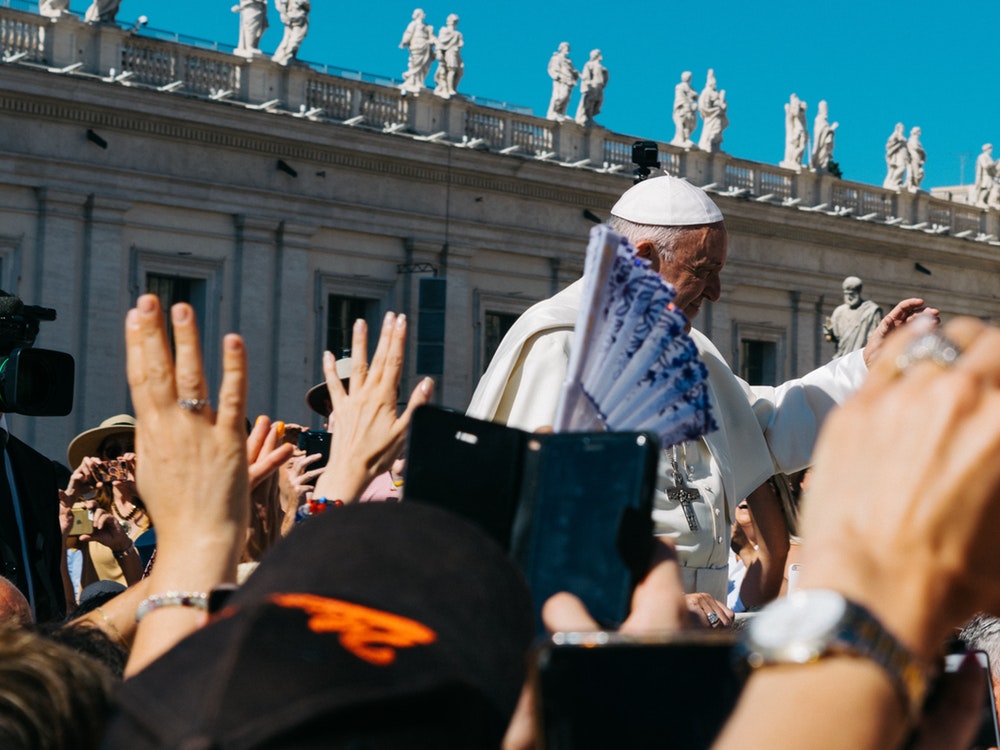
Historically, Catholic leaders have curiously objected to people having access to the Holy Scriptures. For instance, when the codex book form replaced the scroll, and parchment made from sheep or goat skin replaced papyrus, the Catholic Council of Toulouse, France, 1229, forbade anyone who was not a priest from owning a translation of the Bible or any part of it.
John Wycliffe was one of the first to make the Bible available to the average person. He argued that the Scriptures did little good locked away in Latin that few could understand. He finished the first complete English translation based upon the Vulgate in 1382. Hand-written copies were widely circulated and eagerly read. In 1408, nearly a quarter century after Wycliffe’s death, Catholic leaders outlawed the reading of Wycliffe’s translation. So England had a Bible in the English language, but it was a forbidden one.
It gets worse: The Council of Constance condemned Wycliffe in 1415, ordering his body exhumed and burned, along with his books. Yet even the most energetic opposition could not wipe out this powerful movement to translate the Bible into the languages of the common people.
In 1522, William Tyndale conceived the project of translating the New Testament directly from the Greek, bypassing the Latin Vulgate. To a critic of this plan he boldly declared: “If God spare my life, ere many years pass, I will cause a boy that driveth the plough shall know more of the Scriptures than thou dost.”
To carry out his noble project, Tyndale had to flee to Germany because of strong opposition from religious authorities in England. He would never return to his home country.
After Tyndale finished his translation, copies were smuggled into England and widely distributed. But, when discovered, Catholic leaders ordered these Bibles gathered up for burning! Tyndale was betrayed in 1535, kidnapped, and imprisoned by papal agents near Brussels. He was tried for heresy and condemned to death. A decade earlier they had burned the translation; now they intended to burn the translator!
Tyndale went boldly to the stake circa October 6, 1536, still defending his belief that the British should have a Bible in their own language. He was strangled at the post before they burned his body. With his last breath he cried out, “LORD open the king of England’s eyes!” His prayer was answered seven decades later with the King James Bible manifesting in 1611, which used about 84% of Tyndale’s words for the New Testament and 76% for the Old Testament (these are conservative estimates).
The KJV was the most popular English version of the Bible for almost 400 years. The New International Version (NIV) has since usurped this position, which you can observe here. (This explains, by the way, why the NIV is the primary version we use on this site).
Tyndale’s life-mission coincided with the Protestant Reformation, which had just begun in 1517 with the publication of Martin Luther’s Ninety-five Theses in northeast Germany followed by his excommunication by Pope Leo X in early 1521.
The clarion call of the Reformers was sola scriptura, a Latin phrase meaning “(by) Scripture alone.” They were protesting the unbiblical doctrines and practices of the Catholic religion that had accumulated over the centuries and stripped believers of freedom in Christ and the corresponding dunamis power. This explains why these reformers came to be called Protestants, i.e. protest-ants. You see, the God-breathed Scriptures are the LORD’s blueprint for authentic Christianity. In other words, the Bible is the basis for all Christian doctrine/practice and corrections thereof, as plainly stated in Holy Scripture:
Do your best to present yourself to God as one approved, a worker who does not need to be ashamed and who correctly handles the word of truth.
16All Scripture is God-breathed and is useful for teaching, rebuking, correcting and training in righteousness, 17so that the servant of God may be thoroughly equipped for every good work.
2 Timothy 3:16-17
Notice clearly that we are to go to the God-breathed Scriptures (2 Peter 1:21) for legitimate Christian teachings and these Scriptures are the basis for proper doctrine and correction in matters of belief or practice (assuming, of course, they’re “rightly divided” based on common sense hermeneutics). Nothing is said about a pope, cardinal, bishop or priest having the power to override clear biblical teachings.
Of course, the Catholic organization never outright denied the authority of Scripture, they just placed extrabiblical traditions and the teachings of Catholic leaders on a level of authority that superseded Holy Scripture. Some quick examples include: the papacy, apostolic succession, papal infallibility, equating Catholic traditions with Scripture, praying to dead saints, praying to Mary, obsession with religious statues to the point of smacking of idolatry, regular confession to priests, infant baptism, celibacy mandated for ministers, Amillennialism, transubstantiation, the absurd granting of indulgences, the immaculate conception, perpetual virginity, the assumption of Mary and mediatrix. You can read more about these unscriptural doctrines & practices here.
This tendency of fallen humanity and the religious spirit explains the biblical rule Paul had for his assemblies:
“Do not go beyond what is written.”
In other words, don’t go beyond what is written in Holy Scripture in regards to Church doctrine and Christian living. The Lord Himself said we need to “continue in his word” so that “the truth will set us free” (John 8:31-32). He also said to the Father, “Your word is truth” (John 17:17).
Even long after the Reformation, the Catholic organization conveyed the Word of God in Latin at services and so the common person couldn’t even comprehend it. My wife’s father came from a Catholic family and attested to this. He said he never understood a word of what was preached at services. The absurdity of having masses conducted in Latin wasn’t corrected until 1969, obviously due to social pressure since “Protestant” ministers were actually helping the masses with biblical truths. I’m speaking as a humble nonsectarian who simply goes by the scriptural name Christian (Acts 11:26). (If you’re not familiar with sectarianism, go here).
Maybe the Catholic sect has changed in modern times, I don’t know since I don’t attend masses or read Catholic literature (I hope they’ve changed for the sake of their parishioners). But the documented facts plainly show that Catholic leaders have, historically, hated the notion of the common people having access to Holy Scripture — the Word of Truth — or even hearing it at their services in an understandable language.
Don’t these type of religious leaders want people set FREE? Don’t they realize that the Word of God is the “sword of the spirit,” the believer’s most effective weapon in spiritual warfare (Ephesians 6:17)?
Christ answered such questions in the 1st Century when talking to the legalistic Pharisees and Teachers of the Law:
46Jesus replied, “And you experts in the law, woe to you, because you load people down with burdens they can hardly carry, and you yourselves will not lift one finger to help them…
52“Woe to you experts in the law, because you have taken away the key to knowledge. You yourselves have not entered, and you have hindered those who were entering.”
Luke 11:46,52
When Church leaders become infected by forms of legalism, they lack the capacity or desire to set people free. On the contrary, they’ll do the very opposite—they’ll load people down with heavy and unnecessary burdens that they’re unwilling to help carry. It’s what counterfeit religionists do.
The other glaring reason Catholic officials didn’t want believers to have access to God’s Word is that they feared their organization’s unbiblical doctrines & practices would be exposed as bogus and there’d be a great reformation which, of course, is what ultimately happened.
A staunch Catholic wrote me claiming that, until the last few hundred years, the majority of believers didn’t have access to the Holy Scriptures and, even if they did, it would’ve done little good since most people were illiterate. (Notice, interestingly, how he plays down the importance of the Word of God in people’s lives).
Actually, the early Church had the Hebraic Scriptures, which pointed to Christ (John 5:39), as well as the verbal Scriptures via the apostles who literally walked with the Messiah for 3.5 years before His teachings were written down in the four Gospels (Paul didn’t walk with Christ during His earthly ministry, but had a life-changing encounter with the risen Lord, as noted in 1 Corinthians 15:8). Thirty years after Yeshua ascended, Peter cited Paul’s epistles as Scripture and they were circulating amongst the assemblies (2 Peter 3:16). So the early Church did have access to Old and New Covenant Scripture.
As for believers in subsequent decades & centuries, the Marcionite canon from 130-140 AD listed nine of Paul’s New Testament epistles while the Muratorian Canon from circa 170 AD featured all of what became the New Testament except the epistles Hebrews, James, 1 Peter and 2 Peter (the mini-epistles 2 John and 3 John were considered possibilities). This indicates that the essential texts that would ultimately be accepted as New Testament canon were already acknowledged by early believers 100-145 years after Christ’s crucifixion. This was long before what is known as Catholicism originated.
It is true that the public masses were largely illiterate and hardly anyone who was literate had access to the Scriptures until after 1600 because books of the Bible or whole Bibles were all hand-written, but this just shows the responsibility of Church servant-leaders — e.g. pastors & teachers — to feed believers under their care the truths of God’s Word (Ephesians 4:11-13; 1 Peter 5:1-5). The Bible clearly says that such ministers will be held accountable to what they effectively teach or don’t teach at the Judgment Seat of Christ, not to mention they’ll be judged “more strictly” than other believers because of this responsibility (James 3:1; 2 Corinthians 5:10).
This article should not be viewed as “anti-Catholic,” it’s simply pro-history, pro-truth and pro-Lord Jesus Christ. God isn’t concerned about the sectarian tag believers go by — whatever that might be or not be — but rather what’s going on in the individual’s heart; specifically, their faith (belief), as well as their corresponding fruit and actions. Speaking of which, notice this general biblical prayer for believers by the apostle Paul:
9For this reason, since the day we heard about you, we have not stopped praying for you. We continually ask God to fill you with the knowledge of his will through all the wisdom and understanding that the Spirit gives, 10so that you may live a life worthy of the Lord and please him in every way: bearing fruit in every good work, growing in the knowledge of God,
Colossians 1:9-10
How exactly can believers be “filled with the knowledge of His will” and “grow in the knowledge of God” if Christian leaders refuse to teach or preach God’s Word in the vernacular of the people? How can believers be filled with such knowledge and grow in it if they’re forbidden to even possess it or read it (or have it read to them, if they’re illiterate)?
This illustrates the gross error of Catholic leaders denying believers access to the Word of Truth over the centuries of Church history. And by ‘Church‘ I’m referring to “the holy nation” of genuine believers (1 Peter 2:9) who are spiritually-regenerated by the Holy Spirit (Titus 3:5), regardless of the individual’s preferred sectarian tag.
Related Topics:
Does Matthew 16:18-19 Support the Idea of a Pope?
Who Wrote the New Testament Books? Who Authorized them as Scripture Canon?
What Is KJV ONLY? What’s Wrong With It?
Legalism — Understanding its Many Forms
Religion and Christianity — What’s the Difference?
What Are THE BASICS of Christianity?
What Is the Origin of the MIDDLE EAST CONFLICT?
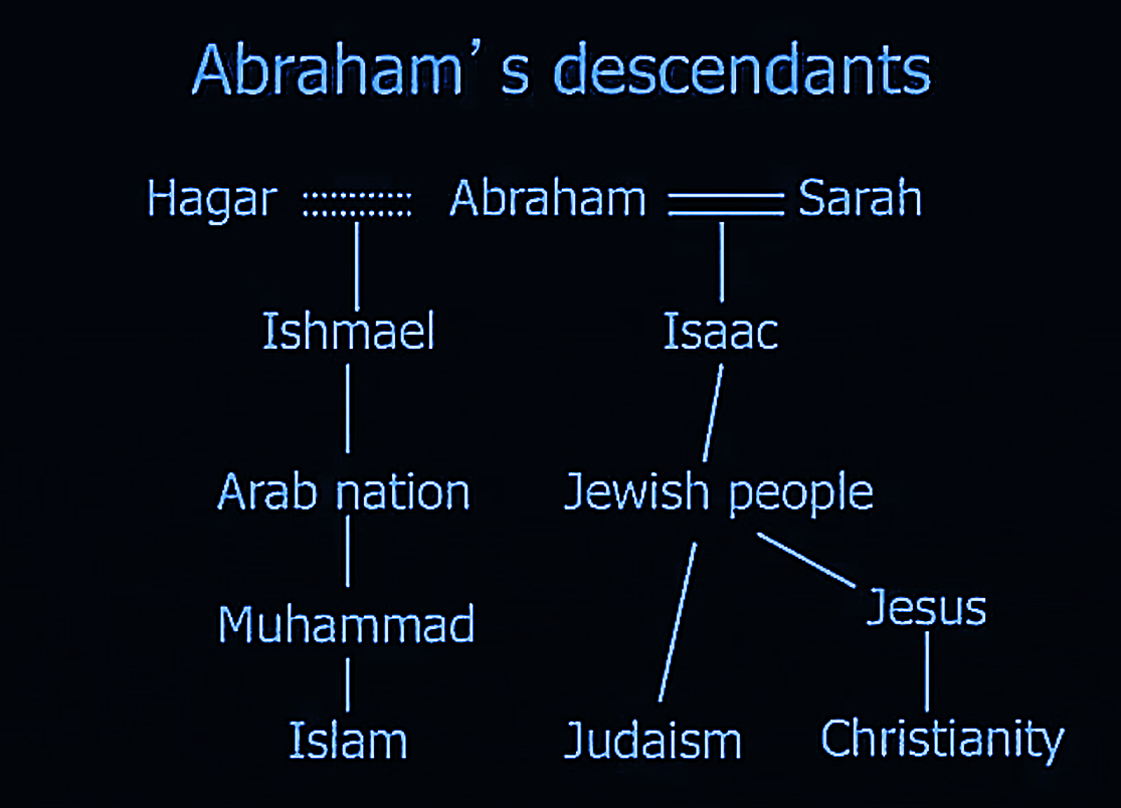
It helps to understand what’s happening in the Middle East by examining where this ongoing conflict started, as revealed in Scripture.
Abram, who was soon renamed Abraham, found favor with the LORD and God viewed him as a friend (Genesis 12:1-7; James 2:23). He was promised that his descendants would be “a great nation” “as numerous as the stars in the sky and as the sand on the seashore” (Genesis 22:17).
Abraham’s wife was Sarai, renamed Sarah, and she began to doubt Gods promise of a son because she was getting on in years, about 75 years-old. So, she suggested that Abraham sleep with her much younger Egyptian maidservant, Hagar. The lass must’ve been attractive because Abraham didn’t put up much of a fight and so Hagar became pregnant with Abraham’s first born, Ishmael (Genesis 16). Fourteen years later, Sarah birthed Abraham’s second son, Isaac, at the age of 90 when Abraham was 100 (Genesis 21:5). People lived longer back then, for anyone who’s wondering.
The Fruit of Ishmael and Isaac
So, Ishmael sprang from Hagar and Isaac came from Sarah. Ishmael was born against the will of God and so, from the beginning, Ishmael’s descendants have been hostile toward Issac’s descendants. Notice what the Angel of the LORD prophesied to Hagar about her son:
11The angel of the Lord also said to her:
“You are now pregnant
and you will give birth to a son.
You shall name him Ishmael,
for the Lord has heard of your misery.
12He will be a wild donkey of a man;
his hand will be against everyone
and everyone’s hand against him,
and he will live in hostility
toward all his brothers.”
Genesis 16:11-12
- From Ishmael came the Arab Nations and Mohammed, who wrote the Islamic Quran 2200 years after the time of Ishmael. The Quran instructs followers of Islam that Jews & Christians and those of any other faith are infidels and, if they refuse to convert to the Muslim faith, must be eradicated.
- From Isaac came the physical nation of Israel, as well as Judaism, and — eventually — Jesus Christ as a blood sacrifice for humanity’s sins (1 Peter 2:24), which gave birth to Christianity and the spiritual nation of the Church, whose genuine members are all “children of Abraham” (Galatians 3:7).
You can probably see how the Middle East has been labeled “the cradle of civilization” or “the fertile crescent.” Abraham originated from the southeastern end of this crescent, in Ur of the Chaldeans, which is roughly 150 miles northwest of the Persian Gulf.
Ishmael’s descendants don’t believe that Jews and Christians have a right to live if they reject embracing Islam. That’s why Iran — like the head of an octopus — directs the tentacles of Hamas, Hezbola, ISIS and other Islamic terrorist organizations to chant “Death to Israel” or “Death to America” and murder innocent people, such as the Hamas-led attack on Israel on October 7, 2023.
Their religious war, which they call jihad, has been going on since the time of Ishmael and will still be happening when Christ’s Second Coming takes place and ends the violence for His peaceful Millennial Reign on Earth, which is the precursor to the eternal age of the New Heavens and New Earth (2 Peter 3:13).
LIEberals Side With the Terrorists While Conservatives Side With Israel
I live in America and this country has been greatly blessed as it has been a defender of Israel and the Hebrews. Remember what the LORD prophesied to Abraham:
2“I will make you into a great nation,
and I will bless you;
I will make your name great,
and you will be a blessing.
3I will bless those who bless you,
and whoever curses you I will curse;
and all peoples on earth
will be blessed through you.”
Genesis 12:2-3
You may have noticed lately that the youth of America & other Western Nations have been supporting the Islamic terrorists and protesting on behalf of them. Leftist academics have taken advantage of their naïveté and indoctrinated them so that they don’t even understand the blind folly of their position. With satanic Leftists in positions of authority and influence in politics, the lamestream media, academia and entertainment, America is only a generation away from turning its back on Israel, unless we repent.
Thankfully, with the 2024 election, the political situation in America is currently being purged of the entrenched LIEberals, along with the collapse of the mainstream media — which is an auxiliary of the Demonic-rat Party, satan’s favorite political party in light of their glaringly bad fruit (Matthew 7:15-23). America has obviously been granted a reprieve by the Sovereign LORD. Pray for the American Church to be wise and not allow satan’s children to take over our political system again. Also pray for our academia to be purged of LIEberal idiotology to save our youth from the corresponding satanic brainwashing. This will of course have a positive impact globally.
Please understand that this article is speaking in generalities about Israel and the Hebrews. They are obviously not good in the absolute sense; nor are all Arabic peoples savage murderers. Only the LORD is good in the absolute sense (Mark 10:18).
Related Topics:
HEBREWS / ISRAELITES / JEWS — Why Did God Choose Them?
Are Gentile Believers SPIRITUAL JEWS?
Was Jesus White, Black or Yellow When He Was on Earth?
Islam and Christianity: A Side-by-Side Comparison
What Are THE BASICS of Christianity?
Did PAUL’S MESSAGE Contradict Jesus & James’ Gospel?

Here’s the argument in question:
The book of James declares works, the keeping of the commandments, as part of the process of justification. From James’ point of view, salvation is by faith plus works. This contradicts Paul’s salvation by grace through faith and not of works.
Actually, there is no contradiction.
Let me offer plain evidence from the Holy Scriptures…
Genuine Faith Naturally Produces Good Works
Consider what Paul went on to say in Ephesians 2:
8For it is by grace you have been saved, through faith—and this is not from yourselves, it is the gift of God— 9not by works, so that no one can boast. 10For we are God’s handiwork, created in Christ Jesus to do good works, which God prepared in advance for us to do.
Ephesians 2:8-10
Also notice what Paul prayed for regarding Gentile believers (not to mention the smattering of Hebraic believers in their midst):
9For this reason, since the day we heard about you, we have not stopped praying for you. We continually ask God to fill you with the knowledge of his will through all the wisdom and understanding that the Spirit gives, 10so that you may live a life worthy of the Lord and please him in every way: bearing fruit in every good work, growing in the knowledge of God,
Colossians 1:9-10
These verses show that genuine faith naturally produces good works and the corresponding fruit of the spirit (Galatians 5:22-23) whereas dead, useless faith does not. The latter was James’ point in his epistle:
14What good is it, my brothers and sisters, if someone claims to have faith but has no deeds? Can such faith save them? 15Suppose a brother or a sister is without clothes and daily food. 16If one of you says to them, “Go in peace; keep warm and well fed,” but does nothing about their physical needs, what good is it? 17In the same way, faith by itself, if it is not accompanied by action, is dead.
18But someone will say, “You have faith; I have deeds.”
Show me your faith without deeds, and I will show you my faith by my deeds. 19You believe that there is one God. Good! Even the demons believe that—and shudder.
20You foolish person, do you want evidence that faith without deeds is useless? 21Was not our father Abraham considered righteous for what he did when he offered his son Isaac on the altar? 22You see that his faith and his actions were working together, and his faith was made complete by what he did. 23And the scripture was fulfilled that says, “Abraham believed God, and it was credited to him as righteousness,” and he was called God’s friend. 24You see that a person is considered righteous by what they do and not by faith alone.
James 2:14-24
James is simply saying that genuine salvation faith produces the corresponding deeds and he illustrates this through the example of Abraham from Genesis 22. Bear in mind that Abraham is our “father of faith” (Romans 4:17). God made one nation through the loins of Abraham, Israel, but many nations through the faith of Abraham, which is one global spiritual nation regardless of sectarian tag, i.e. the Church of Jesus Christ (1 Peter 2:9), which consists of both believing Jews and Gentiles.
Paul and James’ statements about salvation faith and works are relevant to the saying: Don’t put the cart before the horse. In short, don’t put works before faith. You see, works do not save the believer, but genuine faith naturally produces works and the corresponding fruit of the spirit. Faith that doesn’t do this is obviously dead, useless ‘faith’ — mere mental assent.
Believers Uphold the Moral Law by Walking in the Spirit
Here’s the linking argument of those who say Paul taught a separate gospel:
Many statements in the New Testament by Christ, James and John stress the keeping of the commandments, such as John 14:15, 1 John 2:3-4 and Revelation 14:12. However, Paul taught salvation by grace through faith and not of works. He taught that “no one will be declared righteous in God’s sight by the works of the law; rather, through the law we become conscious of our sin” (Romans 3:20).
This suggests Paul did not teach believers that they are obligated to fulfill the moral Law, yet this is a lie, a false doctrine. It is true Paul emphasized that believers are not under the Mosaic Law (Galatians 5:18; Romans 6:14; Romans 7:6), but he said we are obligated to fulfill the moral Law, as observed here:
Do we, then, nullify the law by this faith? Not at all! Rather, we uphold the law.
This corresponds to what Paul openly preached to both Jews and Gentiles:
I have declared to both Jews and Greeks that they must turn to God in repentance and have faith in our Lord Jesus.
“First to those in Damascus, then to those in Jerusalem and in all Judea, and then to the Gentiles, I preached that they should repent and turn to God [in faith] and demonstrate their repentance by their deeds.”
Acts 26:20
True faith involves repentance; that is, changing one’s mind accordingly, which naturally has a positive effect on one’s actions and lifestyle. Repentance and faith are two sides of the same coin and this explains why they’re the first two doctrines of the six basic doctrines of biblical Christianity (Hebrews 6:1-2). Christ taught the same thing in Mark 1:15.
But how do believers “uphold the law”? Here’s how:
in order that the righteous requirement of the law might be fully met in us, who do not live according to the flesh but according to the Spirit.
The “righteous requirements of the law” refers to the moral Law. Believers are responsible to fulfill the moral Law, but this cannot be accomplished by the flesh, as sufficiently proven in the Old Testament; it can only be done by living according to the spirit. This means to live out of your reborn spirit that was “created to be like God in true righteousness and holiness” (Ephesians 4:22-24). Thus Paul taught: “So I say, walk by the spirit, and you will not gratify the desires of the flesh” (Galatians 5:16). The primary fruit of the spirit is love (Galatians 5:22-23; Colossians 3:14).
Speaking of which…
Understanding the Law of Christ, aka the Law of Love
Paul stressed how New Covenant believers are not under the Mosaic law, but under the law of Christ (1 Corinthians 9:19-21 & Galatians 6:2). This is the law of love, which the Lord said had three applications in Matthew 22:37-40:
- LOVE GOD
- LOVE PEOPLE
- As you LOVE YOURSELF
Paul explained this law as such: “whoever loves others has fulfilled the Law” (Romans 13:8), which includes tough love when appropriate (Proverbs 27:5). This is how we “Keep God’s commands,” as the apostle plainly taught (1 Corinthians 7:19). Meanwhile James referred to this law of love—the law of Christ—as “the royal law” in Scripture (James 2:8).
All of this plainly shows that Paul advocated fulfilling the moral commandments of Old Testament Law. He simply taught the proper, effective New Covenant way of doing it.
“Wrongdoers Will Not Inherit the Kingdom of God”
For further proof that Paul didn’t support some vague faith that is nothing more than mental assent and otherwise useless, notice what he plainly taught the believers at Corinth:
7The very fact that you have lawsuits among you means you have been completely defeated already. Why not rather be wronged? Why not rather be cheated? 8Instead, you yourselves cheat and do wrong, and you do this to your brothers and sisters. 9Or do you not know that wrongdoers will not inherit the kingdom of God? Do not be deceived: Neither the sexually immoral nor idolaters nor adulterers nor men who have sex with men 10nor thieves nor the greedy nor drunkards nor slanderers nor swindlers will inherit the kingdom of God. 11And that is what some of you were. But you were washed, you were sanctified, you were justified in the name of the Lord Jesus Christ and by the Spirit of our God.
1 Corinthians 6:7-11
Paul was talking to believers here and says that those who impenitently transgress the moral Law with no concern of penitence—that is, as a lifestyle—will not inherit the kingdom of God, which means they can kiss eternal salvation goodbye. He even adds “Do not be deceived”!
All believers miss it now then on their earthly journey of sanctification (1 John 1:8), but that’s different from living in sin as a lifestyle with no care of penitence. It’s necessary for every believer to “keep with repentance” (Matthew 3:8 & Luke 3:8), which enables the LORD to regularly “forgive us our sins and purify us from all unrighteousness” (1 John 1:9).
The Reasoning Behind this False Doctrine
I’m trying to grasp what the people who make such arguments (in red above) are trying to say. Are they saying that Gentile believers should only take heed to Paul’s epistles and skip out on the rest of the New Testament, at least as far as practice goes? Completely ignore what Christ, James and John said, not to mention Peter? Even if this were true, it’s proven above that Paul clearly taught believers to uphold the “righteous requirements of the law” by walking according to the spirit and not the flesh. He plainly stressed “whoever loves others has fulfilled the Law.” Obviously Paul was very concerned about believers fulfilling the moral commandments of the Mosaic Law but, again, he taught the effective way of doing it, the superior New Covenant way, which is, walking in the spirit.
The likely reason for this curious doctrine is that these people have loved ones who only mentally assent to faith in Christ, but are otherwise walking in the flesh as a day-to-day lifestyle. Another possibility is that they themselves are stubbornly living in the flesh (at least in regards to a pet sin) with no concern of penitence. I’m just guessing.
Proof That Paul Didn’t Preach a Separate Gospel
Whatever the case, the idea that Paul preached a different gospel from the one Christ, James, Peter and John preached is a grossly false doctrine. It’s only true that Paul acclimated the message in order to reach the Gentiles whereas James, Peter and John concentrated on reaching Hebrews. Observe:
…they [Church leaders in Jerusalem] recognized that I had been entrusted with the task of preaching the gospel to the uncircumcised [Gentiles] just as Peter had been to the circumcised [Hebrews]. 8 For God, who was at work in Peter as an apostle to the circumcised, was also at work in me as an apostle to the Gentiles. 9 James, Cephas and John, those esteemed as pillars, gave me and Barnabas the right hand of fellowship when they recognized the grace given to me. They agreed that we should go to the Gentiles, and they to the circumcised.
Galatians 2:7-9
Notice that nothing is said about Paul preaching a separate gospel; he merely adjusted the same message of redemption through Christ in order to reach the Gentiles.
There was some crossover, of course. For instance, the Jerusalem church had a number of Gentile congregants while Gentile assemblies, like Antioch, had a smattering of Jewish believers (Acts 11:19-26; Galatians 2:13). In other words, it’s not like James, Peter and John only ministered to Jews; or that Paul only ministered to Gentiles. In Paul’s own words: “I have declared to both Jews and Greeks [Gentiles] that they must turn to God in repentance and have faith in our Lord Jesus.” (Acts 20:21).
Similarly, notice what Paul himself says in this passage:
Though I am free and belong to no one, I have made myself a slave to everyone, to win as many as possible. To the Jews I became like a Jew, to win the Jews. To those under the law I became like one under the law (though I myself am not under the law), so as to win those under the law. To those not having the law I became like one not having the law (though I am not free from God’s law but am under Christ’s law), so as to win those not having the law. To the weak I became weak, to win the weak. I have become all things to all people so that by all possible means I might save some. I do all this for the sake of the gospel, that I may share in its blessings.
1 Corinthians 9:19-23
Paul ministered to both Jews and Gentiles the same gospel. He merely adjusted the message accordingly.
‘So, Why Does Paul Refer to the Gospel of Christ as “My Gospel”?’
Let’s look at the three occasions in question:
- Romans 2:16: “This will take place on the day when God judges people’s secrets through Jesus Christ, as my gospel”
- Romans 16:25: “Now to him who is able to establish you in accordance with my gospel, the message I proclaim about Jesus Christ, in keeping with the revelation of the mystery hidden for long ages past,”
- 2 Timothy 2:8: “Remember Jesus Christ, raised from the dead, descended from David. This is my gospel,”
‘Gospel’ literally means “good message” or “good news,” and Paul was specifically referring to the good news of redemption through Christ. Peter preached the same message (Acts 10:34-48; 15:11; 1 Peter 1:18-19); and so did James and John. Consider what Peter said in reference to the leaders of the Jerusalem church:
“…We believe it is through the grace of our Lord Jesus that we [Hebrews] are saved, just as they are [Gentiles].”
You see? Both believing Hebrews and believing Gentiles are saved through the same grace of our Lord!
Paul called this message his gospel simply because he was a member of the body of Christ, the worldwide Church. The gospel of Christ was Paul’s message (gospel) just like it was James’ gospel and John’s gospel. It’s also my message and the message of every genuine member of the body of Christ.
Lastly, consider this…
If Paul preached a different gospel to the Gentiles, as opposed to that of Christ, James, Peter and John, he would’ve had to say something somewhere in his epistles to the effect of:
What I am teaching is to the Gentile believers only, not the Jewish believers in your midst. As a Hebrew of Hebrews, I and the Jewish believers amongst you follow the gospel of Jesus, James, Peter and John, but you Gentiles follow a different message, the gospel of Paul, which—again—I myself can’t follow because I am a Hebrew.
Do you see how absurd it gets if we accept this false doctrine?
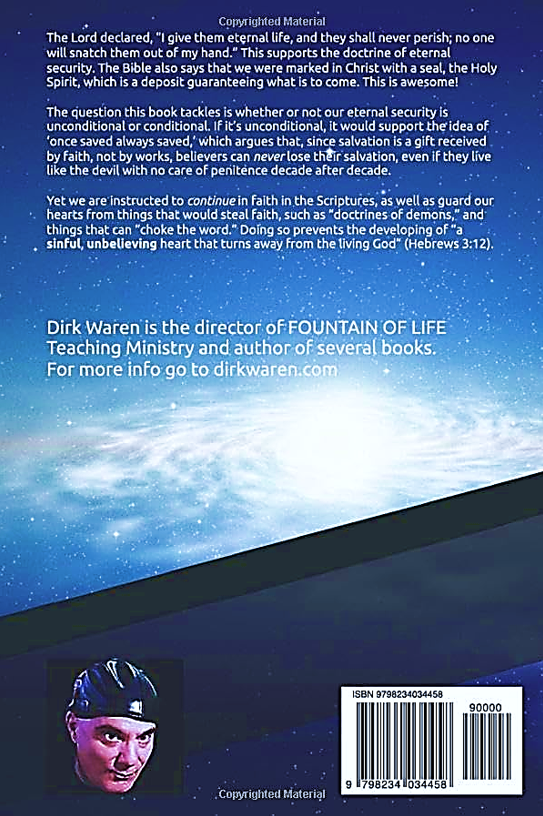
This article is also available in book form as part of chapter 7 of…

Related Topics:
Are Believers Only to Receive From THE EPISTLES OF PAUL?
Does Christ’s GREAT COMMISSION Only Apply to Jewish Believers?
REPENTANCE Is the First Doctrine of Christianity (for Jews AND Gentiles)
Law (Torah) — New Testament Believers are NOT Under the Law
The SALVATION EQUATION: Faith = Salvation (+ Fruit + Works)
What Makes a Believer a “LEGITIMATE CHRISTIAN”?
What Are the APOCRYPHA and PSEUDEPIGRAPHA?

The books contained in the apocrypha (ah-POK-rah-fah) & pseudepigrapha (soo-doh-PIG-rah-fah) are noncanonical writings from the intertestamental period, or “400 silent years,” between the Old and New Testaments; and up to 300-400 AD. ‘Apocrypha’ means “hidden away” while ‘pseudepigrapha’ means “false writings,” mostly because the claimed author of the text is not the actual author. Some of what these books say is true, but some is questionable or false.
It’s similar to the gazillion of Christian books available today, depending on the author and their sectarian bias. Don’t get me wrong, there are many worthwhile Christian books out there, but the best ones are those that stick closely to the Scriptures and rightly-divide them (2 Timothy 2:15 & 3:16-17). In light of this, if you read any books from the apocrypha & pseudepigrapha, it’s necessary to “test them all; hold on to what is good,” as 1 Thessalonians 5:21 puts it. In other words, eat the meat and spit out the bones since they’re not Holy Scripture.
Speaking of which, stick with God’s Word in regard to Christian doctrine (belief) and practice, which explains Paul’s rule “Do not go beyond what is written” (1 Corinthians 4:6).
Related Topics:
Hermeneutics — Proper Bible Interpretation
Who Wrote the New Testament Books? Who Authorized Them as Scripture Canon?
What Does “Do Not Go Beyond What is Written” Mean in 1 Corinthians 4:6?
BEREAN SPIRIT — What Is It? How Do You Cultivate It?
Did Israel Have a QUEEN in Biblical Times?
Yes, in Judah during the time of the divided kingdom, as observed here:
1When Athaliah the mother of Ahaziah saw that her son was dead, she proceeded to destroy the whole royal family. 2But Jehosheba, the daughter of King Jehoram and sister of Ahaziah, took Joash son of Ahaziah and stole him away from among the royal princes, who were about to be murdered. She put him and his nurse in a bedroom to hide him from Athaliah; so he was not killed. 3He remained hidden with his nurse at the temple of the Lord for six years while Athaliah ruled the land.
2 Kings 11:1-3
Athaliah was the wife of evil king Jehoram in Judah, who reigned for eight years in the mid-9th century BC. She was the mother of the next king of Judah, Ahaziah, who only reigned one year, which is when Athaliah usurped power, as detailed above. She is said to be the daughter of wicked king Ahab of Israel and the granddaughter of king Omri (2 Kings 8:18), but some theologians suggest that she was the daughter of king Omri (1 Kings 16:21-28) and thus the sister of Ahab. According to this theory, Ahab is cited as Athaliah’s father because he raised her and therefore functioned as her father.
Whatever the case, Athaliah sprang from the idolatrous Northern Kingdom and brought Baal worship to the court of Judah after the righteous reign of Jehoshaphat, Jehoram’s father (2 Chronicles 17:1-21:3). While she was the reigning queen of Judah for six years, it obviously wasn’t sanctioned by the LORD.
The aunt of the male heir to the throne, Jehosheba, was able to hide Joash for the six years that Athaliah reigned when he was but a toddler and kid. The righteous high priest, Jehoiada — Jehosheba’s husband — was able to enlist the military in a coup that toppled Athaliah and made Joash king at the age of 7 whereupon Jehoiada acted as regent until the boy reached adulthood (2 Kings 11:4-16). The military cooperated with the coup likely because Athaliah was not from Judah, but rather the Northern Kingdom, the offspring of wicked royalty. A secondary reason could be that they preferred a male on the throne since it was a patriarchal culture.
Despite being a patriarchal culture, God chose Deborah to lead Israel during the time of the judges for four decades in which she led the nation spiritually, legally, politically and militarily (Judges 2:16 & Judges 4:4-9). Why did the LORD choose Deborah? Simply because she was the most qualified person for the job, male or female.
Related Topics:
Women of the Bible / Women in Ministry
WOMEN — Were They Considered Just Property in Bible Times?
Bible—Is it Full of Contradictions? Does it Promote Slavery, Tyranny and Discrimination?
HEBREWS / ISRAELITES / JEWS — Why Did God Choose Them?
Are There Different KINDS OF GRACE?

This verse is relevant to the question:
Each of you should use whatever gift you have received to serve others, as faithful stewards of God’s grace in its various forms.
The Greek word for ‘grace’ is charis (KHAR-ees), which means “grace, favor, kindness.” There are different kinds of charis depending on the context. Peter speaks of “God’s grace in its various forms,” which shows that there’s not just one form of God’s grace/favor/kindness. For instance, there’s salvation grace, which is the grace of God’s eternal salvation through the message of Christ (John 3:16 & 3:36).
Peter’s instructions bring to mind this passage by Paul:
6We have different gifts, according to the grace given to each of us. If your gift is prophesying, then prophesy in accordance with your faith; 7if it is serving, then serve; if it is teaching, then teach; 8if it is to encourage, then give encouragement; if it is giving, then give generously; if it is to lead, do it diligently; if it is to show mercy, do it cheerfully.
Romans 12:6-8
Here’s a modern application: God blessed me with the gift of teaching, so I use this gift to serve others as a faithful steward of God’s grace (kindness to people) in its various forms. In this case, God’s grace manifests as the knowledge/understanding/wisdom that comes from the God-breathed Word of Truth (2 Timothy 2:15 & 3:16).
What are your spiritual gifts? Whatever they are, use them to faithfully spread God’s grace to the Body of Christ, as well as to those who are lost & dying in this fallen world.
We “are not our own” because we were “bought at a price” (1 Corinthians 6:19-20), which explains why we’re instructed to be “living sacrifices” every day (Romans 12:1-2). Our bodies, our thoughts, our material possessions, our earnings, our gifts or talents — they’re all God’s already. This frees us up to happily “grow in the grace of giving” by serving others with whatever good things we’ve been graced to possess (2 Corinthians 8:7).
Speaking of growing in the grace of giving, this statement suggests that God’s favor and kindness gives the person the ability or desire to do something or serve in one way or another, which can be observed in this passage, also by Paul:
9For I am the least of the apostles and do not even deserve to be called an apostle, because I persecuted the church of God. 10But by the grace of God I am what I am, and his grace to me was not without effect. No, I worked harder than all of them—yet not I, but the grace of God that was with me.
1 Corinthians 5:9-10
Paul worked harder than the other apostles he speaks of, yet humbly adds that it wasn’t him that did it, but rather the grace of God that was with him. In other words, God’s grace will give you the oomph to do whatever it is you’re called to do in any particular season. For instance, a brother told me he was called to serve at a fellowship that was well over an hour’s drive from his house. He said he faithfully served there as long as he had the grace to do so. When he no longer had that grace, it was time to move on.
Let’s close by considering this curious verse that seems to speak of more than one form of grace (from three different translations):
Out of His fullness we have all received grace in place of grace already given.
John 1:16 (NIV)
For from His fullness we have all received, grace upon grace.
John 1:16 (ESV)
And of His fullness we have all received, and grace for grace.
John 1:16 (NKJV)
John was simply saying that believers receive “blessing upon blessing” or “kindness upon kindness” from the LORD. The original NIV phrases it like so: “From the fullness of His grace we have all received one blessing after another.”
Related Topics:
GRACE — What Is God’s Grace? How Do You Receive It? How Do You Grow In It?
The Fivefold Ministry Gifts — Apostle, Prophet, Evangelist, Pastor and Teacher
What Are THE BASICS of Christianity?
CAIN’S WIFE and Issues of INCEST

Cain was the first child of Adam & Eve, the primordial parents of the human race (Genesis 4:1). After Cain reached adulthood, Scripture says:
Cain made love to his wife, and she became pregnant and gave birth to Enoch. Cain was then building a city, and he named it after his son Enoch.
The Bible doesn’t say if Cain’s wife was his sister but — really — who else could it be? (The Scriptures do say that Adam & Eve had daughters in Genesis 5:4). This was in the pre-law stages of humanity when the gene pool was near perfect. If Cain had no other recourse but to marry his sister in order to fulfill God’s mandate of filling the Earth and subduing it (Genesis 1:28), then it was permissible in this context.
In these early stages of of humanity there was little or no risk of genetic abnormalities, but as the population grew the genetic code became corrupt due to sin and so God forbid sexual relations with close relatives (Leviticus 18:4-24, 20:11–21; Deuteronomy 27:20-23). Abram (Abraham) married his half-sister, Sarai (Sarah), before this prohibition (Genesis 20:12).
I should add that cousins are not included in the lists of prohibited sexual/marital relationships.
While believers are not under the Mosaic law, and the ceremonial & dietary laws have been done away with (Romans 7:6; Colossians 2:16-17), the moral laws are still relevant, which includes this ban on incestuous relations. We just don’t fulfill these moral laws by being under the law, but rather by walking in the spirit (Romans 8:4).
Related Topics:
“LAW is Made NOT for the Righteous”
Law (Torah) — New Testament Believers are NOT Under the Law
What Is “the MOUNTAIN of the LORD’s House” in Isaiah 2:2?

Let’s read the full passage:
1This is what Isaiah son of Amoz saw concerning Judah and Jerusalem:
2In the last days
the mountain of the Lord’s temple will be established
as the highest of the mountains;
it will be exalted above the hills,
and all nations will stream to it.
3Many peoples will come and say,
“Come, let us go up to the mountain of the Lord,
to the temple of the God of Jacob.
He will teach us his ways,
so that we may walk in his paths.”
The law will go out from Zion,
the word of the Lord from Jerusalem.
4He will judge between the nations
and will settle disputes for many peoples.
They will beat their swords into plowshares
and their spears into pruning hooks.
Nation will not take up sword against nation,
nor will they train for war anymore.
Isaiah 2:1-4
“The mountain of the LORD’s temple” is phrased “The mountain of the LORD’s house” in the KJV and NKJV. It refers to Mount Zion, the location of the Temple in Jerusalem, which is an expression used two other times in Scripture (2 Chronicles 33:15 & Micah 4:1).
The context of this passage is the millennial reign of Christ (Revelation 20:1-10). It gives us a prophetic picture of Zion (Jerusalem) in the future millennial kingdom in which all people will recognize Jerusalem as the capitol of the Earth. There will be worldwide peace during this age, until the devil is released from the abyss at the end of the Millennium and deceives the nations into a foolish rebellion (Revelation 20:7-9). They ultimately surround Jerusalem but are easily defeated (verse 9). Light overcomes darkness.
As you can see, the verse does not support the “seven mountain mandate” position that’s ‘hip’ right now in some circles, e.g. the New Apostolic Reformation, or the corresponding dominion (“kingdom now”) theology. Certainly, the LORD wants fruit-bearing believers involved as witnesses in the seven areas of influence — family, education, business, religion, media, arts/entertainment and government/military — but Isaiah 2:2 applies to the Millennium. Remember, “Context is King.”
Citing this verse to support the “seven mountain mandate” is laughable; the same goes with Deuteronomy 7:1. The fact that these New Apostolic Reformation people cite such texts as key scriptural supports for their doctrines shows how questionable they are (the doctrines).
Related Topics:
Hermeneutics — Proper Bible Interpretation
AMILLENNIALISM — What Is It? What’s Wrong With It?