
If Believers Have an ANOINTING TO TEACH THEMSELVES, Why Have Teachers?

This question arises from something John instructed in his first epistle to the believers from the circuit of assemblies he oversaw near Ephesus in what is today western Turkey:
As for you, the anointing you received from him remains in you, and you do not need anyone to teach you. But as his anointing teaches you about all things and as that anointing is real, not counterfeit — just as it has taught you, remain in him.
The “anointing” that John refers to here was previously noted in verse 20. It’s a result of the indwelling Holy Spirit, which all spiritually-regenerated believers have within them (Titus 3:5 & 1 Corinthians 3:16). The Holy Spirit is our “Advocate,” also referred to in some translations as “Helper” or “Comforter” (John 14:26), who is “the Spirit of truth” that guides us “into all truth” (John 16:13). This “Helper” helps believers identify false teachers who are “liars” and “antichrists” who “deny that Jesus is the Christ,” the Anointed One (verses 18 & 22).
While what John says in verse 27 might seem like he was saying believers don’t need genuine human teachers, this can be rejected on the grounds of the hermeneutical guidelines: Scripture interprets Scripture and Context is King:
- In regards to context, John is teaching the believers with this very epistle, which shows that he expects them to learn & receive from genuine teachers of the Holy Scriptures.
- Also concerning context, he’s warning the believers of “liars” who “deny that Jesus is the Christ.” Obviously believers shouldn’t receive from such false teachers. Instead, they can rely on the anointing of the Holy Spirit they possess, which “teaches [believers] about all things.”
- As far as Scripture interpreting Scripture goes, New Testament Scripture elsewhere emphasizes the importance of skilled fivefold ministers (Ephesians 4:11-13) who are anointed to teach & preach so that believers will be fully equipped to walk in newness of life and serve the Lord effectively.
To build an unshakable foundation for healthy spiritual growth, believers should regularly feed from God’s Word (Matthew 4:4) and change their thinking accordingly (which is what ‘repent‘ means). This is “renewing the mind” (Romans 12:2).
I encourage maintaining a balance of 1. feeding from the Scriptures in your devotional time with the help of your personal Teacher, the Holy Spirit (1 John 2:27), with 2. receiving from quality fivefold ministers (Ephesians 4:11-13). This is what I do. Just keep in mind that no genuine minister of God is perfect and they all have their areas of expertise as well as their areas of weakness; this includes topics of Scripture and various ministry skills. Remember, those who transfer knowledge are also able to transfer error. So eat the meat and spit out the bones when receiving from others or, as the Bible puts it, “test everything; hold fast to what is good” (1 Thessalonians 5:21).
Related Topics:
BEREAN SPIRIT — What Is It? How Do You Cultivate It?
Hermeneutics—Proper Bible Interpretation
Who Wrote the New Testament Books? Who Authorized them as Scripture Canon?
Trinity — Father/Son/Holy Spirit — Yes or No?
Should You Get the Surgery or BELIEVE FOR HEALING?

Whether a person should seek physicians for a healing or go to the LORD is an ancient conundrum, as King Asa dealt with the issue 2900 years ago (2 Chronicles 16:12). So, if you’re facing this dilemma, it’s nothing new.
The answer is entirely dependent upon the individual. Healing is a core benefit of the gospel of Christ (1 Peter 2:24) and so you can believe in faith and receive your healing directly from the Lord, as observed in the Gospels (Mark 5:34 & Mark 10:52). I’ve done this on several occasions, which you can read about here (also see the corresponding video). That article & video show that combining your faith with perseverance is necessary to receive and maintain your healing (Hebrews 6:12).
‘But Why Not Just Get the Surgery?’
This is certainly an option and you can do this if you so choose. It’s entirely up to the individual.
I suggest healthy living and building up your faith to receive healing when necessary; only turning to medical professionals and drugs (aka medicine) when absolutely necessary. Of course I recommend regular checkups with an honest, trustworthy doctor, which will provide necessary info in regards to what to believe for when you pray and so on.
The Bible says that the woman who was subject to bleeding for twelve years “had suffered a great deal under the care of many doctors and had spent all she had, yet instead of getting better she grew worse” (Mark 5:26). At that point she was fed up and desperate because she had blown many years of her time and “spent all she had”; so she went directly to the Lord for healing and received it because she believed (Mark 5:34). Obviously if she didn’t believe, she wouldn’t have received.
It is true that people with little faith or even no faith can receive a powerful healing, but they have to wait for a gift of the Spirit for healing to manifest since gifts of the Spirit function as the Spirit wills and can only operate through a vessel that boldly believes and ministers accordingly, like the Messiah & the apostles did in Scripture. A good example is Christ’s amazing healing of the high priest’s servant with a cutoff ear (Luke 22:50-51); another is Paul’s healing of Publius’ father of fever and dysentery (Acts 28:7-8). But these kinds of healings are hard to come by in this era of gross unbelief. In other words, finding an assembly/ministry where gifts of the Spirit regularly manifest is hard to come by, but they’re out there, if you search. It’s for this very reason that I encourage simply learning to receive healings directly from the Lord. Interestingly, the Pool of Béthesda was a type of the gifts of the Spirit and, specifically, the gift of healing.
Getting back to the woman who suffered feminine bleeding for twelve years while under the care of physicians, this explains why I don’t use doctors unless absolutely necessary: Why blow time & money when you can get your healing directly from the Lord? Again, healing is a core benefit of the gospel (Isaiah 53:4-5) and so I’m going to take advantage of it, my wife too. We’d be fools not to. At the same time, we value doctors for cases where they’re needed and effective. For instance, I fell off a cliff when I was a teen, breaking my thigh bone and cracking my pelvis. I sure am thankful for my doctor & the medical staff that treated me! So please don’t think that this article is anti-doctor or anti-healthcare. It’s not.
Of course, doctors and medical technology have improved exponentially in the 2000 years since the account of the woman with the issue of blood. This is absolutely true. Again, if you want to utilize the services of doctors & medical technology to (hopefully) cure whatever ails you then please do so. But it’s going to take time & money (traveling to medical facilities, endless waiting in rooms, etc.), plus — keeping it real — there are legitimate concerns even in our day and age of medical expertise and advances:
- The doctor can botch the surgery. For instance, my mother went ‘under the knife’ for foot surgery in 1985 and the doctor bungled the job. For the last twenty years of her life she had a malformed foot with an unresponsive big toe. More recently, a popular 18 year-old in my local area, a healthy star athlete, underwent minor surgery and never woke up from it. His funeral was attended by many of his fellow students and it was heartbreaking. In another infamous case, a man underwent surgery, but the doctor misidentified the patient and unnecessarily amputated his leg. Imagine waking up from the anesthesia with a missing leg! Sure, these are the exceptions and not the rule, but they’re still very real possibilities when choosing surgery. Ask my Mother.
- Doctors tend to push unnecessary surgeries and medications (drugs) because healthcare — when it comes down to it — is a business, which needs patients to exist. For instance, doctors are often linked to Big Pharma and so they rashly prescribe some medication (drug) for the patient’s ailment, which of course costs time & money. Then there’s often a side-effect to the medication (drug) and you have to take another drug to treat it. On-and-on it goes. Some people are on myriad “medications.” It’s absurd. Personally, I refuse to be a guinea pig to support the extravagant lifestyles of medical professionals & the people of the institutions that back them, like Big Pharma. But if you or anyone else wants to spend time & money on such procedures or “medications,” that’s your choice. It’s not my business.
- You’re more apt to get a staph infection — MRSA — at healthcare facilities, such as hospitals. A friend of mine visited a hospital for something routine several years ago and got MRSA. Not only did he almost die, he lost sight in one of his eyes, and ever since has to visit the hospital a couple of times a week, every week, for dialysis. (He finally did pass away six weeks after the original publishing of this article at the premature age of 59).
For all of these reasons, it’s best to focus on healthy living/eating and learn to receive any healings you might need directly from the LORD. But to do this you have to build up your faith, otherwise you won’t be able to believe to receive.
Building Up Your Faith
How do you build up your faith? By adding knowledge — the Word of God — to your current level of faith on the topic/issue in question (2 Peter 1:5-7), in this case faith for healing (Romans 10:17). For example, meditating on verses like Mark 11:24, John 14:14, John 16:24, Mark 1:40-41 & Matthew 8:1-3 will certainly beef up your faith in this area.
I encourage you to master the passages & points in this video, which includes examples of two healings I received by faith:
Feed on the relevant healing passages cited in the video (Matthew 4:4), plus receive from other anointed ministries who teach/preach faith & healing, as Christ’s ministry did (Matthew 4:23). Stay away from ministries that preach unbelief/doubt and, in essence, advocate sickness/disease. Then start walking in faith to receive healing when you need it for relatively minor things before tackling bigger issues. For instance, if you don’t have the faith to receive healing for a skin rash or back pain, you’re probably not going to have the faith to tackle cancer. Before David had the faith to face Goliath, he built up his faith taking on the lion and the bear (1 Samuel 17:34-37). Like anything else, there are stepping stones to walking in victorious faith.
I should add, just because someone believes in receiving healings by faith and walks in it as much as possible, it doesn’t necessarily mean that s/he has the faith to receive healing for everything on every occasion. For example, a minister with a powerful healing ministry needed some serious dental work. This guy had led formidable healing crusades, but he discerned the LORD instructing him to get the work done because the Spirit said he didn’t have the faith to receive on this occasion. Perhaps it was a case where it would’ve taken time to build-up his faith to receive in the area in question and it needed immediate attention. I don’t know. But we need to be honest with ourselves and God concerning what we have the faith to receive for and what we don’t at any given time. In any case, the minister got the dental work done. There’s no condemnation here for people who decide to go this route, whatever the reason. It’s their decision and their right.
‘But Is It God’s Will That I Be Healed?’
Christ was Immanuel — “God is with us (in the flesh)” (Matthew 1:23) — and so what the Messiah did during his ministry on Earth reveals God’s will to us. For instance, people needing serious healings would approach Jesus and ask “if you are willing.” The Lord never responded “No, it is not my will”; rather he plainly said it was his will (Mark 1:40-41 & Matthew 8:1-3).
I repeat, healing is part of the gospel of Christ (1 Peter 2:24), which is one of several reasons why it’s “good news.” The Bible promises a minimum of 70-80 years of life (Psalm 90:10) so, if you’re under that age, you can claim this promise by faith (2 Corinthians 1:20). Even if you’re over 80 you can believe and receive in faith in your awesome covenant with God simply based on your righteous desire (Mark 11:24, John 14:14, John 16:24).
Don’t Wait till the Last Minute to Build Up Your Faith on Healing
When people are in their 20s-30s they’re in generally good health, so it doesn’t really matter if the assembly/sect they’re hooked up with emphasizes faith & healing. But in later decades it literally becomes a matter of life or death. For instance, when you’re in your 50s your body’s ‘check engine light’ usually starts coming on.
Let me share a recent example of what I’m talking about: My wife, Carol, has a healing anointing and so a woman around 50 years-old asked to meet with her for prayer because she was scheduled for surgery in a couple days. This presented a conundrum that I pointed out: Should Carol simply pray for the woman’s surgery to go well, including praying for the medical professionals who would be treating her, or should she pray that the woman receive healing, which would of course make the surgery irrelevant (assuming she received it)? Carol was led to do the latter and so the woman’s scheduled surgery would then be dependent on if she received healing by faith or not.
When they met, Carol wisely had this woman watch a teaching video on healing, which gave the scriptural basics about receiving healing by faith (this video was from a proven ministry that was anointed to minister in this area). This was necessary because, in order for the woman to receive a lasting healing, she was going to have to have faith to receive and such belief is a result of hearing the Word (Romans 10:17). At that point Carol laid hands on her and prayed, to which the woman said her pain was gone and they praised the Lord. Carol suggested that she postpone the surgery and get retested. Meanwhile the husband was curiously silent the entire time. Carol & I suspected that he’d talk his wife out of receiving healing by faith and sticking with the scheduled surgery, which is what happened. The good news is that the operation was successful. There’s nothing wrong with doing this if that’s where the person’s faith is. But God’s best is to receive healing by faith rather than go under the knife, which can be costly to your body, time and finances. But, to do this, you shouldn’t wait until the proverbial last minute (a mere couple days before a scheduled surgery) to build up your faith in this vital area. Are you following?
Of course believing for a healing and not actually having the faith to receive it can also be costly. It’s no secret that people have died doing this. That’s why responsibility rests with the individual needing the healing and no one else.
If you choose to receive healings by faith — or walk the faith life in general — you’re going to have to develop a righteously stubborn spirit in response to the lies/attacks of the Enemy, like Shadrach, Meshach and Abednego did (Daniel 3:16-18). You’re going to have to righteously hate any curses the Enemy tries to put on you to hamper (or end) your life & productivity in service of God’s kingdom.
I should add that, in cases where your child needs medical attention, please take them to a physician. Never experiment with your faith when it concerns someone else’s health needs (unless, of course, you have no other recourse in the situation, like pioneers in the Old West).
FIGHT the Good Fight of Faith!
The Bible says the believer is to fight the good fight of faith (1 Timothy 6:12). If there’s a fight to faith, then there are enemies to faith. Sickness/disease is one of those enemies.
To build up your faith and develop a spirit that ardently fights the good fight of faith, master the principles & passages covered in this article: Spiritual Warfare — Do You know What You’re Fighting For?
This article is available in book form as chapter 8 in…


- The print book is available here for only $12.50 (303 pages)
- The Kindle eBook is available here for just 99¢!
Both links allow you to “look inside” the book.
Related Topics:
When You Should ASK and When You Should SPEAK IN FAITH, aka DEMAND
Faith — What Is It? Why Is It Important? How Does It Grow?
If Healing Comes by Faith, Why Use Anointing Oil, Handkerchiefs, etc.?
When You Should Pray “IF IT BE YOUR WILL” and When You Shouldn’t
What Is CESSATIONISM and Is It Biblical?
SLAIN IN THE SPIRIT — Is It Biblical?
What Is the AGE OF ACCOUNTABILITY?

All people born into this world since Adam & Eve were born with a sinful nature (Romans 5:17), which explains why David said “Surely I was sinful at birth, sinful from the time my mother conceived me” (Psalm 51:5). The “age of accountability” addresses the age that God begins holding people accountable to their sin.
Think about it like this: Would you hold your child responsible for something they did wrong even though they weren’t mature enough to be adequately aware it was wrong? Obviously not. Similarly, the LORD does not hold children accountable to sin until they reach the age of accountability, which is implied in this passage:
14Therefore the Lord himself will give you a sign: The virgin will conceive and give birth to a son, and will call him Immanuel. 15He will be eating curds and honey when he knows enough to reject the wrong and choose the right, 16for before the boy knows enough to reject the wrong and choose the right, the land of the two kings you dread will be laid waste.
Isaiah 7:14-16
Spiritual Life / Spiritual Death and the Age of Accountability
Children are spiritually alive before the age of accountability, but eventually experience spiritual death in their adolescence, which ultimately ties into the age of accountability (although they’re not synonymous). What do I mean by “spiritually alive”? Being spiritually alive simply means one’s spirit is alive to God whereas being spiritually dead means your spirit is dead to God (Romans 8:10; 1 Corinthians 6:17). Paul notes here that he was spiritually alive at one time:
Once I was alive apart from the law; but when the commandment came, sin sprang to life and I died.
Romans 7:9
Paul obviously wasn’t referring to physical death in this verse, but rather spiritual death. Before knowledge & awareness came to him of what was right and wrong (in this case, through the moral law of the Old Testament), Paul was “alive” — meaning he was spiritually alive — but, once he became aware of what was right and wrong, his flesh “sprang to life” and lured him to willingly commit the transgression in question; and sin produces death (Romans 6:23 & 7:13). Thus he died spiritually.
Unlike Paul, non-Jews don’t have the moral law of the Old Testament, so how does this apply to them? Simple: The moral law is written within them via their God-given consciences (Romans 2:14-16). As they grow through adolescence they become increasingly aware of universal morality and inevitably choose the wrong — i.e. they sin (Romans 3:23) — and thus they die spiritually.
Have you ever run into a family where the parents are heavily involved in sin, like drugs & crime or severe sexual immorality, but their kids are bright-eyed & bushy-tailed? Regardless of the moral degeneracy of their parents, the kids have the sparkle of life in their eyes! It’s incredible. Why is this? Because they’re spiritually alive.
This reminds me of when I was 11-12 years old and the teacher I had in 6th grade. The next year I switched to junior high at a facility about five miles away. The summer in between, I got involved with alcohol, drugs and delinquency, hanging around the wrong crowd (as it is written: “Bad company corrupts good character” – 1 Corinthians 15:33). When I was 13, I ran into my former 6th grade teacher outside the school one day and I didn’t even acknowledge him. He looked at me and recognized me, but I looked totally different. I was now a lil’ drug-obsessed wannabe punk-hoodlum. It was like day and night. What happened?
I had died spiritually.
At What Age Do People Enter the Age of Accountability?
Answer: It depends. I said that I experienced spiritual death when I was 13 years-old. The age when one undergoes spiritual death is not the same as the beginning of the age of accountability, although there’s an obvious correlation between the two. Let’s just say that sometime after spiritual death the age of accountability will begin. When that technically occurs depends on the individual.
For instance, say a boy grows up in a loving Christian home that’s part of a healthy local assembly. In his teens and early adulthood he has the knowledgeable moral foundation to make wise decisions. Compare this to a boy who grows up in a grossly dysfunctional pagan family who’s been fed LIEberal misinformation all his life. He understandably makes foolish decisions because he has a faulty moral foundation. The age of accountability would obviously begin at an earlier time for the first boy compared to the latter. Christ himself plainly acknowledged how knowledge & awareness factor into personal guilt (John 9:40-41, John 15:22 & 15:24).
To complicate matters, growing up in what appears to be a healthy Christian home & church assembly, doesn’t guarantee that a youth will choose the LORD as an adult. Most of us know this. When I was young I became friends with a 16-17 year-old girl. She was a sincere Christian and a powerful witness at her school, pure and devout. Then she went off to (secular) college and some bad things went down, not to mention a couple of tragedies occurred in her family, like her parents divorcing due to the father — an impressive deacon in the fellowship — committing adultery. When she got back from college prematurely, she was hardened and wouldn’t even speak of God. It’s a sad story. (Hopefully she later reconciled with the Lord, but I don’t know what happened to her).
A Biblical Example of the LORD Holding People Accountable Based on Age
When the Israelites stubbornly rebelled against the LORD in the wilderness after they were miraculously freed from bondage in Egypt (Numbers 14:1-11), God judged that all those 20 and over would die in the desert over the course of the next 40 years, except for faithful Caleb and Joshua (Numbers 14:26-35).
Only those 19 and younger would be allowed to live and enter the Promised Land.
How is this relevant to our topic? Simple: the LORD made a stern judgment against the Israelites for their transgression, but only held those over a certain age accountable. Those under that age were not held responsible.
Of course this does not mean that God only holds people 20 and over responsible for their sins, whether today or any era in the past. Again, that would depend on the individual and his/her unique circumstances. But this at least shows us that our Creator deems the age of 20 a good demarcation line for being responsible concerning moral decisions. In short, by that generous point in time blame falls on the individual (which does not mean other people aren’t partially responsible).
Do Those Who Die Before the Age of Accountability Have Eternal Life?
The above explains why most theologians believe children go to Heaven when they die, including non-Christian children, which makes sense. However, this is different than saying that they’re assured eternal life. Let me explain.
The first thing we must establish is that God is absolutely just and fair when it comes to making eternal judgments of people:
righteousness and justice are the
foundation of His throne.
Psalm 97:2b
for He comes to judge the earth.
He will judge the world in righteousness
and the peoples with equity.
Psalm 98:9
When God makes an ultimate judgment on a person we can be certain that the divine judgment will be righteous and just. This is the LORD’s very nature. The second verse says that God will judge people with equity. This means to be completely fair, ethical and impartial.
Now let’s relate this to children or youths who die before the age of accountability. Since they physically died before they were adequately conscious of morality and the negative consequences of immorality, they will have to be exposed to some kind of simulation where God can properly verify if they would receive the gospel of reconciliation or reject it in favor of sin. Such a “simulation” would be a reproduction of life on Earth. The people who would qualify for such an enactment would include those who died as kids because they never had the chance to experience the trials & temptations of life and therefore never had the opportunity to reject their Creator for sin. After all, it wouldn’t be fair that such people would attain eternal life when, in fact, they would have rejected God & reconciliation if they had actually lived and were given the opportunity. Are you following?
For those who argue that such a simulation is incredulous, remember that God is the Almighty who can do anything. It would be nothing for our Creator to put people through such a simulation.
Also keep in mind that making a judgment regarding a person’s eternal destiny is of paramount importance. If God doesn’t have enough information to properly make that decision then the LORD will have to get it; and conducting some kind of simulation is a likely possibility.
Why am I complicating the topic with this point? Because the idea that anytime a child dies they’re guaranteed eternal life is a dubious doctrine at best. As noted above, because children are still spiritually alive they’ll go to Heaven if they die as a kid, but this is different than saying they’re assured eternal life. The false notion that kids are guaranteed salvation from everlasting destruction in the Lake of fire has motivated some mentally questionable parents to kill their kids to save them. Andrea Yates is Exhibit A.
This is a wake up call to such misguided parents.
Related Topics:
“EVIL DESIRES” — What Does the Bible Mean by This?
Universalism, Inclusivism, Restrictivism, Purgatory and the Judgment Seat of Christ
Spiritual Growth — The Four Stages
God Deals With People ACCORDING TO THE LIGHT THEY HAVE
What Are THE BASICS of Christianity?
What Is the ROMANS ROAD to Salvation?

The “Romans road” to salvation is an easy-to-remember tool for sharing the message of Christ with people. It involves a smattering of verses from the book of Romans (with maybe another optional verse added to the mix, like John 3:16).
What’s great about the Romans road is you don’t have to remember anything word-for-word. All you have to do is remember the gist of the 5-6 points and the chapter/verse citations of the passages. As long as you have a small Bible or New Testament available you don’t have to memorize the passages.
Here is the basic “Romans road” in my own wording. Feel free to word it as you see fit. I’m using the NIV, but use whatever version you think will work best (click the verse citation for several other English translations of the verse in question):
1. Establish that everyone is a sinner in God’s eyes even if they deem themselves “basically a good person.”
for all have sinned and fall short of the glory of God,
As it is written: “There is no one righteous, not even one;”
Therefore, just as sin entered the world through one man, and death through sin, and in this way death came to all people, because all sinned
2. Establish the ultimate penalty of sin, which is death. Since our Creator is absolutely just, God must honor this universal penalty (Matthew 10:28). This is important because the recipient will think “Okay, I’m a sinner, so what?”
For the wages of sin is death…
3. Establish the hope for all sinners — even those who think they’re “too bad” to be forgiven — that God has provided redemption through Jesus Christ.
…but the gift of God is eternal life in Christ Jesus our Lord.
But God demonstrates his own love for us in this: While we were still sinners, Christ died for us.
This reveals that it is not God’s will that people perish, but to repent — “change their minds” via the gospel of Christ — and be saved (2 Peter 3:9, 1 Timothy 2:4 & Ezekiel 18:32).
4. Establish how the sinner can be saved from eternal death.
…the message concerning faith that we proclaim: 9 If you declare with your mouth, “Jesus is Lord,” and believe in your heart that God raised him from the dead, you will be saved. 10 For it is with your heart that you believe and are justified, and it is with your mouth that you profess your faith and are saved.
This is optional, but you can throw in John 3:16 to emphasize the importance of belief in the heart for the personal receiving of eternal life.
For God so loved the world that he gave his one and only Son, that whoever believes in him shall not perish but have eternal life.
Whoever confesses Jesus Christ as Lord and believes in their heart will experience spiritual regeneration — rebirth within (John 3:3, 3:6 & Titus 3:5).
You can lead them in prayer at this time if you so feel led. Here’s a simple sample prayer to lead them in:
O, God, have mercy on me a sinner. Thank you that your Son died for my sins and was raised to life for my redemption. Jesus Christ is Lord. Thank you so much for salvation and eternal life. Lead me on. Amen.
The recipient may understandably say s/he needs time to think about what you shared before making a decision. This will give them a chance to chew on the material. If this is the case, respect their position and pray for them based on John 16:7-11 that the Holy Spirit (1) convict them of sin, (2) show their need for the gift of righteousness in Christ since their righteousness is filthy rags in God’s sight (Romans 5:17 & Isaiah 64:6) and warn them of the coming judgment of unredeemed humanity (Revelation 20:13-15).
5. If the recipient accepts the gospel, alleviate any doubts s/he might have by establishing that God has accepted him/her in Christ (assuming they genuinely believed and weren’t lying).
As Scripture says, “Anyone who believes in him will never be put to shame.” 12 For there is no difference between Jew and Gentile—the same Lord is Lord of all and richly blesses all who call on him, 13 for, “Everyone who calls on the name of the Lord will be saved.”
Therefore, since we have been justified through faith, we have peace with God through our Lord Jesus Christ,
Therefore, there is now no condemnation for those who are in Christ Jesus,
For I am convinced that neither death nor life, neither angels nor demons, neither the present nor the future, nor any powers, 39 neither height nor depth, nor anything else in all creation, will be able to separate us from the love of God that is in Christ Jesus our Lord.
If you think these four verses are too many to share, just use one or two.
6. Consider & offer ideas for the new believer to grow in faith and their relationship with the Lord.
Invite him/her to the fellowship you attend, including small gatherings at a house or coffee house/whatever (do the latter if you sense s/he would be intimidated by a larger gathering). If you don’t live in the area, you can recommend a nearby assembly or introduce him/her to some believers you know in the area. Maintain contact with the new believer, whether in person or via phone/email. Consider inviting him/her to do some activity together, like hiking, etc.
This is optional, but you can share one last verse from Romans at the appropriate time:
Do not conform to the pattern of this world, but be transformed by the renewing of your mind. Then you will be able to test and approve what God’s will is — his good, pleasing and perfect will.
This will drive home the importance of regular feeding on God’s Word (Matthew 4:4) and changing one’s thinking accordingly (which is what ‘repent‘ means). Believers can feed from the Scriptures themselves, of course (1 John 2:27), but skilled fivefold ministers (Ephesians 4:11-13) and the anointed teaching & preaching thereof is necessary for believers to be fully equipped to walk in newness of life and serve the Lord effectively.
Related Topics:
Insights on Evangelism, aka “Witnessing”
REDEMPTION — God’s Plan of Liberation for Humanity & Creation
Why Was Jesus Sometimes Ambiguous?
Why did Jesus Answer Questions with Questions?
Disciple — What is it? (The answer might surprise you)
Is Christianity a “Relationship with God”?
The Salvation Equation: Faith = Salvation (+ Fruit + Works)
What Are the Nine GIFTS OF THE SPIRIT?

The Bible lists the nine gifts of the Spirit in this passage:
There are different kinds of gifts, but the same Spirit distributes them. 5 There are different kinds of service, but the same Lord. 6 There are different kinds of working, but in all of them and in everyone it is the same God at work.
7 Now to each one the manifestation of the Spirit is given for the common good. 8 To one there is given through the Spirit a message of wisdom, to another a message of knowledge by means of the same Spirit, 9 to another faith by the same Spirit, to another gifts of healing by that one Spirit, 10 to another miraculous powers, to another prophecy, to another distinguishing between spirits, to another speaking in different kinds of tongues, and to still another the interpretation of tongues. 11 All these are the work of one and the same Spirit, and he distributes them to each one, just as he determines.
1 Corinthians 12:4-11
On a side note, notice that verses 4-6 point out the tri-unity of God: The Holy Spirit, the Lord Jesus Christ and Father God.
Now please take note that nothing is said about a person having to be a fivefold minister to function in any of these charismatic gifts. They’re available to the body of Christ in general, which includes you. Look no further than Stephen (Acts 6:8).
But what is the purpose of these nine spiritual gifts? Verse 7 emphasizes that any manifestation of one of the gifts of the Spirit is for “the common good” of believers (or potential believers) — “the common profiting,” as the Berean Literal Bible puts it — whether the manifestation is for the benefit of one person or a group. In short, these gifts aren’t for selfish, fleshly purposes, but for good (1 Peter 4:10-11). Meanwhile verse 11 plainly points out that these gifts are distributed to believers as the Spirit determines. In other words, a believer cannot turn on a gift of the Spirit at will; rather they manifest as the Spirit wills and in response to the faith of the believer. Let me explain…
For gifts of the Spirit to manifest in your life and at your local assembly, small or great, (1) believers have to know about them because faith comes by learning what God’s Word says on a topic (Romans 10:17) and (2) you have to “eagerly desire” them, as Paul put it as led of the Spirit (1 Corinthians 12:1, 31, 14:1, 39). This is why you have to stay away from the false doctrine of cessationism because it encourages believers to eagerly deny spiritual gifts, which is the very opposite of what the Scriptures instruct us to do.
Keep in mind that the believer’s New Covenant with God is a covenant (contract) of faith and so we receive from the LORD based on our faith (Hebrews 11:1, 11:6 & Luke 8:43-48). This explains why Christ was hampered from performing miracles in his hometown when he ministered there (Matthew 13:54-58). The passage closes with “And he did not do many mighty works there, because of their unbelief.” It goes without saying that gifts of the Spirit will manifest more in an environment of belief as opposed to an environment of unbelief. I’ve experienced this in attending different fellowships: In assemblies where the group in general believed in gifts of the Spirit and expected them to manifest, they would, whereas in fellowships that “explained away” such manifestations due to the doctrine of cessationism or what have you, they would never manifest, and understandably so.
This doesn’t mean, by the way, that those who embrace cessationism aren’t genuine Christians loved by the Lord and worthy of fellowship; it just means that they’re not ‘eating’ everything the LORD has provided to bless & empower the Church. I encourage such dear brothers & sisters to open up to what God’s Word says about charismatic gifts and their benefits.
Now reread the list of nine gifts of the Spirit in verses 8-10 and you’ll notice that there are…
Three Categories of the Gifts of the Spirit
The nine gifts of the Spirit fit into three distinct categories, as follows:
- Revelational: Three gifts that reveal something — a message of wisdom, a message of knowledge and distinguishing between spirits.
- Power: Three gifts that do something — faith, healing and miraculous powers.
- Utterance: Three gifts that say something — prophecy, tongues and interpretation.
Let’s look at each of these three categories and examine the three gifts thereof. We’ll consider biblical examples of each gift in operation in a situation.
The Three Revelational Gifts
As noted above, these three revelational gifts reveal something, whether it’s beneficial for yourself, someone else or a group of people, like a congregation.
A Message of Wisdom
This gift refers to receiving a word of wisdom that is strategic for victory in a challenging situation. This message is supernatural and not reliant upon a person’s natural intelligence or brilliance. For instance, the Messiah told believers that he would grant them this gift when they’re imprisoned for His Name and brought before high officials: “But make up your mind not to worry beforehand how you will defend yourselves. For I will give you words and wisdom that none of your adversaries will be able to resist or contradict” (Luke 21:14-15). Christ was possibly walking in this gift when he stumped his opponents with an immediate amazing response (e.g. Matthew 22:15-22).
Paul functioned in this gift when he saved the lives of desperate sailors during a storm at sea with an adamant word of wise advice (Acts 27:30-32). How would he possibly know with any certainty that, if these sailors left the ship, they would lose their lives? Obviously the spiritual gift of the word of wisdom.
A Message of Knowledge
This gift offers knowledge to the person that s/he wouldn’t otherwise know, like when Christ supernaturally knew where to apprehend funds for him & Peter to pay the yearly Temple tax — in the mouth of a fish at the nearby lake (Matthew 17:24-27). Interestingly, Jesus & his ministry team had enough funds in their treasury box to cover this tax, but this gift of the Spirit enabled Christ & Peter to apprehend money from a surprise source so that they could use their ministry earnings for things more pertinent to the needs of their ministry.
Another example would be how Christ knew the Samaritan woman at the well had five previous husbands and the man she was currently with was not her spouse (John 4:16-19). This enabled him to effectively ‘witness’ to her (John 4:28-29). Yet another example involving Jesus, is when he was privy to knowledge concerning arrangements for his ‘last supper’ with the disciples (Luke 22:9-13).
The message of knowledge can also be observed when Paul supernaturally discerned events while sailing to Rome during a storm that the sailors couldn’t discern and he was ignored to their detriment (Acts 27:10-11).
In the Old Testament the message of knowledge can be seen when Elisha supernaturally knew about his servant’s greedy activities behind his back (2 Kings 5:25-26).
Notice that this gift is called a “message” of knowledge; other translations say “word” of knowledge. It allows the recipient to know something in a fragmentary sense; it doesn’t enable the person to know everything about the person, people or situation. For instance, Christ got a word about what was in the mouth of one fish in the lake; he didn’t know what was in the mouths of every fish in that body of water. It’s a word of knowledge, not an encyclopedia of knowledge.
One last thing, the gift of the message of knowledge differs from the gift of prophecy in that the recipient receives a word of knowledge by the Spirit and then conveys it to those applicable (if this even applies), but it’s not conveyed as in the LORD speaking to others; rather it’s the recipient speaking in the first person. By contrast, when the gift of prophecy manifests the recipient conveys the divine word to the people as the LORD speaking to the people. Are you following?
Distinguishing Between Spirits (or Discerning of Spirits)
This gift enables a person to see in the spirit realm and the activity thereof, whether angels, demons, the LORD or what have you. For instance, Elisha prayed that God would allow his assistant to see that the angelic forces protecting them at Dothan were far greater than the troops of the menacing king of Aram (2 Kings 6:15-17). In the New Testament, Stephen was about to be stoned to death and looked up to Heaven wherein he saw the Lord standing at the right hand of the Father, which gave him the grace to handle his martyrdom (Acts 7:55). Meanwhile Paul was able to actually see the Lord on several occasions (Acts 23:11 & 27:23-24).
I should add that this gift of discerning of spirits is not the gift of paranoid suspicion, carnal judgment and gossip/slander, as wicked legalists think it is.
The Three Power Gifts
(Special) Faith
All believers have faith to some degree (if they didn’t, they wouldn’t be believers), so this gift could better be described as special faith. It’s a sudden supernatural impartation of faith to tackle a challenging situation, like the special faith it took Daniel to handle being thrown into the lion’s den (Daniel 6). No doubt Stephen was walking in special faith during his unjust seizure, potent public testimony and fatal stoning (Acts 6:8-7:60). Meanwhile Peter would have to operate in special faith to boldly command people who’ve been crippled for many years to get up and walk — and then they do it (Acts 3:1-10 & 9:32-35).
Healing
This gift of the Spirit should not be confused with the faith necessary for any believer to receive a healing at any given time, which you can read about here (see the corresponding video too). The charismatic gift of healing is a sudden impartation of faith to heal a specific malady regardless of the faith of the recipient. Christ’s amazing healing of the high priest’s servant with a cutoff ear is a good example (Luke 22:50-51). Another is Paul’s healing of Publius’ father of fever and dysentery (Acts 28:7-8).
I’ve been to services where the minister would say something like “There’s an anointing to heal back problems. If you’re suffering back pain, please obey the prompting of the Spirit and come up now.” People with back issues would then go up to the altar and the minister would apply the laying on of hands and the recipients would (presumably) receive their healing. After several minutes the minister would sometimes announce “The anointing’s gone,” which meant that those with back issues who refused to come up missed their window of opportunity.
Interestingly, the Pool of Béthesda was a type of the gifts of the Spirit and specifically this gift.
Miraculous Powers (aka Working of Miracles)
Several of Christ’s miracles could fall under this heading: Turning water to wine (John 2:1–11), the miraculous catches of fish (Luke 5:1–11 & John 21:1–14), feeding several thousands of people by multiplying a miniscule amount of food (Matthew 14:13-21 & Matthew 15:32-39), walking on water (Matthew 14:22-33) and calming the storm (Mark 4:35-41).
The apostles functioned in this gift as well at times: Peter raised Tabitha from death (Acts 9:36-43) while Paul raised Eutychus from the dead after he fell from a third story window (Acts 20:9-12). Another example would be when Paul rebuked Elymas and pronounced the Lord’s judgment in the form of temporary blindness (!), obviously in the hope that the sorcerer would be humbled and wisely repent (Acts 13:8-12). The passage clearly states that Paul was “filled with the Spirit” when he said this, not filled with the flesh. Since no believer has the power to make someone blind, including Paul, this was obviously a manifestation of the gift of miraculous powers.
The Three Utterance Gifts
Prophecy
The charismatic gift of prophecy is when the recipient has a word from the LORD for the person or people s/he is addressing. I’ve heard many such prophecies over the years and they’re always encouraging and comforting, as Paul pointed out (1 Corinthians 14:3). It’s a wonderful gift that blesses the Church. Unfortunately, but to be expected, it only manifests in assemblies that believe in the gifts of the Spirit — and divine miracles in general — and never in fellowships that embrace the faith-killing doctrine of cessationism.
I should add that, when a believer flows in this gift, it doesn’t mean they’re a fivefold prophet. It just means they’re a believer operating in this particular gift.
Tongues
When this gift manifests it’s simply a prophecy given in another language, unknown to the speaker. But please don’t confuse this charismatic gift with praying in the spirit, which is the believer’s spirit praying to God in a language that his/her mind doesn’t understand (1 Corinthians 14:14-15, 14:18-19 & Ephesians 6:18). The latter form of speaking in tongues is the result of the baptism of the Holy Spirit and is a type of prayer — it’s your spirit bypassing your understanding to pray to God via the use of your tongue (1 Corinthians 14:14-15). The gift of the Spirit kind of tongues, however, is not the recipient praying to God, but rather the recipient giving a word from God to the people. The two are very different. A believer who’s baptized in the Spirit can pray to God in the spirit anytime he/she wants to, day or night, whereas the form of tongues that is a gift of the Spirit only manifests as the Spirit determines in order to give a word from God to God’s children (1 Corinthians 14:2-5). Do you see the difference?
For this gift to be a blessing the body of Christ, it has to be accompanied by the gift of…
Interpretation of Tongues
When someone operates in the interpretation of tongues s/he is simply interpreting a prophecy that was given in tongues. Think about it in terms of two nickels equaling a dime: The charismatic gift of prophecy is the dime whereas tongues & interpretation of tongues are two nickels. The latter two combined are equal to prophecy.
When someone gives a tongue when believers meet — I’m talking about the gift of the Spirit — the Spirit will either move that person to interpret or move upon someone else to interpret because interpretation is necessary in order for the Church to benefit from this gift and be built up (1 Corinthians 14:5).
So there you have it — the nine gifts of the Spirit.
Allow me to close with a pertinent question: In 1 Corinthians 12:31 Paul instructs us by the Holy Spirit to “eagerly desire the greater gifts.” Which of the nine gifts of the Spirit is the “greater gift”? Simply the gift that’s needed at the time. For instance, when Christ encountered the invalid at the Pool of Bethesda the gift of healing was needed, but also likely the gift of special faith, which would be necessary to boldly order a paralyzed person to get up and walk!
Related Topics:
What is Cessationism and is it Biblical?
Should You Get the Surgery or BELIEVE FOR HEALING?
Baptism of the Holy Spirit (“Tongues”) and It’s Benefits
SLAIN IN THE SPIRIT — Is It Biblical?
What Is CESSATIONISM and Is It Biblical?

Cessationism (seh-SAY-shun-izm) is the erroneous belief that gifts of the Spirit (1 Corinthians 12:4-11) ceased by the end of the 1st Century when the last of the original apostles passed away and the biblical canon was completed. While most adherents of cessationism believe God still performs miracles, they don’t believe that the LORD works miracles through the gifts of the Spirit any longer. Nor do they believe that the ministerial offices of the apostle and prophet — with the signs & wonders thereof — are in operation today; they believe these ceased when what they call the ‘Apostolic Age’ ended, i.e. the 1st Century. Cessationists suggest that 1 Corinthians 13:8-12 supports this theory. Let’s read the passage from two different translations:
Love never fails. But where there are prophecies, they will cease; where there are tongues, they will be stilled; where there is knowledge, it will pass away. 9 For we know in part and we prophesy in part, 10 but when completeness comes, what is in part disappears. 11 When I was a child, I talked like a child, I thought like a child, I reasoned like a child. When I became a man, I put the ways of childhood behind me. 12 For now we see only a reflection as in a mirror; then we shall see face to face. Now I know in part; then I shall know fully, even as I am fully known.
1 Corinthians 13:8-12 (NIV)
Love never ends. As for prophecies, they will pass away; as for tongues, they will cease; as for knowledge, it will pass away. 9 For we know in part and we prophesy in part, 10 but when the perfect comes, the partial will pass away. 11 When I was a child, I spoke like a child, I thought like a child, I reasoned like a child. When I became a man, I gave up childish ways. 12 For now we see in a mirror dimly, but then face to face. Now I know in part; then I shall know fully, even as I have been fully known.
1 Corinthians 13:8-12 (ESV)
Cessationists argue that this passage contrasts life before and after the biblical canon was completed, but that’s obviously not what it’s talking about. The text contrasts our life on this Earth where “we see in a mirror dimly” with life on the other side of glory being “face to face” with our Creator; now we only “know in part” whereas then we shall “know fully” even as we are now “fully known” by the LORD (verse 12).
The “mirror” Paul references is translated from the Greek word esoptron (ES-op-tron); this was not like the mirrors we have today; it was a looking-glass made of highly polished metal, which produced an indistinct image of the person viewing it. Paul relates this to our time on Earth during this “present evil age” (Galatians 1:4): Compared to life on the other side of glory where we’ll see our Creator face-to-face, life on Earth is like seeing a poor reflection in an inferior mirror of the 1st Century. In eternity we shall “know fully” instead of “knowing in part” as we do now; spiritual gifts, like prophecy and glossolalia, will no longer be needed in the perfect eternal age to come.
Since fivefold ministers (Ephesians 4:11-13) in the 1st Century were known to flow in the gifts of the Spirit (1 Corinthians 12:4-11) — particularly apostles, prophets and evangelists (2 Corinthians 12:12 & Acts 8:4-7, 8:26-40, 21:8) — cessationists suggest that the offices of apostles and prophets have ceased in the Church since the 1st Century, but they’re okay with evangelists as long as they’re revivalists or missionaries who lack any evidence of the gifts of the Spirit. The obvious problem with this belief is that nowhere in the New Testament do we see any indication that these offices would cease to exist by the end of the 1st Century. The evidence cessationists desperately try to amass is weak and smacks of grasping for straws.
Furthermore, cessationists seem to emphasize how true apostles walked with the Lord on Earth, i.e. Christ’s former 12 disciples, like James, Peter and John (minus Judas Iscariot, of course). But Paul is the preeminent apostle of the New Testament who wrote far more epistles than any other apostle and he didn’t walk with the Lord when Christ ministered on Earth. If the Lord can call Paul to be an apostle well after his ascension, he can certainly call other believers to such positions — to this day.
The biggest problem with the religious doctrine of cessationism is that it encourages believers to deny what the New Testament Scriptures plainly instruct us to eagerly desire: Believers are exhorted to “eagerly desire” spiritual gifts (1 Corinthians 12:1, 31, 14:1, 39) while cessationism encourages believers to do the precise opposite.
This of course creates a spirit of unbelief when it comes to miracles, like divine healing. The problem with this is that our New Covenant with God is a covenant (contract) of faith and we receive from the LORD based on our faith, aka belief (Hebrews 11:1,6 & Luke 8:43-48). This explains why Christ was hampered from performing miracles in his hometown when he ministered there (Matthew 13:54-58). Do you want to be hampered from receiving miracles in your life? Then, by all means, embrace the doctrine of cessationism because it will kill your faith real quick.
I should add that, while cessationism is a false doctrine, it’s not an issue of eternal salvation. If a believer or sect embraces this doctrine it doesn’t mean they’re not fellow believers, loved by the Lord. It just means their faith — their level of belief based on the false doctrine of cessationism — won’t allow them to eat everything the gospel of Christ has to offer; in this case, spiritual gifts and the blessings thereof. (Romans 14:1-6). Those of us with fuller understanding are not to look down on those with the lesser because it would be arrogant. Similarly, the one with the lesser revelation must not condemn the one with the fuller. On the contrary, we are to “accept one another… just as Christ accepted [us], in order to bring praise to God” (Romans 15:7). You could insert any non-essential doctrine or issue into this scenario and it would apply.
What perpetuates the false doctrine of cessationism? Certainly not what the New Testament teaches! Rigid sectarianism is the main reason. Believers grow-up spiritually in assemblies/sects that deny the gifts of the Spirit, as well as the offices of apostle & prophet, and the congregants who are eventually called into vocational ministry — pastors, teachers and evangelists (minus gifts of the Spirit) — will then teach/preach the same error to the believers entrusted to their care. It becomes ‘tradition’ to their sect as the decades or centuries pass.
Another factor is that people tend to prefer the mundane to the supernatural. The mundane is more reliable to them because it’s more comfortable to where they’re at spiritually and less challenging to their faith. In other words, it’s easier to be a cessationist. For instance, it’s easier for a minister to just teach/preach a sermon, counsel congregants and pray for believers before they have surgery than mess around with gifts of the Spirit or teach believers to simply pray for healing & actually believe it. I’m not condemning anyone here; I’m just sharing the way it is.
Furthermore, the deeper a minister or any believer goes in God the more reliant on the Holy Spirit & the supernatural they’ll be, like when it comes to needing a healing. This naturally results in persecution from believers who are less spiritually mature or who, for whatever reason, don’t “eat everything.” They’ll mock you as a “holy roller” and the like because the deeper things of God freaks them out. So there’s pressure in the Church, generally speaking, to keep one’s Christianity as mundane as possible. And this is why cessationism is so appealing in the body of Christ.
Lastly, continuationism is the name theologians have given for the scriptural belief that gifts of the Spirit have been available to the Church since it began and the offices of charismatic fivefold ministries never ceased, e.g. apostle and prophet. Those who embrace continuationism are “continuationists” (actually they’re simply believers who happen to believe what the Bible plainly teaches). The only thing that hinders gifts of the Spirit and charismatic fivefold offices in the body of Christ today is unbelief. And the false doctrine of cessationism feeds this unbelief.
This article is available in print for as the Appendix of…

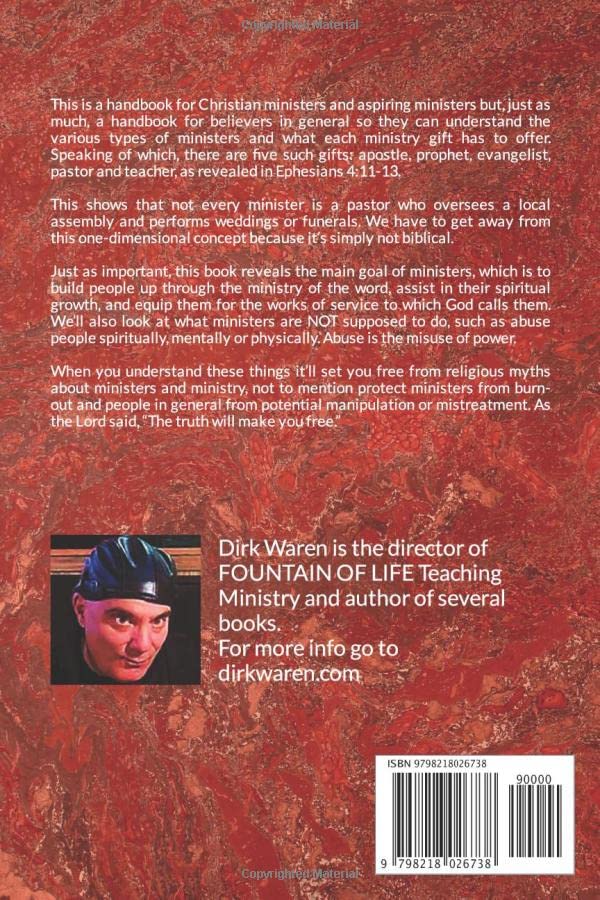
- You can purchase the print book here for only $7.38 (175 pages).
- Or get the Kindle eBook here for only 99¢
Both links allow you to LOOK INSIDE the book.
Related Topics:
What Are the Nine GIFTS OF THE SPIRIT?
Should You Get the Surgery or BELIEVE FOR HEALING?
Baptism of the Holy Spirit (“Tongues”) and It’s Benefits
SLAIN IN THE SPIRIT — Is It Biblical?
PROPHETS — New Testament and Old Testament (There’s a Difference)
What’s the Difference Between TEACHING and PREACHING?

The New Testament speaks of both teaching and preaching God’s Word, whatever the topic might be:
Then Jesus went about all the cities and villages, teaching in their synagogues, preaching the gospel of the kingdom, and healing every sickness and every disease among the people.
Matthew 9:35 (NKJV)
And every day, in the temple and from house to house, they did not cease teaching and preaching that the Christ is Jesus.
Acts 5:42 (ESV)
But Paul and Barnabas remained in Antioch, where they and many others taught and preached the word of the Lord.
Acts 15:35
The elders who direct the affairs of the church well are worthy of double honor, especially those whose work is preaching and teaching.
1 Timothy 5:17
Teaching and preaching are not one-and-the-same, but they are both necessary in effectively ministering to people. Let’s look at each…
Teaching
‘Teaching’ in the original Greek is didaskalia (did-as-kah-LEE-ah) and refers to the careful instruction of God’s Word. It’s more detail-oriented than preaching and less lively, although it’s certainly exciting when an anointed teacher opens up the Scriptures and you see things in God’s Word you never saw before. This was the reaction of people who heard Christ teach from the Scriptures (Mark 6:2).
It is teaching from the Scriptures that feeds people spiritually (Matthew 4:4).
Of course spiritually-regenerated believers can feed themselves through studying the Scriptures with the help of the Teacher, the Holy Spirit (1 John 2:27). It’s best to maintain a balance between these two — feed from God’s Word through skilled ministers and your personal devotional times.
Preaching
There are a few different Greek words translated as “preaching” in the New Testament. In Matthew 9:35 the word is kérussó (kay-ROOS-so), which means “to proclaim.” Another one is euaggelizó (yoo-ang-ghel-ID-zoh), which means “to announce good news or glad tidings.” Understandably, these two Greek words are sometimes translated as “proclaiming” in some English translations.
So when a minister or any believer preaches the Word of God they are proclaiming it, announcing it, whether the topic is the gospel of Christ (2 Corinthians 5:17-21) or any other subject that the Spirit leads one to proclaim.
Teaching AND Preaching
Both teaching and preaching have to do with the “ministry of the Word” (Acts 6:1-4), which is homiletics. Whereas teaching spiritually feeds the listener/reader, preaching exhorts them to action, whether that is to practice what’s being taught (if it’s a practical truth) or to change one’s mindset (if it’s a revelational truth). For instance, walking in the spirit is a practical truth whereas the nature of eternal life is a revelational truth. The first one you practice while the other changes your mindset and therefore your attitude; for instance, the truth about eternal life in Christ had a profound impact on my thinking about death, grief and life in eternity.
Positional truths are also revelational in nature in that they reveal who the believer is in Christ and therefore how God sees him or her. This naturally has a positive impact upon the believer’s life because it deals with his/her identity. You can learn about positional truths in this video.
Obviously people need to be exposed to both teaching and preaching, not just one or the other. Some fivefold ministers (apostles, prophets, evangelists, pastors and teachers) are more adept at teaching the Word of God whereas others are more skilled at preaching. Some might be good at both. Prophets and evangelists are usually preachers whereas teachers obviously excel at teaching.
Apostles and pastors could lean one way or the other. I’ve been to assemblies where the pastor is an outstanding teacher, but not a preacher. I’ve been to other fellowships where the pastor is a great preacher, but a lousy teacher. However, in both cases the pastors had an anointing to oversee a local group of believers. Needless to say, pastors who aren’t good at teaching are going to have to schedule teachers to feed their congregations while pastors who aren’t good at preaching are going to have to bring in some preachers to inspire their people to action. All five offices of the fivefold ministry are necessary so that believers will be fully equipped for service in God’s kingdom (Ephesians 4:11-13). Believers shouldn’t be half-equipped or a third-equipped, but rather fully equipped; and both skilled, anointed teaching and preaching of God’s Word are necessary to accomplish this.
This article was taken from…
- You can purchase the print book here for only $7.38 (175 pages).
- Or get the Kindle eBook here for only 99¢
Both links allow you to LOOK INSIDE the book.
Related Topics:
BEREAN SPIRIT — What Is It? How Do You Cultivate It?
Hermeneutics — Proper Bible Interpretation
What Does “Do Not Go Beyond What is Written” Mean in 1 Corinthians 4:6?
What’s the Diff Between MILK and SOLID FOOD (“Meat”)?
The FIVEFOLD MINISTRY Gifts — Apostle, Prophet, Evangelist, Pastor and Teacher

When people hear the term ‘minister’ they naturally think of a pastor, a minister who oversees a local assembly, but pastoring is only one of the five ministerial gifts in the body of Christ. This can be observed in this passage:
So Christ himself gave the apostles, the prophets, the evangelists, the pastors and teachers, 12 to equip his people for works of service, so that the body of Christ may be built up 13 until we all reach unity in the faith and in the knowledge of the Son of God and become mature, attaining to the whole measure of the fullness of Christ.
Ephesians 4:11-13
While these five ministry gifts are distinguished, they have the same general purpose:
- To equip or prepare people for works of ministry
- To build up the body of Christ and the members thereof (not tear them down)
- To facilitate a spirit of unity in the faith and knowledge of the Lord (as opposed to a spirit of rigid sectarianism)
- To help believers grow spiritually, not stagnate and become lifeless legalists
- To help believers attain to the whole measure of the fullness of Christ (as opposed to a quarter measure or half measure)
Needless to say, every servant-leader — whether apostle, prophet, evangelist, pastor or teacher — needs to make sure they’re fulfilling these purposes and not doing the opposite.
To accomplish their mission, all fivefold ministers naturally need to (1) know and walk with the LORD and (2) know God’s Word, not to mention be able to teach or preach it. Teaching is careful instruction whereas preaching is proclamation in an exhortative sense (you can read details here).
It goes without saying that (1) knowing God and (2) knowing God’s Word are both mandatory for servant-leaders in the body of Christ for obvious reasons (Luke 13:24-27, Matthew 7:15-23 & 1 Corinthians 4:6). Speaking of servant-leaders…
Fivefold Ministers Are to Be Servant-Leaders, Not Domineering Authoritarians
Believers with one or more of the fivefold ministry gifts are called to be servant-leaders in the body of Christ. They’re leaders, no doubt, but their style of leadership is servant-oriented rather than authoritarian. The Lord made this clear:
Jesus called them [the disciples] together and said, “You know that the rulers of the Gentiles lord it over them, and their high officials exercise authority over them. 26 Not so with you. Instead, whoever wants to become great among you must be your servant, 27and whoever wants to be first must be your slave — 28 just as the Son of Man did not come to be served, but to serve, and to give his life as a ransom for many.”
Matthew 20:25-28
The greatest among you will be your servant. 12For those who exalt themselves will be humbled, and those who humble themselves will be exalted.
Matthew 23:11-12
They came to Capernaum. When he was in the house, he asked them, “What were you arguing about on the road?” 34But they kept quiet because on the way they had argued about who was the greatest.
35Sitting down, Jesus called the Twelve and said, “Anyone who wants to be first must be the very last, and the servant of all.”
Mark 9:33-35
The word ‘minister’ literally means “servant” and so fivefold ministers are to minister with a servant’s heart. This isn’t to say, of course, that ministers have to be perpetually sugary sweet as there’s a time and place for tough love, like when Paul openly corrected Peter for his legalism (Galatians 2:11-14) or when Jesus boldly cleared the temple of fools (Mark 11:15-18) or when Peter powerfully reprimanded a sorcerer in Samaria (Acts 8:9-24).
Fivefold Ministers Are to Build Believers Up, Not Tear Down
We saw above that fivefold ministers are “to prepare God’s people for works of service, so that the body of Christ may be built up” (Ephesians 4:11-13). In other words, genuine ministers (and believers in general) are to overflow with life, not death. Why? Because we’re children of God and the LORD is the Fountain of Life (Psalm 36:9). This explains Christ’s prime directive: to give people life and life to the full, not death (John 10:10).
This isn’t to suggest, of course, that there’s no place for denouncing sins and encouraging repentance when ministering. Skilled ministers who are led of the Spirit will bring about a spirit of repentance through the ministry of the Word (Acts 6:1-4), but will also remove the burden of guilt, instill the Lord’s peace and motivate individuals onward. In other words, even though they denounce sin and spur repentance, their ministry is encouraging and inspiring. This is the minister’s job.
A good example of this can be seen in Jesus after his resurrection. Christ appeared to two of the disciples who were understandably discouraged because of his unjust crucifixion. The Messiah met up with them as they were walking along the road and they talked for a bit, but they were somehow prevented from recognizing him. After the Messiah departed, the two disciples reflected on the encounter: “Were not our hearts burning within us while he talked with us on the road and opened the Scriptures to us?” (Luke 24:32).
This is the effect Christ-like ministers should have on believers. You know you’re at a healthy assembly when you leave a service with your heart burning with inspiration and you see things in God’s Word you never saw before. By contrast, if you leave a fellowship feeling beat up, burdened and condemned it’s not a good sign. It indicates that the minister officiating that particular service has fallen prey to a form of legalism and has become spiritually toxic. This spirit of condo is at odds with the true ministerial spirit, which Paul summed up when he spoke of the authority ministers have for building believers up and not tearing them down (2 Corinthians 10:8 & 13:10).
You can read more about the arrogant spirit of condemnation & authoritarianism here.
So what distinguishes these five ministerial gifts — apostle, prophet, evangelist, pastor and teacher? Let’s look at each one in general terms (a Scripture-based book could easily be written about each one):
Apostle
The word ‘apostle’ is apostolos (ah-POS-tol-os) in the original Greek, which means “one sent on a mission with a message.” Of course all disciples of Christ have this mission as the Lord instructed his disciples: “Therefore go and make disciples of all nations, baptizing them in the name of the Father and of the Son and of the Holy Spirit, and teaching them to obey everything I have commanded you” (Matthew 28:19-20). But apostles like Paul and John had an anointing to go out and start assemblies, as well as oversee them. In order to start fellowships, an apostle obviously has to have the gift of pastoring.
A good modern example of an apostle is this powerful minister in my area who started a very successful fellowship, which then sprouted satellite fellowships all over the area. He eventually stopped pastoring the main assembly and now has the position of “bishop” and oversees all of these assemblies (we’ll look at the term bishop in a little bit). This certainly sounds like operating in the gift of an apostle, doesn’t it?
Paul also said that a true apostle is marked by “signs, wonders and miracles” (2 Corinthians 12:12). But this might be hard to come by in these days of gross unbelief, although I’ve seen modern apostles minister in this capacity; they’re out there.
If there are “true apostles” there are also “false apostles” (2 Corinthians 11:13-14). I once met a joyless, stern believer who insisted on being addressed as “Apostle Harrad” at all times even though he wasn’t remotely an apostle in any biblical sense.
How much of the above has to be relevant for a believer to be considered a true apostle? They’d have to:
- Have a drive for reaching people and starting new fellowships,
- Oversee several assemblies (at least more than one),
- Have an anointing with the laying on of hands.
Prophet
‘Prophet’ in the Greek is prophétés (prah-FAY-tus) which means “an interpreter or forth-teller of the divine will.” Please don’t confuse this wonderful gift with that of an occultist fortune teller.
The prophetic word is encouraging and is able to touch believers in that specific area where they need ministered. For example, Acts 15:32 says, “Judas and Silas, who themselves were prophets, said much to encourage and strengthen the brothers.” This is the purpose of the prophetic gift in the Church and reveals why it is so necessary — it encourages and strengthens believers. The original Greek word for ‘encourage’ in this passage means “to cause to move forward.” In other words, a prophetic word will inspire believers and provoke them to go forward and fulfill God’s call on their lives. This shows that prophets are more preachers than teachers. They see things in the spirit realm and proclaim God’s will that’s applicable to the situation or person, but they don’t go into scriptural details on doctrine, like a teacher would.
Have you ever been in the spiritual doldrums where you’re not necessarily walking in sin, but you just seem to lack that spiritual drive and passion for the Lord and your calling? The gift of prophecy has the ability to wake believers from such doldrums and spark them onward! It’s an awesome gift and a needed gift. As such, the office of the prophet should be valued and esteemed in the Church. Unfortunately, too many assemblies and sects are ignorant of it or, for various reasons, the gift lies dormant, which we’ll address later.
I’d like to offer a recent example of how a Spirit-anointed prophetic word can encourage the believer: I was discouraged about what was happening in the political realm recently after reading the Eeyore-like commentaries of a couple of ministers who, while certainly respectable and gifted as teachers, lack prophetic insight. Listening to them produced the vibe of “Woe are we as a nation; our sins have brought doom despite the millions upon millions of sincere, fruit-bearing saints in Christ and their many prayers.” I then exposed myself to four mighty men & women of God who flowed in the prophetic word. Unlike the other two downbeat ministers, these prophets inspired and encouraged. This isn’t to say, by the way, that there isn’t a time & place for a sobering prophetic correction from the Lord, like Christ did with the Laodicean assembly (Revelation 3:17).
While the word of prophecy is important and necessary in the Church this does not condone the abuse of this gift/office where people are made to feel like they’re in bondage to a prophetic word that may be off or even completely wrong. Nor does it condone the dictatorial antics of prophets who think their prophecies are the inerrant Word of God which must be blindly accepted and obeyed to the letter. The origin of this abusive error is this: confusing the New Testament prophet with the Old Testament prophet. These two types of biblical prophets are very different. The primary purpose of the Old Testament prophet was to lead and guide Israel through the Word of the LORD and, in fact, a lot of their words became Holy Scripture and are included in what we know today as the Old Testament. Jesus Christ was the last person to operate in the anointing of an Old Testament prophet (Hebrews 1:1-2) and, in fact, he was The Prophet that the Hebrews were waiting for almost 1500 years (Deuteronomy 18:15, John 6:14 & 7:40).
The New Testament prophet is different. The gift of prophecy was not given to the body of Christ for the purpose of leading and guiding God’s people, as was the case in the Old Testament, because believers are born-again spiritually and have the Holy Spirit within them for this very purpose. As Jesus said, “But when he, the Spirit of truth, comes, he will guide you into all truth. He will not speak on his own; he will speak only what he hears, and he will tell you what is yet to come” (John16:13). Since it’s the Holy Spirit’s job to guide believers in the New Testament era, we don’t need the gift of prophecy for this function. So when a prophet prophesies over you and says you’re to do this or that or go here or there, don’t receive it unless the Spirit has already been leading you in this direction. In other words, prophecies in the New Testament are to confirm what the Holy Spirit has already been leading you to do. You could say it’s an external source to confirm or compliment the believer’s internal source of direction from God. This explains why Paul instructed believers to test prophecies and “hold on to the good,” which means to eat the meat and spit out the bones (1 Thessalonians 5:19-21). Nowhere are we instructed to blindly accept a prophecy spoken over us. For important details see this article.
Evangelist
‘Evangelist’ in the Greek is euaggelistés (yoo-ang-ghel-is-TAYS), which means “a bringer of good news.” Like prophets, they’re preachers and not teachers. They proclaim by unction the truths of the gospel and the Word of God in general, but they’re not effective at detail-oriented teaching. Many hardcore missionaries would be examples of fivefold evangelists (by ‘hardcore’ I mean those believers who function as missionaries in a vocational sense as opposed to those who flirt with missionary work for relatively short periods of time). While euaggelistés only appears three times in the Greek scriptures, the verb form, euaggelizó (yoo-ang-ghel-ID-zoh), appears 54 times.
Evangelists can certainly minister to believers at revivals and what have you, but their drive & focus is reaching the lost with the life-changing Good News of the message of Christ (2 Corinthians 5:17-21).
I knew a pastor who simultaneously had the gift of an evangelist, which was also the case with Timothy (2 Timothy 4:5). This particular pastor wasn’t good at teaching, although — as a pastor — he was gifted at overseeing an assembly and could preach. But I saw him at an evangelical service and he was exceptional at preaching the gospel and inspiring people to turn to the Lord in repentance and faith (Acts 20:21). This shows that fivefold ministers can have more than one of the fivefold gifts. A good example from Scripture is Paul, who was both a teacher and an apostle (2 Timothy 1:11).
Like apostles and prophets, evangelists in the New Testament were known to flow in the gifts of the Spirit, such as Philip (Acts 8:4-7, 8:26-40 & 21:8).
Pastor
The word ‘pastor’ comes from the Greek poimén (poy-MAYN) meaning “shepherd,” whether literally in reference to a shepherd of sheep (Luke 2:8) or figuratively in the sense of someone overseeing a flock of people. In the latter sense, Christ is the “Good Shepherd” of the Church (John 10:11,14,27) while fivefold ministers with the gift of pastoring are under-shepherds, as observed in this passage:
To the elders among you, I appeal as a fellow elder and a witness of Christ’s sufferings who also will share in the glory to be revealed: 2 Be shepherds of God’s flock that is under your care, watching over them—not because you must, but because you are willing, as God wants you to be; not pursuing dishonest gain, but eager to serve; 3 not lording it over those entrusted to you, but being examples to the flock. 4 And when the Chief Shepherd appears, you will receive the crown of glory that will never fade away.
1 Peter 5:1-4
Peter is an elder and an apostle and he is addressing elders here, but specifically pastors, as shown in verse 2 (the word ‘shepherds’ in the original Greek is the verb form of poimén). In verse 4 he notes the Chief Shepherd, Christ, which shows that pastors are under-shepherds, accountable to the Lord.
Verses 2-3 convey Peter’s six instructions to pastors:
- “Shepherd God’s flock that is under your care,” which is phrased in the KJV as “Feed the flock of God” (1 Peter 5:2) and this corresponds to what Christ instructed Peter (John 21:15-17). Making sure the believers under their care are spiritually fed is the number one duty of pastors, which includes exposing them to the ministry of other fivefold ministers now & then so that they’ll be “fully equipped for every good work” (Ephesians 4:12). Feeding believers the word of God is called “the ministry of the word” (Acts 6:1-4). Notice, by the way, that those believers under the pastor’s care are called “God’s flock.” In other words, believers in the worldwide Church are God’s sheep, not the pastor’s sheep. The pastor merely shepherds certain believers for the period of time they are under that pastor’s care, which isn’t determined by the pastor, but by the believer (hopefully led of the Holy Spirit).
- “Watch over” those believers that are under your care, which means oversee. This means to supervise or manage the believers under the pastor’s care, but it doesn’t mean to tyrannically dominate them in an authoritarian sense. The passage says that pastors are to serve as “overseers” and not lord it over believers, which are “God’s flock.” In light of this, whatever else ‘oversee’ means, we can be sure that it does not mean to lord it over people (more on this momentarily).
- Don’t pursue dishonest gain, which means don’t be greedy.
- Be eager to serve rather than begrudgingly serve. If a fivefold minister cannot pastor people with gratefulness and enthusiasm he should do something else in God’s service.
- Don’t “lord it over” those entrusted to you, which means don’t be a pompous authoritarian. Pastors who lord it over those in their assemblies try to control or subjugate them in the sense of being the ultimate authority (except that they aren’t the ultimate authority, God is). If you’re a pastor, please don’t do this; serve with a loving, humble servant’s heart. Anyone functioning in the office of pastor who cannot do this needs to find another way to serve the LORD.
- Be examples to “the flock” in all you say and do. This shows that ministry isn’t just about “the ministry of the Word of God” (Acts 6:1-4), but also actually walking with the Lord and walking in newness of life. In short, it’s not just talking the talk, it’s walking the walk. Talk is cheap.
When the elders of the church of Ephesus met Paul in Miletus, he instructed them to “Keep watch over yourselves and all the flock of which the Holy Spirit has made you overseers. Be shepherds [pastors] of the church of God, which he bought with his own blood” (Acts 20:28). This shows that elders (presbuteros), overseers (episkopos) and pastors (poimén) are synonymous in the New Testament. In other words, they refer to the same office, although “elder” could refer to another fivefold minister; for instance, the apostle John was nicknamed “the elder” when he was mature in years (2 John 1:1 & 3 John 1:1). (A nickname is a nickname, not a title; for instance, one pastor I knew was called Butch, even though his name was Bob). Also, an overseer could refer to an apostle since apostles start out as pastors and eventually oversee several churches. Even prophets, evangelists and teachers are overseers of the inner circle of their ministries.
Ideally, those effective elders in the Church who preach and teach should be paid (1 Timothy 5:17). Although fivefold ministers might have to take up secular work to pay the bills, which is what Paul occasionally did with tentmaking (Acts 18:3-5).
As noted earlier, all fivefold ministers must know the Word of God and be able to teach or preach so that the body of Christ is fed & exhorted spiritually at services. Pastors also have to have a gift to oversee an assembly of believers (apostles too, obviously). I’ve been to some assemblies where the pastors are outstanding at teaching God’s Word, which means carefully explaining topics in an insightful, inspiring manner. However, I’ve been to other fellowships where the pastors aren’t good at teaching, although they can preach and, like all genuine pastors, are good at overseeing a group of believers.
Obviously pastors who are also exceptional at teaching God’s Word have the fivefold gift of a teacher. Pastors who aren’t gifted at teaching are obviously going to have to enlist the services of fivefold teachers at their assemblies in order to effectively feed God’s sheep in their midst. Speaking of teachers…
Teacher
‘Teacher’ in the Greek is didaskalos (di-DAS-kal-os), which simply means “instructor.” Fivefold teachers have the anointing to carefully explain the Holy Scriptures in an understandable, enlightening way. They make the Scriptures come alive for their hearers/readers and help them to see things in God’s Word they’ve never seen before. They give structure to knowledge and their potent insights often result in believers thinking, “I’ve never heard this, but it makes total sense. Where did the minister get this?!” This is the reaction people had to Christ when he taught (Mark 6:2). It is teaching from the Scriptures that feeds people spiritually (Matthew 4:4).
Fivefold teachers differ from pastors (and apostles) in that they don’t have the gift to oversee people. I’m a fivefold teacher. I have the gift to teach believers, but not oversee them. To be an effective pastor you have to want to watch over people. I have no such desire. I operate in the ministry of the word (Acts 6:1-4) and pray for my hearers/readers and then it’s in the Spirit’s hands, as well as the hands of their local pastor.
I should point out that there is such a thing as a body teacher in the Church (Romans 12:6-8). Such believers have a gift to teach in the body of Christ, but they lack the anointing of a fivefold teacher. These may be fivefold teachers in seedling form, although not necessarily. In other words, as they grow spiritually the LORD will eventually lead them into the fivefold ministry. That’s what happened with me.
One pastor I know taught that fivefold teachers usually focus on one topic and teach it wherever they minister. This, of course, enables them to become experts at teaching that particular subject. This is not wholly accurate. Teachers are typically well-studied on myriad of topics — hundreds actually — and can effectively teach them all. However, a teacher may be led by the Spirit to focus on one particular topic and serve people accordingly. For instance, I know a fulltime minister who has about 75 gigs a year and he sticks to one basic topic with four sermons within that context, which means he’d have to be scheduled at the same assembly four times before even considering coming up with something different. Needless to say, if a minister sticks to one topic and four sermons within that topic, they’ll get good at it.
The Fivefold Ministry Offices
So there you have it, the five biblically-based servant-leadership positions in the Church — apostle, prophet, evangelist, pastor and teacher.
In many camps, only the offices of the evangelist, pastor and teacher are active. The other two are pretty much dormant. They might have apostles in some partial form, albeit under a different name and usually minus signs and wonders (2 Corinthians 12:12). Meanwhile they omit the prophet office altogether. Some of these sects justify this due to their adherence to the erroneous doctrine of cessationism, the belief that the gifts of the Spirit (1 Corinthians 12:4-11) ceased by the end of the 1st Century when the last of the original Church apostles passed away, including Paul. If there are no gifts of the Spirit then obviously the apostle cannot function in signs and wonders and the prophet cannot prophesy, which would make these gifts inoperable and irrelevant.
You can search in vain throughout all the above New Testament passages, but you’ll find no statement where the Spirit-led writers of the Scriptures say something like: “However, the positions of the apostle and prophet will only last a little while longer — till the end of this century — then they will cease, along with the nine gifts of the Spirit.” On the contrary, believers are encouraged to “eagerly desire” spiritual gifts, as shown in 1 Corinthians 12:1, 31, 14:1, 39, which would include the gift of personal tongues, otherwise known as glossolalia (gloss-ah-LAY-lee-ah). Paul emphasized eagerly desiring — pursuing — the “greater gifts” (1 Corinthians 12:31). What is the greater gift? Simply the specific gift that’s needed at the time!
Think about it, the religious doctrine of cessationism encourages believers to do the precise opposite of what the New Testament Scriptures actually instruct us to do. It encourages believers to eagerly deny spiritual gifts when God’s Word encourages us to eagerly desire them!
That said, while cessationism is a false doctrine, it’s not an issue of eternal salvation. If a believer or sect embraces this doctrine it doesn’t mean that they’re not a fellow believer, loved by the Lord. It just means their faith — their belief level based on the false doctrine of cessationism — won’t allow them to eat everything the gospel of Christ has to offer; in this case, spiritual gifts and the blessings thereof. (Romans 14:1-6). Those of us with fuller understanding are not to look down on those with the lesser because it would be arrogant. Similarly, the one with the lesser revelation must not condemn the one with the fuller. On the contrary, we are to “accept one another… just as Christ accepted [us], in order to bring praise to God” (Romans 15:7). You could insert any non-essential doctrine or issue into this scenario and it would apply.
What’s in a Name?
As suggested earlier, anyone who functions in one of these five ministry positions — apostle, prophet, evangelist, pastor and teacher — could also be called an elder and, in some cases, an overseer. The Greek word for ‘overseer’ (episkopos) is also translated as ‘bishop’ in some English versions of the Bible, such as the KJV. A bishop in the Church is a fivefold minister who oversees a group of subordinate believers.
During my formative years as a young Christian, the assembly that I was involved with embraced these five biblical terms for the offices of servant-leaders. I think it’s best to stick to biblical terminology since the Holy Scriptures are our basis for doctrinal truth and practice (1 Corinthians 4:6 & 2 Timothy 3:16). However, if a camp/sect/assembly chooses to use a different term for a fivefold minister — whether the minister is called to be an apostle, prophet, evangelist, pastor or teacher — it would not change the fact that that minister functions within the position of one of these five offices. Are you following? In short, it’s nothing worth arguing about.
Fivefold Ministers, Great and Small
Fivefold ministers can be great or small and it doesn’t change the fact that they are indeed a fivefold minister, whether an apostle, prophet, evangelist, pastor or teacher. For instance, there are pastors in the body of Christ who shepherd a dozen believers and there are pastors who shepherd hundreds or thousands, but they’re both pastors.
‘Official’ Ministers and Independent Ministers
It should be pointed out that there are official and independent fivefold ministers in the body of Christ. Official ministers are those who function within the structure of a particular camp/sect/denomination. These ministers receive their credentials through schools in these groups and largely function within their camp. In most cases they only function within their camp. To one degree or another, their allegiance is to their sect and their human overseers thereof, but hopefully to God & the Holy Scriptures first and foremost.
Independent ministers, by contrast, function outside of sectarian tags even if they might get their human credentials through a particular group or via a school that serves Christians from several sects that operate under the banner of, say, Evangelicals. Of course, some genuine independent ministers don’t have proper public credentials at all, but neither did Christ or the original apostles; the latter simply walked with the Lord and were anointed of God.
Official ministers are generally reliable sources of Christian ministry, depending on how biblically-based their sect is, but they’re naturally prone to the flaws of their camp, whatever those might be. In cases where the Scriptures clearly don’t agree with a particular doctrine or practice of their sect, they’ll likely side with their group above the Scriptures since it’s convenient and that’s where they get their bread & butter, so to speak, not to mention their position/recognition. Few official ministers are willing to risk losing these things, although Martin Luther did so when he boldly posted the 95 theses on the Wittenberg Door and eventually split from the Catholic sect.
Another downside of ministers functioning solely within the framework of a particular sect is that they can become spiritually inbred with the corresponding rigid sectarianism. Their ministry — e.g. their sermons — are prone to cop a “same old, same old” vibe with little freshness. As a result, they can become uninspiring.
The strength of independent ministers is that they’re less interested in the official doctrines/practices of a particular sect and more interested in what the God-breathed Scriptures actually teach. They can shake things up for believers in a positive way. It goes without saying that receiving from independent ministers can be refreshing and invigorating. Actually, the Word of God and anointed ministers should always shake us up in a positive manner (I’m obviously not talking about abusive non-ministry tactics, like a wicked spirit of condemnation, which sucks the life out of believers). The potential weakness of such ministers is that their quirks and lack of strong governing structure can lead them astray into dubious doctrines/practices. However, any minister that simply sticks to the rightly-divided Word of God will avoid this pitfall.
You can read more about official ministers and independent ministers here.
The Fivefold Ministry Gifts Are God-Given Gifts or Positions/Offices, Not Titles
One last should be emphasized: The five ministry gifts are just that, gifts. They’re God-given talents which enable members of the Church to fulfill the leadership position/office in question, small or great. However, they are not personal titles since there is no indication in the Scriptures of any fivefold minister being referred to with such a title, like Apostle Jones or Pastor Jim.
For instance, Paul continually acknowledged his office of apostle (Romans 1:1, 1 Corinthians 1:1, 2 Corinthians 1:1, Ephesians 1:1, 1 Timothy 1:1, etc.), but he was simply addressed as Paul or “brother Paul” (2 Peter 3:15). Meanwhile Peter was called Peter, John was called John and so on (Galatians 2:6-9). This is the example set for us in the blueprint of Holy Scripture and is in line with what the Lord instructed regarding titles (Matthew 23:7-11).
In short, the fivefold ministry gifts are not and never were meant to be titles in the Church for ministers. If Paul & the other great fivefold ministers in the New Testament are secure enough in their relationship with God and their calling to be addressed simply by name, so can ministers since that time, including today.
The reason I bring this topic up is because the “title syndrome” can get pretty eye-rolling and it smacks of the flesh since it’s obviously centered around ego. For instance, I was at a church dinner where the pastor corrected his own mother for not addressing him with the title of Pastor. Seriously?
That said, if a fivefold minister wants to insist on a title, particularly for those under them in the Lord, that’s their call. What’s it to me? However, they should not expect believers who know what the Scriptures plainly teach on this topic to do so.
If you desire more scriptural proof on the irrelevance of personal titles in the Church, see this article.
A longer version of this article is available in book form with loads of additional material!
- You can purchase the print book here for only $7.38 (175 pages).
- Or get the Kindle eBook here for only 99¢
Both links allow you to LOOK INSIDE the book.
Related Topics:
OFFICIAL Prophets (Ministers) and INDEPENDENT Prophets (Ministers)
Should You “Obey” Your Pastor?
Ministerial Pitfalls and Abuses
Ministerial Abuse — The Diotrephes Spirit vs. the Davidic Spirit
Should Ministers Be Addressed with Titles?
Legalism — Understanding its Many Forms
Religion and Christianity — What’s the Difference?
Godliness and Religion—What’s the Difference?
WOMEN of the Bible / WOMEN in Ministry
What if You KNOW a Confrontation Will Turn UGLY?

When people offend you, confrontation & correction is a biblical solution to the problem (Matthew 18:15-17), but there are seven common sense guidelines for rebuke, especially if you want the correction to be successful.
Yet what if the individual that needs confronted is known for being difficult (with you, if no one else) and so approaching him/her with a correction will likely create more issues than resolve? Put another way, this person tends to bring out the worst in you and so a reprimand on your part will probably result in a nasty mêlée. If you sense this then don’t do it, unless of course the Spirit specifically leads you to do so. It wouldn’t be worth it. Only a masochist would willfully enter into such a draining, unpleasant confrontation.
If the person goes to your assembly you can procure the aid of spiritually mature elders and then confront him/her, which will help keep the situation from becoming nasty. If the offender doesn’t go to your fellowship you can recruit the assistance of spiritual friends or kin. If neither of these is a viable option, then just intercede in the hope that the transgressor will change, but otherwise keep your distance. If it’s a person you’re forced to brush shoulders with due to work, family or neighborhood then limit your contact as far as is possible.
Someone might understandably contend: ‘But the Lord said we must confront the individual in Matthew 18:15-17.’ Actually Christ’s instructions apply specifically to handling offending Christians from one’s own assembly, which naturally means his guidelines must be revised in cases where the transgressor is hooked up with another fellowship or is unchurched. The Messiah’s words are more general instructions than unbendable rules that must be observed to the letter in each potential case.
For support, consider Paul’s instructions to the believers in Rome:
I appeal to you, brothers, to watch out for those who cause divisions and create obstacles contrary to the doctrine that you have been taught; avoid them. 18 For such persons do not serve our Lord Christ, but their own appetites, and by smooth talk and flattery they deceive the hearts of the naive.
Romans 16:17-18 (ESV)
Paul instructs believers to look out for those who tend to cause conflict and concludes by simply saying “avoid them.” He doesn’t say anything about confronting & correcting these troublesome souls; he merely says to keep away from them. Were these contentious individuals believers or heathen? Paul was obviously denoting people functioning within the fellowship of Roman Christians who were at least professing believers. Whether they were genuine followers of Christ or not, Paul stresses in verse 18 that they weren’t actually serving the Lord but rather their own appetites. He then reveals what marks such divisive people: They have a reputation for being smooth talkers who deceive naïve folks, that is, people who are incapable of discerning their carnal character.
What exactly is deceitful “smooth talk”? To be frank, it’s bullcrap or another word that shares the initials of Bernie Sanders. These types have a knack for telling stories and exaggeration. Put another way, they have the ability to dazzle listeners with their bullcrap; not everyone, of course, just those who are gullible and lack the ability to identify their bullcrap for what it is. These are fabricators, braggarts and flatterers who naturally create discord and division wherever they roam since it’s their very nature. Guard yourself from such ‘believers’ and steer clear of them. Don’t approach and reprimand them because they’ll despise you for it and turn the situation against you (Proverbs 9:7-9); they’ll try to tear you to pieces like the (hidden) vicious predators they are (Psalm 57:4; Psalm 3:7; Proverbs 30:14). They want to lure you into the realm of the flesh, which is the plane from which they operate. They want to bring out the worst in you. Don’t take the bait. Keep away from them; intercede for them and shield the naïve sheep in your midst from their smooth-talking devices.
I had an in-law years ago who was so offensive and argumentative that I had to stop taking his calls. I’d delete his messages without even listening. Why? Because speaking to him, or even giving ear to a voicemail, was like consuming poison; it would throw my day off course — destroying my concentration and draining my energy. I found out a Christian relative refused to take his calls as well. Neither of us did this hastily; it took ten years of merciful forbearance and prayer. But life is too valuable to squander on arrogant, disrespectful troublemakers and liars, even if they profess to be Christians (Titus 1:16). Don’t give ear to such a proven contentious person unless you learn from a respected source that s/he is willing to speak with a smidgen of meekness and respect. If so, give it a try.
Here’s another relevant text on the topic:
But understand this, that in the last days there will come times of difficulty. 2 For people will be lovers of self, lovers of money, proud, arrogant, abusive, disobedient to their parents, ungrateful, unholy, 3 heartless, unappeasable, slanderous, without self-control, brutal, not loving good, 4treacherous, reckless, swollen with conceit, lovers of pleasure rather than lovers of God, 5having the appearance of godliness, but denying its power. Avoid such people.
2 Timothy 3:1-5 (ESV)
Paul gave these instructions to his acolyte, Timothy. He exhorted him to “avoid” these fleshly types who had an “appearance of godliness” but no actual spiritual effectiveness (verse 5). This revealed that these were people who claimed to know the LORD but plainly lacked the power of a new life. Instead of fruit of the spirit — love, joy, peace, patience, kindness, humility and self-control (Galatians 5:22-23) — they reveal steady signs of hatred, selfishness, greed, boasting, arrogance, manipulation, ungratefulness, depravity, gossip/slander, recklessness and smugness. As with the passage from Romans above, the apostle doesn’t even tell his protégé to confront & correct such individuals; rather he directs him to simply keep away from them.
If the offenders you are dealing with share these carnal traits, rebuking them is pointless because they lack the spiritual character to receive correction, the primary fruit being love. It’s just not possible to correct bigheaded, rude, impulsive individuals without being pulled into a big nasty fight. It will likely drag you into the realm of the flesh and draw out the worst in you. These hardened types loathe spirituality and correction, regardless of whether or not they’re confessing Christians and attend a certain assembly. “Avoid such people.”
Discern Proper Timing When a Confrontation/Correction Is Necessary
Timing is another thing to consider when the possibility of an ugly confrontation surfaces. The Messiah’s handling of the Pharisees is a good illustration. The Pharisees & other legalists in the Holy Land were unjustly antagonistic toward Christ and were so hateful they literally schemed to slay him. They also transgressed against the LORD with their gross legalism and shady “leadership” in Israel. Keep in mind that Yeshua was Immanuel — “God with us” (Isaiah 7:14; Matthew 1:23) — so these corrupt religionists were sinning against the Son just as well as the Father. Obviously the Lord would have to eventually confront them if they failed to respond to intercession and the preaching of truth, even though he knew it wouldn’t be pleasant. However, we observe Jesus leaving Judea for Galilee in the early days of his ministry in order to dodge a premature altercation with the Pharisees, who were troubled by his swelling number of disciples (John 4:1-3). They were obviously green with envy. Whilst Christ knew he would probably have to confront & correct these fake religious leaders, it was yet too early to do so; thus he evaded a clash altogether by going back to Galilee. The Messiah later reprimanded them to their faces, of course, and it was anything but pleasant (Luke 11:37-54; Matthew 23:13-33).
This discloses the Messiah’s fight strategy regarding the possibility of open rebuke: He first tackled the situation in a moderate, lenient manner — dodging an ugly clash in preference to prayer & conveying the Word. He only upped the ante when the gentler method failed to produce results. When Christ dealt with spiritual individuals, like John “the disciple whom Jesus loved,” he rarely if ever had to take the tough love approach because spiritual people have the prudence to respond to the softer approach.
Paul adhered to this basic plan of action as well. He established the assembly at Corinth and set the doctrinal groundwork with much paternal love, compassion, kindness and intercession. But several years later he found out that the congregants were acting like spiritual infants and so he rebuked them (1 Corinthians 3:1-3); he was even ready to pull out the metaphorical whip (1 Corinthians 4:21). If they reacted wisely to the harder approach, meaning they meekly ’fessed up, Paul would of course return to his softer, favored style of ministry.
Let’s bring this home: If the prayerful, soft love manner isn’t effective, God may direct you or me to confront individuals in the Christian community, including ‘leaders’ corrupted by pomposity and religiosity, but we have to discern appropriate timing. Like Christ, we have to be guided by the Spirit and go with our spiritual instincts, even though this won’t change the likelihood that the altercation will be unpleasant.
This article was taken from chapter 3 of…

- You can purchase the print book here for only $5.76 (121 pages).
- Or get the Kindle eBook here for only 99¢
Both links allow you to LOOK INSIDE the book.
Related Topics:
How to CONFRONT & CORRECT (and How NOT to)
Handling Personal Offenses vs. Handling Criminal Acts
Does Walking in AGAPE LOVE Mean You Should Be a DOORMAT to Abuse?
HANDING an Unrepentant Believer OVER TO SATAN (?)
Forgiveness—Should You Forgive EVERYONE for EVERYTHING ALL of the Time?
Insights on OFFENSE & FORGIVENESS from Joseph’s Story
Why You should Always FORGIVE When the Offender Is Repentant