
Does the Bible Support MONOGAMY or POLYGAMY?

While the LORD allowed Hebrew men to marry multiple wives for a couple reasons, polygamy is not God’s best for marriage, as clearly detailed in the beginning (Matthew 19:4-6). Polygamous marriages chronicled in Scripture suffered contention with the inevitable rivalry of the wives (e.g. 1 Samuel 1:1-8).
Meanwhile Solomon’s myriad wives were his undoing (1 Kings 11:1-4). While Solomon was certainly wise in his early reign (1 Kings 4:29) and he advocated monogamy as the ideal (Ecclesiastes 9:9 & Song of Songs), he foolishly ignored God’s scriptural instructions by taking multiple foreign wives (Deuteronomy 17:17 & Exodus 34:15-16).
In the New Covenant, the Scriptures instruct that leaders in the Church should have but one spouse (1 Timothy 3:2, 3:12 & Titus 1:6), which was to be an example to the believers under them (1 Timothy 4:12 & 1 Peter 5:3). So, while the New Testament doesn’t outright forbid polygamy, it definitely encourages God’s ideal as originally stated in Genesis – one husband, one wife, till death do them part.
But why did the LORD allow polygamy in the Old Testament? A couple reasons come to mind: The world at the time generally consisted of patriarchal societies where females relied on their fathers, brothers and husbands for provision & protection. Thus marriage, even if it was polygamous, protected women from a life of poverty, prostitution or slavery.
Polygamy also facilitated God’s Genesis directive to “be fruitful and multiply, and fill the earth” (Genesis 1:28, 9:1 & 9:7) seeing as how husbands could impregnate other wives while one was pregnant/giving birth. This allowed men to have several children per year, as opposed to just one, and this was conducive to the increase & spread of humanity on Earth.
Related Topics:
What IS Marriage? (and Related Topics)
Beauty, Objectification and Lust
Why You Shouldn’t Put Men or Women in a Box (Marriages too)
Q&A on Sex, Romance and Marriage
Q&A on Solomon’s SONG OF SONGS
Women of the Bible / Women in Ministry
What’s the Diff Between MILK and SOLID FOOD (“Meat”)?

Both the Old Testament and New Testament say that “Man shall not live on bread alone, but on every word that comes from the mouth of God” (Deuteronomy 8:3 & Matthew 4:4). This suggests that God’s word is spiritual food for people. The way you partake of this spiritual food is by exposing yourself to it, “chewing” on it – that is, meditating on it – and then “swallowing” it by living it (if it’s a practical truth) or living in light of it (if it’s a revelational or positional truth).*
* You can learn more about the differences of these kinds of truth here.
Interestingly, the New Testament differentiates spiritual food into two forms – milk and solid food – as observed here:
Brothers and sisters, I could not address you as people who live by the Spirit but as people who are still worldly—mere infants in Christ. 2 I gave you milk, not solid food, for you were not yet ready for it. Indeed, you are still not ready. 3You are still worldly. For since there is jealousy and quarreling among you, are you not worldly? Are you not acting like mere humans? 4For when one says, “I follow Paul,” and another, “I follow Apollos,” are you not mere human beings?
1 Corinthians 3:1-4
Just like infants in the natural, immature or young believers need to be fed the “milk” of God’s word before they can handle the “solid food” or “meat.” Let me give an example from my own life: When I was a young believer in my early 20s I was growing in the Lord on a daily basis, but I was mostly drinking the “milk” of God’s word while trying out some “solid food” here and there. On one occasion I had a book by an anointed minister that addressed the topic of demons & exorcism and it was just too heavy for me at the time. So I put it on back burner, so to speak, until I could handle such things.
Does the Bible specifically delineate what the difference between “milk” and “solid food” is? Yes, it does:
We have much to say about this, but it is hard to make it clear to you because you no longer try to understand. 12In fact, though by this time you ought to be teachers, you need someone to teach you the elementary truths of God’s word all over again. You need milk, not solid food! 13Anyone who lives on milk, being still an infant, is not acquainted with the teaching about righteousness. 14But solid food is for the mature, who by constant use have trained themselves to distinguish good from evil.
1Therefore let us move beyond the elementary teachings about Christ and be taken forward to maturity, not laying again the foundation of repentance from acts that lead to death, a and of faith in God, 2instruction about cleansing rites, b the laying on of hands, the resurrection of the dead, and eternal judgment.
Hebrews 5:11-14 & 6:1-2
The six basic doctrines of Christianity detailed in verses 1-2 are called “elementary” and are said to be the “foundation” of the believer, which suggests that these six doctrines are “milk.” The “solid food” or “meat” would be any doctrine that can be built on this basic foundation and would take the believer deeper into knowing the LORD and being effective in God’s service, like discerning the difference between flesh & spirit and walking free of sin by living according to the spirit, functioning in the forms of prayer on a regular basis, legalism vs. libertinism, spiritual warfare, demonology / angelology and so on. For a detailed examination of the six basic doctrines go here.
Notice how verse 14 shows that mature believers are able to distinguish good and evil, which means that they understand the differences between the fruit of the spirit and the works of the flesh (Galatians 5:19-23). Furthermore, it’s implied that they are able to live free of the flesh by daily walking in the spirit.
Immature believers, by contrast, are still struggling with flesh issues, which can be observed in the first passage showcased above, 1 Corinthians 3:1-4, wherein Paul calls the believers in Corinth “infants” who could only handle “milk,” not “solid food.” What evidence does he offer of this? He says that the Corinthian believers were still “worldly” – that is, walking according to the flesh – because their assemblies were characterized by constant jealousies and quarrels, not to mention juvenile sectarianism (verses 3-4). While every assembly in the worldwide Church will experience jealousies, quarrels and sectarianism due to the influx of immature believers, it’s clear that the elders in Corinth were functioning like this, which is why Paul corrected them.
Of course even mature believers miss it now and then, which is explained in 1 John 1:8-9, but there’s a difference between a believer living out of his/her flesh on a regular basis – like the Corinthians were doing – and a believer who has learned to walk in the spirit on a 24/7 basis. The former are stuck in Stage Two of spiritual growth whereas the latter are in Stage Four or, at least, Stage Three. You can learn more about the stages of spiritual growth here.
To close, the six basic doctrines in their simplest form would be “milk” for the believer whereas everything else lain on top of this foundation would be “solid food” or “meat.”
Related Topics:
What Are the Sources of TRUTH (Reality)?
Hermeneutics — Proper Bible Interpretation
BEREAN SPIRIT — What Is It? How Do You Cultivate It?
What’s the Difference Between TEACHING and PREACHING?
What Did Paul Mean by ACCORDING TO THE SCRIPTURES?

Speaking of Christ’s death, burial and resurrection, Paul made this statement by the Holy Spirit:
For what I received I passed on to you as of first importance: that Christ died for our sins according to the Scriptures, 4 that he was buried, that he was raised on the third day according to the Scriptures,
1 Corinthians 15:3-4
What Scriptures was Paul referring to? Since the book of James and three of Paul’s earlier epistles (the two Thessalonian letters and Galatians) were the only New Testament Scriptures at this point in time,* it would be a reference to the Old Testament Scriptures since they clearly spoke of the sufferings, death & resurrection of Christ, e.g. Psalm 16:8-11, Psalm 22 & Isaiah 53. Also see Luke 24:25-27 and Acts 2:25-31.
Paul made another interesting reference to the existing Scriptures of that time earlier in the same epistle, in 1 Corinthians 4:6, which you can read about here.
* For a listing of the chronological order of the New Testament books go here.
Related Topics:
What Does “Do Not Go Beyond What is Written” Mean in 1 Corinthians 4:6?
What Are the Sources of TRUTH (Reality)?
Hermeneutics—Proper Bible Interpretation
BEREAN SPIRIT — What Is It? How Do You Cultivate It?
Who Wrote the New Testament Books? Who Authorized them as Scripture Canon?
What Are the SOURCES OF TRUTH (Reality)?

Christ said that “the truth will set you free” (John 8:31-32). The Greek word for ‘truth’ is alétheia (ah-LAY-thee-ah), which means “the way it really is,” aka reality. Since the devil is “the father of lies” and is temporarily the “god of this world” (John 8:44 & 2 Corinthians 4:4), it’s going to take truth to set us free in a world where lies abound. Naturally the more truth we appropriate the freer we’ll be.
But what are our sources of truth? In the passage above (John 8:31-32) Christ said that his word was a source of truth and, by extension, the Holy Scriptures in general, which is substantiated by passages like 2 Timothy 3:15-17 and 1 Corinthians 4:6. The Messiah said God’s word is truth (John 17:17), which could be described as chronicled (written) truth; yett the Lord also said HE was truth (John 14:6), which is living truth.
As such, believers can receive truth from the written word of God as well as via the living word of God thru the spirit of truth within us (John 16:13). This reveals that we need to:
- Become students of the WRITTEN word while…
- Cultivating a relationship with the LIVING word (John 1:1-4).
Being a student of the written word involves 1. reading & studying of the Scriptures (1 John 2:27) balanced out by 2. receiving from the “ministry of the Word” (Acts 6:1-4) thru anointed fivefold ministers. In both cases, striving to rightly divide the Scriptures is paramount (2 Timothy 2:15).
For insights on receiving from both the written Word and the living Word, see this 19-minute video:
Of course another source of truth is God’s creation, that is, the Earth & Universe and all living things (Psalm 19:1-4; Romans 1:19-20). By unbiasedly studying the creation we acquire truth, which is the basis of the genuine sciences, as opposed to the faulty pseudo-science advocated by LIEberals (I’m talking about the ones who claim with a straight face that there are scores of genders and that biological men can legitimately compete in female sports by simply “identifying” as a woman). Through the study of the Earth & Universe and all living things we learn the truths of geography, geology, astronomy, biology, physiology, zoology, entomology and so on.
Related Topics:
Hermeneutics—Proper Bible Interpretation
What Does “Do Not Go Beyond What is Written” Mean in 1 Corinthians 4:6?
BEREAN SPIRIT — What Is It? How Do You Cultivate It?
What’s the Diff Between MILK and SOLID FOOD (“Meat”)?
If Believers Have an Anointing to Teach Themselves, Why Do They Need Teachers? (1 John 2:27)
Who Wrote the New Testament Books? Who Authorized them as Scripture Canon?
Your Belief Window — the Lens through which You See Life (video)
Understanding the Religion of LIEberalism
Was There a TALKING SNAKE in Genesis 3?

Unbelievers, and especially militant atheists, are known to ask this question for the purpose of mocking the Bible’s depiction of events in the Garden of Eden just before the fall of humanity.
The scenario takes place in Genesis 3, but the creature wasn’t a snake in the sense that we understand the reptile. It was a beautiful, intelligent, non-creepy creature called a “serpent,” which obviously had legs of some sort (verses 1 & 14). Only after it was divinely cursed did it became the creepy creature we know as the snake.
After Satan’s plunge from Heaven he possessed a serpent-with-legs for the purpose of tempting Eve in the Garden of Eden and, through Eve, seduced Adam into outright rebellion against the Almighty. Here’s the account:
Now the serpent was more crafty than any of the wild animals the Lord God had made. He said to the woman, “Did God really say, ‘You must not eat from any tree in the garden’?”
2 The woman said to the serpent, “We may eat fruit from the trees in the garden, 3 but God did say, ‘You must not eat fruit from the tree that is in the middle of the garden, and you must not touch it, or you will die.’”
4 “You will not certainly die,” the serpent said to the woman. 5 “For God knows that when you eat from it your eyes will be opened, and you will be like God, knowing good and evil.”
6 When the woman saw that the fruit of the tree was good for food and pleasing to the eye, and also desirable for gaining wisdom, she took some and ate it. She also gave some to her husband, who was with her, and he ate it. 7 Then the eyes of both of them were opened, and they realized they were naked; so they sewed fig leaves together and made coverings for themselves.
8 Then the man and his wife heard the sound of the Lord God as he was walking in the garden in the cool of the day, and they hid from the Lord God among the trees of the garden.
Genesis 3:1-8
While Satan could have manifested himself in the physical realm like the “sons of God” later did (Genesis 6:1-4*) he obviously wanted to present his temptation to Eve as a harmless creature in order to be successful. This corresponds to something the New Testament says about him: “Satan himself masquerades as an angel of light” (2 Corinthians 11:14). So he possessed a serpent but, as noted, this reptile was hardly the slithering serpentine creatures with which we’re familiar.
* See this article for details.
This reptile had legs and it did not have the negative connotation that snakes have had ever since (Genesis 3:14). Remember, after God created the Universe and all living things the entire creation was called “very good” and this would include the serpent (Genesis 1:31). So this was a striking, shining animal. It was as threatening to Eve as the GEICO gecko would be to us.
As far as the issue of this beautiful, intelligent creature being able to communicate with Eve goes, Adam & Eve were clearly used to communicating with animals in the Garden of Eden before the fall of creation because Eve wasn’t shocked when the serpent spoke to her. She reacted as if communing with such an animal was a normal thing. If this sounds strange to you, keep in mind that most of us communicate with animals every day.
For instance, my cats let me know when they want something to eat, when they want affection, when they want let outdoors and when they want in the house; they even give thanks! They may not speak English, but they certainly talk verbally and bodily; and I understand them. I also communicate with them: I indicate when they’re welcome on my lap or when they’re not welcome, e.g. “Get!” And they understand me on their primitive level. Here are a couple of pics of me with my cat Joelebah Duma:


Now imagine how heightened such communion would be before sin entered the physical realm and the corresponding curse on creation; this was when the world was perfect and everything was “very good,” as noted earlier. Now add to this the fact that the serpent was said to be the smartest of the animals God made (Genesis 3:1). The serpent is called “crafty” or “clever,” which is translated from the Hebrew word arum (aw-ROOM), meaning prudent, shrewd or sensible.
None of this means that the serpent communed with Eve in the language Adam & Eve spoke, nor with a human voice. The serpent simply utilized whatever vocal capabilities it had and Eve understood the meaning; and vice versa.
As you can see, this scenario wasn’t as absurd as unbelieving mockers would have you believe.
For details on this topic see this article.
Related Topics:
The Fall of Man (Humanity) and Slavery to Satan
REDEMPTION — God’s Plan of Liberation for Humanity & Creation
Why Is This World So Messed Up?
BEAUTY, Objectification and Lust

The Bible plainly acknowledges the beauty or handsomeness of certain people on several occasions. For instance, the following verses reveal that Sarai (aka Sarah), Rebekah, Rachel and Esther were women of exceptional beauty:
When Abram came to Egypt, the Egyptians saw that Sarai was a very beautiful woman.
Genesis 12:14
Before he had finished praying, Rebekah came out with her jar on her shoulder. She was the daughter of Bethuel son of Milkah, who was the wife of Abraham’s brother Nahor. 16 The woman was very beautiful, a virgin; no man had ever slept with her. She went down to the spring, filled her jar and came up again.
Genesis 24:15-16
When the men of that place asked him about his wife, he said, “She is my sister,” because he was afraid to say, “She is my wife.” He thought, “The men of this place might kill me on account of Rebekah, because she is beautiful.”
Genesis 26:7
Leah had weak eyes, but Rachel had a lovely figure and was beautiful.
Genesis 29:17
Mordecai had a cousin named Hadassah, whom he had brought up because she had neither father nor mother. This young woman, who was also known as Esther, had a lovely figure and was beautiful. Mordecai had taken her as his own daughter when her father and mother died.
Esther 2:7
And here are a few passages that reveal how Joseph, Saul and David were exceptionally good-looking men:
So Potiphar left everything he had in Joseph’s care; with Joseph in charge, he did not concern himself with anything except the food he ate.
Now Joseph was well-built and handsome, 7and after a while his master’s wife took notice of Joseph and said, “Come to bed with me!”
Genesis 39:6-7
Kish had a son named Saul, as handsome a young man as could be found anywhere in Israel, and he was a head taller than anyone else.
1 Samuel 9:2
So he sent for him [David] and had him brought in. He was glowing with health and had a fine appearance and handsome features. Then the LORD said, “Rise and anoint him; this is the one.”
1 Samuel 16:12
Appreciating Beauty vs. Objectifying a Person
The Bible offers an interesting lesson on objectification in this account of king Xerxes of Persia and his queen, Vashti:
On the seventh day, when King Xerxes was in high spirits from wine, he commanded the seven eunuchs who served him—Mehuman, Biztha, Harbona, Bigtha, Abagtha, Zethar and Karkas— 11to bring before him Queen Vashti, wearing her royal crown, in order to display her beauty to the people and nobles, for she was lovely to look at. 12But when the attendants delivered the king’s command, Queen Vashti refused to come. Then the king became furious and burned with anger.
Esther 1:10-12
Basically, Xerxes wanted to “show off” his wife to all the partying elites at his banquet because she was extraordinarily beautiful, but Vashti was so repulsed by the idea of being objectified by her husband’s drunken guests she was willing to risk her queen-ship and be deposed, which is what happened. (This of course paved the way for Esther, a secret Hebrew, to become queen of Persia — Esther 2:17).
To disobey a direct order from the king in that culture was unthinkable, but Vashti obviously couldn’t betray her own dignity — i.e. violate her conscience — to be ogled by a bunch of drunken men, especially considering the possibility that she was to appear before them wearing only her crown, which is what some Hebrew historians maintain. This account is contrasted by Salome’s willingness to dance at King Herod’s banquet but, then, she didn’t do it nude and she & her mother had an ulterior motive (Mark 6:17-28).
What can we get from Vashti’s impressive refusal to give-in to her husband’s ignoble request at great cost? While it’s nice to be sincerely noticed or complimented now and then, being objectified is a different story. It reduces the person to a piece of meat and the Bible emphasizes that this is a worldly perspective rather than spiritual (2 Corinthians 5:16).
‘What About “Beauty Is in the Eye of the Beholder”?’
Obviously there is such a thing as exceptional good-looks, but beauty is also subjective. For instance, an Aborigine living in the bush might likely find a beauty contest winner in the USA or Europe unappealing and understandably so. What makes his idea of beauty less valid than a judge at a beauty contest in Western Civilization? Every person is like that Aborigine: The only beauty that matters to the individual is what he or she finds beautiful, not what some judge at a beauty contest or magazine editor insists is beautiful. Hence, beauty is in the eye of the beholder.
So beauty is both subjective and objective. It is subjective in that people are unique individuals who don’t find the same things attractive; they each have their own opinions and preferences on what is beautiful or handsome. However, beauty is also objective in that some people are simply better looking than others, as noted in the scriptures cited above.
Are there examples of subjective beauty in the Bible? Yes. The male protagonist in the Song of Songs refers to his beloved like so:
Like a lily among thorns
is my darling among the young women.
Song of Songs 2:2
You are altogether beautiful, my darling;
there is no flaw in you.
Song of Songs 4:7
8Sixty queens there may be,
and eighty concubines,
and virgins beyond number;
9but my dove, my perfect one, is unique,
Song of Songs 6:8-9
He speaks of his beloved’s beauty as if she blows away all other women on Earth, even to the point of having “no flaw” and being his “perfect one.” Is this factually true or merely his subjective perspective looking through the lens of passionate romantic love? Obviously the latter since even the most beautiful women in this fallen world have flaws.
The woman in the story speaks of her man in a similar idealized fashion, e.g. Song of Songs 5:10-16.
While both ‘lover’ and ‘beloved’ in the Song of Songs may have been exceptional in one way or another, neither were the most attractive, flawless male or female on Earth. As such, these verses reflect the idea of subjective beauty.
‘What About Inner Beauty?’
What good is outer beauty without inner beauty to balance it out? If anything, inner beauty is more important and very much so. After all, what benefit would it be to marry a gorgeous Hollywood starlet or stud who has a roaming eye and the marriage lasts a short time due to inevitable unfaithfulness?
This explains why Peter, inspired by the Holy Spirit, encouraged female believers to not focus on “outward adornment” and all that goes with it, but rather on the true attractiveness of “your inner self, the unfading beauty of a gentle and quiet spirit, which is of great worth in God’s sight” (1 Peter 1:3-4). He wasn’t saying female believers can’t wear attractive clothing, just that their focus should be on the true beauty that stems from a spiritual heart. This is what attracted me to Carol, my wife, when I first met her. Of course I found her physically attractive, but she didn’t dress like a courtesan and didn’t need to. It was her gentle, quiet, godly spirit that shined like the midday sun and captured my attention. Here’s a photo of us on our wedding day in 1995:

By “gentle” and “quiet” I don’t mean Carol was a shy pushover, I mean she wasn’t an obnoxious loudmouth, like odious LIEberals and their opinionated falsities & slander. There’s a pleasantness to a gentle, quiet spirit that doesn’t constantly bloviate and isn’t rash with jumping to conclusions. At the same time Carol has no qualms about wisely holding me accountable to the Word of God; and I do the same with her, which is a form of tough love. This kind of love doesn’t fail to correct others when necessary.
But the Scriptures don’t just encourage women to be gentle and quiet as each are positive attributes for both men and women. Paul said to all the believers at Philippi: “Let your gentleness be evident to all” (Philippians 4:5). Meanwhile James said “Everyone should be quick to listen, slow to speak and slow to become angry” (James 1:19). And the book of Proverbs says “The one who has knowledge uses words with restraint, and whoever has understanding is even-tempered” (Proverbs 17:27).
In other words, the Scriptures exhort both men and women to not be loathsome loudmouths. Yet this doesn’t mean there isn’t a time & place for righteous reprimand and Holy Ghost-inspired preaching.
Appreciating Beauty vs. Lusting
Since the Bible clearly acknowledges physical beauty or handsomeness in human beings and God created this beauty, there’s a place for appreciating it, whether being awed by it or simply admiring it. There’s nothing wrong with this. As it is written, “To the pure, all things are pure” (Titus 1:15).
However, the Bible condemns lust for anyone outside the covenant of holy matrimony, which is preoccupation in thought or deed with sexual desire and has to do with the aforementioned objectification. Even for your wife or husband, your desire for her/him should be greater than one-dimensional lust or the marriage won’t likely last. Christ said, “I tell you that anyone who looks at a woman lustfully has already committed adultery with her in his heart” (Matthew 5:28). This explains why righteous Job made an agreement with his eyes to not look at a woman lustfully (Job 31:1).
But what is the dividing line between appreciating beauty and sexual lust? Here’s a parable to illustrate the difference: You’re walking down the sidewalk and come across a bed of flowers wherein you naturally relish their colorful beauty and fragrance; you may stop for a moment, but you continue on your way because you have a schedule and other things to do. Besides, the flowers aren’t yours. Then someone else walks down the sidewalk and sees the same beautiful bed of flowers, but he dives into it wildly pulling them out by the roots so he can take them home with him. I think it’s obvious which one of these is reasonable, acceptable behavior and which is not.
If that’s not clear enough, here’s a more blunt way to distinguish falling into lust: If your thoughts about a person inspire you to run to a secluded room to masturbate, it’s obviously lust. The answer to this kind of problem is learning to control your thoughts, as well as learning to walk in the spirit. God said to Cain: “sin is crouching at your door; it desires to have you, but you must master it” (Genesis 4:7). This is a matter between the individual and the LORD.
All men and women are unique with different strengths/weaknesses and each one is going to have to determine in their relationship with God what the dividing line is between appreciating beauty and lust. It’s a part of “working out your salvation with fear and trembling” (Philippians 2:12).
Let me close with this relevant story filled with insights:
Several years ago I was part of a men’s group that would read Christian books on male-oriented issues and regularly meet for discussion and fellowship. In one of the books the author went to extreme lengths to protect himself from his lust problem. For instance, before reading a newspaper or magazine he’d cut out any ads or pictures that featured a fetching female, especially scantily-clad ones like underwear or bathing suit ads. In addition, if he were out in public he’d never look at a comely female for more than a passing glance (approximately 0.187 seconds) and would refuse to view TV shows or movies that showed women in alluring apparel. Etcetera. These were rules that this man came up with in order to walk free of lust and serve the Lord with a clear conscience. There’s nothing wrong with these rules if a man has issues with lust, usually due to an exceptional sex drive. Such a man observes such rules for the sake of personal holiness, which is pure religion in God’s eyes (James 1:27). These rules are akin to the alcoholic who must stay away from any environment that includes alcoholic beverages in order to walk in victory. But not all men have such a weakness to lust, nor do all people struggle with alcohol like the severe alcoholic.
To be expected, this subject provoked a lively discussion at the group. A couple of the men, both married, admitted that they needed to go to such extremes to walk free of lust, while some others felt the rules were so radical that it was the next thing to requiring women to wear robes and veils in public, like in some Islamic countries.
This was the perfect occasion for us to practice Paul’s instructions in Romans 14: The men who felt it necessary to adhere to these rigid rules should not look down on those who didn’t and vice versa. As Paul instructed, “Who are you to judge someone else’s servant? To his own master he stands or falls. And he will stand, for the Lord is able to make him stand… Each one should be fully convinced in his own mind” (Romans 14:4-5).
Such rules are fine if you require them to keep a clean conscience before God, but be careful that religious pride doesn’t seep-in and you start judging and condemning other genuine believers who don’t require these rules. Otherwise you’ll be infected by legalism, which is a path of spiritual darkness and death even though it wraps itself in the garnishment of respectable religiosity.
Carol & I attended one assembly where the pastor had a history of alcohol-related problems before he came to the Lord and, consequently, was hell-bent against anything having to do with alcohol. Not only was drinking a sip of alcohol a sin — to him — it was also a sin to dine at an establishment that served alcohol, like Red Lobster. In fact, it was wrong to shop at a store that sold alcohol, like Walmart! Do you see the problem here? Because he had a weakness toward alcohol he developed an extreme view on the subject and tried to impose his personal rules of holiness on everyone else, including the vast majority who had no need of such radical rules.
This article is also available as a chapter in…

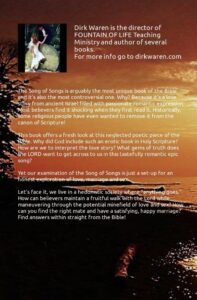
- The print book is available here for only $7.26 (171 pages)
- The Kindle eBook is available here for just 99¢!
Both links allow you to LOOK INSIDE the book.
Related Topics:
FORMS OF ART IN THE BIBLE, Including Music, Visual and Performance Art
Can a Certain Style of ART Be Evil?
How to keep BALANCED in every area of Life
Legalism — Understanding its Many Forms
Libertinism — What’s Wrong with It and How to Walk FREE
The Seven Keys to SPIRITUAL GROWTH
What’s the Diff Between SIMILE, METAPHOR, ANALOGY, CONTRAST?

In the Bible you’ll observe examples of similes, metaphors, analogies and contrasts. Let’s look at each of these to distinguish them:
Similes
A simile (SIM-uh-lee) is a comparison of one thing with another of a different kind using the words “as” or “like.” In this verse, for instance, you’ll observe three similes:
“I am sending you out like sheep among wolves. Therefore be as shrewd as snakes and as innocent as doves.”
Three similes can also be observed in this passage:
There was a violent earthquake, for an angel of the Lord came down from heaven and, going to the tomb, rolled back the stone and sat on it. 3His appearance was like lightning, and his clothes were white as snow. 4The guards were so afraid of him that they shook and became like dead men.
Matthew 28:2-4
Metaphors
A metaphor is also a comparison, but directly states it, leaving out the words “like” or “as.” Here are several examples:
The LORD is my shepherd, I lack nothing.
For the LORD God is a sun and shield; the LORD bestows favor and honor; no good thing does he withhold from those whose walk is blameless.
Jesus answered, “I am the way and the truth and the life. No one comes to the Father except through me.”
“You are the salt of the earth. But if the salt loses its saltiness, how can it be made salty again? It is no longer good for anything, except to be thrown out and trampled underfoot.”
14“You are the light of the world. A town built on a hill cannot be hidden. 15Neither do people light a lamp and put it under a bowl. Instead they put it on its stand, and it gives light to everyone in the house. 16In the same way, let your light shine before others, that they may see your good deeds and glorify your Father in heaven.”
Matthew 5:13-16
Analogies
An analogy is also a comparison for explanation or argumentation, but is more lengthy and complicated than similes and metaphors, not to mention an analogy will utilize similes and metaphors. Christ’s parables, for instance, are types of analogies. The Parable of the Weeds (Tares) is a good example:
Jesus told them another parable: “The kingdom of heaven is like a man who sowed good seed in his field. 25But while everyone was sleeping, his enemy came and sowed weeds among the wheat, and went away. 26When the wheat sprouted and formed heads, then the weeds also appeared.
27“The owner’s servants came to him and said, ‘Sir, didn’t you sow good seed in your field? Where then did the weeds come from?’
28“ ‘An enemy did this,’ he replied.
“The servants asked him, ‘Do you want us to go and pull them up?’
29“ ‘No,’ he answered, ‘because while you are pulling the weeds, you may uproot the wheat with them. 30Let both grow together until the harvest. At that time I will tell the harvesters: First collect the weeds and tie them in bundles to be burned; then gather the wheat and bring it into my barn.’ ”…
36Then he left the crowd and went into the house. His disciples came to him and said, “Explain to us the parable of the weeds in the field.”
37He answered, “The one who sowed the good seed is the Son of Man. 38The field is the world, and the good seed stands for the people of the kingdom. The weeds are the people of the evil one, 39and the enemy who sows them is the devil. The harvest is the end of the age, and the harvesters are angels.
40“As the weeds are pulled up and burned in the fire, so it will be at the end of the age. 41The Son of Man will send out his angels, and they will weed out of his kingdom everything that causes sin and all who do evil. 42They will throw them into the blazing furnace, where there will be weeping and gnashing of teeth. 43Then the righteous will shine like the sun in the kingdom of their Father. Whoever has ears, let them hear.
Matthew 13:24-30, 36-43
This parable is an analogy. The first part employs similes while the second part uses both metaphors and similes.
Contrasts
Also look for contrasts in the Bible, which are the opposite of comparisons (similes and metaphors), but likewise make insightful points. Consider, for example, the Lord’s Parable of the Persistent Widow:
Then Jesus told his disciples a parable to show them that they should always pray and not give up. 2He said: “In a certain town there was a judge who neither feared God nor cared what people thought. 3And there was a widow in that town who kept coming to him with the plea, ‘Grant me justice against my adversary.’
4“For some time he refused. But finally he said to himself, ‘Even though I don’t fear God or care what people think, 5yet because this widow keeps bothering me, I will see that she gets justice, so that she won’t eventually come and attack me!’ ”
6And the Lord said, “Listen to what the unjust judge says. 7And will not God bring about justice for his chosen ones, who cry out to him day and night? Will he keep putting them off? 8I tell you, he will see that they get justice, and quickly. However, when the Son of Man comes, will he find faith on the earth?”
Luke 18:1-8
In this tale the LORD is not being compared to an uncaring, unjust judge, as casual readers have mistaken; rather this is an example of contrast: If even a heartless, unjust judge will listen to a persistent person of low stature how much more so our caring, just Heavenly Father?
Related Topics:
Hermeneutics — Proper Bible Interpretation
BEREAN SPIRIT — What Is It? How Do You Cultivate It?
What Are THE BASICS of Christianity?
Human FREEWILL and God’s SOVEREIGNTY

In one of my articles I made the point: Could God make a stone so big He couldn’t lift it? The answer is, yes, the human will. Someone responded by insisting that this rejects God’s sovereignty. No, it doesn’t. Allow me to explain…
The LORD is Almighty and indeed reigns supreme (Psalm 103:19, 93:1, Isaiah 37:16, Exodus 19:5 & Zechariah 6:5), but within God’s Sovereignty he allows humans (and angels) freedom of moral will. As such, although God could force us to make righteous choices, he instead grants us moral volition. This means he won’t make us to do what’s wise or right even though he has the power to do so.
Think about it in terms of something as mundane as choosing your clothes for the day. Does the LORD force you to wear a certain shirt or pair of pants? Obviously not, although He certainly could. In short, you choose what you’re going to wear. That’s freewill.
Here are a few examples of moral freewill from both the Old Testament and the New Testament:
This day I call the heavens and the earth as witnesses against you that I have set before you life and death, blessings and curses. Now choose life, so that you and your children may live
Deuteronomy 30:19
Although the LORD encouraged the Israelites to choose life he couldn’t make them do it. Why? Because they had freewill.
Yet to all who did receive him, to those who believed in his name, he gave the right to become children of God — 13 children born not of natural descent, nor of human decision or a husband’s will, but born of God.
John 1:12-13
People choose to receive Christ because they believe; they’re not forced to do so. It’s freewill.
Jesus answered, “My teaching is not my own. It comes from the One who sent me. 17Anyone who chooses to do the will of God will find out whether my teaching comes from God or whether I speak on my own.”
John 7:16-17
People obviously have the choice to discern and carry out God’s will or not. No one is forced to damnation and no one is forced to eternal life (2 Peter 3:9).
However, freewill does not mean unaccountable. God’s sovereignty can be observed in the fact that everyone will stand before the Almighty and give an account of their lives, which includes answering for their impenitent choices, thoughts & actions – believers at the Judgment Seat of Christ and the unsaved at the Great White Throne Judgment (1 Corinthians 4:5, Romans 14:10-12 & Ecclesiastes 12:13-14). If the LORD didn’t reign supreme then we wouldn’t have to answer to our Creator. Even archangels and satan have to give account to the Almighty (Job 1:6 & 2:1).
Now, think about it, God wouldn’t hold us accountable to our actions if, in fact, we didn’t have freewill. If we had no choice in the matter and were forced to do this or that, how can we be held accountable for our actions? In other words, the very fact that we’re accountable to the LORD proves freewill.
Why does the Creator allow freedom of moral will? Obviously because God desires people (and angels) to serve & love their Maker because they want to rather than because they’re programmed to do so, like robots.
But, if the LORD is sovereign and reigns supreme, why is this world so messed up? Why is the devil currently “the god of this world” (2 Corinthians 4:4)? Doesn’t God care? These questions and more are answered in this article.
Related Topics:
God’s Perfect Will vs. God’s Permissive Will
What’s the Diff Between ARMINIANISM and CALVINISM?
What Scripture Passages Disprove CALVINISM?
The Fall of Man (Humanity) and Slavery to Satan
REDEMPTION — God’s Plan of Liberation for Humanity & Creation
Are Believers SHEEP?

A man who was an absolute pacifist wrote me arguing:
‘Jesus called his followers sheep. A Christian is a sheep. Sheep don’t fight. Never!’
This is an example of going to unbalanced extremes. He took the biblical symbolism of believers being sheep and carried it to extremes, ignoring other relevant passages of Scripture, which breaks the hermeneutical rule: Scripture interprets Scripture.
Disregarding the fact that the New Testament does not support the idea of absolute pacifism, but rather limited pacifism (a peaceable attitude that only resorts to violence when necessary), I answered his remark, first pointing out that he was mistakenly making an absolute statement about a limited figurative description. For instance, while the Bible does refer to believers as sheep on occasion (Psalm 100:3), it also clearly says that “the righteous are as bold as a lion” (Proverbs 28:1).
Meanwhile pastors are shepherds, not sheep; in other words, they lead sheep with the understanding that Christ is the Chief Shepherd and fivefold ministers are under-shepherds (1 Peter 5:1-4). Also keep in mind that believers are called to imitate the Lord (Ephesians 5:1). Was Jesus a sheep when he cleansed the Temple or a fearsome lion? (Mark 11:15-18). What about when he boldly confronted the corrupt legalists face-to-face (Matthew 23:13-33)?
Furthermore, Christ added important exposition on the metaphor of sheep when he instructed his disciples: “I am sending you out like sheep among wolves. Therefore be as shrewd as snakes and as innocent as doves” (Matthew 10:16). “Shrewd” refers to skill or cunningness in real-world matters, like when Paul slyly employed “divide and conquer” tactics when held before the contrasting factions of the Supreme Council of the Hebrews (Acts 23:6-8).
Believers today are often too nice and gullible yet the Lord said we need to be shrewd as snakes while maintaining our blamelessness. He even gave an entire parable commending the shrewdness of a wasteful manager who was about to lose his job (Luke 16:1-9). Why would Christ exhort us to be shrewd as snakes? Because we live in the midst of wolves. Verily, walk blamelessly before your Creator but sugariness and gullibility won’t cut it when you’re dealing with bigheaded, antagonistic, deceiving people, like Joseph’s brethren who were jealous of their younger sibling and sold him into slavery; and then lied about it. Such predators will naturally perceive amiability and naïveté as signs of weakness and respond accordingly. Simply put, they’ll eat you up and spew you out! This reveals why Joseph — who was a type of Christ — acted like he didn’t know his siblings, spoke roughly to them, and falsely accused them of being foreign agents; he was employing shrewdness. This was the only way to break his carnal brothers. See this article for details on Joseph’s story.
As for the argument that “A Christian is a sheep,” this assumes that the New Testament’s description of believers as “sheep” is a compliment. It is in some ways, perhaps, but definitely not in others. For instance, in parts of Africa it is common to see goats, chickens, cattle and sheep on the road. While other animals have the sense to run to safety at the sight of an approaching vehicle, sheep do not seem to possess this wisdom. Rather, they’ll remain in the road or even move in front of the vehicle, as if they want to get run over.
Furthermore, sheep seem to lack the ability to properly care for themselves. When born, sheep are very white with a nice fleece, but within weeks their coat gets dirty and they have little regard for cleanliness. They turn this unsightly sort of tan with all manner of stuff in their fur. They are pathetic-looking animals that aimlessly wander about scarcely able to survive without supervision.
Christ said: “I am the good shepherd. The good shepherd lays down his life for the sheep… I know my sheep and my sheep know me” (John10:11,14). This implies that Christians are a purposeless progeny who, without the day-to-day direction and shielding of our good Shepherd and Holy Spirit, wouldn’t be able to take care of ourselves, at least not spiritually. We would be stuck in a trench, figuratively speaking, needing succor. Apart from Christ we are helpless, but in Christ we “can do all things” that God calls us to do (Philippians 4:13).
This article was edited from chapter 8 of…

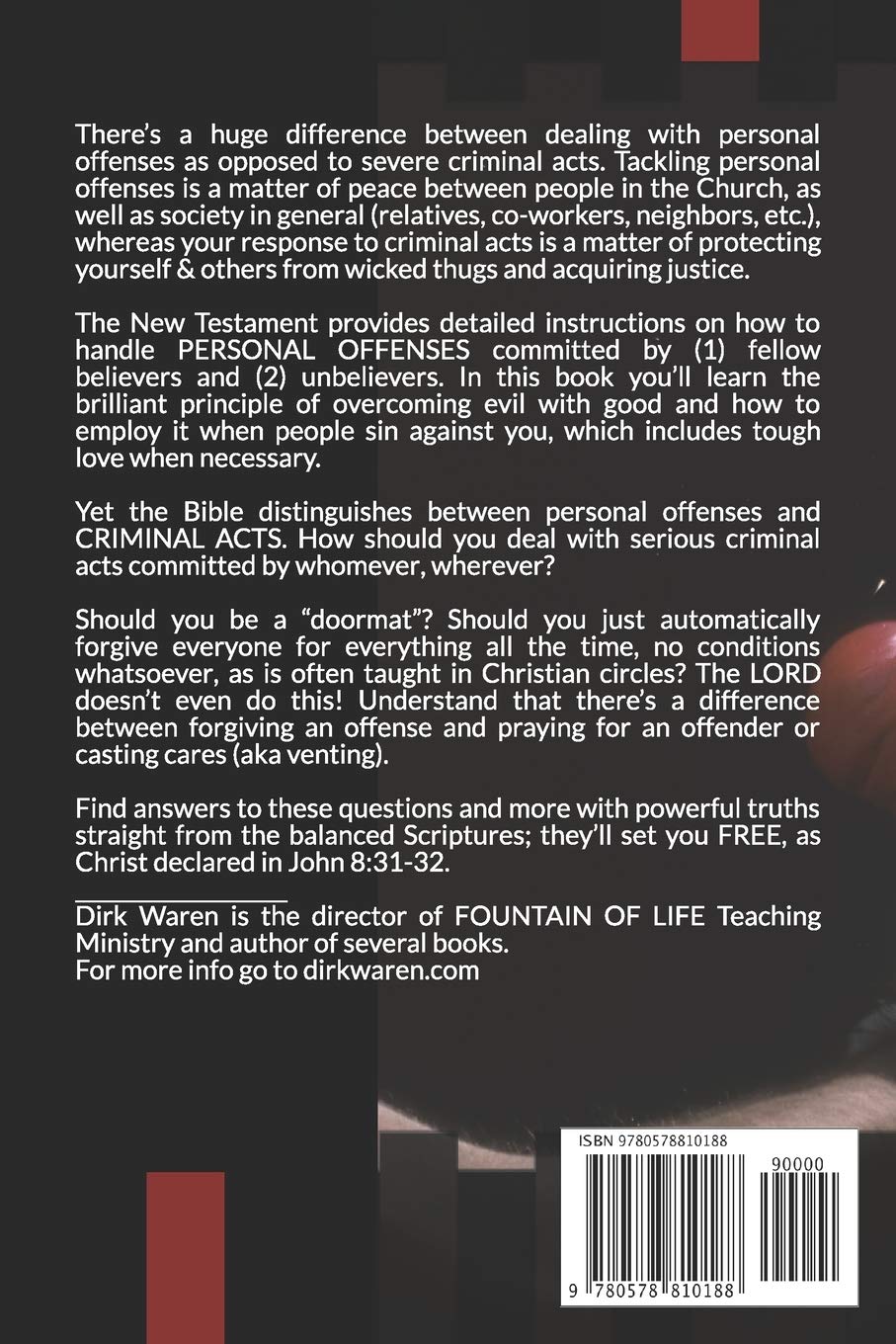
- The print book is available here for only $5.06 (121 pages)
- The Kindle eBook is available here for just 99¢!
Both links allow you to “look inside” the book.
Related Topics:
Spiritual Growth — The Four Stages
Absolute Pacifism (Unbiblical) vs. Limited Pacifism (Biblical)
Should Christians RESIST Criminal Acts? (video)
Military Service — Is it Okay for Believers to Serve in the Armed Forces?