
What Is a DEACON?

The Greek word for ‘deacon’ is diakonos (dee-AK-on-os) and literally refers to anyone who performs a service. The deacon is a position in the body of Christ that refers to those officially designated to perform service-oriented tasks at fellowships subordinate to the fivefold ministers in servant-leadership thereof, such as ushers, greeters, secretaries, custodians, sound operators and guards.
These services are “helps ministry” and vary depending on the unique demands of the particular ministry, culture, time period and needs of the people therein. For instance, sound operators are a fairly new position in the scope of Church history.
Notice what the apostle Paul instructed his protégé Timothy on the deacon position:
In the same way, deacons are to be worthy of respect, sincere, not indulging in much wine, and not pursuing dishonest gain. 9 They must keep hold of the deep truths of the faith with a clear conscience. 10 They must first be tested; and then if there is nothing against them, let them serve as deacons…
12 A deacon must be faithful to his wife and must manage his children and his household well. 13 Those who have served well gain an excellent standing and great assurance in their faith in Christ Jesus.
1 Timothy 3:8-10,12-13
Not just anyone who says they’re a Christian can be a deacon. They must first be evaluated by servant-leaders in the ministry and proven to be respectable, honest, not drunkards (or druggies), not lovers-of-money, faithful to his/her spouse and able to effectively manage his/her household. These general qualifications would apply to anyone functioning in a service-oriented position at an assembly. After all, would you want the sound operator or camera person at your fellowship to leave the service and commit adultery or fraud on their off days? Obviously not.
How do you distinguish an official deacon from a believer at the fellowship who’s simply serving in some manner, like serving coffee or distributing food? You could say that the latter, while not an official deacon, is a deacon in spirit; and will likely become a deacon before too long.
Paul’s instructions on deacons in the context of 1 Timothy (above) refer specifically to the church in Ephesus that Timothy was pastoring, which was located in what is today western Turkey. While this cultural context called for deacons to be male in that particular region & time period, it does not exclude the possibility of female deacons in every assembly throughout the Church Age since Phoebe was a deacon at the church in Cenchrea (Romans 16:1); and Euodia & Syntyche were deacons as well (Philippians 4:2-3).
As such, Paul’s instructions in 1 Timothy 3 cannot be interpreted to mean that all deacons must be male during the Church Age. Remember, “there is no male and female, for you are all one in Christ Jesus” (Galatians 3:28 ESV).
If you’re a fivefold minister and live in a part of the world where it’s best to only have males in deacon positions, like Timothy’s situation in Ephesus, then — by all means — do so as led of the Spirit, otherwise having female deacons isn’t an issue. The most important thing is that the person in the deacon position be qualified for it, whether male or female.
Speaking of the gender of deacons, I’ve been to myriad assemblies over the last several decades since turning to the Lord in 1984, and I’ve noticed that certain deacon positions tend to involve males and others females, with some featuring both. For instance, I’ve rarely seen a female usher, but every secretary I’ve known in the church has been female.
Meanwhile greeters and sound operators tend to be both. And, while most security guards might be male, I’ve seen formidable female ones. Jeanne Assam, the strategic security guard at the New Life Church in Colorado Springs during the 2007 shooting incident, is a good example.
This article was edited from…

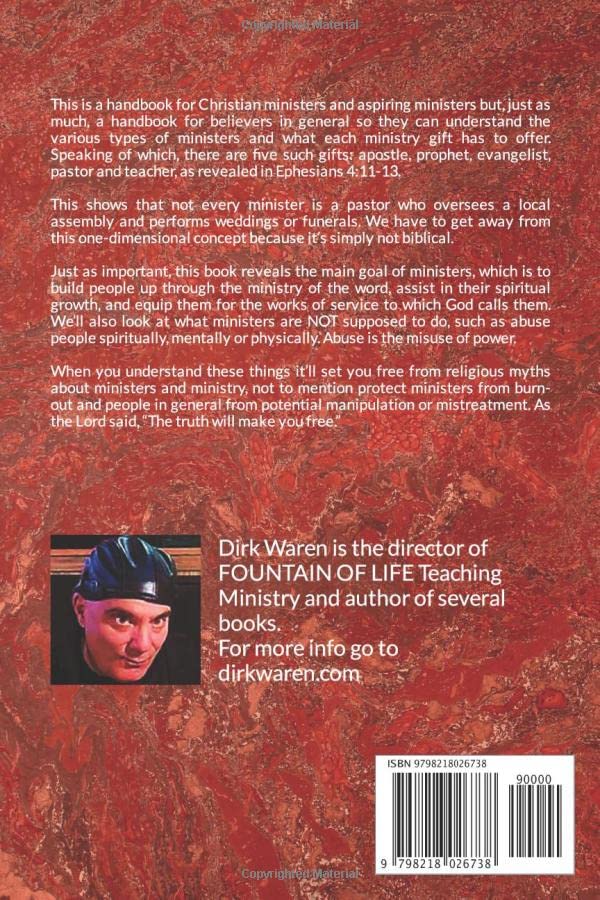
You can purchase the print book here for only $7.38 (175 pages)
Or get the Kindle eBook here for only 99¢
Related Topics:
Church of Christ — What Is It?
When Did the NEW TESTAMENT Start? When Did the CHURCH Begin?
How to Keep Yourself BLAMELESS (While Not Being SINLESS)

The apostle Paul prayed that the Philippian believers would be blameless and encouraged it:
And this is my prayer: that your love may abound more and more in knowledge and depth of insight, 10 so that you may be able to discern what is best and may be pure and blameless for the day of Christ, 11 filled with the fruit of righteousness that comes through Jesus Christ—to the glory and praise of God.
Philippians 1:9-11
Do everything without grumbling or arguing, 15 so that you may become blameless and pure, “children of God without fault in a warped and crooked generation.” Then you will shine among them like stars in the sky 16 as you hold firmly to the word of life. And then I will be able to boast on the day of Christ that I did not run or labor in vain.
Philippians 2:14-16
David is hailed in Scripture as “a man after God’s own heart” (Acts 13:22) and he put an emphasis on keeping himself blameless before the LORD:
22All his laws are before me;
I have not turned away from his decrees.
23 I have been blameless before him
and have kept myself from sin.
Psalm 18:23
13 Keep your servant also from willful sins;
may they not rule over me.
Then I will be blameless,
innocent of great transgression.
Psalm 19:13
Obviously being blameless is linked to keeping oneself from sin, and specifically “willful sins,” but how exactly can we keep ourselves blameless when other passages clearly show that even the best of us will miss it now and then? Here are three examples:
Indeed, there is no one on earth who is righteous, no one who does what is right and never sins.
Ecclesiastes 7:20
“…for there is no one who does not sin…”
1 Kings 8:46
If we claim to be without sin, we deceive ourselves and the truth is not in us.
1 John 1:8
These passages show that we’re all going to miss it here and there, even those of us who are spiritually mature and walk in the spirit on a day-to-day basis (although of course spiritual leaders should be freed-up from the bigger sins, as observed in 1 Timothy 3:1-7). That’s why 1 John 1:8 goes on to say:
If we confess our sins, he is faithful and just and will forgive us our sins and purify us from all unrighteousness.
This is the key to keeping yourself blameless before the LORD. When you inevitably miss it, be honest about it and ’fess up to your Creator. And God will be faithful & just to forgive you and cleanse you from all unrighteousness, which means you’ll once again be righteous in the Lord’s sight and even “free from accusation” (Colossians 1:22). This is what the Bible calls “keeping with repentance” (Matthew 3:8 & Luke 3:8). It’s crucial to keep yourself blameless before your Maker in this manner.
Interestingly, only humble people can do this because it takes humility to honestly admit that you’ve missed it and confess accordingly. Proud people, by contrast, have a very difficult time admitting that they’ve made a mistake, how much more so disclose that they’ve sinned? This explains something that Scripture emphasizes repeatedly: “God opposes the proud but shows favor [grace] to the humble” (James 4:6, 1 Peter 5:5 & Proverbs 3:34).
Put simply, arrogance repels God while humility attracts God (Isaiah 66:2).
You could say that the LORD is only close to the humble and this explains why only humble people are greatly used of God, like Moses (Numbers 12:3) and David (1 Samuel 18:23). While humility is meekness, it’s not weakness.
If you know someone who’s involved in ministry that 1. constantly boasts, 2. regularly puts people down (to elevate himself/herself) and 3. refuses to ever admit making a mistake, you can be sure that he/she is not close to God regardless of the airs they put on.
Understanding “Willful Sins” and Keeping Yourself Blameless
As noted above, David prayed:
Keep your servant also from willful sins;
may they not rule over me.
Then I will be blameless,
innocent of great transgression.
Psalm 19:13
You cannot be blameless before the Lord if you’re walking in “willful sins,” which David equals to “great transgression.” You see, there’s a difference between a person struggling with a certain sin, yet humbly keeping with repentance, and a person who regularly engages in willful sin. The word ‘willful’ in the Hebrew is zed (ZAYD), which means arrogant, proud, presumptuous or insolent. In other words, people who commit a willful sin know it’s a sin but still do it and aren’t sorry about practicing it. This is “great transgression” in God’s eyes and will eventually incur judgment if the individual continues to walk in it with no care of repentance.
Let me stress that the LORD is greatly merciful and compassionate (Psalm 145:8, 103:8; Jonah 4:2). In other words, God sympathetically understands the human struggle with the flesh — relapsing — and wants to set people free. If you’re struggling with a certain sin, rejoice, there is deliverance, which you can read about here. Yet Scripture also says:
Do not be deceived: God cannot be mocked. A man reaps what he sows. 8Whoever sows to please their flesh, from the flesh will reap destruction; whoever sows to please the Spirit, from the Spirit will reap eternal life.
Galatians 6:7-8
The LORD knows the difference between someone struggling with a sin, missing it, and getting back up with a penitent heart (Proverbs 24:16) as opposed to someone brazenly walking in willful sin. The former person keeps the flow of God’s grace pouring into their lives while the latter individual will eventually reap divine judgment in the form of some manner of destruction.
You see, God treats us according to the light we have (John 9:39-41, John 15:22 & John 15:24). He expects us to live up to our level of knowledge and understanding. If you’re a pint, live up to being a pint; if you’re a gallon, live up to being a gallon. The Pharisees & other Judaic leaders were very learned in the Holy Scriptures that existed up to that point (John 5:39) and so the LORD expected them to live up to the great knowledge and understanding they had, which explains why Christ openly rebuked them on appropriate occasions, calling them “hypocrites” (fakes), “blind fools,” “snakes” and “brood of vipers” (Matthew 23:13-33). Someone who’s steadily growing spiritually, even while missing it here or there and honestly keeping with repentance, is a different story.
Walking in willful sins and not keeping oneself blameless before the Lord explains Paul’s statement to the believers at Corinth, some of whom were partaking of the Lord’s Supper while engaging in willful sins, which brought judgment in the form of physical ailments and even premature death:
Everyone ought to examine themselves before they eat of the bread and drink from the cup. 29 For those who eat and drink without discerning the body of Christ eat and drink judgment on themselves. 30 That is why many among you are weak and sick, and a number of you have fallen asleep. 31 But if we were more discerning with regard to ourselves, we would not come under such judgment. 32 Nevertheless, when we are judged in this way by the Lord, we are being disciplined so that we will not be finally condemned with the world.
1 Corinthians 11:28-32
You’ll rarely hear passages like this taught at church services for obvious reasons, but it ties into keeping oneself blameless before God.
Earlier we saw how Paul linked walking blameless before God to doing “everything without grumbling or arguing” (Philippians 2:14-16). Grumbling means “to mutter, whisper or murmur with smoldering discontent.” Here’s what the apostle said about grumblers when writing to believers at Corinth (believers, not unbelievers):
10 And do not grumble, as some of them did—and were killed by the destroying angel.
11 These things happened to them as examples and were written down as warnings for us, on whom the culmination of the ages has come.
1 Corinthians 10:10-11
Those “killed by the destroying angel” refers to Numbers 16 where Korah, Dathan & Abiram and their 250 followers grumbled against the LORD and his chosen leaders (verse 11). It also includes the thousands of Israelites who grumbled the day after these rebels were slain by the LORD, which brought about the death of 14,700 more Israelites. These complaining rebels “were killed by the destroying angel” and Paul said that these examples were chronicled “as warnings to us.” Obviously, if a believer wants to be blameless before God he/she can’t be a constant grumbler, which does not mean ignoring legitimate issues that should be brought up and corrected when appropriate (Proverbs 9:7-9 & 27:5-6).
Paul linked blamelessness to not being a contentious person as well (Philippians 2:14-16). A contentious person is someone who likes to quarrel about anything and everything on a regular basis. These are angry, miserable people who lack godly peace and constantly try to drag others into the darkness of unprofitable arguments (1 Timothy 6:4; 2 Timothy 2:14; Proverbs 20:3; 27:3).
Also consider the issue of gossip/slander. At some point in spiritual growth, God expects us to remove this sin from our walk. It’s a matter of keeping oneself blameless. If a believer knows the truth yet continues to arrogantly engage in gossip & slander you can be sure s/he will reap judgment. Paul says “This is why many among you are weak and sick.” Why? Because they were engaging in willful sins with no concern of penitence; thus they reaped judgment. These people no doubt prayed for healing concerning their weakness/sickness, but their faith didn’t ‘work.’
This explains why Paul encourages believers to “examine themselves” in the above passage (1 Corinthians 11:28) and elsewhere (2 Corinthians 13:5). When a curse comes upon you (Deuteronomy 28), the first thing you should ask is if you brought it upon yourself through a willful sin. If so, then honestly ’fess up and God will forgive you, then fight the good fight of faith and receive your healing or deliverance (1 Timothy 6:12).
If this is new to you I encourage you to study up on spiritual warfare and then put what you understand into practice.
Let me close with how David — “a man after God’s own heart” — was diligent to keep himself blameless before the Lord:
Keep your servant also from willful sins;
may they not rule over me.
Then I will be blameless,
innocent of great transgression.
Psalm 19:13
9 Hide your face from my sins
and blot out all my iniquity.
10 Create in me a pure heart, O God,
and renew a steadfast spirit within me.
11 Do not cast me from your presence
or take your Holy Spirit from me.
12 Restore to me the joy of your salvation
and grant me a willing spirit, to sustain me.Psalm 51:9-12
This article is available in book form as chapter 11 of…


- The print book is available here for only $12.50 (303 pages)
- The Kindle eBook is available here for just 99¢!
Both links allow you to “look inside” the book.
Related Topics:
How God Sees YOU (video)
God Deals With People According to the Light They Have
What Are THE BASICS of Christianity?
Why Does 1 Chronicles OMIT David’s Adultery & Murder?

When the Old Testament historical book 1 Chronicles details the era in David’s reign involving his adultery with Bathsheba and murder of her husband (detailed in 2 Samuel 11:1–12:23) it omits these transgressions altogether, choosing instead to focus on David’s victories over the Ammonites, as shown in 1 Chronicles 20:1-3. Why?
Answer: Because the historical books of Samuel & Kings focused on telling the good, the bad and the ugly of Israel, which informed the Hebrews how they ended up in exile. Chronicles, by contrast, was originally written to the Jews returning to the Promised Land after 70 years of exile who needed to know if they still fit into God’s plan. In other words, they didn’t need to know the sordid details of their national history at that particular time. They needed encouraged about their national identity and history, not ashamed and deflated.
Think about it like this, have you ever shared a story from your past, but downplayed your flaws and transgressions? Most of us have. That’s basically what the book of 1 Chronicles does with King David.
Related Topics:
Hermeneutics — Proper Bible Interpretation
BEREAN SPIRIT — What Is It? How Do You Cultivate It?
What Does CHRIST IN YOU, THE HOPE OF GLORY Mean?

To understand what the phrase “Christ in you, the hope of glory” means, let’s read it in context of Paul’s letter to the believers at Colossae:
I have become its [the Church’s] servant by the commission God gave me to present to you the word of God in its fullness— 26 the mystery that has been kept hidden for ages and generations, but is now disclosed to the Lord’s people. 27 To them God has chosen to make known among the Gentiles the glorious riches of this mystery, which is Christ in you, the hope of glory.
28 He is the one we proclaim, admonishing and teaching everyone with all wisdom, so that we may present everyone fully mature in Christ.
Colossians 1:25-28
“Christ in you, the hope of glory” (verse 27) is the “mystery that has been kept hidden for ages and generations” but now is revealed to people through the awesome Christian message (verse 26). It refers to the Lord being in the believer through spiritual regeneration via the seed of Christ (1 John 3:9; 1 Peter 1:23; Titus 3:5; James 1:18), as well as the permanent indwelling Spirit of Christ (Romans 8:9), which is the seal and hope of all glorious things to come (2 Corinthians 1:22; Ephesians 1:13-14). What glorious things are these?
- Acquiring intrinsic immortality (2 Timothy 1:10);
- The bodily resurrection (1 Corinthians 15:42-44);
- And inheriting the new heavens & new earth, the eternal home of righteousness (2 Peter 3:13).
Related Topics:
What Is the MYSTERY OF THE AGES?
The Fountain of Life Within (video)
How to Walk FREE OF THE FLESH by being Spirit-Controlled
Did PAUL’S MESSAGE Contradict Jesus & James’ Gospel?
Are Believers Only to Receive From THE EPISTLES OF PAUL?
God Deals With People ACCORDING TO THE LIGHT THEY HAVE

The LORD deals with people according to the light they have. Once we have revelation of a certain truth we are responsible for living according to it (or living in light of it). This can be observed in a few key passages, like these:
Jesus said, “For judgment I have come into this world, so that the blind will see and those who see will become blind.”
40 Some Pharisees who were with him heard him say this and asked, “What? Are we blind too?”
41 Jesus said, “If you were blind, you would not be guilty of sin; but now that you claim you can see, your guilt remains.”
“If I had not come and spoken to them, they would not be guilty of sin; but now they have no excuse for their sin.”
If I had not done among them the works no one else did, they would not be guilty of sin. As it is, they have seen, and yet they have hated both me and my Father.
Christ wasn’t talking about physical blindness in the first passage, but rather spiritual blindness. The Pharisees & other Judaic leaders were very learned in the Holy Scriptures that existed up to that point (John 5:39), but they had unfortunately allowed the spiritual disease of legalism to infect them — aka dead religiosity — and, as such, they were arrogant, rigid know-it-alls who couldn’t see the forest for the trees, spiritually speaking. The very Scriptures they diligently studied pointed to Christ, but here he was on Earth ministering with God’s powerful anointing and yet they rejected him due to their hateful jealousy and, worse, wanted to murder him (John 5:36-40 & John 8:31-47).
Here are a couple other supportive texts:
“The servant who knows the master’s will and does not get ready or does not do what the master wants will be beaten with many blows. 48 But the one who does not know and does things deserving punishment will be beaten with few blows. From everyone who has been given much, much will be demanded; and from the one who has been entrusted with much, much more will be asked.”
Luke 12:47-48 (here’s the whole passage)
If anyone, then, knows the good they ought to do and doesn’t do it, it is sin for them.
This obviously isn’t an excuse to stay in ignorance, but it does show that God handles people according to the light they have. For instance, the LORD deals differently with a believer who is in his or her first few years of salvation as opposed to someone who’s been a believer for 37 years and is very versed in the Scriptures along with much experience in the things of God in general.
Our Creator takes into consideration things like the person’s stage of spiritual growth, talents, calling and access to knowledge, as well as understanding of that knowledge. A new believer who grew up in a godless, lawless culture might not know a certain sexual activity is a sin, like fornication, and so God deals with him accordingly. As the believer grows, however, he’ll soon learn truth in regards to sexual propriety thru God’s word and the guidance of the Holy Spirit; the LORD then holds him accountable to what he knows and understands.
As Yeshua said, “From everyone who has been given much, much will be demanded; and from the one who has been entrusted with much, much more will be asked.” (Luke 12:48). You could put it this way: If you’re a half-pint, live up to being a half-pint; if you’re a gallon, live up to being a gallon; if you’re a two-ton tank, live up to being a two-ton tank.
Let me close by emphasizing that God is love (1 John 4:16) and therefore is greatly compassionate & merciful with his children:
8 The Lord is gracious and compassionate,
slow to anger and rich in love.
9 The Lord is good to all;
he has compassion on all he has made.Psalm 145:8-9
Therefore, since we have a great high priest who has ascended into heaven, Jesus the Son of God, let us hold firmly to the faith we profess. 15 For we do not have a high priest who is unable to empathize with our weaknesses, but we have one who has been tempted in every way, just as we are—yet he did not sin. 16 Let us then approach God’s throne of grace with confidence, so that we may receive mercy and find grace to help us in our time of need.
Hebrews 4:14-16
Related Topics:
Spiritual Growth — The Four Stages
SPIRITUAL GROWTH Is Like Climbing a Mountain
What Does THEY SHALL TAKE UP SNAKES Mean?

When the Lord gave the Great Commission he noted that certain signs would accompany believers:
“And these signs will accompany those who believe: In my name they will drive out demons; they will speak in new tongues; 18 they will pick up snakes with their hands; and when they drink deadly poison, it will not hurt them at all; they will place their hands on sick people, and they will get well.”
Mark 16:17-18
To properly understand what Christ meant by the statement “they will pick up snakes with their hands,” just look to the rest of the verse where he says “and when they drink deadly poison, it will not hurt them.” So the Messiah was talking about being accidently exposed to something poisonous and not being harmed. A good example is when Paul got bit by a deadly viper on the island of Malta after being shipwrecked:
Paul gathered a pile of brushwood and, as he put it on the fire, a viper, driven out by the heat, fastened itself on his hand. 4 When the islanders saw the snake hanging from his hand, they said to each other, “This man must be a murderer; for though he escaped from the sea, the goddess Justice has not allowed him to live.” 5 But Paul shook the snake off into the fire and suffered no ill effects.
Acts 28:3-5
This is the obvious meaning of our text: Believers will not be hurt by deadly snakes or poison, assuming they’re walking in faith (see this article for details). The rest of the account shows that this sign was a powerful witness to the inhabitants of the island along with the sign that “they will place their hands on sick people, and they will get well”:
The people expected him to swell up or suddenly fall dead; but after waiting a long time and seeing nothing unusual happen to him, they changed their minds and said he was a god.
7 There was an estate nearby that belonged to Publius, the chief official of the island. He welcomed us to his home and showed us generous hospitality for three days. 8 His father was sick in bed, suffering from fever and dysentery. Paul went in to see him and, after prayer, placed his hands on him and healed him. 9 When this had happened, the rest of the sick on the island came and were cured. 10 They honored us in many ways; and when we were ready to sail, they furnished us with the supplies we needed.
Acts 28:6-10
What Christ said in Mark 16:17-18 was hypothetical, but we see here two of these actual signs in real life on Malta, as well as the effect it had on the unconverted.
Does this sign of picking up snakes warrant having “snake-handling ceremonies” where poisonous snakes are brought into an assembly and the believers handle the serpents to prove that they are true believers? Obviously not. It would be like bringing deadly poison to the fellowship, such as drain cleaner, and encouraging the believers to drink it to verify their authenticity. This is idiotic fanaticism that “puts the LORD God to the test” (Matthew 4:7; Deuteronomy 6:16).
Speaking of “snake-handling rituals,” I’ve been a believer since the age of 20 and have been to myriad assemblies in the last four decades, but I’ve never run across this kind of dubious ceremony, not even close, even though I’ve attended numerous varied Pentecostal/Charismatic services, including in Appalachian areas. However, I have seen snake-handling rites depicted in a couple movies. So, while there have been cases of this peculiar rite occurring in a small number of isolated churches, typically in Appalachia, it’s more of a cinematic myth than reality. I bring this up because Carol, my wife, worked with a woman a few years ago who kept referring to “snakebite churches,” which Carol & I found amusing. For the most part, they don’t exist except in the minds of Hollywood scriptwriters.
In any case, “they will pick up snakes with their hands” should be taken in the obvious sense relevant to Acts 28:3-5.
However, there is…
A Deeper Interpretation
Sometimes Scripture has a straight-forward meaning as well as a subtextual one. A good example would be Paul’s figurative interpretation of two historical people, Sarah and Hagar (Galatians 4:24).
So is there a deeper meaning to Christ’s statement “They shall take up serpents” in Mark 16:18? Yes, there is a viable symbolic interpretation. Consider when the LORD gave Moses & Aaron the assignment to appear before Pharaoh when the Hebrews were slaves in Egypt:
Then Moses answered and said, “But suppose they will not believe me or listen to my voice; suppose they say, ‘The Lord has not appeared to you.’ ”
2 So the Lord said to him, “What is that in your hand?”
He said, “A rod.”
3 And He said, “Cast it on the ground.” So he cast it on the ground, and it became a serpent; and Moses fled from it. 4 Then the Lord said to Moses, “Reach out your hand and take it by the tail” (and he reached out his hand and caught it, and it became a rod in his hand), 5 “that they may believe that the Lord God of their fathers, the God of Abraham, the God of Isaac, and the God of Jacob, has appeared to you.”
Exodus 4:1-5 NKJV
And here’s what happened when Moses & Aaron actually went to Pharaoh:
So Moses and Aaron went in to Pharaoh, and they did so, just as the Lord commanded. And Aaron cast down his rod before Pharaoh and before his servants, and it became a serpent.
11 But Pharaoh also called the wise men and the sorcerers; so the magicians of Egypt, they also did in like manner with their enchantments. 12 For every man threw down his rod, and they became serpents. But Aaron’s rod swallowed up their rods.
Exodus 7:10-12 NKJV
Summing this up, Moses & Aaron appeared before Pharaoh and, as a sign to the Egyptians (aka the world), cast a staff to the ground and it became a serpent. Pharaoh’s sorcerers cast their rods to the ground as well and they also became serpents thru their black arts, yet Moses’ serpent consumed the other serpents and their black arts couldn’t prevent it. Then Moses & Aaron took up the serpent and it became a staff once again.
This account can be interpreted symbolically when you grasp the symbols:
- The serpents represent sin in the Bible, which I’ll elaborate on in a moment.
- Jesus Christ is the Branch of God, as detailed in Isaiah’s prophecy:
There shall come forth a Rod from the stem of Jesse, And a Branch shall grow out of his roots.
Isaiah 11:1 (NKJV)
This reveals that the family tree of David’s father, Jesse, would produce a “Branch” out of its roots, which refers to the Messiah (Romans 1:2-4).
Christ, the Righteous Branch, become sin and this is represented in Moses & Aaron’s staff becoming a serpent. The Son was “cast” to the Earth by the Father in order to be sin on our behalf when crucified (2 Corinthians 5:21), but was then taken up (to Heaven) to become, once again, the Righteous Branch. He’s no longer sin on the cross, a figurative serpent, but rather has been raised for the justification of all those who believe (Romans 4:25).
This helps make sense of the Old Testament account in which the Hebrews grumbled in unbelief after escaping slavery in Egypt and so were attacked by venomous snakes (Numbers 21:4-7). In other words, their sin — represented by the snakes — was going to kill them, but they humbly repented and thus the LORD gave them the means of salvation from the deadly bites, thus escaping the wages of their sin:
The Lord said to Moses, “Make a snake and put it up on a pole; anyone who is bitten can look at it and live.” 9 So Moses made a bronze snake and put it up on a pole. Then when anyone was bitten by a snake and looked at the bronze snake, they lived.
Numbers 21:8-9
This obviously foreshadows Jesus’ crucifixion:
“Just as Moses lifted up the snake in the wilderness, so the Son of Man must be lifted up, 15 that everyone who believes may have eternal life in him.
16 For God so loved the world that he gave his one and only Son, that whoever believes in him shall not perish but have eternal life.”
John 3:14-16
Now let’s apply this to believers “taking up snakes” in a figurative sense as a sign to the world during the current Age of Grace…
As we share the awesome news of the message of Christ (2 Corinthians 5:21), the people who are behaving like serpents — that is, lost in the world and living in sin — have the opportunity to believe and die to the flesh as they are raised righteous in Christ through spiritual rebirth, thus giving their lives over to the Lord (Romans 4:24; Titus 3:5; Romans 12:1; Mark 8:35).
The New Testament teaches that believers are raised to life in Christ and have the “gift of righteousness” (John 5:24; Romans 5:17). We are like the Egyptian sorcerers’ snakes that are swallowed up by Moses’ serpent and enter the work of the crucified & resurrected Christ. This work of the Anointed One who became sin for us yet was raised from that sin & death to righteousness & life by the hand of God.*
* Jesus didn’t sin, but became sin on our behalf (Hebrews 4:15).
All those who believe are taken in Christ just like the Egyptian snakes were taken into Moses’ serpent. The Lord became sin itself and took our sins; then was raised to life for our justification (Romans 4:25 & 5:17). In short, those who believe, receive Christ and are taken in Him and raised to life together with the Lord as new creations (2 Corinthians 5:17).
As such, this sign “They shall take up serpents” is how:
- We share the awesome news of the message of Christ (2 Corinthians 5:17-21) and…
- How people in the world are delivered from sin & death by being taken into Christ through faith.
They are no longer “serpents” — hopeless, unredeemed sinners — but are now in Christ, the Righteous Branch. Amen.
Related Topics:
What Are THE BASICS of Christianity?
“Holy water” and “Saying Grace”
Baptism of the Holy Spirit (“Tongues”) and It’s Benefits
What Is GLORY in the Sense of God’s (Shekinah) GLORY?

God’s glory is linked to the LORD’s presence. When you hear a minister pray “God, show us your glory” it’s referring to the LORD manifesting glory to the people thereof. This is where we get the phrase God’s ‘manifest presence.’ The Almighty is omnipresent, of course — present everywhere at the same time in the sense of knowing what’s going on everywhere and nothing can be hidden from the Creator (Jeremiah 23:24 & Proverbs 15:3) — but this does not mean that God lacks a central presence and form (Psalm 11:4), it just means that the LORD manifests his presence and the corresponding glory to people at a certain time/place.
Some refer to this as shekinah glory, a phrase coined by Hebrew rabbis in reference to a visitation of the LORD on Earth and the corresponding glory. ‘Shekinah’ literally denotes the dwelling or settling of the presence of the Almighty, such as on the lid of the Ark of the Covenant (Leviticus 16:2). Although this Hebrew term doesn’t technically appear in the Holy Scriptures, the concept of shekinah glory does (Ezekiel 43:2-5).
One of the meatier passages on God’s glory pertains to the time when Moses was leading the Israelites through the Sinai wilderness after escaping Egypt:
Now Moses used to take a tent and pitch it outside the camp some distance away, calling it the “tent of meeting.” Anyone inquiring of the LORD would go to the tent of meeting outside the camp. 8And whenever Moses went out to the tent, all the people rose and stood at the entrances to their tents, watching Moses until he entered the tent. 9As Moses went into the tent, the pillar of cloud would come down and stay at the entrance, while the LORD spoke with Moses. 10Whenever the people saw the pillar of cloud standing at the entrance to the tent, they all stood and worshiped, each at the entrance to their tent. 11The LORD would speak to Moses face to face, as one speaks to a friend. Then Moses would return to the camp, but his young aide Joshua son of Nun did not leave the tent.
12Moses said to the LORD, “You have been telling me, ‘Lead these people,’ but you have not let me know whom you will send with me. You have said, ‘I know you by name and you have found favor with me.’ 13If you are pleased with me, teach me your ways so I may know you and continue to find favor with you. Remember that this nation is your people.”
14The LORD replied, “My Presence will go with you, and I will give you rest.”
15Then Moses said to him, “If your Presence does not go with us, do not send us up from here. 16How will anyone know that you are pleased with me and with your people unless you go with us? What else will distinguish me and your people from all the other people on the face of the earth?”
17And the LORD said to Moses, “I will do the very thing you have asked, because I am pleased with you and I know you by name.”
18Then Moses said, “Now show me your glory.”
19And the Lord said, “I will cause all my goodness to pass in front of you, and I will proclaim my name, the Lord, in your presence. I will have mercy on whom I will have mercy, and I will have compassion on whom I will have compassion. 20But,” he said, “you cannot see my face, for no one may see me and live.”
21Then the Lord said, “There is a place near me where you may stand on a rock. 22When my glory passes by, I will put you in a cleft in the rock and cover you with my hand until I have passed by. 23Then I will remove my hand and you will see my back; but my face must not be seen.”
Exodus 33:7-23
When Moses went to the Tent of Meeting outside the camp “The LORD would speak to Moses face to face, as one speaks to a friend.” To explain, the Ark of the Covenant was housed in the Tent of Meeting and God’s shekinah glory dwelt on the top of the lid of the Ark (Numbers 17:4). “Face to face” in this context is a metaphor for intimate communion between God and Moses “as one speaks to a friend.” It’s not a literal statement, but rather refers to experiencing God’s spiritual presence and the relationship thereof, not physical presence. We know this because the LORD plainly says in verse 20, “you cannot see my face, for no one may see me and live.”
Forms of God’s Manifest Presence
Someone asked me if God’s glory is a cloud, likely due to the pillar of cloud mentioned in verses 9-10. The LORD’s glory manifested as a cloud on this occasion perhaps because this cloud pillar was used to guide the Israelites through the desert wilderness for 40 years during the day and as a pillar of fire at night (Exodus 13:21). God’s glory also manifested as a cloud at the Temple on another exceptional occasion (1 Kings 8:10-11 & 2 Chronicles 5:13-14), which we also observe in the heavenly Temple in John’s vision (Revelation 15:8).
Yet God’s glory doesn’t always manifest in the form of a cloud or “holy smoke.” You might even call such manifestations exceptions. For instance, when the LORD passed before Moses and the prophet saw God’s back parts there is no mention of a cloud (Exodus 33:18-23). Furthermore, when Moses came down from Mount Sinai, after he had communed with the Creator for 40 days, his face was radiant with splendor, but there was no cloud wrapped around his face.
Moreover, when the LORD passed by Elijah on the mountain, God’s glory manifested as a gentle whisper or “still small voice” rather than a powerful wind, earthquake or fire (1 Kings 19:11-13). This shows, by the way, that we can experience God’s glory without some great spectacle occurring, like a pillar of cloud or fire. You can be sitting in a field and quietly experience shekinah glory.
Jesus Christ often went to solitary places in the wilderness to pray “as was his habit,” as shown in Mark 1:35, Matthew 14:23 and Luke 22:39-41. Do you think he experienced the Father’s presence & corresponding glory on these occasions? It’s a rhetorical question in light of the exceptional anointing Christ walked in during his earthly ministry.
The Result of Experience God’s Presence (Glory)
There are a lot of wonderful things we can get from this passage — Exodus 33:7-23 — such as the fact that Moses’ aid, Joshua, would linger in the LORD’s presence after Moses left the Tent of Meeting, and guess who God chose to lead the Hebrews into the Promised Land after Moses’ passing? Joshua! So anyone who wants to be used greatly of the LORD, spending time in God’s presence is a prerequisite, which is linked to praise & worship.
What we want to focus on here is simply how God’s shekinah glory is linked to the LORD’s manifest presence. Both the Greek word and Hebrew word for ‘glory’ bespeak of God’s splendorous intrinsic substance or essence. Since praising God naturally attracts the LORD’s presence and worship (adoration) is the natural response to being in God’s presence, a spirit of praise & worship are key to experiencing shekinah glory (Psalm 95:1-7 & Psalm 100).
Also, since the Living Word said that his words “are spirit and life” (John 6:63) it stands to reason that you’ll be filled with spirit and life if you fill yourself up with the LORD’s word. In other words, the more you spend time with the Lord and soak in the things of God in general, the more glory you’ll experience, but you’ll have to recognize & avoid the life-stifling pitfall of legalism, a horrible spiritual disease.
It is said that we become like those we hang around. For instance, if you spend a lot of time with a certain person, you’ll tend to pick up his/her traits. If you hang around smokers you’ll have an aroma of smoke. The same principle is at play with the LORD and the things of God in general. This can be observed in Moses’ hanging out with the LORD:
When Moses came down from Mount Sinai with the two tablets of the covenant law in his hands, he was not aware that his face was radiant because he had spoken with the Lord. 30When Aaron and all the Israelites saw Moses, his face was radiant, and they were afraid to come near him. 31But Moses called to them; so Aaron and all the leaders of the community came back to him, and he spoke to them. 32Afterward all the Israelites came near him, and he gave them all the commands the Lord had given him on Mount Sinai.
33When Moses finished speaking to them, he put a veil over his face. 34But whenever he entered the Lord’s presence to speak with him, he removed the veil until he came out. And when he came out and told the Israelites what he had been commanded, 35they saw that his face was radiant. Then Moses would put the veil back over his face until he went in to speak with the Lord.
Exodus 34:29-35
Spending intimate time with the LORD on the top of Mount Sinai and experiencing the glory of God’s presence had a noticeably effect on Moses. His face was radiant with God’s glory, which caused the Israelites to separate from him because they were uncomfortable, even afraid (verse 30).
The New Testament brings up this occasion (2 Corinthians 3:13-16) and ends with this thought:
Now the Lord is the Spirit, and where the Spirit of the Lord is, there is freedom. 18And we all, who with unveiled faces contemplate the Lord’s glory, are being transformed into his image with ever-increasing glory, which comes from the Lord, who is the Spirit.
2 Corinthians 3:17-18
Those who “contemplate the Lord’s glory” are transformed into God’s image with ever-increasing glory. In the Greek, “ever-increasing glory” literally means going from glory to glory. In other words, there are levels of glory that we will experience in our earthly pilgrimage corresponding to our spiritual growth. But we have to make sure we’re exposing ourselves to the LORD’s glory on a regular basis, not to mention soaking up the things of God in general. I’m talking beyond trips to your local assembly once or twice a week, although that’s good too of course (assuming the fellowship is biblical & godly and not legalistic).
All of this explains the idea of ministers with a high level ‘anointing.’ It’s the result of soaking up the presence of God & the corresponding glory, not to mention the things of God in general.
Several years ago we had a neighbor who regularly smoked. When Carol went to visit her I could always tell when she came back because she smelled like smoke. The same principle applies to those who regularly “hang out” with God. They’ll have the Lord’s light & aroma about them (2 Corinthians 2:15-17). It’s an anointing of glory.
One last thing, which is only for those interested in details…
Experiencing God’s Glory Is Distinguished From Having an “Altar Experience”
You can experience God’s manifest presence and the corresponding shekinah glory on a regular basis as you enter into the LORD’s presence (Psalm 95:1-7 & Psalm 100). This is different from having an “altar experience,” which is an encounter with God wherein you receive a potent revelation and make the necessary sacrifices. Such encounters are separate from – and should not be confused with – one’s daily fellowship with the LORD where the believer has (or, at least, can have) a 24/7 rapport with God by the Spirit (1 Thessalonians 5:17), which you can read about here.
Again, altar experiences are distinguished from entering into the Lord’s presence during Praise & Worship. How are they different? Simple: altar experiences occur infrequently and naturally involve a fresh directive and the appropriate sacrifice, physical or mental. That said, one can certainly have an “altar experience” during praise & worship when encountering God’s manifest presence. If you are not familiar with altar experiences, you can read about the topic here (or see the video).
Related Topics:
DRINK UP from the Fountain of Life (video)
Is Christianity a “RELATIONSHIP With God”?
Spiritual Growth — The Four Stages
Spiritual Growth is Like Climbing a Mountain
Believers Who Believe in SPIRITUAL GIFTS vs. Those Who Don’t

I just read a long rant by a minister who rebuked some Pentecostals/Charismatics for their arrogance and stressed how the fruits of the spirit are the true evidence of spiritual maturity. He had some corrective things to say that the body of Christ needs to hear, particularly fleshly believers in the Pentecostal/Charismatic camps, but other things he said showed a very limited understanding of the topic of glossolalia and spiritual gifts. Worse, he came across as looking down on Pentecostals/Charismatics, which is not good as shown in this passage:
Accept the one whose faith is weak, without quarreling over disputable matters. 2 One person’s faith allows them to eat anything, but another, whose faith is weak, eats only vegetables. 3The one who eats everything must not treat with contempt the one who does not, and the one who does not eat everything must not judge the one who does, for God has accepted them. 4Who are you to judge someone else’s servant? To their own master, servants stand or fall. And they will stand, for the Lord is able to make them stand.
Romans 14:1-4
You could insert any non-essential doctrine or practice into this scenario and it would apply. It corresponds to the wise saying:
In essentials unity; in non-essentials liberty; in all things charity
The topic this minister was addressing happened to be glossolalia and gifts of the Spirit. Believers who believe in spiritual gifts must not look down on those who don’t and vice versa. In other words, do not treat people with contempt if they don’t believe in spiritual gifts and don’t treat people with contempt if they do embrace them. The principle applies both ways.
Now let’s consider what was good and not good about this brother’s rant.
He was right to stress the importance of the fruit of the spirit as evidence of genuinely walking with the Lord (Galatians 5:16-26). He was also right to rebuke the arrogance of some Pentecostals/Charismatics who make the gift of speaking in tongues out to be the sign of a true believer. It’s not; the fruits of the spirit are — as Christ plainly said: “by their fruit you will recognize them” (Matthew 7:15-23). Notice he didn’t say “by their spiritual gifts you will recognize them.” A good example of immature believers flowing in charismatic gifts while glaringly walking in the flesh can be observed right in the Bible at the assembly in Corinth, which explains Paul’s open correction to them:
Brothers and sisters, I could not address you as people who live by the Spirit but as people who are still worldly—mere infants in Christ… 3 You are still worldly. For since there is jealousy and quarreling among you, are you not worldly? Are you not acting like mere humans?
1 Corinthians 3:1,3
This minister was right to confront this issue in his rant and correct it.
However, he was in error concerning his understanding of the gift of the baptism of the Holy Spirit. From what he said, it didn’t seem like he has spent much time studying this gift or charismatic gifts in general beyond what he understood of Acts 2. More specifically, he argued that the only purpose of glossolalia is for believers to reach unsaved people on the mission field who speak a different language. Actually there’s WAY more on speaking in tongues in the Scriptures as shown in:
- This article on the baptism of the Holy Spirit.
- This article on gifts of the Spirit.
I am so thankful for receiving the baptism of the Holy Spirit 2.5 years after I was initially saved as a young man. I can’t tell you how much it has blessed me and empowered my walk with the Lord. I encourage every believer to learn of this awesome gift and receive it. However, I don’t look down on those who are ignorant of it or reject it for one reason or another. That’s their call.
The brother stressed Christ’s words in John 14:23 “if a man loves me, he will keep my word,” but what about keeping the Lord’s word in Holy Scripture on the baptism of the Holy Spirit and spiritual gifts in general? Or should we just pretend like those many passages aren’t there? Or write them off somehow?
He argued: “They (Pentecostals/Charismatics) are more or less striving for special callings, ministerial power and gifts.” Yet doesn’t the Bible plainly instruct us to “eagerly desire” spiritual gifts (1 Corinthians 12:1, 31, 14:1, 39)? This is why believers should stay away from the false doctrine of cessationism because it encourages believers to eagerly deny spiritual gifts, which is the very opposite of what the Scriptures instruct us to do.
Paul plainly said in Scripture: “I thank God that I speak in tongues more than all of you,” which certainly smacks of spiritual boasting (notice I said spiritual boasting, not fleshly). Yet he quickly followed this up with “But in the church I would rather speak five intelligible words to instruct others than ten thousand words in a tongue” (1 Corinthians 14:18-19). This shows wise balance on his part.
When it comes to non-essential doctrines & practices we have to be careful not to treat believers with contempt just because they disagree on some issue that we have a conviction. By “non-essential” I don’t mean that these doctrines/practices are unimportant, just that they’re not essential to salvation or being a genuine Christian.
By “not treating believers with contempt” I don’t mean that you shouldn’t teach/preach what the Bible says on any topic thru rightly-dividing the Scriptures (2 Timothy 2:15). Please do so, by all means, but be prepared to prove your case from several passages. Anyone who can’t do this is probably in error. However, if the person you’re trying to convince rejects it due to sectarianism or what have you, please don’t pester them or look down on them. Grant them the liberty to reflect on the matter and make their own decisions. Then pray for them. It’s their spiritual walk, not yours or mine. As the Scripture passage says at the beginning of this article: “Who are you to judge someone else’s servant? To their own master, servants stand or fall. And they will stand, for the Lord is able to make them stand” (Romans 14:4).
Allow me to close with a fitting passage:
1If I speak in the tongues of men or of angels, but do not have love, I am only a resounding gong or a clanging cymbal. 2If I have the gift of prophecy and can fathom all mysteries and all knowledge, and if I have a faith that can move mountains, but do not have love, I am nothing. 3If I give all I possess to the poor and give over my body to hardship that I may boast, but do not have love, I gain nothing.
4Love is patient, love is kind. It does not envy, it does not boast, it is not proud. 5It does not dishonor others, it is not self-seeking, it is not easily angered, it keeps no record of wrongs. 6Love does not delight in evil but rejoices with the truth. 7It always protects, always trusts, always hopes, always perseveres.
8Love never fails. But where there are prophecies, they will cease; where there are tongues, they will be stilled; where there is knowledge, it will pass away. 9For we know in part and we prophesy in part, 10but when completeness comes, what is in part disappears. 11When I was a child, I talked like a child, I thought like a child, I reasoned like a child. When I became a man, I put the ways of childhood behind me. 12For now we see only a reflection as in a mirror; then we shall see face to face. Now I know in part; then I shall know fully, even as I am fully known.
13And now these three remain: faith, hope and love. But the greatest of these is love.
1 Corinthians 13
Related Topics:
What Is CESSATIONISM and Is It Biblical?
Spiritual Growth — The Four Stages
What Are THE BASICS of Christianity?
SLAIN IN THE SPIRIT — Is It Biblical?
HANDING an Unrepentant Believer OVER TO SATAN (?)

The apostle Paul gave a curious instruction to the Corinthian believers, an assembly that he started. It concerned a foolish man in their midst who was having sexual relations with his father’s wife. In other words, this was a practicing fornicator in the fellowship. The man was obviously confronted and corrected, but remained stubborn and impenitent. Thus Paul advised the believers to “hand this man over to satan for the destruction of the flesh, so that his spirit may be saved on the day of the Lord” (1 Corinthians 5:5).
What did the apostle mean by this? Simply that the man must be excommunicated from the assembly since he was unwilling to repent of his sin (1 Corinthians 5:12-13). The hope was that he’d eventually be spurred to repentance whereupon he’d be forgiven and warmly welcomed back. Thankfully, this is precisely what panned out, as revealed in Paul’s subsequent letter (2 Corinthians 2:6-11).
Paul was in essence instructing the believers at Corinth to hand the impenitent man over to a Discipline-Intended Trial. Nine or ten years later the apostle wrote about handing a couple of other unrepentant believers over to satan so that they’d learn a lesson (1 Timothy 1:20). To explain, there are three types of trials that believers will undergo during their pilgrimage on Earth: Self-Inflicted Trials (SITs), Discipline-Intended Trials (DITs) and Maturing-Intended Trials (MITs). Here’s an explanation of each:
- SITs are obvious: they are the result of one’s own folly, like being injured after wrecking due to reckless driving or suffering physically due to a junk food diet. In both cases the person’s travails are not due to some satanic plot, but simply his/her foolish choices. The answer to SITs is learning wisdom and applying it.
- A DIT means a curse is hitting you due to disobedience, whether a sin of commission or a sin of omission. I don’t mean “curse” like in those old horror flicks, but rather in a biblical sense (see Deuteronomy 28). If this is the case, immediately ’fess up and God will dismiss the transgression (1 John 1:8-9); then take up your weapons and “fight the good fight of faith” until the curse departs (1 Timothy 6:12).
- An MIT means that the curse is striking you for righteousness’ sake and the LORD is allowing the enemy to assault you in order to test your character and, once your character is proven, turn the negative situation around to your good (Romans 8:28). What happened to Job is a good example (Job 1-2). The genius of MITs is that God takes something in which the enemy intends to destroy you with—or, at least, hinder you—and ultimately turns it around to your good, making you “strong, firm and steadfast” “after you have suffered for a little while” (1 Peter 5:8-10). Of course, this is providing you fulfill your role by fighting the good fight of faith and enduring. (Remember: the LORD is your “helper,” not your do-everything-for-you-so-you-don’t-have-to-do-anything-at-all-er). This is precisely what happened with Joseph (Genesis 50:20).
How was handing the unrepentant man in Corinth over to satan synonymous with a DIT? Simple, a dis-fellowshipped believer is removed from the protective covering of the church assembly and placed outside where the “god of this world” is at liberty to have his way with him/her, so to speak (2 Corinthians 4:4). The enemy will thus assault the individual with one or more of the curses of the Law because this is how satan & evil spirits attack people. They don’t manifest as spooky boogeymen with cloven hooves and pitchforks, they’re invisible spiritual beings who attack through one or more of the curses of the Law.
Any curse of the Law falls into one of five categories: physical ailments, mental illness, human attack/defeat, the threat of premature death and financial attack (again, see Deuteronomy 28). For a biblical example of this, read Job 1-3 wherein the devil struck righteous Job with these five curses after the Sovereign LORD gave permission to attack him.
Let me emphasize: The ultimate purpose for “handing a person over to satan” is to win him/her back. Paul’s goal was in line with God’s love, in this case tough love. The hope was that banishment from the community of believers and suffering one or more of the curses of the Law would humble the man, provoke desperation, and ultimately shock him back to his spiritual senses, at which point he would be warmly welcomed back into the fellowship, just like the prodigal son humbly returned to his father and was received with open arms (Luke 15:11-32).
So handing a person over to satan is one-and-the-same as handing him/her over to a Discipline-Intended Trial (DIT). These kinds of trials may be challenging, but they’re good in that they provoke a person to positive change.
If this article raises as many questions as it answers, it is because it’s meant to “wet your taste” and go deeper in God’s Word on the topic of spiritual warfare, which you can do by studying & applying the material in this article.
This article was edited from chapter 20 of…
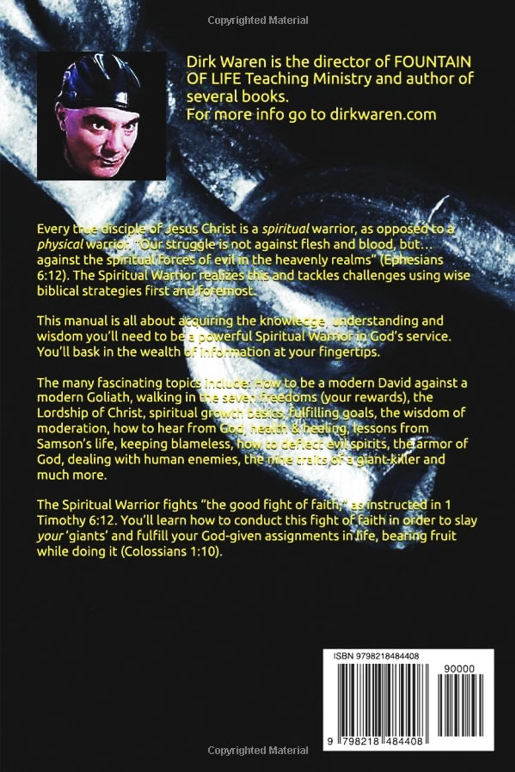
- The print book is available here for only $12.50 (303 pages)
- The Kindle eBook is available here for just 99¢!
Both links allow you to “look inside” the book.
Related Topics:
Spirituality — How to be Spirit-Controlled Rather than Flesh-Ruled
Handling Personal Offenses vs. Handling Criminal Acts
How to CONFRONT & CORRECT (and How NOT to)
What if You KNOW a Confrontation Will Turn UGLY?
False Grace — “Hyper-Grace Cotton Candy”
Judging—When SHOULD You Judge and When SHOULDN’T You Judge?
Forgiveness—Should You Forgive EVERYONE for EVERYTHING ALL of the Time?