
An Honest Look at the M WORD (Masturbation)

Back in the ’80s an Evangelical pastor who was popular with young people spoke frankly on the topic of masturbation and tried to be balanced. Being a controversial topic, interviewers would naturally ask him about it. He responded, “Look, I’ll answer your questions to the best of my knowledge and understanding, but I don’t want to be known as the ‘masturbation pastor’; that’s not where my heart is.” I feel the same here.
Masturbation is one of those subjects that are so private, so intimate, it’s understandably awkward to openly discuss. If you can’t handle an honest examination of this very personal, adult-oriented issue, I suggest leaving and maybe coming back later.
The two extreme positions on the issue reflect the Conservative and Liberal mindsets. It’s wise to consider the evidence for both sides, along with the Middle Ground position, before drawing plausible conclusions that apply to one’s own situation. That’s what we’re going to do here.
Let’s start with the fact that…
The Bible Doesn’t Directly Mention Masturbation
Whatever answers we come up with in this study, they will be from indirect material since the topic of masturbation is not mentioned in the Holy Scriptures. In short, there’s no commandment “Thou Shalt Not Masturbate.” Sexual lust is detailed, of course, but not self-stimulation of the genitals for gratification.
For anyone who might cite Onan from Genesis 38:8-10, his offense wasn’t masturbation, but rather Onan’s refusal to fulfill his Hebraic duty in perpetuating his brother’s line of descendants (Deuteronomy 25:5-10).
The obvious question is: Why doesn’t the Creator mention masturbation in the God-breathed Scriptures (2 Timothy 3:16) — the LORD’s written Word to humanity — a topic that practically every human being has to deal with during his/her life on Earth? Perhaps because it’s not a cut-and-dried issue and, whether or not masturbation is a sin, depends on several things, which will be detailed as we progress. As such, each individual will have to work out this private issue in his/her personal relationship with their Creator with fear and trembling (Philippians 2:12).
That said, I want to stress that…
A Person Is a Slave to Whatever Has Mastered Him/Her
Peter put it like this:
They promise them freedom, while they themselves are slaves of depravity—for “people are slaves to whatever has mastered them.”
2 Peter 2:19
If a person allows himself/herself to become in bondage to something that’s not necessary for survival (water, food, air, etc.) they in essence become a slave to that thing, not to mention the thing in question becomes a figurative idol. Christianity is all about true freedom, which includes freedom from the flesh and religious legalism (2 Corinthians 3:17 & Galatians 5:1), but it also supports the wisdom of moderation in all things so as not to be hindered or mastered by anything (Hebrews 12:1 & 1 Corinthians 6:12).
Anything that impedes a person’s productivity in life automatically becomes a destructive “weight” and needs to be “thrown off.” This would include the practice of masturbation. This must be understood at the outset of our study along with the fact that…
Believers Are Instructed to Control Their Bodies
This can be observed in Paul’s instruction to the Thessalonians:
It is God’s will that you should be sanctified: that you should avoid sexual immorality; 4 that each of you should learn to control your own body in a way that is holy and honorable, 5 not in passionate lust like the pagans, who do not know God; 6 and that in this matter no one should wrong or take advantage of a brother or sister. The Lord will punish all those who commit such sins, as we told you and warned you before. 7 For God did not call us to be impure, but to live a holy life.
1 Thessalonians 4:3-7
Verse 5 reveals that the issue comes down to knowing God or not knowing God. The spiritually-regenerated believer who walks with the Lord is expected to control his/her body in a way that is holy and honorable, not in passionate lust like unbelievers who aren’t walking with the Lord.
This shows that the Creator wants his children to be in a state of control over their bodies & thoughts/actions and not in bondage to anything. Yet verse 4 plainly says that believers have to “learn” to control their bodies; in other words, it’s a process — there is a progression that goes with sanctification.
Secondly, while the text is pretty straightforward, there’s also a degree of mystery: What exactly does “control your body in a way that is holy and honorable, not in passionate lust” mean for each individual? Obviously the indwelling Spirit is going to have to guide & help each believer in this matter. The Spirit’s guidance will depend on the maturity level of the person, their unique situation and their calling. Such things will be elucidated as we continue.
Now let’s consider the three perspectives on masturbation and the pros or cons of each:
The Conservative View: Masturbation Is Always a Sin
This is the go-to position of most Evangelicals, which makes masturbation a black & white issue. They base it on the fact that Christ said, “But I tell you that anyone who looks at a woman lustfully has already committed adultery with her in his heart” (Matthew 5:28), which is bolstered by righteous Job’s attitude: “I made a covenant with my eyes not to look lustfully at a young woman” (Job 31:1) and similar comments made in verses 9-12.
These passages support the obvious connection between what goes on in the mind to one’s potential actions (as well as the error of objectifying a woman due to her physical beauty). And, since it’s arguably impossible to masturbate without the use of imagination, advocates of this position reason that masturbation is always a sin.
Until the individual is married, they argue, the sexual side of life can be totally shut down through walking in the spirit (Ephesians 4:22-24). Of course learning to live by the Spirit is a process and so the believer will have to “keep with repentance” when they inevitably miss it (Matthew 3:8 & 1 John 1:8-9).
Speaking of marriage, supporters of this view point to God’s original design for the two genders, male & female, to unite together in marriage and multiply (Genesis 2:18 & 1:28) — with nothing being said about masturbation in the Song of Songs, which is God’s poetic ‘manual’ on romantic love/sex/marriage.
Likewise, the New Testament says zilch about masturbation when the topic of singlehood and marriage surfaces. For instance, the apostle Paul argued, since sexual immorality abounds, “each man should have sexual relations with his own wife, and each woman with her own husband” (1 Corinthians 7:2). While Paul stressed that being single is good, particularly in that time and place (Corinth, a city about 50 miles west of Athens, Greece), he also pointed out that marriage is the natural solution for the single person who can’t control himself/herself for “it is better to marry than to burn with passion” (1 Corinthians 7:9). This would be the fitting place for Paul, led of the Spirit, to bring up the topic of masturbation, but he mysteriously says nada.
Is nothing said about masturbation in these key passages because it’s implied that it’s a prohibited, sinful practice, as supporters of this position would argue, or is it simply because God leaves the issue open for each individual to work out in his/her relationship with the LORD? (Philippians 2:12).
As far as releasing pent-up sexual energy goes, adherents of this view maintain that the Creator has provided a natural way for a person to release constrained sexuality; it’s called the wet dream (Deuteronomy 23:10-11). As such, masturbation is not necessary to release bottled-up sexual energy since a wet dream will naturally do it for the individual.
If you are satisfied with the arguments for this position, I encourage you to stick with it (Romans 14:14). However, if you discern some holes or unexplained details, read on. But, first, let’s consider the other side of the moral spectrum…
The Liberal View: Masturbation Is Never a Sin
A moderate Liberal argued that masturbation was God’s gift to assist people with pent-up sexual energy (presumably single people). While this sounds somewhat reasonable, the radical Liberal position goes back to the sexual revolution of the 60s and the foolish Leftie mantra: “If it feels good do it.” This is the philosophy of hedonism. Those who subscribe to hedonism are libertines.
When it comes to carnal desires, no matter how questionable, libertines typically encourage the embracing of the whim. After all, you were “born that way,” they argue, and so you are free to indulge because “it’s the way you were made.” Does this mean an adult male is free to pursue having sex with a 14 year-old girl because he experiences the desire and therefore was “born that way”? Should a woman who has the whim to eat 2 gallons of ice cream per day do so because she was “born that way”? Should a youth become a druggie/drunkard because he has the desire to be wasted? Obviously not in all three cases. And this reveals the absurdity of libertinism: Just because you experience a desire doesn’t automatically mean it’s good and you should act on it or base your life around it.
Speaking of which, Liberals tend to encourage people to base their identities around curious desires and whims. To deny a flesh urge is repression to them; and repression of desire, they reason, creates a “repressed” individual, which they consider mental illness. Personal discipline is an abomination to libertines unless it involves things like performing yoga or not using straws. Yes, I’m being amusing, but it’s pretty much the truth when it comes to Leftwingers.
It comes as no surprise, therefore, that the Liberal view on masturbation is that it’s natural & healthy and can be practiced as often as the individual wishes, regardless of whether he/she is single or married. “If it feels good, do it!”
Since modern-day Liberalism is equal to what the Bible calls “the world” (1 John 2:15-17) — and explains why I refer to it as LIEberalism — this viewpoint can be dismissed out of hand in this discussion. Remember, these are the folks who say with a straight face that there are 152 genders (or whatever the tally is these days) and that a man can become a woman by simply identifying as a female or, worse, having his penis surgically removed and being pumped with female hormones; either way, he can then legitimately compete in female competitions and be praised for winning (rolling my eyes).
The Middle Ground: Masturbation May or May Not Be a Sin, Depending on the Individual and Details Thereof
This view argues that, since masturbation is not mentioned in the Bible and there is no direct prohibition against it, whether or not it is permissible in a person’s life depends on his/her unique position, their level of spiritual maturity and the leading of the Spirit. Let’s look at each of these:
- The person’s unique position: God doesn’t make people ‘cookie-cutter’; we’re all unique. What may be an issue for one person is not an issue whatsoever for another. For instance, Paul spoke of his gift of continence to which he acknowledged many others don’t have, yet they have other gifts (1 Corinthians 7:7). Some single men have exceptionally high sex drives and the occasional ‘wet dream’ arguably isn’t going to cut it for them. As for Paul’s argument that “it is better to marry than to burn with passion” (1 Corinthians 7:9), while this may be true, it would be extremely foolish to marry someone solely on the grounds of sexual gratification since it’s a huge commitment and life-altering matter.
- The person’s level of spiritual maturity: There’s a world of difference between, say, a new believer at 20 years of age and a seasoned man or woman of God of 55. There are stages to spiritual growth, not to mention keys to spiritual growth, and so everyone isn’t at the same place.
- Conscience and the leading of the Spirit in the individual’s life: Since masturbation isn’t mentioned in the Scriptures and there is no direct prohibition against it, the believer is going to have to go by the leading of the Spirit within and the conviction thereof (1 John 3:19-24). In other words, if your conscience & indwelling Spirit convict you of something, then don’t do it. If there is no conviction — at least currently — then you can be certain that “to the pure all things are pure” (Titus 1:15). However, when the Spirit guides you to remove something from your life, you are obligated to do so since “you are not your own, you were bought at a price” (1 Corinthians 6:19-20).
It goes without saying that we have to be careful with the verse that says “to the pure all things are pure.” This shouldn’t be mistaken to mean that a sin can ever be pure, like adultery. We also have to be careful of the self-deception of being “pure in our own eyes” (Proverbs 16:2 & Proverbs 30:12).
While the Middle Ground position respects the Conservative view and admits that believers should stick with that position if they’re convinced of it, à la Romans 14:14, it objects to its black & white simplicity. For instance, both Matthew 5:28 and Job 3:1 are talking about committing adultery within one’s heart. But what if a married man is away from home for a long period of time and releases his sexual energy by masturbating to thoughts of his wife? By doing this, he reasons, he’ll be less prone to amorous temptations on the road. Obviously this wouldn’t be adultery and the masturbation would arguably be permissible.
For those who understandably contend that the same principle would apply to the sin of fornication, what if the ‘woman’ in question is a drawing or image. To explain, in concentration camps, like Soviet gulags, artists would draw an alluring sketch of a woman and barter it to other captives. How exactly can a man commit fornication with a ‘woman’ that doesn’t exist? In other words, if what the person is imagining when he/she masturbates involves an unreal figure, how exactly is it a sin, unless of course the Spirit leads that person to not do it or stop the practice?
What if a single man with an exceptional sex drive expunges his sexual energy in this manner on the grounds that it will assist in evading amorous temptations, including the allure of porn, which is always just a click away in the modern day? In other words, to him, it basically removes that challenge from the table and frees him up for spiritual things. I’m not necessarily agreeing with this position, just sharing what guys have said who deal with this real-life issue.
On top of all this is the glaring question: When does merely appreciating beauty end and sinister lust begin?
These kinds of questions are naturally troubling to those who see everything in black & white, which is what some STAGE TWO believers tend to do. This is said with zero condescension; it’s simply a reflection of the way it is with spiritual growth and non-growth. Yet we’re talking real-life issues and struggles here, which demand frankness and tackling the hard questions.
In any case, the Middle Ground position acknowledges that masturbation is something that the Lord will eventually weed out of a person’s life as he/she grows, à la Colossians 3:5 and 1 Thessalonians 4:3-7, but this is going to be accomplished by the Spirit’s leading and not some legalistic religious rule that’s not actually cited in the Bible. It’s the aforementioned process of sanctification.
Remember, the Bible emphasizes God’s compassion, which means sympathetic understanding of our plight in this fallen world (Psalm 145:9 & Hebrews 4:15). In short, anyone struggling with the things we’re talking about here, the Lord understands — the Lord cares. God’s not some ogre in the sky waiting to smash people with a cosmic baseball bat; the Lord’s full of love, mercy and compassion for his children (Psalm 86:15, 103:8 & 103:13), which is not to say that that there isn’t a time for divine discipline (Hebrews 12:5-7). God is for you, not against you (Romans 8:31). It’s of the utmost importance to your spiritual health that you get a hold of this!
A young minister strongly advocated the Conservative position in an honest article, arguing that masturbation is indeed a sin, yet the reason for his rigid stance was revealed in his testimony: He became captive to the practice in his teens and desperately wanted freedom. Upon turning to the Lord he acquired emancipation, but the experience unsurprisingly left him viewing masturbation as a great sin and his personal #1 flesh-enemy. Yet this doesn’t necessarily make masturbation a sin any more than it makes playing computer games a sin because an individual is in bondage to the activity. What about the gazillions of people who play computer games, but they do so in moderation and there’s zero bondage?
The same goes for the severe alcoholic who turns to the Lord and escapes the bondage of drunkard-ness. Just because drinking alcohol is a sin to this person, it doesn’t mean another person who isn’t an alcoholic can’t drink a sip of alcohol, assuming s/he is in an environment that’s not going to make someone stumble (Romans 14:13-23). Are you following?
One pastor I served under adamantly taught from the pulpit that merely shopping at a store that sells alcoholic beverages is a sin. Why? Not because the Bible says it’s a sin, obviously, but rather because he was a serious alcoholic before giving his life to the Lord and this caused him to unjustly condemn anything involving alcoholic beverages, even if it wasn’t immoral from a biblical standpoint. (While this is wrong and grossly legalistic, the Holy Spirit might of course lead a specific believer to not shop at a certain establishment for one reason or another).
Speaking of alcoholic beverages, supporters of the Middle Ground position believe masturbation could be equated to the topic of alcohol in the Bible. While being a drunkard is indeed a sin (Galatians 5:19-21), drinking in moderation is not (Matthew 11:19 & 1 Timothy 5:23) — assuming a believer even chooses to drink an alcoholic beverage in the first place (some could care less about alcohol, like me). As long as it doesn’t compel anyone who struggles with alcoholism to fall or troubles someone with a weak conscience, it’s allowable. In short, just as drinking alcohol can become a bondage and therefore detrimental to someone’s life, so can masturbation, yet neither are evil in-and-of-themselves (Romans 14:14). The details of the person, their situation and the leading of the Spirit will determine if either is permissible or destructive at the time.
Closing Word
I was reluctant to do this article because the topic is controversial and any minister who doesn’t staunchly support the Conservative position is readily written off as “going Liberal” (at least in Evangelical circles). But that’s hardly the case here. In any event, there’s pressure for ministers to tout the Evangelical convention on this topic — the Conservative position — or just keep mum on the subject.
Since masturbation is not directly mentioned in Scripture — and God obviously did this intentionally — it comes down to a matter between the individual believer and their Creator. It’s one of those “disputable” issues that should be kept between the person and their LORD (Romans 14:22) as they weigh the applicable verses of Scripture, their conscience and the guidance of the Spirit. In short, it’s a private matter.
Someone mocked the idea of God — the Creator of all things — caring about what a guy does with his pee-pee, which is an understandable point, but the Lord does care since we were bought at great price:
Flee from sexual immorality. All other sins a person commits are outside the body, but whoever sins sexually, sins against their own body. 19 Do you not know that your bodies are temples of the Holy Spirit, who is in you, whom you have received from God? You are not your own; 20 you were bought at a price. Therefore honor God with your bodies.
1 Corinthians 6:18-20
We are not our own; the LORD purchased us through the precious blood of Christ and we’re to offer our bodies as living sacrifices (1 Peter 1:18-19 & Romans 12:1). As far as our thoughts go, the Bible acknowledges that thoughts run our lives and thus God is very interested in what goes on in our minds (Psalm 24:3-5, Proverbs 15:26, Matthew 5:8, Colossians 3:2 & Philippians 4:8). For one, our thought life determines our actions, one way or another.
Personally, I don’t masturbate. The Holy Spirit pruned it from me long ago as part of my particular process of sanctification. That’s my example. How, when, and why the Lord deals with other people on the issue is between them and their Creator. I don’t care to know the details because it’s a TMI matter of the first order. This doesn’t mean, of course, that they can’t talk to a spiritual mentor about it if they feel the need to do so, just be sure that he/she is actually spiritual and not a gossip (Matthew 7:15-23). (For instance, I’ve come across ministers who regularly counsel others and have been known to share details of their counselee by name behind their backs, typically with other ministers; it goes without saying that this is outrageously wrong, but it unfortunately happens).
The reason I decided to cover this topic is because the journey in finding answers from God’s Word brings up many issues relevant to one’s walk with the LORD in this fallen world, such as spiritual development, self-control, thought life, appreciating beauty vs. lust, walking in the spirit, knowing God, Christianity vs. legalism, libertinism, disputable issues and so on.
Our conclusion is that the Liberal view should be dismissed outright because it embraces the folly of libertinism. The Conservative view should be respected and works for many believers while the Middle Ground perspective honestly explores the holes in that view and dares to tackle the ignored details. So the truth lies somewhere between the Conservative position and the Middle Ground position. Being a decidedly private matter, it’s up to each believer to work it out with their Maker on their spiritual journey with fear and trembling.
Amen.
This article is also available in book form as a chapter in…

- The print book is available here for only $7.26 (171 pages).
- The Kindle eBook is available here for just 99¢!
Both links allow you to LOOK INSIDE the book.
Related Topics:
Beauty, Objectification and Lust
How to FEAR NOT in Perilous Times

The Bible encourages believers to “fear not” and “do not be afraid” at least a hundred times with myriad more if you count variations, like “have no fear,” “do not worry,” “be anxious for nothing” and “do not be dismayed.” A good example from the Old Testament is Isaiah 41:10 while Luke 12:32 and Philippians 4:6 are examples from the New Testament.
Walking in a state of faith rather than fear is especially relevant today with corrupt politicians & their media auxiliary stirring up a pandemic of fear and prolonging it — the fear of getting sick, the fear of suffering, the fear of dying — followed by socially manipulating citizens to get experimental vaccines at the threat of losing their jobs, restricting travel & consumption and even being forcibly interred in FEMA camps. Anyone who claims this hasn’t been increasingly happening around the globe in 2020-2022 is naïve and misinformed.
Here’s an applicable passage for comfort and faith in these trying times:
1 Whoever dwells in the shelter of the Most High
will rest in the shadow of the Almighty.
2 I will say of the Lord, “He is my refuge and my fortress,
my God, in whom I trust.”
3 Surely he will save you
from the fowler’s snare
and from the deadly pestilence.
4 He will cover you with his feathers,
and under his wings you will find refuge;
his faithfulness will be your shield and rampart.
5 You will not fear the terror of night,
nor the arrow that flies by day,
6 nor the pestilence that stalks in the darkness,
nor the plague that destroys at midday.
7 A thousand may fall at your side,
ten thousand at your right hand,
but it will not come near you.
Psalm 91:1-7
Here’s another:
“no weapon forged against you will prevail,
and you will refute every tongue that accuses you.
This is the heritage of the servants of the Lord,
and this is their vindication from me,”
declares the Lord.Isaiah 54:17
Can a New Covenant believer claim these promises from the Old Testament by faith and walk in them? Yes. Paul said:
For no matter how many promises God has made, they are “Yes” in Christ. And so through him the “Amen” is spoken by us to the glory of God.
2 Corinthians 1:20
Anyone who’s “in Christ” — in covenant with God thru Christ — can claim these promises by faith. And this explains how, during the last couple of years of the C0vid outbreak and the corresponding hysteria, I’ve never taken a C0vid test, never had the symptoms and never worried about it except for a few days of melancholy in Spring, 2020, but I overcame it.
Update: I did finally get attacked by something resembling the flu for a few days in September, 2022, but resisted in faith, rested, and was fully restored; whether or not it was C0vid, I don’t know and don’t care.
This is walking in a state of “FEAR NOT.”
Anyone can do this but they have to do three things:
- Be a believer; that is, be “in Christ” (which you can read more about here).
- Turn off the fear-inducing misinformation of the lamestream media, which has to do with guarding your heart as the wellspring of life (Proverbs 4:23).
- Put on the armor of God on a regular basis (Ephesians 6:10-18).
The two most relevant pieces of the armor needed to overcome the mass C0vid panic are the belt of truth and the shield of faith:
- The belt of truth has to do with procuring the truth on which you base your faith (otherwise you won’t have faith). This would include the above two passages — Psalm 91:1-7 and Isaiah 54:17 — which are promises from God’s Word on which you establish your trust/belief.
- The shield of faith is activated by releasing your faith thru speaking according to the promises of God, which corresponds to the fact that your words have the power of life and death (Proverbs 18:21). This invisible “shield” erected around you will extinguish all the flaming arrows of the evil one,” including any dangerous virus (Ephesians 6:16).
This is how you FEAR NOT in perilous times like these. As Psalm 91 puts it, “You will not fear the terror of night, nor the arrow that flies by day, nor the pestilence that stalks in the darkness, nor the plague that destroys at midday. A thousand may fall at your side, ten thousand at your right hand, but it will not come near you” (verses 5-7). Hallelujah!
Make this your confession and make sure you don’t cancel out faith with negative statements of fear, such as, “Oh, no, this virus (or new variant) is going around! Everyone’s getting sick or dying! I’ll probably get it next!!” Anyone who walks in fear like this will automatically cancel out their faith and thus there will be no shield to protect them. Don’t be like that.
This article is given in the spirit of humility and concern for people. There’s zero arrogance or condescension. The LORD said, “My people are destroyed for lack of knowledge” (Hosea 4:6). That’s why so many sincere believers are succumbing to fear of the virus, including Pentecostals and Charismatics. The only antidote to lack-of-knowledge is knowledge/understanding and the wisdom to apply it. Rise up O Man of God, Rise Up O Woman of God in a spirit of faith! “Be strong in the Lord and the power of his might” (Ephesians 6:10 KJV). Amen.
To further bolster your faith, see this article on the Armor & Weaponry of God and the follow-up on Spiritual Warfare.
Related Topics:
DRINK UP from the Fountain of Life (video)
How to Enlist the HELP OF ANGELS
Can I Receive a Healing? (video)
What Is the HOLY SPIRIT’S ROLE in Human Redemption?

Most people understandably think of the Son when the topic of human redemption comes up, and understandably so, since Christ obediently became a lowly human in order to greatly suffer & die for our sins so that we might be reconciled to the Creator and have eternal life (Philippians 2:5-11 & John 3:16). Yet the Holy Spirit plays a strategic role as well.
For instance, the Holy Spirit:
- Convicts us of our need of salvation (John 16:7-11)
- Draws us to the Lord (John 6:44)
- Gives us spiritual rebirth (John 3:6 & Titus 3:5)
- which baptizes us into Christ (1 Corinthians 2:11)
- Circumcises our hearts (Romans 2:29)
- Indwells us (1 Corinthians 3:16 & 2 Corinthians 6:16)
- Empowers us (Romans 8:11 & Acts 1:8)
- Guides us (John 16:13)
- Teaches us (John 14:26)
- Helps, comforts and intercedes for us (John 16:17) (the Greek word paraklétos means all three)
- Sanctifies us (1 Peter 1:2)
- And Seals us for salvation (Ephesians 1:13)
As you can see, the Holy Ghost’s role in human redemption is quite significant. Chew on these passages for greater understanding & appreciation of the awesome Spirit of God.
More on the Holy Spirit Convicting People
Here’s what Christ said about the Holy Ghost convicting the lost:
But very truly I tell you, it is for your good that I am going away. Unless I go away, the Advocate will not come to you; but if I go, I will send him to you. 8 When he comes, he will prove the world to be in the wrong about sin and righteousness and judgment: 9 about sin, because people do not believe in me; 10 about righteousness, because I am going to the Father, where you can see me no longer; 11 and about judgment, because the prince of this world now stands condemned.
John 16:7-11
The Spirit of God convicts the world in three ways
- Of sin, which means to miss the mark morally and whose wages is eternal death (Romans 6:23)
- Of righteousness because our righteousness is filthy rags (Isaiah 64:6) and we desperately need the gift of righteousness thru Christ Jesus (Romans 5:17 & 2 Corinthians 5:21)
- Of judgment because, apart from the Anointed One, people will have to stand before the LORD at the Great White Throne Judgment (Revelation 20:11-15)
When you intercede for those who are lost & dying in this world, pray accordingly.
Of course the Holy Spirit also convicts believers of sin, which is part of the process of sanctification and keeps one in fellowship with the LORD along with God’s grace/favor flowing into his/her life (1 John 1:7-9).
Related Topics:
Trinity — Father/Son/Holy Spirit — Yes or No?
Is the Holy Spirit God or a Divine Force?
Does God have a Feminine side?
Baptism of the Holy Spirit (“Tongues”) and It’s Benefits
What Is the UNPARDONABLE SIN (Blasphemy Against the Holy Spirit)?
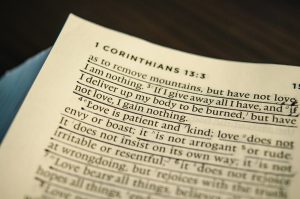
Let’s read the two most informative accounts of where the Lord detailed the unpardonable sin:
And the teachers of the law who came down from Jerusalem said, “He is possessed by Beelzebul! By the prince of demons he is driving out demons.”
23 So Jesus called them over to him and began to speak to them in parables: “How can Satan drive out Satan? 24 If a kingdom is divided against itself, that kingdom cannot stand. 25 If a house is divided against itself, that house cannot stand. 26 And if Satan opposes himself and is divided, he cannot stand; his end has come. 27 In fact, no one can enter a strong man’s house without first tying him up. Then he can plunder the strong man’s house. 28 Truly I tell you, people can be forgiven all their sins and every slander they utter, 29 but whoever blasphemes against the Holy Spirit will never be forgiven; they are guilty of an eternal sin.”
30 He said this because they were saying, “He has an impure spirit.”
Mark 3:22–30
Then they brought him a demon-possessed man who was blind and mute, and Jesus healed him, so that he could both talk and see. 23 All the people were astonished and said, “Could this be the Son of David?”
24 But when the Pharisees heard this, they said, “It is only by Beelzebul, the prince of demons, that this fellow drives out demons.”
25 Jesus knew their thoughts and said to them, “Every kingdom divided against itself will be ruined, and every city or household divided against itself will not stand. 26 If Satan drives out Satan, he is divided against himself. How then can his kingdom stand? 27 And if I drive out demons by Beelzebul, by whom do your people drive them out? So then, they will be your judges. 28 But if it is by the Spirit of God that I drive out demons, then the kingdom of God has come upon you.
29 “Or again, how can anyone enter a strong man’s house and carry off his possessions unless he first ties up the strong man? Then he can plunder his house.
30 “Whoever is not with me is against me, and whoever does not gather with me scatters. 31 And so I tell you, every kind of sin and slander can be forgiven, but blasphemy against the Spirit will not be forgiven. 32 Anyone who speaks a word against the Son of Man will be forgiven, but anyone who speaks against the Holy Spirit will not be forgiven, either in this age or in the age to come.
Matthew 12:22-32
Whether or not these two accounts are discussing the same episode or two different-yet-similar episodes is irrelevant. In both cases Christ was talking to religious leaders who weren’t actually in touch with God and were in reality children of the devil, as revealed elsewhere (John 8:44). They saw evidence of Jesus driving out demons from afflicted people and attributed it to the power of the prince of demons, Beelzebul.* He then explains the illogic of such reasoning—the absurdity that satan’s power could be overthrown by satan’s aid—but adds that anyone who speaks against the Holy Ghost will not be forgiven, whether in this age or the eternal age to come. “They are guilty of an eternal sin” (Mark 3:29).
* Beelzebul (or Beelzebub) had once been the name of a Canaanite idol, “the lord of the high place,” but by the time of Christ it was used by Hebrews in reference to the “lord of dung,” the ruler of the Underworld, satan, aka the devil.
We know that Christ was “full of the Spirit” (Luke 4:1) and this empowered him to exorcise demons and execute other miracles. So when the Teachers of the Law and Pharisees said he was driving out evil spirits by the prince of demons they were, in essence, calling the Holy Spirit an evil, unclean spirit, which is slander. This was speaking against the Holy Spirit, aka blasphemy concerning the Holy Spirit, a transgression that is unpardonable. It’s an eternal sin. Why? Because these people’s hearts were so hardened with unbelief that they attributed something clearly done by the power of God to satan! How spiritually blind and dull could they be? These are the same people who, a little earlier, objected to the Messiah’s amazing healing of a man with a shriveled hand on the Sabbath and thus plotted to murder him (Mark 3:1-6).
So the unpardonable sin is unbelief so gross that the person attributes an obvious work of the Holy Spirit—aka God—to the devil or demons. Their eyes have become so tightly closed to the light that it has become darkness; and good has become evil. This is such embedded unbelief that the person is incorrigible. In other words, someone who commits the unpardonable sin isn’t someone who is concerned that they committed such a transgression.
Anyone who’s concerned that they committed the unpardonable sin did not commit it. The very fact of their concern is proof that they didn’t. Any person who wants to make things right with his/her Creator did not commit the unpardonable sin. “The blood of Jesus… purifies us from all sin” for anyone who’s penitent (1 John 1:7-9). Those who commit the unpardonable sin, by contrast, want nothing to do with the truth—reality—which includes the LORD, the Almighty Creator (John 14:6).
Be Careful About Presuming Someone Has Committed the Unpardonable Sin
We need to be careful: Just because someone puts on the airs that they’re radically against God and truth, it doesn’t automatically mean they’ve committed the unpardonable sin and cannot be reached. For instance, Paul was formerly a Pharisee named Saul who fiendishly opposed Christians in the 1st Century to the point of apprehending believers to be imprisoned or executed (Acts 8:1-3) and even tried to get them to blaspheme (Acts 26:11). Despite being a “blasphemer and a persecutor,” Saul was shown mercy because “he acted in ignorance and unbelief” (1 Timothy 1:13) and thus the Lord was able to reach him on the Road to Damascus and he became the most strategic vessel for Christianity in the New Testament era (Acts 9:1-30).
The only way Paul would’ve committed the unpardonable sin is if, when he saw the (literal) light on the Road to Damascus (in other words, when he experienced clear evidence of the truth), he willfully closed his eyes & ears to it and continued on with his gross persecution of the Church. In such an event, he wouldn’t have even recognized his actions as sin and therefore wouldn’t seek forgiveness, but would’ve gone on stubbornly thinking he was doing the work of God with an undisturbed conscience. You see, people who commit the unpardonable sin no longer have a functioning conscience because it has been seared as with a hot iron and their hearts are thus hopelessly hardened (1 Timothy 4:2).
A good modern example would be Blackie Lawless of the shock rock/metal band W.A.S.P. Few other people would seem as far away from God as Blackie, but here’s what he said after reconciling with his Creator:
“I went to church in my teens and I went because I wanted to. I left in my late teens and came to California and studied the occult for three years. I went as far away as you could possibly go. I realized there was no truth and then I wandered around bumping into walls for the next 20 years, thinking I was mad at God. I realized that I wasn’t mad at God but I was mad at man for the indoctrination I received.
For me I had to settle this issue once and for all because I am not going to walk around with this anxiety of what’s going to happen to me and where I’m going, I got to know the truth. I got the Bible and I started reading and I thought I was going to disprove this thing once and for all.
I discover that it’s 66 books written by 40 different authors spread out over 2000 years in three continents. Most of these people didn’t know each other. I’m also aware that people think the Bible is written by man even if the Bible is inspired by God. I thought I would prove it isn’t true reading from an attitude of extreme prejudice. The more I read I realized that people weren’t just answering each other’s questions—they were finishing each other’s sentences. When I realized that, I recognized I was looking at the supernatural. I finally realized I was reading the Living Word of the Living God. And I was coming from a perspective of extreme prejudice, trying to disprove it. I’ll say this in short: it’s beyond impossible that men could have written this.”
Conversions of radically anti-Christian individuals like Saul and Blackie show that we have to be very careful about assuming someone has committed the unpardonable sin. Christ obviously discerned by the Spirit that these religious Hebrews who said he was driving out demons by satan were so hardened by their unbelief that they were hopeless.
Insights From Luke’s Account
Now let’s consider what Christ said in Luke’s account about blasphemy against the Holy Spirit:
“I tell you, whoever publicly acknowledges me before others, the Son of Man will also acknowledge before the angels of God. 9 But whoever disowns me before others will be disowned before the angels of God. 10 And everyone who speaks a word against the Son of Man will be forgiven, but anyone who blasphemes against the Holy Spirit will not be forgiven.”
Luke 12:8-10
The Lord says here that those who disown Him to people on Earth will be disowned by Christ in Heaven (cf. Matthew 10:33). In other words, these are individuals who deny the truth, which is Christ (John 1:1-4 & 14:6). He immediately follows this up with the sin of blasphemy against the Holy Spirit. These sins are technically different and yet they both result in the Lord holding the sin against the individual and not forgiving him/her. This reveals a connection: Both offenses have to do with gross unbelief that stubbornly rejects the truth despite glaring evidence to the contrary.
With that in mind, you could say that every soul rejected by God on Judgment Day and discarded in the lake of fire to suffer the second death will have committed the unpardonable sin (Revelation 20:11-15; Hebrews 10:26-27; Matthew 10:28). Every such person had been exposed to the truth one way or another in their lives, but rejected it in preference to their pet sin or godless ideology. Thus they are thrown away in the lake of fire where they reap the wages of their sin (Romans 6:23).
“And everyone who speaks a word against the Son of Man will be forgiven, but anyone who blasphemes against the Holy Spirit will not be forgiven”
How do we explain this statement by the Lord in verse 10? Answer: People in Israel were understandably uncertain about the carpenter’s son, Jesus, being the prophesied Messiah (Deuteronomy 18:15,18) and his identity would gradually dawn on many of them. You could say that the true nature of “the son of man” was veiled in his humanity & humility and thus people could’ve easily failed to grasp his identity. The same goes for other people up to this day. Thus a person’s statements against Christ based on false, fragmentary or conflicting information would be understandable and forgiven, assuming s/he is penitent.
It is true that Peter denied knowing Jesus out of fear for his life (Matthew 26:69-75) but—while his lips turned traitor for the nonce—his heart did not apostatize, not to mention he was repentant (Luke 22:31-32), which paved the way for the Spirit’s healing favor and thus Peter became a mighty apostle for the Lord. The saying “You’ve got to lose to know how to win” applies.
The Holy Spirit, however, is the invisible Divine Power on Earth strategic to human redemption seeing as how the Spirit:
- convicts us of our need of salvation (John 16:7-11),
- draws us to the Lord (John 6:44),
- gives us spiritual rebirth (John 3:6; Titus 3:5),
- indwells us (1 Corinthians 3:16 & 2 Corinthians 6:16),
- empowers us (Romans 8:11; Acts 1:8)
- and guides us on a daily basis (John 16:13).
Hence people with hardened hearts of unbelief who badmouth the glaring work of the Spirit of God have committed an eternal sin and are thus irredeemable.
Additional Insights
Let’s end with four further points relating to the unpardonable sin:
- The difference between the unpardonable sin and the “sin that leads to death” (1 John 5:16; Hebrews 6:4-6) is that the unpardonable sin applies to spiritually un-regenerated people (keeping in mind that the Judaic religious leaders weren’t spiritually reborn) whereas the “sin that leads to death” applies to seasoned born-again believers who willfully turn away from the LORD; that is, they commit apostasy. Of course, those who commit the “sin that leads to death” are also arguably committing blasphemy of the Holy Spirit since they foolishly chose to reject the Spirit who had been indwelling/guiding them.
- In addition to gross unbelief, the unpardonable sin is slandering God since it slanders the Holy Spirit as the devil (or a devil). Keep in mind that ‘devil’ literally means “slanderer” and so one of the key marks of a person who follows the devil is slander.
- The fact that there is an unforgivable sin disproves the doctrine of Universalism, which argues that everyone will eventually be forgiven and redeemed. ’Nuff said.
- People who are guilty of committing the unpardonable sin always do so due to their embracing the flesh and false beliefs. For instance, the religious leaders of Israel slandered Christ as being possessed by the prince of demons because they were envious of his great works and jealous of his increasing following (Matthew 27:18). Today a lot of people blaspheme the Holy Spirit because of their unrepentant commitment to satanic ideologies, e.g. the secular religion of LIEberalism.
To close, the unpardonable sin is deliberately closing one’s eye to the light and absurdly calling good evil despite glaring evidence to the contrary. It’s wantonly ascribing the activity of the Holy Spirit to a demonic agency. The person who does so is incorrigibly lost by his/her own stubborn volition. Any person concerned about committing the eternal sin did not commit it because their very concern is proof that they didn’t. Anyone open & willing to make things right with God CAN (Proverbs 28:13; Isaiah 1:18).
An edited version of this article is also available in book form in chapter 13 of…

- The print book is available here for only $11.99 (299 pages)
- The Kindle eBook is available here for just 99¢!
Both links allow you to LOOK INSIDE the book.
Related Topics:
What Is the “SIN THAT LEADS TO DEATH” in 1 John 5:16?
God Deals With People According to the Light They Have
How to Walk FREE OF THE FLESH by being Spirit-Controlled
How to Keep Yourself BLAMELESS (While Not Being SINLESS)
Spiritual Growth — The Four Stages
What Is THE SIN THAT LEADS TO DEATH in 1 John 5:16?

Let’s read the passage in question:
If you see any brother or sister commit a sin that does not lead to death, you should pray and God will give them life. I refer to those whose sin does not lead to death. There is a sin that leads to death. I am not saying that you should pray about that.
The topic is a fellow believer seen committing a sin and the reader being encouraged to pray for him/her, which is encouraged elsewhere in Scripture as well (James 5:15; Galatians 6:1). Then John adds that he’s only talking about a believer whose sin does not lead to death followed by the fact that there is a sin that leads to death and it’s useless to pray for that person. Notice that he doesn’t say you can’t pray for this individual, he just implies it’s useless to do so.
First of all, John is not referring to physical death here even though there is evidence in the New Testament of genuine believers receiving the judgment of premature physical death due to their sinful actions (1 Corinthians 11:28-32; Acts 5:1-10). This does not mean they’re not saved, but they’ll have to answer for their sin at the Judgment Seat of Christ (2 Corinthians 5:10). How do we know for sure that John’s not referring to physical death? A few reasons:
- ‘Context is King’ is a hermeneutical rule and physical death does not fit the context. For instance, the antithesis of death is life and the seven times that John uses ‘life’ in chapter 5 all refer to either eternal life or spiritual life and not solely physical life. Verses 11-12 are a good example. Moreover, in the very verse in question—John 5:16—John refers to ‘life’ and it’s clear he’s talking about spiritual life (in the sense of fellowship with God) since the person in question is already physically alive.
- The only other time John refers to death in this entire epistle—twice in John 3:14—he’s clearly referring to spiritual death and the corresponding eternal death.
- The idea of physical death wouldn’t ‘work’ in regards to John’s instructions in the verse. To explain, John implies that we shouldn’t pray for the believer who has committed the sin that leads to death. If John was referring to divine discipline in the form of physical death, how would we know if a brother or sister has committed a sin that has incurred the judgment of physical decease? For instance, in the case of 1 Corinthians 11:28-32 some believers were getting sick and some dying because, as Paul put it, they “eat and drink judgment on themselves.” The answer is that we wouldn’t know and thus we would apply the aforementioned verses on praying for those who have sinned and are sick (i.e. James 5:15; Galatians 6:1). The exception of course would be if the Holy Spirit informed you specifically not to pray for a certain believer who has sinned because it has incurred the judgment of premature death. But, let’s be honest, how many believers then or now are able to discern the Spirit’s leading with accuracy concerning something which would compel the person to disregard the clear teaching of Scripture in such matters (that is, praying for those who have sinned and are now sick)?
So John was talking about a sin that a believer can commit that leads to spiritual death & the corresponding eternal death. What sin is that? The book of Hebrews explains:
It is impossible for those who have once been enlightened, who have tasted the heavenly gift, who have shared in the Holy Spirit, 5 who have tasted the goodness of the word of God and the powers of the coming age 6 and who have fallen away, to be brought back to repentance. To their loss they are crucifying the Son of God all over again and subjecting him to public disgrace.
Hebrews 6:4-6
The topic of these verses is believers who have “fallen away” even though they had once been enlightened to the truth of the message of Christ, tasted of the heavenly gift (Titus 3:5), were filled with the Holy Spirit, had fed well upon the word of God and evidently had experience with the gifts of the Spirit. If a believer experiences all of this they obviously have some degree of spiritual maturity. In other words, we’re not talking about a Christian slipping into sin or struggling with sin (1 John 1:8-9; Isaiah 1:18), but rather someone who knows the truth and has walked with the Lord as a mature believer to some measure, but has willfully chosen to turn away from the faith in outright denial and rebellion.
This is the sin of apostasy, which means the abandonment or renunciation of one’s faith. It’s why the sin is referred to as “fallen away” and not merely falling down. Believers who fall down can get right back up and continue moving forward (Proverbs 24:16) whereas those who willfully fall away have abandoned the road of Christian faith altogether and have set a new course that doesn’t include the LORD or the rightly-divided Holy Scriptures.
This is what John was talking about in 1 John 5:16—apostates—since he was earlier addressing those who had left the worldwide Church (which is different from leaving a particular local assembly) and deny that Christ is the Messiah (1 John 2:19 & 2:22). Don’t pray for apostates like this because it’s useless seeing as how it is impossible for them to be brought back to repentance (Hebrews 6:4-6). Again, John was talking specifically about those who were reasonably spiritually mature, not young believers struggling with a sin problem, like many of us have done with reoccurring relapses.
I’ll give you a modern example. A dozen years ago Carol & I were part of a fellowship wherein a new family joined the assembly and the husband, who was in his late 30s, was an experienced praise & worship leader. He shortly became one of three such leaders and he would effectively lead the congregation in praise & worship. A year and a half later the Lord called Carol & me out of that fellowship to serve elsewhere, but I eventually reunited with the man a few years later. We would have friendly chats now and then, mostly on Christian doctrine and current issues; sometimes debates.
Everything was great until he started becoming increasingly contentious, arguing for the sake of arguing, which I found curious (and reveals a lack of the peace of God). Then one day he dropped a bomb by saying that the Holy Scriptures were written by the devil, blah, blah, blah. It was a bunch of gobbledygook, but he was totally serious. I couldn’t believe it. This was once a formidable man of God who led the Lord’s people in praise & worship. Now he’s outrageously contentious and blathering about God’s Word being of the devil. Go figure.
I bring this sad story up because this man is a modern example of an apostate—someone who has left the Christian faith altogether and is actively preaching gross error. It’s useless to pray for him since he was a relatively mature believer in a leadership position who had chosen to turn away from the faith. This is the sin that leads to death, as John put it.
Let me hastily that, if you’re in a situation where it appears a seasoned believer has committed the sin of apostasy and you feel led of the Spirit to intercede for him/her then, by all means, do so.
This article is also available in book form in chapter 13 of…
- The print book is available here for only $11.99 (299 pages)
- The Kindle eBook is available here for just 99¢!
Both links allow you to LOOK INSIDE the book.
Related Topics:
What Is the UNPARDONABLE SIN (Blasphemy Against the Holy Spirit)?
God Deals With People According to the Light They Have
How to Walk FREE OF THE FLESH by being Spirit-Controlled
How to Keep Yourself BLAMELESS (While Not Being SINLESS)
Spiritual Growth — The Four Stages
When You Should ASK and When You Should SPEAK IN FAITH, aka DEMAND
Christ spoke of both speaking in faith and asking for things in prayer in the same breath:
So Jesus answered and said to them, “Have faith in God. 23 For assuredly, I say to you, whoever says to this mountain, ‘Be removed and be cast into the sea,’ and does not doubt in his heart, but believes that those things he says will be done, he will have whatever he says. 24 Therefore I say to you, whatever things you ask when you pray, believe that you receive them, and you will have them.
Mark 11:22-24 (NKJV)
There was a mountain nearby and the Messiah spoke of it in a figurative sense, as if it were an obstacle or hindrance in one’s life. Jesus said that you can speak to such an obstacle by faith and what you speak will come to pass, assuming you believe.
NOTE that Christ mentions speaking three times and faith (belief) once. In other words, if you’re having trouble believing for something then keep speaking in faith and it will have positive impact on your belief since words have the power of life and death (Proverbs 18:21; Matthew 12:37). You can learn more here.
After talking about speaking in faith, the Lord goes right into the topic of asking for things in prayer, which is petition. While the two are different they’re obviously somewhat linked. They’re both forms of spiritual warfare or prayer, but one involves speaking in belief in the sense of demanding something by faith and the other involves requesting. So when should you speak in faith (demand) for something and when should you ask for it? The answer lies in comparing a couple of statements by Jesus in the Gospel of John:
“Believe me when I say that I am in the Father and the Father is in me; or at least believe on the evidence of the works [miracles] themselves. 12 Very truly I tell you, whoever believes in me will do the works I have been doing, and they will do even greater things than these, because I am going to the Father. 13 And I will do whatever you ask in my name, so that the Father may be glorified in the Son. 14 You may ask me for anything in my name, and I will do it.”
John 14:11-14
“In that day you will no longer ask me anything. Very truly I tell you, my Father will give you whatever you ask in my name. 24 Until now you have not asked for anything in my name. Ask and you will receive, and your joy will be complete.”
John 16:23-24
In both of these passages Christ is talking about asking for things. The same Greek word is used in both verses, as well as Mark 11:24 above, which is aiteó (eye-TAY-oh). This word can mean ask in the sense of making a request, yet it can also mean demand in the sense of speaking in faith. The context will determine the proper meaning.
For instance, in the first passage, John 14:11-14, the Lord was talking about performing “works,” aka miracles, and says that believers will do these same works — and even greater works — because he was going to be resurrected and sit at the right hand of the Father in Heaven (Acts 2:33). As such, he was talking about speaking in faith — demanding — in order to receive a miracle. A few examples in the New Testament include when Christ commanded the paralyzed man to get up and walk home (Matthew 9:6-8) and another occasion with an invalid at the Pool of Bethesda (John 5:8), as well as Peter’s similar miracle concerning a lame man at the Temple gate (Acts 3:6).
A miraculous healing in my own life required speaking in faith. I needed knee surgery in 2013, but didn’t want to go that radical route for understandable reasons. So Carol & I prayed over my knee every day, speaking in faith for a healing. It took about three months, but the healing manifested and I was out skiing slopes in New York the following winter. This shows that sometimes perseverance is necessary in order to receive the miracle for which you’re speaking in faith; and not just to receive your healing, but to maintain it as well (Hebrews 6:12). For details see this video.
I was simply speaking in faith as Jesus instructed in Mark 11:23 — and adding perseverance — whereas Jesus and Peter in the above three examples were presumably operating in the gifts of the Spirit; nevertheless, both methods require speaking in faith, aka demanding the miracle in question.
When there’s a need for a healing miracle you don’t ask since healing is an important part of the gospel of Christ (1 Peter 2:24); and it is God’s will that the person be healed. How can I say that with certainty? Because Christ was Immanuel — “God is with us (in the flesh)” (Matthew 1:23) — and so what the Messiah did during his ministry on Earth reveals God’s will to us. For instance, people needing serious healings would approach Jesus and ask “if you are willing.” The Lord never responded “No, it is not my will”; rather he plainly said it was his will (Mark 1:40-41; Matthew 8:1-3).
I repeat, healing is part of the gospel of Christ (1 Peter 2:24), which is one of several reasons why it’s “good news.” The Bible promises a minimum of 70-80 years of life (Psalm 90:10) so, if you’re under that age, you can claim this promise by faith (2 Corinthians 1:20). Even if you’re over 80 you can believe and receive in faith in your awesome covenant with God simply based on your righteous desire (Mark 11:24; John 14:14; John 16:24).
Chew on these Scriptures (Matthew 4:4) and you’ll have increasing insight on when to ask for something in prayer petition and when to speak in faith for a miracle; always be led of the Spirit (John 14:26; Romans 8:14). Amen.
Related Topics:
When You Should Pray “IF IT BE YOUR WILL” and When You Shouldn’t
Should You Get the Surgery or BELIEVE FOR HEALING?
FAITH — What Is It? Why Is It Important? How Does It Grow?
Why Don’t FAITH HEALERS Heal Everyone in Hospitals?
What Are THE BASICS of Christianity?
When You Should Pray IF IT BE YOUR WILL and When You Shouldn’t

Right before Christ was apprehended, abused and crucified for the sins of humanity, he prayed this prayer:
“Father, if you are willing, take this cup from me; yet not my will, but yours be done.”
Luke 22:42
The Messiah was not petitioning Father God for a financial need or healing here, but rather he was seeking the Father about direction, which involves consecrating one’s life to fulfill the LORD’s will. Christ on Earth was both God and man (Philippians 2:6-8). Being God, the Son, he knew that he was called to die for humanity (John 3:16) and that the next twelve hours of his earthly life were going to be an excruciating challenge, to say the least. Thus, being part man, he understandably sought the Father in regards to the possibility of another way — an easier way — yet ended his prayer with “yet not my will, but yours be done.”
Whenever you are seeking the LORD for direction, your flesh is naturally going to want to take the less grueling direction, yet God’s plan for your life may involve challenges and difficulties that your human side is understandably going to be resistant toward. Thus when praying for direction and consecration of your life you can request what you desire, which is usually the comfortable route, but your ultimate attitude must be “Yet not my will, but yours be done.” Why? Because you’re a servant while God is your LORD (Luke 17:7-10 & Philippians 1:1), you are a son/daughter while God is the spiritual Parent (Romans 8:15 & Matthew 23:9).
The prayer of petition, however, is a different matter. Petition refers to requesting something and must be based on the promise of God’s Word, not to mention what you ask for is received through faith:
This is the confidence we have in approaching God: that if we ask anything according to his will, he hears us. 15 And if we know that he hears us—whatever we ask—we know that we have what we asked of him.
1 John 5:14-15
For instance, we know in the Scriptures that God promises to supply our needs and even righteous desires (Matthew 21:22, John 14:14 & 16:23-24), as well as healing when needed (1 Peter 2:24, Mark 1:40-41 & Matthew 8:1-3), thus we can pray for such things and receive them by faith. Notice how Christ emphasized the importance of faith for answered petition:
“Have faith in God,” Jesus answered. 23 “Truly I tell you, if anyone says to this mountain, ‘Go, throw yourself into the sea,’ and does not doubt in their heart but believes that what they say will happen, it will be done for them. 24 Therefore I tell you, whatever you ask for in prayer, believe that you have received it, and it will be yours.
Mark 11:22-24
With the prayer of petition you don’t include the phrase “if it be thy will” because you’re praying based on the promise of Holy Scripture and you receive what you seek by faith. You must be sure it’s the LORD’s will based on the promise of God’s Word because, otherwise, you’ll likely doubt that God wants you to have what you’re seeking and this will hinder faith and sabotage your spiritual warfare. For instance, you’ll be apt to reason: “Maybe it’s not God’s will for me to be healed.” When you think like this, you inhibit faith and thus won’t get what you’re seeking.
I should add that I specified righteous desires above to distinguish them from fleshly, worldly desires (James 4:3-4).
If you’re struggling with faith to believe for answers in prayer petition, the answer is to:
- Increase your faith, which comes by drawing nearer to the Living Word in relationship (John 1:1 & 6:51).
- Increase your knowledge of the written word and the covenant promises thereof (Romans 10:17 & 2 Corinthians 1:20).
You can learn more about doing both in this video. Also see the relevant topics listed below.
Allow me to close with this thought: As you grow spiritually you’ll spend less-and-less time on petitioning for needs because such things will automatically be supplied as you put God first in your life — first, not only (Matthew 6:33). This will free you up for other, more important types of prayer, like praise & worship, simple communion, intercession and spiritual warfare, all of which you can learn more about from the links below.
Related Topics:
When You Should ASK and When You Should SPEAK IN FAITH, aka DEMAND
What Sin Did HAM Commit Against His Father Noah?

Let’s read the passage in question:
The sons of Noah who came out of the ark were Shem, Ham and Japheth. (Ham was the father of Canaan.) 19 These were the three sons of Noah, and from them came the people who were scattered over the whole earth.
20 Noah, a man of the soil, proceeded to plant a vineyard. 21 When he drank some of its wine, he became drunk and lay uncovered inside his tent. 22 Ham, the father of Canaan, saw his father naked and told his two brothers outside. 23 But Shem and Japheth took a garment and laid it across their shoulders; then they walked in backward and covered their father’s naked body. Their faces were turned the other way so that they would not see their father naked.
24 When Noah awoke from his wine and found out what his youngest son had done to him, 25 he said,
“Cursed be Canaan!
The lowest of slaves
will he be to his brothers.”26 He also said,
“Praise be to the Lord, the God of Shem!
May Canaan be the slave of Shem.
27 May God extend Japheth’s territory;
may Japheth live in the tents of Shem,
and may Canaan be the slave of Japheth.”Genesis 9:18-27
Ham’s transgression was not that he unintentionally saw Noah naked, but rather that he didn’t respectfully cover-up his father’s dubious behavior; instead he ran out and tattled to Shem and Japheth with the likely intent of gossipy ridicule. His brothers, by contrast, dealt with the awkward situation with reverence and love, which brings to mind a few verses:
Above all, love each other deeply, because love covers over a multitude of sins.
1 Peter 4:8
Hatred stirs up conflict, but love covers over all wrongs.
Proverbs 10:12
Whoever would foster love covers over an offense, but whoever repeats the matter separates close friends.
Proverbs 17:9
“Honor your father and your mother, so that you may live long in the land the Lord your God is giving you.”
Exodus 20:12
Ham didn’t conceal his father’s embarrassing situation, but rather disrespectfully gossiped about it. His brothers, by contrast, honorably covered-up the matter, literally and figuratively. The moral is that we should not be gung-ho about exposing an individual’s faults, how much more so when the person in question is your father? The same applies if someone’s your spiritual father or mother (1 Corinthians 4:15).
This does not mean that we should ignore offenses as there is a time & place for confrontation and correction, which holds people accountable to negative behavior. Yet, even then, Christ said to handle it privately on the initial confrontation and not to gossip about it (Matthew 18:15-17).
So it’s not what Ham saw that caused Noah to overlook him with his fatherly blessing and curse Canaan, but rather what he foolishly did about what he saw.
Related Topics:
Why GOSSIP & SLANDER Are So Evil
How to CONFRONT & CORRECT (and How NOT to)
What Happened to the Hebrews in the Old Testament Are WARNINGS FOR BELIEVERS
What Are THE BASICS of Christianity?
What Happened to the Hebrews in the Old Testament Are WARNINGS FOR BELIEVERS

The New Testament refers to our Hebraic forefathers who escaped slavery in Egypt:
Nevertheless, God was not pleased with most of them, for they were struck down in the wilderness.
6 Now these things occurred as examples to keep us from setting our hearts on evil things as they did. 7 Do not be idolaters, as some of them were; as it is written: “The people sat down to eat and drink and got up to indulge in revelry.” 8 We should not commit sexual immorality, as some of them did—and in one day twenty-three thousand of them died. 9 We should not test Christ, as some of them did—and were killed by snakes. 10 And do not grumble, as some of them did—and were killed by the destroying angel.
11 These things happened to them as examples and were written down as warnings for us, on whom the culmination of the ages has come.
1 Corinthians 10:5-11
As you can see, what happened to the Hebrews who escaped slavery in Egypt yet continued to live in sin was chronicled as sobering “examples” and “warnings” for us — New Covenant believers — so that we would not foolishly walk in the same transgressions and suffer accordingly. Four particular sins and the corresponding tragic occasions are named:
- Idolatry: This means worshiping something above the LORD, which doesn’t have to be a literal idol; it could be something like mammon (money). Paul got this example from Exodus 32 where the Israelites — barely out of Egypt — fell into gross idol worship. For insights on modern-day idolatry and how to walk free see this article.
- Sexual immorality: This includes all forms of sexual sin — fornication, adultery, homosexuality and so forth. This also refers to what took place in Exodus 32. The figure of 23,000 deaths is a combination of the 3000 killed by the Levites at Sinai for instigating the mass orgy (verse 28) and the participators who died from the subsequent plague (verse 35). For insights on how to walk free of any type of sexual lust see this article.
- Testing Christ: This refers to questioning the goodness and plan of the Almighty, who created us, leads us, protects us and provides for us. This example comes from Numbers 21:4-9 where the Israelites became impatient and frustrated due to Moses’ circuitous route to the Promised Land where they proceeded to speak “against God and against Moses” (verses 5 & 7). Thus the LORD sent venomous snakes against the rebels and killed them (verse 6). The only way those bitten could live was to look at a snake on a pole made by Moses at the LORD’s instructions, which foreshadowed Jesus’ death on the cross (Numbers 21:8-9).*
* Why would Christ be pictured as a snake on the cross? Because, although Jesus didn’t sin, he was made “sin on our behalf, so that we might become the righteousness of God in Him” (2 Corinthians 5:21 NASB).
Two significant things bear noting from this account: First, the attacking snakes were types of the devil & filthy spirits (Luke 10:19). How’s this apply to us? Simple: Unbelief and the corresponding disobedience hinders protective angels and looses evil spirits (“snakes”). Secondly, Paul by the Spirit says that the Israelites tested “Christ” whereas the Old Testament account in Numbers specifically says they spoke against “God” and the “LORD” (verses 4 & 7). You see, Christ is the LORD, albeit the Son, not the Father. The Israelites were speaking against The Angel of the LORD whose job was to lead them through the wilderness and into the Promised Land (Exodus 23:20-23). Thus the Israelites “spoke against the LORD,” which “tested Christ.” Chew on that.
- Grumbling: This means complaining — murmuring and muttering in smoldering discontent — which includes complaining against God’s will, his Word and his leading, not to mention his God-anointed servant-leaders, like Moses & Aaron were to the Israelites. Paul says that those who obstinately grumbled were “killed by the destroying angel.” This refers to Numbers 16 where Korah, Dathan & Abiram and their 250 followers grumbled against the LORD and his chosen leaders (verse 11). It also includes the thousands of Israelites who grumbled the day after these rebels were slain by the LORD, which brought about the death of 14,700 more Israelites. These complaining rebels “were killed by the destroying angel”!!
Do you want to be slain by the destroying angel? Of course you don’t. So don’t grumble against the LORD, his Word, his will or his anointed servant-leaders. For anyone who would argue that this doesn’t apply to New Testament believers and our assemblies, the above passage plainly says otherwise (Corinthians 10:5-11).
This doesn’t mean, of course, that you should tolerate abuse from ministers (abuse is the misuse of power). In the case of Numbers 16 Moses & Aaron were not guilty of abuse. As a matter of fact, Moses was the humblest, godliest man on the face of the Earth at the time (see Numbers 12:3-8), which is in contrast to some modern arrogant “ministers” (‘minister,’ by the way, means “servant”). If you have legitimate evidence of abuse by spiritual leaders, pray about it and confront the person as led of the Spirit, as humbly as possible. If the person is unrepentant then get one or two witnesses for support in a follow-up confrontation. Christ Himself instructed us to do this (Matthew 18:15-17). If the “minister” remains obstinate about his/her abuse then do what the Messiah adamantly instructed: “Leave them; they are blind guides” (Matthew 15:14).
More on the Application of 1 Corinthians 10:5-11
Needless to say, 1 Corinthians 10:5-11 is a sobering passage and we need to regularly examine ourselves to see if we’re honestly in the faith and repent as necessary (2 Corinthians 13:5).
The four transgressions listed — idolatry, sexual immorality, testing God and grumbling — are common sins (1 Corinthians 10:13). All believers miss it now & then and anyone who says they don’t is a liar (1 John 1:8). But servant-leaders are supposed to be spiritually mature and therefore freed-up from the bigger sins (1 Timothy 3:1-7). After all, if they aren’t free from sin how can they help others walk free?
Regardless, all believers must learn to daily “put off the old self” — the flesh — and “put on the new self” (Ephesians 4:22-24). This is a process that requires “keeping with repentance” (Matthew 3:8 & Luke 3:8), meaning humbly ’fessing up when you miss it, which keeps God’s grace and forgiveness flowing in your life (1 John 1:9). Theologians refer to this process as sanctification, which means purification. It’s a purification of the mind that naturally occurs as believers grow spiritually (Romans 12:2).
Let’s close by taking another look at the last two sins listed in 1 Corinthians 10:9-10:
- Testing Christ. Believers commit this sin when they speak against the LORD, his Word or his genuine servant-leaders. This automatically ties-up angels because angels only obey the voice of God’s Word. If believers are speaking against God’s Word, angels have nothing upon which to act. Instead, evil spirits — “snakes” — will be released to kill, steal and destroy (John 10:10). (You can read scriptural details about this here and here). If you don’t want this happening in your life then don’t speak against God’s Word, his will or his genuine servant-leaders (however, if a servant-leader is living in sin or is abusive, it needs to be addressed through intercession, confrontation and correction, although not gossip/slander).
- Grumbling. Amazingly, Korah and his fellow rebels grumbled against the LORD and Moses for delivering them from the bondage of Egypt (!), which they outrageously referred to as “a land flowing with milk and honey” (Numbers 16:12-13). I say “outrageously” because this was how God described the Promised Land he wanted to give the Israelites (Exodus 3:8). They also complained about being taken from Egypt to be killed in the desert. After Korah & his rebels were judged and wiped off the face of the Earth, thousands of Israelites complained about it and thus 14,700 were killed by “the destroying angel” via a plague that came out from the LORD (Numbers 16:46). The Bible applies this Old Testament account to New Testament believers. Needless to say, if you don’t want to be “killed by the destroying angel” then don’t be a grumbler.
Related Topics: