
When You Should Pray IF IT BE YOUR WILL and When You Shouldn’t

Right before Christ was apprehended, abused and crucified for the sins of humanity, he prayed this prayer:
“Father, if you are willing, take this cup from me; yet not my will, but yours be done.”
Luke 22:42
The Messiah was not petitioning Father God for a financial need or healing here, but rather he was seeking the Father about direction, which involves consecrating one’s life to fulfill the LORD’s will. Christ on Earth was both God and man (Philippians 2:6-8). Being God, the Son, he knew that he was called to die for humanity (John 3:16) and that the next twelve hours of his earthly life were going to be an excruciating challenge, to say the least. Thus, being part man, he understandably sought the Father in regards to the possibility of another way — an easier way — yet ended his prayer with “yet not my will, but yours be done.”
Whenever you are seeking the LORD for direction, your flesh is naturally going to want to take the less grueling direction, yet God’s plan for your life may involve challenges and difficulties that your human side is understandably going to be resistant toward. Thus when praying for direction and consecration of your life you can request what you desire, which is usually the comfortable route, but your ultimate attitude must be “Yet not my will, but yours be done.” Why? Because you’re a servant while God is your LORD (Luke 17:7-10 & Philippians 1:1), you are a son/daughter while God is the spiritual Parent (Romans 8:15 & Matthew 23:9).
The prayer of petition, however, is a different matter. Petition refers to requesting something and must be based on the promise of God’s Word, not to mention what you ask for is received through faith:
This is the confidence we have in approaching God: that if we ask anything according to his will, he hears us. 15 And if we know that he hears us—whatever we ask—we know that we have what we asked of him.
1 John 5:14-15
For instance, we know in the Scriptures that God promises to supply our needs and even righteous desires (Matthew 21:22, John 14:14 & 16:23-24), as well as healing when needed (1 Peter 2:24, Mark 1:40-41 & Matthew 8:1-3), thus we can pray for such things and receive them by faith. Notice how Christ emphasized the importance of faith for answered petition:
“Have faith in God,” Jesus answered. 23 “Truly I tell you, if anyone says to this mountain, ‘Go, throw yourself into the sea,’ and does not doubt in their heart but believes that what they say will happen, it will be done for them. 24 Therefore I tell you, whatever you ask for in prayer, believe that you have received it, and it will be yours.
Mark 11:22-24
With the prayer of petition you don’t include the phrase “if it be thy will” because you’re praying based on the promise of Holy Scripture and you receive what you seek by faith. You must be sure it’s the LORD’s will based on the promise of God’s Word because, otherwise, you’ll likely doubt that God wants you to have what you’re seeking and this will hinder faith and sabotage your spiritual warfare. For instance, you’ll be apt to reason: “Maybe it’s not God’s will for me to be healed.” When you think like this, you inhibit faith and thus won’t get what you’re seeking.
I should add that I specified righteous desires above to distinguish them from fleshly, worldly desires (James 4:3-4).
If you’re struggling with faith to believe for answers in prayer petition, the answer is to:
- Increase your faith, which comes by drawing nearer to the Living Word in relationship (John 1:1 & 6:51).
- Increase your knowledge of the written word and the covenant promises thereof (Romans 10:17 & 2 Corinthians 1:20).
You can learn more about doing both in this video. Also see the relevant topics listed below.
Allow me to close with this thought: As you grow spiritually you’ll spend less-and-less time on petitioning for needs because such things will automatically be supplied as you put God first in your life — first, not only (Matthew 6:33). This will free you up for other, more important types of prayer, like praise & worship, simple communion, intercession and spiritual warfare, all of which you can learn more about from the links below.
Related Topics:
When You Should ASK and When You Should SPEAK IN FAITH, aka DEMAND
What Sin Did HAM Commit Against His Father Noah?

Let’s read the passage in question:
The sons of Noah who came out of the ark were Shem, Ham and Japheth. (Ham was the father of Canaan.) 19 These were the three sons of Noah, and from them came the people who were scattered over the whole earth.
20 Noah, a man of the soil, proceeded to plant a vineyard. 21 When he drank some of its wine, he became drunk and lay uncovered inside his tent. 22 Ham, the father of Canaan, saw his father naked and told his two brothers outside. 23 But Shem and Japheth took a garment and laid it across their shoulders; then they walked in backward and covered their father’s naked body. Their faces were turned the other way so that they would not see their father naked.
24 When Noah awoke from his wine and found out what his youngest son had done to him, 25 he said,
“Cursed be Canaan!
The lowest of slaves
will he be to his brothers.”26 He also said,
“Praise be to the Lord, the God of Shem!
May Canaan be the slave of Shem.
27 May God extend Japheth’s territory;
may Japheth live in the tents of Shem,
and may Canaan be the slave of Japheth.”Genesis 9:18-27
Ham’s transgression was not that he unintentionally saw Noah naked, but rather that he didn’t respectfully cover-up his father’s dubious behavior; instead he ran out and tattled to Shem and Japheth with the likely intent of gossipy ridicule. His brothers, by contrast, dealt with the awkward situation with reverence and love, which brings to mind a few verses:
Above all, love each other deeply, because love covers over a multitude of sins.
1 Peter 4:8
Hatred stirs up conflict, but love covers over all wrongs.
Proverbs 10:12
Whoever would foster love covers over an offense, but whoever repeats the matter separates close friends.
Proverbs 17:9
“Honor your father and your mother, so that you may live long in the land the Lord your God is giving you.”
Exodus 20:12
Ham didn’t conceal his father’s embarrassing situation, but rather disrespectfully gossiped about it. His brothers, by contrast, honorably covered-up the matter, literally and figuratively. The moral is that we should not be gung-ho about exposing an individual’s faults, how much more so when the person in question is your father? The same applies if someone’s your spiritual father or mother (1 Corinthians 4:15).
This does not mean that we should ignore offenses as there is a time & place for confrontation and correction, which holds people accountable to negative behavior. Yet, even then, Christ said to handle it privately on the initial confrontation and not to gossip about it (Matthew 18:15-17).
So it’s not what Ham saw that caused Noah to overlook him with his fatherly blessing and curse Canaan, but rather what he foolishly did about what he saw.
Related Topics:
Why GOSSIP & SLANDER Are So Evil
How to CONFRONT & CORRECT (and How NOT to)
What Happened to the Hebrews in the Old Testament Are WARNINGS FOR BELIEVERS
What Are THE BASICS of Christianity?
What Happened to the Hebrews in the Old Testament Are WARNINGS FOR BELIEVERS

The New Testament refers to our Hebraic forefathers who escaped slavery in Egypt:
Nevertheless, God was not pleased with most of them, for they were struck down in the wilderness.
6 Now these things occurred as examples to keep us from setting our hearts on evil things as they did. 7 Do not be idolaters, as some of them were; as it is written: “The people sat down to eat and drink and got up to indulge in revelry.” 8 We should not commit sexual immorality, as some of them did—and in one day twenty-three thousand of them died. 9 We should not test Christ, as some of them did—and were killed by snakes. 10 And do not grumble, as some of them did—and were killed by the destroying angel.
11 These things happened to them as examples and were written down as warnings for us, on whom the culmination of the ages has come.
1 Corinthians 10:5-11
As you can see, what happened to the Hebrews who escaped slavery in Egypt yet continued to live in sin was chronicled as sobering “examples” and “warnings” for us — New Covenant believers — so that we would not foolishly walk in the same transgressions and suffer accordingly. Four particular sins and the corresponding tragic occasions are named:
- Idolatry: This means worshiping something above the LORD, which doesn’t have to be a literal idol; it could be something like mammon (money). Paul got this example from Exodus 32 where the Israelites — barely out of Egypt — fell into gross idol worship. For insights on modern-day idolatry and how to walk free see this article.
- Sexual immorality: This includes all forms of sexual sin — fornication, adultery, homosexuality and so forth. This also refers to what took place in Exodus 32. The figure of 23,000 deaths is a combination of the 3000 killed by the Levites at Sinai for instigating the mass orgy (verse 28) and the participators who died from the subsequent plague (verse 35). For insights on how to walk free of any type of sexual lust see this article.
- Testing Christ: This refers to questioning the goodness and plan of the Almighty, who created us, leads us, protects us and provides for us. This example comes from Numbers 21:4-9 where the Israelites became impatient and frustrated due to Moses’ circuitous route to the Promised Land where they proceeded to speak “against God and against Moses” (verses 5 & 7). Thus the LORD sent venomous snakes against the rebels and killed them (verse 6). The only way those bitten could live was to look at a snake on a pole made by Moses at the LORD’s instructions, which foreshadowed Jesus’ death on the cross (Numbers 21:8-9).*
* Why would Christ be pictured as a snake on the cross? Because, although Jesus didn’t sin, he was made “sin on our behalf, so that we might become the righteousness of God in Him” (2 Corinthians 5:21 NASB).
Two significant things bear noting from this account: First, the attacking snakes were types of the devil & filthy spirits (Luke 10:19). How’s this apply to us? Simple: Unbelief and the corresponding disobedience hinders protective angels and looses evil spirits (“snakes”). Secondly, Paul by the Spirit says that the Israelites tested “Christ” whereas the Old Testament account in Numbers specifically says they spoke against “God” and the “LORD” (verses 4 & 7). You see, Christ is the LORD, albeit the Son, not the Father. The Israelites were speaking against The Angel of the LORD whose job was to lead them through the wilderness and into the Promised Land (Exodus 23:20-23). Thus the Israelites “spoke against the LORD,” which “tested Christ.” Chew on that.
- Grumbling: This means complaining — murmuring and muttering in smoldering discontent — which includes complaining against God’s will, his Word and his leading, not to mention his God-anointed servant-leaders, like Moses & Aaron were to the Israelites. Paul says that those who obstinately grumbled were “killed by the destroying angel.” This refers to Numbers 16 where Korah, Dathan & Abiram and their 250 followers grumbled against the LORD and his chosen leaders (verse 11). It also includes the thousands of Israelites who grumbled the day after these rebels were slain by the LORD, which brought about the death of 14,700 more Israelites. These complaining rebels “were killed by the destroying angel”!!
Do you want to be slain by the destroying angel? Of course you don’t. So don’t grumble against the LORD, his Word, his will or his anointed servant-leaders. For anyone who would argue that this doesn’t apply to New Testament believers and our assemblies, the above passage plainly says otherwise (Corinthians 10:5-11).
This doesn’t mean, of course, that you should tolerate abuse from ministers (abuse is the misuse of power). In the case of Numbers 16 Moses & Aaron were not guilty of abuse. As a matter of fact, Moses was the humblest, godliest man on the face of the Earth at the time (see Numbers 12:3-8), which is in contrast to some modern arrogant “ministers” (‘minister,’ by the way, means “servant”). If you have legitimate evidence of abuse by spiritual leaders, pray about it and confront the person as led of the Spirit, as humbly as possible. If the person is unrepentant then get one or two witnesses for support in a follow-up confrontation. Christ Himself instructed us to do this (Matthew 18:15-17). If the “minister” remains obstinate about his/her abuse then do what the Messiah adamantly instructed: “Leave them; they are blind guides” (Matthew 15:14).
More on the Application of 1 Corinthians 10:5-11
Needless to say, 1 Corinthians 10:5-11 is a sobering passage and we need to regularly examine ourselves to see if we’re honestly in the faith and repent as necessary (2 Corinthians 13:5).
The four transgressions listed — idolatry, sexual immorality, testing God and grumbling — are common sins (1 Corinthians 10:13). All believers miss it now & then and anyone who says they don’t is a liar (1 John 1:8). But servant-leaders are supposed to be spiritually mature and therefore freed-up from the bigger sins (1 Timothy 3:1-7). After all, if they aren’t free from sin how can they help others walk free?
Regardless, all believers must learn to daily “put off the old self” — the flesh — and “put on the new self” (Ephesians 4:22-24). This is a process that requires “keeping with repentance” (Matthew 3:8 & Luke 3:8), meaning humbly ’fessing up when you miss it, which keeps God’s grace and forgiveness flowing in your life (1 John 1:9). Theologians refer to this process as sanctification, which means purification. It’s a purification of the mind that naturally occurs as believers grow spiritually (Romans 12:2).
Let’s close by taking another look at the last two sins listed in 1 Corinthians 10:9-10:
- Testing Christ. Believers commit this sin when they speak against the LORD, his Word or his genuine servant-leaders. This automatically ties-up angels because angels only obey the voice of God’s Word. If believers are speaking against God’s Word, angels have nothing upon which to act. Instead, evil spirits — “snakes” — will be released to kill, steal and destroy (John 10:10). (You can read scriptural details about this here and here). If you don’t want this happening in your life then don’t speak against God’s Word, his will or his genuine servant-leaders (however, if a servant-leader is living in sin or is abusive, it needs to be addressed through intercession, confrontation and correction, although not gossip/slander).
- Grumbling. Amazingly, Korah and his fellow rebels grumbled against the LORD and Moses for delivering them from the bondage of Egypt (!), which they outrageously referred to as “a land flowing with milk and honey” (Numbers 16:12-13). I say “outrageously” because this was how God described the Promised Land he wanted to give the Israelites (Exodus 3:8). They also complained about being taken from Egypt to be killed in the desert. After Korah & his rebels were judged and wiped off the face of the Earth, thousands of Israelites complained about it and thus 14,700 were killed by “the destroying angel” via a plague that came out from the LORD (Numbers 16:46). The Bible applies this Old Testament account to New Testament believers. Needless to say, if you don’t want to be “killed by the destroying angel” then don’t be a grumbler.
Related Topics:
The Seven Keys to SPIRITUAL GROWTH
How to Keep Yourself BLAMELESS (While Not Being SINLESS)
What Is a DEACON?

The Greek word for ‘deacon’ is diakonos (dee-AK-on-os) and literally refers to anyone who performs a service. The deacon is a position in the body of Christ that refers to those officially designated to perform service-oriented tasks at fellowships subordinate to the fivefold ministers in servant-leadership thereof, such as ushers, greeters, secretaries, custodians, sound operators and guards.
These services are “helps ministry” and vary depending on the unique demands of the particular ministry, culture, time period and needs of the people therein. For instance, sound operators are a fairly new position in the scope of Church history.
Notice what the apostle Paul instructed his protégé Timothy on the deacon position:
In the same way, deacons are to be worthy of respect, sincere, not indulging in much wine, and not pursuing dishonest gain. 9 They must keep hold of the deep truths of the faith with a clear conscience. 10 They must first be tested; and then if there is nothing against them, let them serve as deacons…
12 A deacon must be faithful to his wife and must manage his children and his household well. 13 Those who have served well gain an excellent standing and great assurance in their faith in Christ Jesus.
1 Timothy 3:8-10,12-13
Not just anyone who says they’re a Christian can be a deacon. They must first be evaluated by servant-leaders in the ministry and proven to be respectable, honest, not drunkards (or druggies), not lovers-of-money, faithful to his/her spouse and able to effectively manage his/her household. These general qualifications would apply to anyone functioning in a service-oriented position at an assembly. After all, would you want the sound operator or camera person at your fellowship to leave the service and commit adultery or fraud on their off days? Obviously not.
How do you distinguish an official deacon from a believer at the fellowship who’s simply serving in some manner, like serving coffee or distributing food? You could say that the latter, while not an official deacon, is a deacon in spirit; and will likely become a deacon before too long.
Paul’s instructions on deacons in the context of 1 Timothy (above) refer specifically to the church in Ephesus that Timothy was pastoring, which was located in what is today western Turkey. While this cultural context called for deacons to be male in that particular region & time period, it does not exclude the possibility of female deacons in every assembly throughout the Church Age since Phoebe was a deacon at the church in Cenchrea (Romans 16:1); and Euodia & Syntyche were deacons as well (Philippians 4:2-3).
As such, Paul’s instructions in 1 Timothy 3 cannot be interpreted to mean that all deacons must be male during the Church Age. Remember, “there is no male and female, for you are all one in Christ Jesus” (Galatians 3:28 ESV).
If you’re a fivefold minister and live in a part of the world where it’s best to only have males in deacon positions, like Timothy’s situation in Ephesus, then — by all means — do so as led of the Spirit, otherwise having female deacons isn’t an issue. The most important thing is that the person in the deacon position be qualified for it, whether male or female.
Speaking of the gender of deacons, I’ve been to myriad assemblies over the last several decades since turning to the Lord in 1984, and I’ve noticed that certain deacon positions tend to involve males and others females, with some featuring both. For instance, I’ve rarely seen a female usher, but every secretary I’ve known in the church has been female.
Meanwhile greeters and sound operators tend to be both. And, while most security guards might be male, I’ve seen formidable female ones. Jeanne Assam, the strategic security guard at the New Life Church in Colorado Springs during the 2007 shooting incident, is a good example.
This article was edited from…

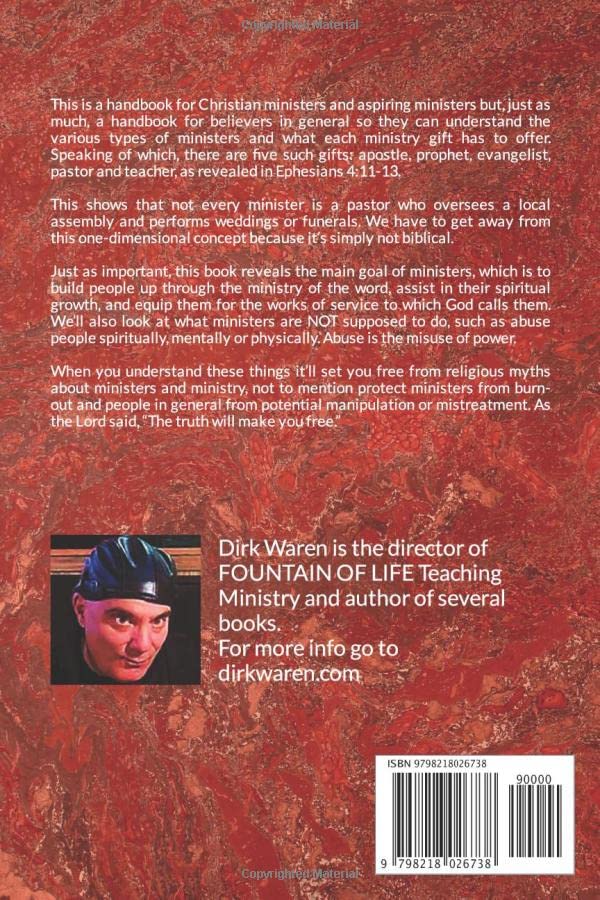
You can purchase the print book here for only $7.38 (175 pages)
Or get the Kindle eBook here for only 99¢
Related Topics:
Church of Christ — What Is It?
When Did the NEW TESTAMENT Start? When Did the CHURCH Begin?
How to Keep Yourself BLAMELESS (While Not Being SINLESS)

The apostle Paul prayed that the Philippian believers would be blameless and encouraged it:
And this is my prayer: that your love may abound more and more in knowledge and depth of insight, 10 so that you may be able to discern what is best and may be pure and blameless for the day of Christ, 11 filled with the fruit of righteousness that comes through Jesus Christ—to the glory and praise of God.
Philippians 1:9-11
Do everything without grumbling or arguing, 15 so that you may become blameless and pure, “children of God without fault in a warped and crooked generation.” Then you will shine among them like stars in the sky 16 as you hold firmly to the word of life. And then I will be able to boast on the day of Christ that I did not run or labor in vain.
Philippians 2:14-16
David is hailed in Scripture as “a man after God’s own heart” (Acts 13:22) and he put an emphasis on keeping himself blameless before the LORD:
22All his laws are before me;
I have not turned away from his decrees.
23 I have been blameless before him
and have kept myself from sin.
Psalm 18:23
13 Keep your servant also from willful sins;
may they not rule over me.
Then I will be blameless,
innocent of great transgression.
Psalm 19:13
Obviously being blameless is linked to keeping oneself from sin, and specifically “willful sins,” but how exactly can we keep ourselves blameless when other passages clearly show that even the best of us will miss it now and then? Here are three examples:
Indeed, there is no one on earth who is righteous, no one who does what is right and never sins.
Ecclesiastes 7:20
“…for there is no one who does not sin…”
1 Kings 8:46
If we claim to be without sin, we deceive ourselves and the truth is not in us.
1 John 1:8
These passages show that we’re all going to miss it here and there, even those of us who are spiritually mature and walk in the spirit on a day-to-day basis (although of course spiritual leaders should be freed-up from the bigger sins, as observed in 1 Timothy 3:1-7). That’s why 1 John 1:8 goes on to say:
If we confess our sins, he is faithful and just and will forgive us our sins and purify us from all unrighteousness.
This is the key to keeping yourself blameless before the LORD. When you inevitably miss it, be honest about it and ’fess up to your Creator. And God will be faithful & just to forgive you and cleanse you from all unrighteousness, which means you’ll once again be righteous in the Lord’s sight and even “free from accusation” (Colossians 1:22). This is what the Bible calls “keeping with repentance” (Matthew 3:8 & Luke 3:8). It’s crucial to keep yourself blameless before your Maker in this manner.
Interestingly, only humble people can do this because it takes humility to honestly admit that you’ve missed it and confess accordingly. Proud people, by contrast, have a very difficult time admitting that they’ve made a mistake, how much more so disclose that they’ve sinned? This explains something that Scripture emphasizes repeatedly: “God opposes the proud but shows favor [grace] to the humble” (James 4:6, 1 Peter 5:5 & Proverbs 3:34).
Put simply, arrogance repels God while humility attracts God (Isaiah 66:2).
You could say that the LORD is only close to the humble and this explains why only humble people are greatly used of God, like Moses (Numbers 12:3) and David (1 Samuel 18:23). While humility is meekness, it’s not weakness.
If you know someone who’s involved in ministry that 1. constantly boasts, 2. regularly puts people down (to elevate himself/herself) and 3. refuses to ever admit making a mistake, you can be sure that he/she is not close to God regardless of the airs they put on.
Understanding “Willful Sins” and Keeping Yourself Blameless
As noted above, David prayed:
Keep your servant also from willful sins;
may they not rule over me.
Then I will be blameless,
innocent of great transgression.
Psalm 19:13
You cannot be blameless before the Lord if you’re walking in “willful sins,” which David equals to “great transgression.” You see, there’s a difference between a person struggling with a certain sin, yet humbly keeping with repentance, and a person who regularly engages in willful sin. The word ‘willful’ in the Hebrew is zed (ZAYD), which means arrogant, proud, presumptuous or insolent. In other words, people who commit a willful sin know it’s a sin but still do it and aren’t sorry about practicing it. This is “great transgression” in God’s eyes and will eventually incur judgment if the individual continues to walk in it with no care of repentance.
Let me stress that the LORD is greatly merciful and compassionate (Psalm 145:8, 103:8; Jonah 4:2). In other words, God sympathetically understands the human struggle with the flesh — relapsing — and wants to set people free. If you’re struggling with a certain sin, rejoice, there is deliverance, which you can read about here. Yet Scripture also says:
Do not be deceived: God cannot be mocked. A man reaps what he sows. 8Whoever sows to please their flesh, from the flesh will reap destruction; whoever sows to please the Spirit, from the Spirit will reap eternal life.
Galatians 6:7-8
The LORD knows the difference between someone struggling with a sin, missing it, and getting back up with a penitent heart (Proverbs 24:16) as opposed to someone brazenly walking in willful sin. The former person keeps the flow of God’s grace pouring into their lives while the latter individual will eventually reap divine judgment in the form of some manner of destruction.
You see, God treats us according to the light we have (John 9:39-41, John 15:22 & John 15:24). He expects us to live up to our level of knowledge and understanding. If you’re a pint, live up to being a pint; if you’re a gallon, live up to being a gallon. The Pharisees & other Judaic leaders were very learned in the Holy Scriptures that existed up to that point (John 5:39) and so the LORD expected them to live up to the great knowledge and understanding they had, which explains why Christ openly rebuked them on appropriate occasions, calling them “hypocrites” (fakes), “blind fools,” “snakes” and “brood of vipers” (Matthew 23:13-33). Someone who’s steadily growing spiritually, even while missing it here or there and honestly keeping with repentance, is a different story.
Walking in willful sins and not keeping oneself blameless before the Lord explains Paul’s statement to the believers at Corinth, some of whom were partaking of the Lord’s Supper while engaging in willful sins, which brought judgment in the form of physical ailments and even premature death:
Everyone ought to examine themselves before they eat of the bread and drink from the cup. 29 For those who eat and drink without discerning the body of Christ eat and drink judgment on themselves. 30 That is why many among you are weak and sick, and a number of you have fallen asleep. 31 But if we were more discerning with regard to ourselves, we would not come under such judgment. 32 Nevertheless, when we are judged in this way by the Lord, we are being disciplined so that we will not be finally condemned with the world.
1 Corinthians 11:28-32
You’ll rarely hear passages like this taught at church services for obvious reasons, but it ties into keeping oneself blameless before God.
Earlier we saw how Paul linked walking blameless before God to doing “everything without grumbling or arguing” (Philippians 2:14-16). Grumbling means “to mutter, whisper or murmur with smoldering discontent.” Here’s what the apostle said about grumblers when writing to believers at Corinth (believers, not unbelievers):
10 And do not grumble, as some of them did—and were killed by the destroying angel.
11 These things happened to them as examples and were written down as warnings for us, on whom the culmination of the ages has come.
1 Corinthians 10:10-11
Those “killed by the destroying angel” refers to Numbers 16 where Korah, Dathan & Abiram and their 250 followers grumbled against the LORD and his chosen leaders (verse 11). It also includes the thousands of Israelites who grumbled the day after these rebels were slain by the LORD, which brought about the death of 14,700 more Israelites. These complaining rebels “were killed by the destroying angel” and Paul said that these examples were chronicled “as warnings to us.” Obviously, if a believer wants to be blameless before God he/she can’t be a constant grumbler, which does not mean ignoring legitimate issues that should be brought up and corrected when appropriate (Proverbs 9:7-9 & 27:5-6).
Paul linked blamelessness to not being a contentious person as well (Philippians 2:14-16). A contentious person is someone who likes to quarrel about anything and everything on a regular basis. These are angry, miserable people who lack godly peace and constantly try to drag others into the darkness of unprofitable arguments (1 Timothy 6:4; 2 Timothy 2:14; Proverbs 20:3; 27:3).
Also consider the issue of gossip/slander. At some point in spiritual growth, God expects us to remove this sin from our walk. It’s a matter of keeping oneself blameless. If a believer knows the truth yet continues to arrogantly engage in gossip & slander you can be sure s/he will reap judgment. Paul says “This is why many among you are weak and sick.” Why? Because they were engaging in willful sins with no concern of penitence; thus they reaped judgment. These people no doubt prayed for healing concerning their weakness/sickness, but their faith didn’t ‘work.’
This explains why Paul encourages believers to “examine themselves” in the above passage (1 Corinthians 11:28) and elsewhere (2 Corinthians 13:5). When a curse comes upon you (Deuteronomy 28), the first thing you should ask is if you brought it upon yourself through a willful sin. If so, then honestly ’fess up and God will forgive you, then fight the good fight of faith and receive your healing or deliverance (1 Timothy 6:12).
If this is new to you I encourage you to study up on spiritual warfare and then put what you understand into practice.
Let me close with how David — “a man after God’s own heart” — was diligent to keep himself blameless before the Lord:
Keep your servant also from willful sins;
may they not rule over me.
Then I will be blameless,
innocent of great transgression.
Psalm 19:13
9 Hide your face from my sins
and blot out all my iniquity.
10 Create in me a pure heart, O God,
and renew a steadfast spirit within me.
11 Do not cast me from your presence
or take your Holy Spirit from me.
12 Restore to me the joy of your salvation
and grant me a willing spirit, to sustain me.Psalm 51:9-12
This article is available in book form as chapter 11 of…


- The print book is available here for only $12.50 (303 pages)
- The Kindle eBook is available here for just 99¢!
Both links allow you to “look inside” the book.
Related Topics:
How God Sees YOU (video)
God Deals With People According to the Light They Have
What Are THE BASICS of Christianity?
Why Does 1 Chronicles OMIT David’s Adultery & Murder?

When the Old Testament historical book 1 Chronicles details the era in David’s reign involving his adultery with Bathsheba and murder of her husband (detailed in 2 Samuel 11:1–12:23) it omits these transgressions altogether, choosing instead to focus on David’s victories over the Ammonites, as shown in 1 Chronicles 20:1-3. Why?
Answer: Because the historical books of Samuel & Kings focused on telling the good, the bad and the ugly of Israel, which informed the Hebrews how they ended up in exile. Chronicles, by contrast, was originally written to the Jews returning to the Promised Land after 70 years of exile who needed to know if they still fit into God’s plan. In other words, they didn’t need to know the sordid details of their national history at that particular time. They needed encouraged about their national identity and history, not ashamed and deflated.
Think about it like this, have you ever shared a story from your past, but downplayed your flaws and transgressions? Most of us have. That’s basically what the book of 1 Chronicles does with King David.
Related Topics:
Hermeneutics — Proper Bible Interpretation
BEREAN SPIRIT — What Is It? How Do You Cultivate It?
What Does CHRIST IN YOU, THE HOPE OF GLORY Mean?

To understand what the phrase “Christ in you, the hope of glory” means, let’s read it in context of Paul’s letter to the believers at Colossae:
I have become its [the Church’s] servant by the commission God gave me to present to you the word of God in its fullness— 26 the mystery that has been kept hidden for ages and generations, but is now disclosed to the Lord’s people. 27 To them God has chosen to make known among the Gentiles the glorious riches of this mystery, which is Christ in you, the hope of glory.
28 He is the one we proclaim, admonishing and teaching everyone with all wisdom, so that we may present everyone fully mature in Christ.
Colossians 1:25-28
“Christ in you, the hope of glory” (verse 27) is the “mystery that has been kept hidden for ages and generations” but now is revealed to people through the awesome Christian message (verse 26). It refers to the Lord being in the believer through spiritual regeneration via the seed of Christ (1 John 3:9; 1 Peter 1:23; Titus 3:5; James 1:18), as well as the permanent indwelling Spirit of Christ (Romans 8:9), which is the seal and hope of all glorious things to come (2 Corinthians 1:22; Ephesians 1:13-14). What glorious things are these?
- Acquiring intrinsic immortality (2 Timothy 1:10);
- The bodily resurrection (1 Corinthians 15:42-44);
- And inheriting the new heavens & new earth, the eternal home of righteousness (2 Peter 3:13).
Related Topics:
What Is the MYSTERY OF THE AGES?
The Fountain of Life Within (video)
How to Walk FREE OF THE FLESH by being Spirit-Controlled
Did PAUL’S MESSAGE Contradict Jesus & James’ Gospel?
Are Believers Only to Receive From THE EPISTLES OF PAUL?
God Deals With People ACCORDING TO THE LIGHT THEY HAVE

The LORD deals with people according to the light they have. Once we have revelation of a certain truth we are responsible for living according to it (or living in light of it). This can be observed in a few key passages, like these:
Jesus said, “For judgment I have come into this world, so that the blind will see and those who see will become blind.”
40 Some Pharisees who were with him heard him say this and asked, “What? Are we blind too?”
41 Jesus said, “If you were blind, you would not be guilty of sin; but now that you claim you can see, your guilt remains.”
“If I had not come and spoken to them, they would not be guilty of sin; but now they have no excuse for their sin.”
If I had not done among them the works no one else did, they would not be guilty of sin. As it is, they have seen, and yet they have hated both me and my Father.
Christ wasn’t talking about physical blindness in the first passage, but rather spiritual blindness. The Pharisees & other Judaic leaders were very learned in the Holy Scriptures that existed up to that point (John 5:39), but they had unfortunately allowed the spiritual disease of legalism to infect them — aka dead religiosity — and, as such, they were arrogant, rigid know-it-alls who couldn’t see the forest for the trees, spiritually speaking. The very Scriptures they diligently studied pointed to Christ, but here he was on Earth ministering with God’s powerful anointing and yet they rejected him due to their hateful jealousy and, worse, wanted to murder him (John 5:36-40 & John 8:31-47).
Here are a couple other supportive texts:
“The servant who knows the master’s will and does not get ready or does not do what the master wants will be beaten with many blows. 48 But the one who does not know and does things deserving punishment will be beaten with few blows. From everyone who has been given much, much will be demanded; and from the one who has been entrusted with much, much more will be asked.”
Luke 12:47-48 (here’s the whole passage)
If anyone, then, knows the good they ought to do and doesn’t do it, it is sin for them.
This obviously isn’t an excuse to stay in ignorance, but it does show that God handles people according to the light they have. For instance, the LORD deals differently with a believer who is in his or her first few years of salvation as opposed to someone who’s been a believer for 37 years and is very versed in the Scriptures along with much experience in the things of God in general.
Our Creator takes into consideration things like the person’s stage of spiritual growth, talents, calling and access to knowledge, as well as understanding of that knowledge. A new believer who grew up in a godless, lawless culture might not know a certain sexual activity is a sin, like fornication, and so God deals with him accordingly. As the believer grows, however, he’ll soon learn truth in regards to sexual propriety thru God’s word and the guidance of the Holy Spirit; the LORD then holds him accountable to what he knows and understands.
As Yeshua said, “From everyone who has been given much, much will be demanded; and from the one who has been entrusted with much, much more will be asked.” (Luke 12:48). You could put it this way: If you’re a half-pint, live up to being a half-pint; if you’re a gallon, live up to being a gallon; if you’re a two-ton tank, live up to being a two-ton tank.
Let me close by emphasizing that God is love (1 John 4:16) and therefore is greatly compassionate & merciful with his children:
8 The Lord is gracious and compassionate,
slow to anger and rich in love.
9 The Lord is good to all;
he has compassion on all he has made.Psalm 145:8-9
Therefore, since we have a great high priest who has ascended into heaven, Jesus the Son of God, let us hold firmly to the faith we profess. 15 For we do not have a high priest who is unable to empathize with our weaknesses, but we have one who has been tempted in every way, just as we are—yet he did not sin. 16 Let us then approach God’s throne of grace with confidence, so that we may receive mercy and find grace to help us in our time of need.
Hebrews 4:14-16
Related Topics:
Spiritual Growth — The Four Stages
SPIRITUAL GROWTH Is Like Climbing a Mountain
What Does THEY SHALL TAKE UP SNAKES Mean?

When the Lord gave the Great Commission he noted that certain signs would accompany believers:
“And these signs will accompany those who believe: In my name they will drive out demons; they will speak in new tongues; 18 they will pick up snakes with their hands; and when they drink deadly poison, it will not hurt them at all; they will place their hands on sick people, and they will get well.”
Mark 16:17-18
To properly understand what Christ meant by the statement “they will pick up snakes with their hands,” just look to the rest of the verse where he says “and when they drink deadly poison, it will not hurt them.” So the Messiah was talking about being accidently exposed to something poisonous and not being harmed. A good example is when Paul got bit by a deadly viper on the island of Malta after being shipwrecked:
Paul gathered a pile of brushwood and, as he put it on the fire, a viper, driven out by the heat, fastened itself on his hand. 4 When the islanders saw the snake hanging from his hand, they said to each other, “This man must be a murderer; for though he escaped from the sea, the goddess Justice has not allowed him to live.” 5 But Paul shook the snake off into the fire and suffered no ill effects.
Acts 28:3-5
This is the obvious meaning of our text: Believers will not be hurt by deadly snakes or poison, assuming they’re walking in faith (see this article for details). The rest of the account shows that this sign was a powerful witness to the inhabitants of the island along with the sign that “they will place their hands on sick people, and they will get well”:
The people expected him to swell up or suddenly fall dead; but after waiting a long time and seeing nothing unusual happen to him, they changed their minds and said he was a god.
7 There was an estate nearby that belonged to Publius, the chief official of the island. He welcomed us to his home and showed us generous hospitality for three days. 8 His father was sick in bed, suffering from fever and dysentery. Paul went in to see him and, after prayer, placed his hands on him and healed him. 9 When this had happened, the rest of the sick on the island came and were cured. 10 They honored us in many ways; and when we were ready to sail, they furnished us with the supplies we needed.
Acts 28:6-10
What Christ said in Mark 16:17-18 was hypothetical, but we see here two of these actual signs in real life on Malta, as well as the effect it had on the unconverted.
Does this sign of picking up snakes warrant having “snake-handling ceremonies” where poisonous snakes are brought into an assembly and the believers handle the serpents to prove that they are true believers? Obviously not. It would be like bringing deadly poison to the fellowship, such as drain cleaner, and encouraging the believers to drink it to verify their authenticity. This is idiotic fanaticism that “puts the LORD God to the test” (Matthew 4:7; Deuteronomy 6:16).
Speaking of “snake-handling rituals,” I’ve been a believer since the age of 20 and have been to myriad assemblies in the last four decades, but I’ve never run across this kind of dubious ceremony, not even close, even though I’ve attended numerous varied Pentecostal/Charismatic services, including in Appalachian areas. However, I have seen snake-handling rites depicted in a couple movies. So, while there have been cases of this peculiar rite occurring in a small number of isolated churches, typically in Appalachia, it’s more of a cinematic myth than reality. I bring this up because Carol, my wife, worked with a woman a few years ago who kept referring to “snakebite churches,” which Carol & I found amusing. For the most part, they don’t exist except in the minds of Hollywood scriptwriters.
In any case, “they will pick up snakes with their hands” should be taken in the obvious sense relevant to Acts 28:3-5.
However, there is…
A Deeper Interpretation
Sometimes Scripture has a straight-forward meaning as well as a subtextual one. A good example would be Paul’s figurative interpretation of two historical people, Sarah and Hagar (Galatians 4:24).
So is there a deeper meaning to Christ’s statement “They shall take up serpents” in Mark 16:18? Yes, there is a viable symbolic interpretation. Consider when the LORD gave Moses & Aaron the assignment to appear before Pharaoh when the Hebrews were slaves in Egypt:
Then Moses answered and said, “But suppose they will not believe me or listen to my voice; suppose they say, ‘The Lord has not appeared to you.’ ”
2 So the Lord said to him, “What is that in your hand?”
He said, “A rod.”
3 And He said, “Cast it on the ground.” So he cast it on the ground, and it became a serpent; and Moses fled from it. 4 Then the Lord said to Moses, “Reach out your hand and take it by the tail” (and he reached out his hand and caught it, and it became a rod in his hand), 5 “that they may believe that the Lord God of their fathers, the God of Abraham, the God of Isaac, and the God of Jacob, has appeared to you.”
Exodus 4:1-5 NKJV
And here’s what happened when Moses & Aaron actually went to Pharaoh:
So Moses and Aaron went in to Pharaoh, and they did so, just as the Lord commanded. And Aaron cast down his rod before Pharaoh and before his servants, and it became a serpent.
11 But Pharaoh also called the wise men and the sorcerers; so the magicians of Egypt, they also did in like manner with their enchantments. 12 For every man threw down his rod, and they became serpents. But Aaron’s rod swallowed up their rods.
Exodus 7:10-12 NKJV
Summing this up, Moses & Aaron appeared before Pharaoh and, as a sign to the Egyptians (aka the world), cast a staff to the ground and it became a serpent. Pharaoh’s sorcerers cast their rods to the ground as well and they also became serpents thru their black arts, yet Moses’ serpent consumed the other serpents and their black arts couldn’t prevent it. Then Moses & Aaron took up the serpent and it became a staff once again.
This account can be interpreted symbolically when you grasp the symbols:
- The serpents represent sin in the Bible, which I’ll elaborate on in a moment.
- Jesus Christ is the Branch of God, as detailed in Isaiah’s prophecy:
There shall come forth a Rod from the stem of Jesse, And a Branch shall grow out of his roots.
Isaiah 11:1 (NKJV)
This reveals that the family tree of David’s father, Jesse, would produce a “Branch” out of its roots, which refers to the Messiah (Romans 1:2-4).
Christ, the Righteous Branch, become sin and this is represented in Moses & Aaron’s staff becoming a serpent. The Son was “cast” to the Earth by the Father in order to be sin on our behalf when crucified (2 Corinthians 5:21), but was then taken up (to Heaven) to become, once again, the Righteous Branch. He’s no longer sin on the cross, a figurative serpent, but rather has been raised for the justification of all those who believe (Romans 4:25).
This helps make sense of the Old Testament account in which the Hebrews grumbled in unbelief after escaping slavery in Egypt and so were attacked by venomous snakes (Numbers 21:4-7). In other words, their sin — represented by the snakes — was going to kill them, but they humbly repented and thus the LORD gave them the means of salvation from the deadly bites, thus escaping the wages of their sin:
The Lord said to Moses, “Make a snake and put it up on a pole; anyone who is bitten can look at it and live.” 9 So Moses made a bronze snake and put it up on a pole. Then when anyone was bitten by a snake and looked at the bronze snake, they lived.
Numbers 21:8-9
This obviously foreshadows Jesus’ crucifixion:
“Just as Moses lifted up the snake in the wilderness, so the Son of Man must be lifted up, 15 that everyone who believes may have eternal life in him.
16 For God so loved the world that he gave his one and only Son, that whoever believes in him shall not perish but have eternal life.”
John 3:14-16
Now let’s apply this to believers “taking up snakes” in a figurative sense as a sign to the world during the current Age of Grace…
As we share the awesome news of the message of Christ (2 Corinthians 5:21), the people who are behaving like serpents — that is, lost in the world and living in sin — have the opportunity to believe and die to the flesh as they are raised righteous in Christ through spiritual rebirth, thus giving their lives over to the Lord (Romans 4:24; Titus 3:5; Romans 12:1; Mark 8:35).
The New Testament teaches that believers are raised to life in Christ and have the “gift of righteousness” (John 5:24; Romans 5:17). We are like the Egyptian sorcerers’ snakes that are swallowed up by Moses’ serpent and enter the work of the crucified & resurrected Christ. This work of the Anointed One who became sin for us yet was raised from that sin & death to righteousness & life by the hand of God.*
* Jesus didn’t sin, but became sin on our behalf (Hebrews 4:15).
All those who believe are taken in Christ just like the Egyptian snakes were taken into Moses’ serpent. The Lord became sin itself and took our sins; then was raised to life for our justification (Romans 4:25 & 5:17). In short, those who believe, receive Christ and are taken in Him and raised to life together with the Lord as new creations (2 Corinthians 5:17).
As such, this sign “They shall take up serpents” is how:
- We share the awesome news of the message of Christ (2 Corinthians 5:17-21) and…
- How people in the world are delivered from sin & death by being taken into Christ through faith.
They are no longer “serpents” — hopeless, unredeemed sinners — but are now in Christ, the Righteous Branch. Amen.
Related Topics:
What Are THE BASICS of Christianity?