
Can a Believer Become Apostate and LOSE THEIR SALVATION?

The answer is yes. You see, attaining immortality & eternal life is a two-phase process: We receive eternal life in our spirits when we accept the gospel—God doesn’t force us—and this is completed at the bodily resurrection (1 Corinthians 15:42-54). Between these two phases it’s possible for a believer to abort his/her salvation (2 Timothy 2:12; Titus 1:16).
To explain, Christ taught eternal security in John 10:28-29, but this is obviously contingent on continuing in faith, as observed by Colossians 1:23 and several other verses. After all, if it takes faith to be saved, one can no longer be saved if s/he comes to a point where they no longer believe. The Bible teaches that it is through faith and perseverance that we inherit what is promised, including eternal salvation, not faith for a while and then giving up (Hebrews 6:12; Luke 8:13).
Here are some relevant passages for you to consider in your studies: Galatians 5:19-21, Hebrews 10:25-27, 2 Peter 2:20-21, Romans 11:19-24, 1 Corinthians 6:9-11, Hebrews 3:6, 3:12 & 6:4-6, James 5:19-20, Jude 1:5, Matthew 10:22, Mark 13:13, Luke 8:13 & 13:5-9, and John 15:1-6.
In short, eternal security is indeed a biblical doctrine, but unconditional eternal security is not. “Do not be deceived” (Galatians 6:7-8).
Anyone who studies eternal security must consider every one of those passages, which were written by the Holy Spirit (aka God). They must be included in whatever conclusion is drawn. Anyone who refuses to do so isn’t “rightly dividing” the Word of Truth since s/he is omitting relevant passages (2 Timothy 2:15 & 3:16-17).
Obviously, the most important thing is for each believer to make sure that he or she is walking in faith with the LORD and “keeping with repentance” when they miss it (Matthew 3:8 & Luke 3:8). Such believers indeed have eternal security.
This article is an abbreviation of chapter 1 of…

Both links allow you to LOOK INSIDE.
Related Topics:
Once Saved Always Saved? — Answering the Best Arguments
False Grace — “Hyper-Grace Cotton Candy”
The Six Basic Doctrines of Christianity
How Do You Effectively Respond to a GOSSIPER?

Now & then you’ll come across a person who’s addicted to gossip & slander. Such people are toxic faultfinders who naturally try to draw you into their “choice morsels” of corrupt talk (Proverbs 18:8; 26:22).
For anyone who thinks gossip & slander are harmless and, besides, “everyone does it,” here are a handful of verses from both the Old Testament and New Testament that tell otherwise:
…whoever spreads slander is a fool.
With his mouth the godless destroys his neighbor…
A perverse person stirs up conflict, and a gossip separates close friends. [i.e. stirs up strife & division]
Brothers and sisters, do not slander one another.
Don’t grumble against one another… or you will be judged. The Judge is standing at the door!
Since gossip always devolves into slander as it spreads, it’s a form of false testimony, which is outrightly condemned by the LORD (Exodus 20:16; Matthew 15:19). Even if what someone says about a person behind their back is based on a truth, those who gossip characteristically put a negative spin on it, so it becomes a lie. Keep in mind that the word ‘devil’ (diabolos) literally means “accuser” or “slanderer” (Revelation 12:10). As such, those who regularly engage in gossip & slander are acting like the devil!
This explains why impenitent badmouthing of people not present will draw divine judgment, as observed in James 5:9 (quoted above). How much more so if the slander concerns those in Christian servant-leadership, aka fivefold ministers? See Psalm 105:15 to get my drift.
As a man or woman of God, I’m encouraging you to not allow gossip to go unchallenged. What’s the wisest way to respond? Here are seven ways you can counteract this type of ungodly activity and hopefully move the gossiper to penitence:
- Say nothing, which leads to the gossiper eventually stopping since there’s no fuel for the slander (Proverbs 26:20).
- Immediately start praying for the person being badmouthed, to which the gossiper will be compelled to pray with you and agree.
- Bless the person being cursed.
- Say something good about the victim that offsets the badmouthing.
- Offer to call the victim on your smart phone so the slanderer can speak to him/her directly. If you do this, consider putting your phone on speaker so everyone present can hear the conversation.
- Correct the gossiper through quoting a key Scripture, like the ones noted above.
- Simply walk away from the conversation (or hang up the phone), which will speak volumes in and of itself.
The last time I encountered a heinous gossiper I implemented #2: The man started badmouthing someone not present — a beloved believer — so I started praying for her on the spot, to which he stopped maligning and joined-in with the prayer. This morphed his toxic words into a productive communication by getting God involved in the situation.
One of the favorite bits of slander of a person I know — who’s a confessing believer — is to unjustly say a man is ‘gay.’ He did this regarding the waiter the last time I went out to eat with him (even though there was zero indication the man was ‘gay’). Why does he do this? Obviously, he considers the person in question a rival and so he instinctively puts him down in order to elevate himself, which shows that it’s an issue of arrogance. This isn’t good since “Pride goes before destruction, a haughty spirit before a fall” (Proverbs 16:18) and God actively “opposes the proud” (James 4:6; 1 Peter 5:5).
As men and women of God, we have to stop allowing this type of carnal behavior or we become accessories in the evil speech. I realize it’s difficult to walk in tough love with someone who’s a relative or a fellow congregant or you’re a guest at their home or they’re feeding you, but we’re obligated to put a stop to malicious gossip.
Take David, for example. He was “a man after God’s own heart” (1 Samuel 13:14; Acts 13:22) who said this about gossips & slanderers in his social sphere:
Whoever slanders their neighbor in secret, I will put to silence;
Let’s be like David. Amen?
Related Topics:
Why GOSSIP & SLANDER Are So Evil
What Is FAULTFINDING? What’s Wrong With It?
What Did Christ Mean By “EMPTY” (“IDLE”) WORDS in Matthew 12:36?
When Was the Church Corrupted by the IMMORTAL SOUL Doctrine?
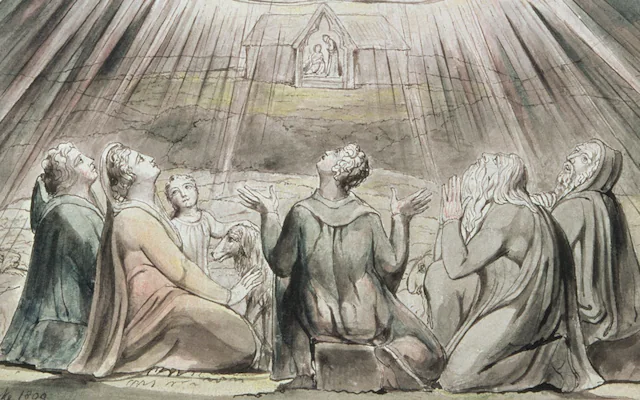
The Scriptures plainly teach that immortality and eternal life are only available through the gospel of Christ (2 Timothy 1:10; John 3:36). In other words, human beings do not intrinsically possess immortality apart from redemption in Christ, which is why we’re told to seek it (Romans 2:7). For the unrepentant, the Lord plainly declared that God would “destroy both soul and body in hell (Gehenna)” (Matthew 10:28) and the writer of Hebrews said that “raging fire that will consume the enemies of God” (Hebrews 10:26-27), which was corroborated by Jesus’ Parable of the Ten Minas: ” ‘But those enemies of mine who did not want me to be king over them—bring them here and kill them in front of me’ ”
(Luke 19:27). This was backed-up by Paul who unmistakably said that “the wages of sin is death” while eternal life is a gift from God only available in Christ Jesus, not something people already have (Romans 6:23), which is supported by the most popular verse in the Bible, John 3:16. This is just the tip of the iceberg; for more evidence go here.
The fact that the early Church did not subscribe to the doctrine of the immortal soul apart-from-redemption-in-Christ is supported by extrabiblical data, as verified in this article.
So, when did the Church become corrupted by this idea that every human soul, once born, can never cease to exist and thus those who reject the message of Christ will suffer never-ending roasting torture in the lake of fire?
To answer, we need to go back to the 400-year gap between the latest Old Testament books and the earliest New Testament books, which is often referred to as “the 400 silent years” since God did not speak through Scripture prophecy during this time. Within a century after Malachi, the last book of the Old Testament, Alexander the Great conquered most of the world from the Greek perspective and Israel was among these conquered lands. Greek culture and philosophy inevitably spread to these regions and Greek became the lingua franca linking peoples scattered since the time of the infamous tower of Babel (Genesis 11:1-9).
As such, the foreign notions of Greek philosophy were introduced to Hebrew culture, including the Platonic theory that every human being, once created, possesses an intrinsic immortal soul and can never cease to exist. While many Hebrews heeded God’s warnings to remain separate and pure, like the Qumranites and John the Baptist, the sect of the Pharisees did not.
Although the Scriptures themselves don’t reveal anything about the Pharisees’ official view of damnation, it is contended that they advocated eternal torment because they believed in the Hellenistic belief in the immortality of the soul. Yet nothing good is ever said about the Pharisees in the Bible. Jesus continually conflicted with this sect; he called them names, rebuked them, and spoke badly of them. See, for example, Matthew 5:20 & 23:13,15,25,28,33. In fact, Christ commanded his followers to “Leave them; they are blind guides” (Matthew 15:12-14) and plainly warned of their false teachings in Matthew 16:11-12. Yeshua was talking about the Pharisees’ teachings in this particular passage, their doctrines, not their hypocrisy. The Lord no doubt agreed with the Pharisees on quite a few issues, but eternal torment certainly wasn’t one of them.
The apostle Paul was formerly a radical Pharisee named Saul who zealously persecuted the early Church—imprisoning disciples, voicing murderous threats and approving of their executions (Acts 7:58, 8:1 & 9:1,13-14,21). But Christ appeared to Saul and commanded him to leave this sect of blind guides. Years after his conversion and enlightenment, Paul referred to his pharisaic past as “rubbish,” “refuse” and “dung” (Philippians 3:4-8; see the KJV and Amplified renditions). By “rubbish” Paul was referring to all the hypocrisy, lifeless tradition and false teachings of the Pharisees, which would include the doctrine of eternal torment.
Athenagorus of Athens hailed from the 2nd century after Christ (127-190 AD). He was a Platonic philosopher who converted to Christianity and was the first Christian writer to expressly deny the literal everlasting destruction of the ungodly. Tertullian (160-220 AD) was also negatively influenced by Greek philosophy and even stated: “I may use, therefore, the opinion of a Plato when he declares, ‘Every soul is immortal.’ ” Their conclusions were not based on Scripture, but on the pagan idea that every unsaved human being possesses an immortal soul that can never die. This belief infiltrated Christianity soon after the time of the apostolic fathers when “the apologists” converted from Greek philosophy. Converts from Hellenistic Judaism also contributed to the proliferation of this teaching.
It was Augustine from the 4th & 5th centuries (354-430), however, who systemized and popularized the immortal soul (apart from Christ) and the corresponding eternal torment, causing these beliefs to become the official doctrine of the Roman church, accepted by the Council of Ephesus in 431 AD. One might understandably wonder how God could allow such false doctrines as these to become embedded in the collective Christian mindset, yet God had nothing to do with “allowing” these unbiblical beliefs to infiltrate Christendom. These doctrines stem from the very first satanic lie recorded in the Bible (Genesis 3:4) (see this article for details). After the compilation of the New Testament canon, the Roman church increasingly deviated from Holy Scripture in the ensuing generations. When people willingly disregard the authority of God’s Word in favor of the word of human philosophy and religion there’s nothing God can do to stop the resulting apostasy, except inspire a reformation by the Holy Spirit, which came to pass a thousand years later.
Speaking of which, the Protestants based their reforms on the principle of sola scriptura, that all judgments of doctrine and practice must be based on the plain teachings of Holy Scripture, which are the blueprint for valid Christianity (1 Corinthians 4:6). The very father of the Reformation, Martin Luther, spoke of the philosophical arguments for the immortal soul as “monstrous fables that form part of the Roman dunghill of decretals [i.e. decrees].”
Many Anabaptists believed that the ungodly would ultimately perish in hell and cease to exist, as Christ plainly declared (Matthew 10:28; Luke 19:27), but John Calvin, second only to Luther as a Reformation leader, opposed the Anabaptists on this matter and advocated his support for the “traditional” Roman sect views of the immortal soul and eternal torment. Luther, not wanting to cause division, kept quiet in light of Calvin’s vehement stance. Thus the doctrines of the immortal soul and eternal torment crossed the pivotal point of the Reformation as part of fundamental Protestant beliefs. Consequently, despite the fact that both of these beliefs are clearly unscriptural, many Christians today continue to blindly regard them as unquestionable “orthodoxy.”
This article was edited from chapter 7 of…
- You can purchase the book here for a low price (350 pages).
- Or get the Kindle eBook for only $2.99!
FREE TRACTS Are Available for this Teaching
Contact us here.
- If you want physical copies, simply send the street address to which you want the tracts sent (ten per each mailing). When you run out of those, we can send ten more (or just print additional copies from the copies we sent you).
- We can also email you the PDF or Microsoft Word file and you can print as many copies as you desire on your preferred type/color paper.
For mailings outside the USA, it would be nice if you donate the approximate postage. (If not, we’ll still try to get ’em to you).
Free tracts on other topics are also available; go here for a list (scroll down).
Related Topics:
IMMORTALITY — Only Available Through the Gospel
DEATH — Does It Mean “Separation” as Religionists Claim? (No)
Hell (Human Damnation) — Questions and Answers
Q&A on SHEOL / HADES, the Intermediate State of the Unsaved
RICH MAN & LAZARUS: Fantastical Parable or Literal Account?
The Believer’s “Intermediate State” (between Physical Death and Bodily resurrection)
Eternal Life: Questions & Answers
What Did the Jews and Early Christians BELIEVE ABOUT HELL?

The orthodox view concerning human damnation of both the Jews in the Old Testament period and the Christians of the New Testament period was literal everlasting destruction. This is obvious because every person used of God to write the Holy Scriptures adhered to everlasting destruction. This was the commonly accepted position of believers in these eras (for detailed proof, go here). Thus the view of literal destruction is as old as the earliest Old Testament Scriptures.
Aside from the Bible itself, the doctrine of literal destruction can be traced back to biblical times. It can be found, for instance, in the writings of Justin Martyr (114-165 AD), who taught that human souls are mortal and that the ungodly will suffer only as long as God wills and then pass out of existence. Literal destruction can also be found in the Didache, a 2nd Century Christian handbook, which speaks of “two ways”—the way of “life” and the way of “death”—plainly stating that the ungodly will ultimately perish. Even the great Rabbi Hillel, who passed away a few years before Jesus was born, taught that unrepentant sinners would be literally and eternally destroyed in Gehenna, though he did maintain that one extreme class of sinners would suffer “to ages of ages,” yet even this does not indicate perpetuity.
Another good example would be the writers of the Dead Sea Scrolls who lived in Qumran by the Dead Sea and were believed to be Essenes. The Essenes were a sect of Jews that left Jerusalem because they believed the priests of the Temple were corrupted by Rome. They wanted to stay pure and keep Torah—God’s Law—pure, so they moved to the desolate Dead Sea area.
This is the group spoken of as the “Sons of Light” in historical writings. It has been suggested that John the Baptist lived and studied with them in preparation for his ministry and some believe that Jesus himself studied with them. Regardless, sometime between 200 BC and the destruction of the Temple in 70 AD the Qumran brotherhood wrote and transcribed many documents, including the Hebrew Scriptures. These documents were discovered in the mid-20th Century and are presently referred to as the Dead Sea Scrolls.
It’s clear from these scrolls that the Qumranites adhered to everlasting destruction, not eternal torment:
“And all the ages of their generations they [the ungodly] shall spend in bitter weeping and harsh evils in the abysses of darkness until their destruction, without there being a remnant or survivor among them.”
1 QS 4:13-14
The Qumran brotherhood obviously believed that eternal damnation will consist of a time of suffering—described as “bitter weeping and harsh evils in the abysses of darkness”—that would end in utter destruction. The word “until” indicates that there will be a change—destruction would bring an end to the bitter weeping. To reinforce that “destruction” literally means destruction, the passage ends by making it clear that there would be no remnant or survivor of those damned to the “abysses of darkness” (i.e. the lake of fire). The only possible way there could be no remnant or survivor is if they all eventually ceased to exist; after all, people that live forever in torment would still be surviving.
This is serious blow to the doctrine of eternal roasting, as far as extra-biblical literature goes.
In light of the above information we could safely conclude that literal everlasting destruction was not only the biblical view at the time of Christ—which is all that really matters—but the orthodox “Jewish view” as well. By “orthodox” I mean historically established beliefs that are generally accepted as true (‘orthodox,’ by the way, literally means “correct view”). In other words, literal everlasting destruction was the conventional Jewish view of damnation. I add this in response to the outdated argument that Jesus endorsed never-ending torment because it was supposedly “the Jewish view” at the time of his earthly ministry. The evidence proves this theory false.
Of course, Christ was never concerned about Jewish orthodoxy during his earthly ministry. As “the truth” (John 14:6), he didn’t care what doctrines were established or popular. In fact, he didn’t care that everlasting destruction was the orthodox Jewish view. He simply taught what the Word of truth taught (John 17:17 & Psalm 119:43,160). I’m talking about the Hebraic Scriptures, which clearly support literal destruction.
It should be pointed out that there were actually over seventy sects of Judaism at the time of Christ, including Sadducees, Pharisees, Zealots, Scribes, Herodians and Samaritans, all of which are mentioned in the New Testament. In light of this, the content of proper Jewish orthodoxy becomes somewhat debatable because these different groups stressed different beliefs as vital, just as different Christian sects do today. Each group had their own version of fundamental doctrines. As such, to suggest there was a single “Jewish view” is pointless. There was, however, a single scriptural view, and that is what Jesus Christ plainly preached.
The Views of the Sadducees and Pharisees on Human Damnation
Besides the Qumran brotherhood, the Sadducees also adhered to literal destruction, albeit a quite different version: They believed that when people died they would be literally dead forever, with no future resurrection for either the righteous or unrighteous.* This belief is known as universal extinction. They didn’t believe in angels or demons either (see Acts 23:8).
* The fact that the Sadducees didn’t believe in the resurrection of the righteous unto eternal life explains their namesake—they were “sad, you see?”
Although the Sadducees were definitely wrong in denying both the resurrection and the existence of angelic beings, their adherence to universal extinction proves that there were whole groups of organized Jews who rejected the teachings of the immortal soul and eternal conscious torment, not to mention they supported literal everlasting destruction in some form.
It’s interesting to note that the very words the Sadducees used to describe their belief in universal extinction (“death,” “perish,” “destruction,” “destroy,” etc.) are the same words used in the Bible to describe the second death. Why should we assume these words have a completely different meaning today? You can read details here.
As for the Pharisees, a sect that emerged from obscurity after the Maccabean revolt in 164 BC, the Scriptures themselves don’t reveal anything about their official view of damnation, but it is contended that they advocated eternal torment because they believed in the immortality of the soul. It really doesn’t matter since nothing good is ever said about the Pharisees in the Bible. The Messiah continually conflicted with this sect; he called them names, rebuked them, and spoke badly of them. See, for example, Matthew 5:20 & 23:13,15,25,28,33. In fact, Christ commanded his followers to “Leave them; they are blind guides” (Matthew 15:12-14) and plainly warned of their false teachings in Matthew 16:11-12. Jesus was talking about the Pharisees’ teachings in this particular passage, their doctrines, not their hypocrisy. The Lord no doubt agreed with the Pharisees on quite a few doctrinal issues, but eternal torment certainly wasn’t one of them.
The apostle Paul was formerly a radical Pharisee named Saul who zealously persecuted the early Church—imprisoning disciples, voicing murderous threats and approving of their executions (Acts 7:58, 8:1 & 9:1,13-14,21). But the Lord appeared to Saul and commanded him to leave this sect of blind guides. Years after his conversion and enlightenment, Paul referred to his pharisaic past as “rubbish,” “refuse” and “dung” (Philippians 3:4-8; see the KJV and Amplified renditions). By “rubbish” Paul was referring to all the hypocrisy, lifeless tradition and false teachings of the Pharisees, which would include the doctrine of eternal torment.
I point out these obvious biblical facts because there are some who argue that the Pharisees adhered to proper Jewish orthodoxy and that Christ doctrinally agreed with them on everything. Frankly, anyone who believes this doesn’t read his/her Bible. Jesus warned of the Pharisee’s false teachings, called them blind guides and commanded his hearers to leave them; seriously, what more proof do we need to understand that the Lord didn’t believe the Pharisees represented proper Hebrew theology?
This article was edited from chapter 7 of…
- You can purchase the book here for a low price (350 pages).
- Or get the Kindle eBook for only $2.99!
Both links allow you to LOOK INSIDE the book.
FREE TRACTS Are Available for this Teaching
Contact us here.
- If you want physical copies, simply send the street address to which you want the tracts sent (ten per each mailing). When you run out of those, we can send ten more (or just print additional copies from the copies we sent you).
- We can also email you the PDF or Microsoft Word version and you can print as many copies as you desire on your preferred type/color paper.
For mailings outside the USA, it would be nice if you donate the approximate postage. (If not, we’ll still try to get ’em to you).
Free tracts on other topics are also available; go here for a list (scroll down).
Related Topics:
IMMORTALITY — Only Available Through the Gospel
DEATH — Does It Mean “Separation” as Religionists Claim? (No)
Q&A on SHEOL / HADES, the Intermediate State of the Unsaved
RICH MAN & LAZARUS: Fantastical Parable or Literal Account?
Paul “FULLY PROCLAIMED the Gospel,” Including About HELL
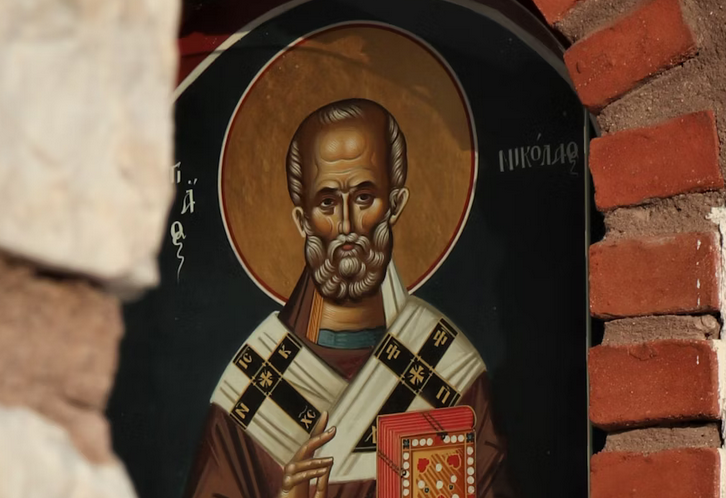
Aside from Jesus Christ, Paul is by far the most important figure in the New Testament. Over half of the book of Acts, which is a biblical documentation of the early Church, is devoted to Paul’s exploits in ministry. About one third of the entire New Testament and nearly two thirds of the epistles were actually written by Paul under the inspiration of the Holy Spirit (2 Peter 3:15-16).
With this understanding, consider a statement Paul made to a group of elders from Ephesus:
26“Therefore, I declare to you today that I am innocent of the blood of all men. 27 For I have not hesitated to proclaim to you the whole will of God.”
Acts 20:26-27
Paul declares here that he is innocent of the blood of all people because he faithfully proclaimed “the whole will of God” or — as the King James Version puts it — he declared “all the counsel of God.” Paul backed this statement up in his letter to the Romans:
So from Jerusalem all the way around to Illyricum, I have fully proclaimed the gospel of Christ.
Why was Paul “innocent of the blood of all men”? Simply because everywhere he went he fully proclaimed the gospel—the whole counsel of God. Paul didn’t hide anything that the Lord revealed to him; he didn’t hide any aspect of the gospel message. He shared it all. He was therefore innocent of “the blood” of all people.
My point is that if Paul fully proclaimed the whole counsel of God, as Scripture verifies, then he would have certainly mentioned something somewhere about unrepentant sinners suffering eternal conscious torment if this doctrine were true. After all, this is way too important of an issue to forget to mention, yet Paul says absolutely nothing about eternal fiery torture anywhere in his inspired writings or in his exploits as recorded in Acts.
Out of the thirteen biblical letters written by Paul — and fourteen if he’s the writer of Hebrews — in all but six of them he repeatedly made very clear statements about the eternal fate of those who reject the gospel of reconciliation. Let’s review them here as viewing everything Paul consistently taught concerning the nature of the “second death” (Revelation 20:11-15) is illuminating and makes a powerful point.
Paul fully proclaimed the whole counsel of God by plainly declaring:
- That those who live a lifestyle of unrepentant sin “deserve death” – Romans 1:32
- That “all who sin apart from the law will also perish apart from the law” – Romans 2:12
- That sin “leads to death” – Romans 6:16
- That sin “results in death” – Romans 6:21
- That “the wages of sin is death” – Romans 6:23
- That those who live according to the sinful nature “will die” – Romans 8:13
- That the gospel is foolishness “to those who are perishing” – 1 Corinthians 1:18
- That “in Adam all die” – 1 Corinthians 15:22
- That those who preach the gospel are “the smell of death” “to those who are perishing” – 2 Corinthians 2:15-16
- That the Old Testament law “kills” and ultimately brings “death” – 2 Corinthians 3:6-7
- That the gospel is “veiled to those who are perishing” – 2 Corinthians 4:3
- That those who please the sinful nature “from that nature will reap destruction” – Galatians 6:8
- That “they will be destroyed” – Philippians 1:28
- That “their destiny is destruction” – Philippians 3:19
- That “they will be punished with everlasting destruction” – 2 Thessalonians 1:9
- That they “are perishing” – 2 Thessalonians 2:10
- That “they perish because they refused to love the truth and so be saved” – 2 Thessalonians 2:10
- That “Christ Jesus… has destroyed death” – 2 Timothy 1:10
We can add these next four if Paul was the writer of Hebrews:
- That they are like worthless land that will “in the end… be burned” – Hebrews 6:8
- That sins are “acts that lead to death” – Hebrews 9:14
- That raging fire “will consume the enemies of God” – Hebrews 10:27
- That those who “shrink back” in unbelief will be “destroyed” – Hebrews 10:39
In various ways with various words Paul was sure to repeatedly declare precisely what would happen to those who foolishly reject the gospel. He was sure to do this because God appointed him to fully proclaim the whole counsel of God. Paul didn’t hide any aspect of the truth—including the awful truth that those who reject Christ will be utterly destroyed by the raging fire of the LORD. If words have any meaning at all then this is what we must conclude.
Moreover, if Jesus supposedly preached eternal torture, as many contend, then Paul would have certainly reinforced it. Yet Paul taught no such thing because Jesus taught no such thing, not to mention the Bible they taught from—what we know as the Old Testament—teaches no such thing.
Lastly, in Acts 20:26-27, quoted above, Paul declared that he was “innocent of the blood of all men” because he didn’t hesitate to share the whole counsel of God, including the unfortunate news of what will ultimately happen to those who reject the gospel. The very fact that Paul said he was innocent of the blood of all people shows that people will actually die when they suffer the second death. Whether physical blood or spiritual blood, it doesn’t matter: People’s blood will spill on the Day of Judgment, which is called “the day of slaughter” in God’s Word (James 5:5). Gehenna, often translated as “hell” in English Bibles and used as a symbolic reference to the lake of fire, was also known as “The Valley of Slaughter” (Jeremiah 7:30-34 & 19:2-13). “Slaughter” signifies that blood will be spilled, and the simple fact is this: When blood is spilled people die. Paul’s statement makes no sense whatsoever if people don’t really perish in the lake of fire, as Christ plainly taught (Matthew 10:28). If people exist forever in conscious torment, their blood would not be spilled at all—they’d still be alive, forever.
This article was edited from chapter 3 of…
- You can purchase the book here for a low price (350 pages).
- Or get the Kindle eBook for only $2.99!
The more affordable Condensed Version is available here for only $6.72 (153 pages); or get the eBook for just 99 cents. This version is good for people who aren’t interested in excessive details and just want the main scriptural facts. It makes a perfect gift to introduce people to the topic.
FREE TRACTS Are Available for this Teaching
Contact us here.
- If you want physical copies, simply send the street address to which you want the tracts sent (ten per each mailing). When you run out of those, we can send ten more (or just print additional copies from the copies we sent you).
- We can also email you the PDF or Microsoft Word version and you can print as many copies as you desire on your preferred type/color paper.
For mailings outside the USA, it would be nice if you donate the approximate postage. (If not, we’ll still try to get ’em to you).
Free tracts on other topics are also available; go here for a list (scroll down).
Related Topics:
The LANGUAGE OF DESTRUCTION Concerning Human Damnation
Hell (Human Damnation) — Questions and Answers
Q&A on SHEOL / HADES, the Intermediate State of the Unsaved
RICH MAN & LAZARUS: Fantastical Parable or Literal Account?
IMMORTALITY — Only Available Through the Gospel
DEATH — Does It Mean “Separation” as Religionists Claim? (No)
The Believer’s “Intermediate State” (between Physical Death and Bodily resurrection)
Eternal Life: Questions & Answers
The Soul is NOT IMMORTAL Apart From Redemption in Christ

Nowhere does the Bible state that the human soul, once created, is immortal and can never die. The Hebrew word for “soul” (or “being” or “life”) is nephesh, which appears over 750 times in the Old Testament; the Greek word for “soul,” psuche, appears over 100 times in the New Testament. These over 850 references should tell us all we need to know about the soul, yet none say anything about it being immortal by nature apart from redemption in Christ (2 Timothy 1:10). If the immortal soul doctrine were true, why did the LORD inspire hundreds of references to the soul without mentioning anything about it being inherently immortal? On the contrary, God plainly informed Adam, who was a “living soul,” that he would “surely die” if he sinned (Genesis 2:17). He also pointed out in Ezekiel 18:4,20 that “the soul (nephesh) who sins… will die.” And, of course, Jesus plainly declared that God would “destroy both soul (psuche) and body in hell” (Matthew 10:28). A usual knee-jerk, but hollow, response is to argue that these Scriptures “are taken out of context.” I would like to use this same argument by pointing out that biblical references to the immortal soul are taken out of context, but I can’t because no such passages exist.
A comparison of New Testament words for “death,” “perish,” “destruction,” etc. to other well-known Greek writings of the same general period offers additional support. For example, four centuries before Christ, Plato argued that the human soul is immortal and can never die or cease to exist. What Greek words did Plato use to express this denial? He used the exact Greek words that Paul and others in the New Testament used to describe the everlasting destruction of unbelievers. Here are several examples:
- Plato taught that the human soul would not die (apothnesko) whereas Paul taught that it could die (e.g. Romans 8:13);
- Plato taught that the human soul would never experience death (thanatos) whereas Paul and James taught that it could experience death (e.g. James 5:20);
- Plato taught that the human soul would not suffer destruction (olethros and apoleia) whereas Paul, Peter and Christ taught that it could suffer destruction (e.g. 2 Thessalonians 1:9, 2 Peter 3:7 and Matthew 7:13-14).
Plato used these various Greek words to describe absolute extinction of being, not separation of being and perpetual existence in torment. Since Paul and others used these very same words to describe the eternal fate of those who reject God’s message of reconciliation in Christ, we must conclude that they too were referring to absolute extinction of being.
Furthermore, there were people in the 1st Century who adhered to universal extinction, that is, they believed that when people died, they simply ceased to exist, with no hope of resurrection for either the righteous or unrighteous (which is a false doctrine, of course, in light of what the Bible teaches about the two types of resurrections). The Epicureans were Greeks who advocated this view and the Sadducees were Jews who supported it. What words did these sects use to express their belief in absolute extinction of conscious life? Why, the very same Greek words used in the New Testament to describe the everlasting destruction of the ungodly.
Corrupted by a Greek mindset, Augustine of Hippo (354-430) naturally adhered to the belief that the human soul is immortal and can never cease to exist; he was consequently a strong proponent of the eternal torment doctrine.
There were theologians prior to Augustine who embraced the idea of eternal torment, such as Tertullian (160-220 AD) whose support of never-ending roasting was based on his zealous belief in the immortality of the soul apart from redemption in Christ. He was so influenced by pagan Greek philosophy that he would quote Plato in his writings. For example: “I may use, therefore, the opinion of a Plato when he declares, ‘Every soul is immortal.’ ”
Athenagorus of Athens (127-190 AD), a Platonic philosopher who converted to Christianity, was the first Christian writer to expressly deny the literal everlasting destruction of the ungodly. Needless to say, his conclusion was not based on Scripture but on the pagan teaching that he learned earlier as a Greek philosopher, the idea that every unsaved human being possesses an immortal soul that can never die. This belief infiltrated Christianity soon after the time of the apostolic fathers when “the apologists” converted from Greek philosophy. Converts from Hellenistic Judaism also contributed to the proliferation of this teaching.
It was Augustine, however, who systemized and popularized eternal torment and caused it to become the official doctrine of the Roman church with his views being officially accepted by the Council of Ephesus in 431 AD. One might understandably wonder how God could allow such false doctrines as this and the immortal soul (apart from Christ) to become imbedded in the collective Christian mindset, yet God had nothing to do with “allowing” these unbiblical beliefs to infiltrate Christendom. These doctrines stem from the very first satanic lie recorded in the Bible (Genesis 3:4) (see this article for details). After the compilation of the New Testament canon, the Roman church increasingly deviated from Holy Scripture in the ensuing generations. When people willingly disregard the authority of God’s Word in favor of the word of human philosophy and religion there’s nothing God can do to stop the resulting apostasy, except inspire a reformation by the Holy Spirit, which came to pass a thousand years later.
Speaking of which, the Protestants based their reforms on the principle of sola scriptura, that all judgments of doctrine and practice must be based on the plain teachings of Holy Scripture, the blueprint for valid Christianity (1 Corinthians 4:6). The very father of the Reformation, Martin Luther, spoke of the philosophical arguments for the immortal soul as “monstrous fables that form part of the Roman dunghill of decretals [i.e. decrees].”
Many Anabaptists believed that the ungodly would ultimately perish in hell and cease to exist, as Christ plainly declared (Matthew 10:28; Luke 19:27), but John Calvin, second only to Luther as a Reformation leader, opposed the Anabaptists on this matter and advocated his support for the “traditional” Roman sect views of the immortal soul and eternal torment. Luther, not wanting to cause division, kept quiet in light of Calvin’s vehement stance. Thus the doctrines of the immortal soul and eternal torment crossed the pivotal point of the Reformation as part of fundamental Protestant beliefs. Consequently, despite the fact that both of these beliefs are clearly unbiblical, many Christians today continue to blindly regard them as unquestionable “orthodoxy.”
This article was edited from chapters 4, 6 and 9 of…
- You can purchase the book here for a low price (350 pages).
- Or get the Kindle eBook for only $2.99!
The more affordable Condensed Version is available here for only $6.72 (153 pages); or get the eBook for just 99 cents. This version is good for people who aren’t interested in excessive details and just want the main scriptural facts. It makes a perfect gift to introduce people to the topic.
Related Topics:
IMMORTALITY — Only Available Through the Gospel
DEATH — Does It Mean “Separation” as Religionists Claim? (No)
Hell (Human Damnation) — Questions and Answers
Q&A on SHEOL / HADES, the Intermediate State of the Unsaved
RICH MAN & LAZARUS: Fantastical Parable or Literal Account?
The Believer’s “Intermediate State” (between Physical Death and Bodily resurrection)
Eternal Life: Questions & Answers
The LANGUAGE OF DESTRUCTION Concerning Human Damnation

The apostle Paul summed up the whole matter of people’s reward for sin when he wrote:
For the wages of sin is death, but the gift of God is eternal life through Christ Jesus our Lord.
Could it be stated any plainer? The wages for sin is shown to be death; and eternal life is a gift from God, not something people already have. This is consistently expressed from Genesis to Revelation, notice:
“Enter through the narrow gate, for wide is the gate and broad the road that leads to destruction and many enter through it. But small is the gate and narrow the road that leads to life, and only a few find it.”
“For God so loved the world that he gave his one and only Son, that whoever believes in him shall not perish but have eternal life.”
For if you live according to the sinful nature, you will die; but if by the spirit you put to death the misdeeds of the body, you will live.
These passages, and many others, clearly describe the two separate destinies of the righteous and the unrighteous. The “righteous” are people who are in right-standing with God because they’ve accepted his sacrifice for their sins while the “unrighteous” are those who are not in-right-standing because they’ve rejected God’s offer of salvation and are unrepentant. The former will inherit eternal life whereas the latter will reap the wages of sin and be destroyed.
The offer to receive eternal life as opposed to suffering everlasting destruction is the core message of the gospel of Christ, as plainly expressed in this passage:
But it [God’s grace] has now been revealed through the appearing of our Savior, Christ Jesus, who has destroyed death and has brought life and immortality to light through the gospel.”
Notice that life and immortality are only available for people through the gospel. What exactly is “the gospel?” The gospel literally means “good news.” Its main message is summed up in the aforementioned famous passage: “For God so loved the world that he gave his one and only Son that whoever believes in him shall not perish but have eternal life.” Note, again, what is clearly being contrasted in these verses: In John 3:16 perish is contrasted with the gift of eternal life. In 2 Timothy 1:10 death is contrasted with both immortality and life, which are said to be made available through the gospel.
Here’s what the Bible says will happen to those who reject the gospel:
Whoever believes in the Son has eternal life, but whoever rejects the Son will not see life, for God’s wrath remains on him.
As you can see, those who reject Jesus Christ will not see any life at all. This includes even a pathetic life roasting in agony for all eternity. Such people will be justly-but-mercifully put to death, absolute death, for this is the wages of their actions: God “will destroy both soul and body in hell” (Matthew 10:28). But our loving Creator doesn’t want anyone to perish like this; He has provided a way to eternal life through his Son, Jesus Christ.
God is just trying to save his beloved fallen creation, humanity, from the folly of sin and the wages thereof. Ezekiel 18:32 reveals the heart of God on the matter: “ ‘For I take no pleasure in the death of anyone,’ declares the Sovereign LORD, ‘Repent and live!’ ”
Consider what Christ and the apostles plainly taught will happen to ungodly people when they suffer the “second death,” as detailed in Revelation 20:11-15. They taught that:
- the ungodly would die (John 11:26; Romans 8:13),
- they would experience death (John 8:51; Romans 6:23; James 5:20),
- destruction would occur (Matthew 7:13; 2 Peter 3:7),
- both their souls and bodies would be destroyed (Matthew 10:28; James 4:12),
- they would perish (John 3:16; 2 Peter 3:9).
There you have it in a nutshell—Jesus and the apostles’ description of the second death: die, death, destruction, destroy and perish. We could appropriately describe these terms as the “language of destruction.” This language is consistently used to describe the eternal fate of the ungodly in the Bible; not the language of eternal conscious torment, not the language of “eternal separation from God,” not the language of “ruin, loss, not of being, but of well-being,” no, the language of destruction.
If the eternal fate of unrepentant sinners is to be some sort of perpetual life or existence in separation from God in roasting misery, God would have said so. He could have used words that basically mean “separation from God,” “existence in torment,” or “life in misery.” But he did not do this. No, he consistently used words which have for their general, usual, or basic meaning “die,” “death,” “destruction,” “destroy,” and “perish.” If language means anything at all, we must conclude that the “second death” will be a literal death. Raging fire will literally consume the enemies of God, not preserve them for never-ending roasting torture (Hebrews 10:26-27). As the Lord said in one of his parables: “But those enemies of mine who did not want me to be king over them—bring them here and kill them in front of me” (Luke 19:27).
Does the Bible really mean what it says with this language of destruction? The answer is obvious.
Want More Proof?
Consider the very word “hell” itself. There is only one biblical word translated as “hell” that refers to the lake of fire and is therefore relevant to the final disposition of ungodly people: Gehenna (geh-HEN-nah). This is Greek form of the Hebrew Ge-Hinnom, which literally means “the Valley of Hinnom” (HIN-uhm). The Hinnom Valley was also referred to as Topheth (TOH-feth), meaning “a place to be spat on or abhorred.” It borders Jerusalem to the south and can easily be located on close-up Bible maps of Jerusalem. This was the valley Jesus was referring to when he said, “…be afraid of the One who can destroy both soul and body in hell (Gehenna)” in Matthew 10:28.
Why would Christ use this ravine as an example of the lake of fire and the destruction that will take place there on Judgment Day? Because Gehenna was a certain symbol of destruction that all of his hearers readily understood. The worst of Judah’s kings practiced pagan worship in the Hinnom Valley, with child sacrifice being a particularly offensive aspect (2 Kings 16:3; 21:6). It would overflow with Israelite corpses when God later judged Judah for its sins. Consequently Gehenna became known as “the Valley of Slaughter” (Jeremiah 7:30-34; 19:2-13). Note incidentally that Gehenna was known as “the Valley of Slaughter” and not “the Valley of Eternal Torture,” an important difference. Needless to say, long before Jesus’ earthly ministry, Gehenna had a negative image of sinful rebellion, fire and death.
After righteous King Josiah desecrated Gehenna as part of his godly reforms (2 King 23:10), the valley became the constantly smoking trash dump of Jerusalem, which is what it was at the time of Christ. As a hygienic incinerator, Gehenna’s fires were kept burning in order to burn up the refuse thrown in—trash, garbage, animal carcasses, corpses of despised criminals and vanquished enemies. As would be natural in such a climate, worms or maggots bred freely and preyed upon the filth. As such, whatever was not burned up in the fires would be devoured by maggots.
The implication of using Gehenna as a reference to the “second death” is clear: Those who reject God’s love in Christ become God’s garbage and will therefore be disposed of in the LORD’s incinerating “garbage dump,” the lake of fire. The outcome is the literal destruction of soul and body.
This article was edited from chapters 1 and 2 of…
- You can purchase copies here for a low price (350 pages).
- Or get the Kindle eBook for only $2.99!
The more affordable Condensed Version is available here for only $6.72 (153 pages); or get the eBook for just 99 cents. This version is good for those who aren’t interested in excessive details and just want the main scriptural facts. It makes a perfect gift to introduce people to the topic.
FREE TRACTS Are Available for this Teaching
Contact us here.
- If you want physical copies, simply send the street address to which you want the tracts sent (ten per each mailing). When you run out of those, we can send ten more (or just print additional copies from the copies we sent you).
- We can also email you the PDF or Microsoft Word version and you can print as many copies as you desire on your preferred type/color paper.
For mailings outside the USA, it would be nice if you donate the approximate postage. (If not, we’ll still try to get ’em to you).
Free tracts on other topics are also available; go here for a list (scroll down).
Related Topics:
IMMORTALITY — Only Available Through the Gospel
DEATH — Does It Mean “Separation” as Religionists Claim? (No)
Hell (Human Damnation) — Questions and Answers
Q&A on SHEOL / HADES, the Intermediate State of the Unsaved
RICH MAN & LAZARUS: Fantastical Parable or Literal Account?
The Believer’s “Intermediate State” (between Physical Death and Bodily resurrection)
Eternal Life: Questions & Answers
SATAN’S FIRST LIE: Unredeemed People Have Immortal Souls
SATAN’S FIRST LIE Was the Claim That Unredeemed People Have Immortal Souls

You can search in vain all you want, but you’ll find no passage in the Bible saying that human beings possess immortality apart from redemption in Christ. The Bible teaches that God alone has immortality in the absolute sense (1 Timothy 6:16) and he offers it to people only through the gospel:
… Christ Jesus, who has destroyed death and has brought life and immortality to light through the gospel.
God did indeed bless the first man with the gift of eternal life when he created him. Adam had immortality, but there was a condition to maintaining this immortality as God clearly instructed Adam that if he sinned he would “surely die”:
And the LORD God commanded the man, “You are free to eat from any tree in the garden; 17 but you must not eat from the tree of the knowledge of good and evil, for when you eat of it you will surely die.”
Genesis 2:16-17
The Hebrew word translated as “die” in this passage is muth (mooth) which means “to die” or “kill” and is repeatedly used in the Old Testament simply in reference to death, including the death of animals (e.g. Exodus 7:18; 14:11). If Adam never sinned, he would’ve never died. Yet he did sin, and the instant that he did part of him died—his immortal nature. We know this because the aging process started that very day culminating in his death many years later (Genesis 5:5). God foretold Adam’s death immediately after Adam’s fall, “For dust you are and to dust you will return” (Genesis 3:19). This helps us to understand why muth—“die”—is actually used twice in Genesis 2:17 (two forms of the word, that is— tamut muth). A more literal translation of this verse would read: “but you must not eat from the tree of the knowledge of good and evil, for when you eat of it, dying, you will die.” In other words, the very day Adam sinned part of his being died, leading to his eventual demise.
The immediate spiritual death of Adam & Eve is evident by the fact that they hid from God and were afraid of Him (Genesis 3:8-10). Their relationship with the LORD severely changed when they sinned as their pure communion died. Humanity has been hiding from God ever since. This is spiritual death—being dead to the Creator. Like Adam & Eve, we’ve tried to cover up our sin with the fig leaves of religion, but religion can never solve the problem of spiritual death, including quasi-Christian religion. That’s why Jesus Christ, the second Adam, taught that we need to be spiritually regenerated to have a relationship with God (John 3:3,6).
Thus no one born into this world intrinsically possesses eternal life because we’ve been born of the perishable seed of Adam. The only life (zoe) that people born of the perishable seed of Adam possess is the temporal life (zoe) which God “gives all men” (Acts 17:25). To inherit eternal life (zoe) we must be born again of the imperishable seed of Christ, the second Adam. This is what the gospel of Christ is all about: “For as in Adam all die, so in Christ all will be made alive” (1 Corinthians 15:22).
This offers a better understanding of the Bible’s most popular verse:
“For God so loved the world that he gave his one and only Son, that whoever believes in him shall not perish but have eternal life.”
The last verse of this biblical chapter offers even more clarity: “Whoever believes in the Son has eternal life, but whoever rejects the Son will not see life, for God’s wrath remains on them” (John 3:36).
Where did this popular idea that human beings inherently possess an immortal soul apart from God’s redemption originate? The devil, the “father of lies” (John 8:44). Remember what God said to Adam and Eve would be the consequence of disobedience: He warned them that they would “surely die” (Genesis 2:17). The LORD made it perfectly clear way back in the beginning that going the wrong way—the way of selfishness and rebellion—would lead to death. This is in harmony with the biblical fact that “the wages of sin is death” (Romans 6:23). Yet when “the father of lies” tempted Eve to sin in Genesis 3:4, he contradicted what God said by saying that she would “not surely die” if she sinned. This is the very first lie recorded in the Bible. The devil was saying in essence, “What God said is a lie, you will not surely die—you have an immortal soul.” Regrettably, people have been believing this lie about the so-called immortal soul ever since; this false doctrine infiltrated Christianity early on and has become the “orthodox” view even though the Bible does not teach it, thus proving the power of religious tradition and sectarian allegiance. This long-lasting mass deception explains why I refer to the doctrine of the immortal soul apart-from-Christ as The Great Lie.
After the unfortunate fall of Adam and Eve, notice what the LORD says:
And the LORD God said, “The man has now become like one of us, knowing good and evil. He must not be allowed to reach out his hand and take also from the tree of life and eat, and live forever.”
God would not have said this if Adam already possessed an immortal soul (i.e. unconditional immortality). Secondly, this statement makes it clear that human beings can obtain unconditional immortality if they eat of the tree of life. The obvious reason God did not want Adam to eat of the tree of life is because he was unredeemed. If Adam ate of the tree of life in his disgraced condition, he would have attained unconditional immortality and thus would have condemned himself and his descendants to live forever in a fallen, ungodly state, like the devil and his angels (Matthew 25:41, cf. Matthew 10:28, Hebrews 10:26-27, Luke 19:27, etc.). The LORD is just, righteous and merciful and didn’t want such a horrible tragedy to befall humanity, so he immediately banished Adam & Eve from the garden and was sure to guard the way to the tree of life (Genesis 3:23-24).
The LORD would have to redeem humankind before allowing us to eat “from the tree of life and live forever.” That’s what the gospel of Christ is all about. And this explains Jesus’ statement in Revelation 2:7, “To him who overcomes I will give the right to eat from the tree of life, which is in the paradise of God.” Notice clearly that only those who are born of God and overcome the world by faith (1 John 5:4) have the right to eat of the tree of life and live forever. That’s because eternal life and immortality are only available through the gospel (2 Timothy 1:10).
This article was edited from chapter 4 of…
- You can purchase the book here for a low price (350 pages).
- Or get the Kindle eBook for only $2.99!
The more affordable Condensed Version is available here for only $6.72 (153 pages); or get the eBook for just 99 cents. This version is good for people who aren’t interested in excessive details and just want the main scriptural facts. It makes a perfect gift to introduce people to the topic.
FREE TRACTS Are Available for this Teaching
Contact us here.
- If you want physical copies, simply send the street address to which you want the tracts sent (ten per each mailing). When you run out of those, we can send ten more (or just print additional copies from the copies we sent you).
- We can also email you the PDF or Microsoft Word version and you can print as many copies as you desire on your preferred type/color paper.
For mailings outside the USA, it would be nice if you donate the approximate postage. (If not, we’ll still try to get ’em to you).
Free tracts on other topics are also available; go here for a list (scroll down).
Related Topics:
IMMORTALITY — Only Available Through the Gospel
DEATH — Does It Mean “Separation” as Religionists Claim? (No)
Hell (Human Damnation) — Questions and Answers
Q&A on SHEOL / HADES, the Intermediate State of the Unsaved
RICH MAN & LAZARUS: Fantastical Parable or Literal Account?
The Believer’s “Intermediate State” (between Physical Death and Bodily resurrection)
Eternal Life: Questions & Answers
What’s the Diff Between ARMINIANISM and CALVINISM?

Generally speaking, Arminianism is pro-freewill whereas Calvinism supports determinism and therefore opposes freewill.
Personally, while I’ll humbly consider arguments from either perspective, all that’s relevant is what the truth is; that is, what God’s Word clearly and consistently teaches based on the foundation of sound hermeneutics.
Now consider this enlightening verse:
This day I call the heavens and the earth as witnesses against you that I have set before you life and death, blessings and curses. Now choose life, so that you and your children may live
Related Topics:
What Scripture Passages Disprove CALVINISM?
God’s Perfect Will vs. God’s Permissive Will