Should Ministers Be PAID?
The Bible plainly instructs that ministers must not pursue dishonest gain because that has to do with greed (1 Peter 5:1-4). Christian ministers cannot simultaneously be lovers of money, aka lucre-worshipers (Matthew 6:24, 1 Timothy 3:3 & Titus 1:7). Why? Because people obsessed with money and materialism will naturally take advantage of their position to manipulate others in order to acquire the object of their love, lucre. Even deacons cannot be greedy, which refers to those in helps ministry (1 Timothy 3:8).
Ideally, those effective servant-leaders in the Church who preach and teach should be well paid (1 Corinthians 9:14 & 2 Timothy 2:6). The Bible says they are “worthy of double honor” (1 Timothy 5:17). The Greek for ‘honor’ in this verse is a financial term, shown here.
However, fivefold ministers might have to take up secular work to pay the bills, which is what Paul occasionally did by making tents (Acts 18:3-5). Paul didn’t take collections from the believers in Corinth as a voluntary sacrifice on their behalf (1 Corinthians 9:12, 9:18). He was only able to do this without resorting to secular work because he was receiving finances from other assemblies under his apostleship (2 Corinthians 11:8).
What about Old Testament ministers, did they receive payment for their services? Keep in mind that the history of the Hebrews & Israel chronicled in the Old Testament serve as examples to us, the worldwide Church (Romans 15:4 & 1 Corinthians 10:11). Here are three examples of ministers being respected by people offering financial support in one form or another:
- Young Saul (before he became king) and his servant insisted on honorably paying Samuel the priest & prophet for his services (1 Samuel 9:6-8).
- The first king of the Northern Kingdom of Israel, Jeroboam, made sure his wife paid the prophet Ahijah with gifts for his services (1 Kings 14:1-3).
- The mighty prophet Elisha was rewarded for his services (2 Kings 4:42 & 5:15).
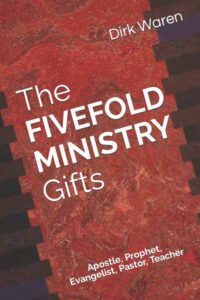
This article was edited from…
- You can purchase the print version here for only $7.38 (175 pages).
- Or get the Kindle eBook here for only 99¢
Both links allow you to LOOK INSIDE the book.
Related Topics:
The Fivefold Ministry Gifts — Apostle, Prophet, Evangelist, Pastor and Teacher
The Gist on Giving and “Tithing”
Provision, Money and “Prosperity”
Are Some Leaders BEYOND ACCOUNTABILITY?
King Solomon made this observation:
Since a king’s word is supreme, who can say to him, “What are you doing?”
In other words, when someone is at the top of the proverbial Totem Pole, they have the authority to make decisions and carry them out, regardless of what those under them think or say.
Does this mean that certain leaders are beyond accountability, whether political leaders, business leaders or ministerial leaders? To a point, yes, but only in regards to human accountability since we are all ultimately accountable to our Sovereign Creator and therefore will stand before the LORD at either the Judgment Seat of Christ (2 Corinthians 5:10-11) or at the Great White Throne Judgment (Revelation 20:11-15). This is true whether a person believes in God or not.
The Almighty is the ultimate authority and the Bible often acknowledges this in several ways (Job 9:12; Psalm 50:10-12, 103:19, 93:1, 89:11; Isaiah 37:16; Daniel 4:35; Matthew 11:25). Such passages shows that God is Sovereign, which literally means “reigns supreme” and this explains why God is called the Most High (Psalm 47:2). Despite this, our Creator allows freewill with the understanding that every person is ultimately accountable to the LORD. Even archangels and satan have to give account to the Almighty (Job 1:6 & 2:1). Reflect on it: If the LORD didn’t reign supreme we wouldn’t have to answer to our Creator.
As far as political leaders go — kings, queens, dictators, prime ministers, presidents, governors, mayors, etc. — God permits them to rule for a season for one reason or another (Psalm 75:6-7; Daniel 2:21, 4:25; Romans 13:1). For instance, Ahaz reigned in Jerusalem for sixteen years and he was one of the worst kings of Judah or Israel (2 Chronicles 28:1-5), but he was preceded by righteous Jotham, who reigned for 25 years, and succeeded by godly Hezekiah, who reigned 29 years.
While’s it’s frustrating and challenging to function under a corrupt authority, whether in your nation, city/town, occupation or even ministry, we’re not helpless. You can conduct spiritual warfare through intercession or confronting & correcting, assuming it’s viable to do the latter. You can also remove yourself from the situation and plant your life elsewhere, like move to a new country/region or get a different job, including starting your own business. No matter what you do, though, you’ll likely still have to deal with corrupt authorities in one way or another. It’s a fact of living in a fallen world.
Consider these contrasting examples from the Bible of dealing with corrupt leaders in Israel: After King David’s adultery with Bathsheba and his failed attempts to get valiant Uriah to sleep with Bathsheba to cover up his sin, David contacted Israel’s military commander, Joab, and instructed him to put Uriah in the front line, where the fighting was fiercest, and then have the other soldiers withdraw so Uriah would die in battle. This is murder in an indirect form, but murder nevertheless. Joab should have rejected this wicked order since Uriah was a noble, brave warrior, but he instead chose to be a pathetic “yes man” (2 Samuel 11:14-21). Shortly later, the prophet Nathan refused to be like this. He boldly confronted David’s corruption and spoke the truth, come what may (2 Samuel 12:1-14).
Joab failed to hold the King accountable whereas Nathan did. When you see corruption in the leadership of the body of Christ you can either weakly go along with it, like Joab, or hold the person accountable whatever the cost, like Nathan. If you choose the former you’ll have to answer for it at the Judgment Seat because the Lord will hold you accountable.
When you think about it, though, we’re all “kings” or “queens” in a sense. Even if you’re a subordinate at work, you run the show in your own abode, which recalls the saying “A man’s home is his castle.” (Keep in mind that ‘man’ in the biblical sense can refer to male and/or female depending on context; see Genesis 1:27 for proof).
Even if you are subordinate in the place you live, you are the ruler of your mind, actions, body and tongue. You choose what to think about or not think about every minute of every day. You choose what you do or don’t do, how you react or don’t react, what you wear or don’t wear, what you eat and how much you eat. You choose what you say and don’t say, including if you unjustly lie, negatively spin something or slander someone with premature judgments and half-truths. While it’s true that your choices are limited in some cases, such as what you eat or wear, you nevertheless have freewill to choose.
Your thought life is your personal domain. Even if you’re imprisoned in a small room, you choose what to meditate on. This isn’t some small thing when you consider how your thoughts run your life (Proverbs 4:23 NCV).
We began this article with a quote from Solomon from the book of Ecclesiastes. Let’s end with another one, which relates to all these things that you have authority over:
13Now all has been heard;
here is the conclusion of the matter:
Fear God and keep his commandments,
for this is the duty of all mankind.
14For God will bring every deed into judgment,
including every hidden thing,
whether it is good or evil.
Ecclesiastes 12:13-14
Related Topics:
Human FREEWILL and God’s SOVEREIGNTY
ACCOUNTABILITY — the Good, the Bad and the Eye-Rolling
What Is the “AGE OF ACCOUNTABILITY”?
What Are THE BASICS of Christianity?
If Healing Comes by Faith, Why Use ANOINTING OIL, HANDKERCHIEFS, etc.?

The covenant (contract) that the believer has with God thru Christ is a covenant of faith (Hebrews 11:6, Romans 4:16 & Galatians 3:6-9) and so everything we receive in our covenant is by faith, including eternal salvation (Ephesians 2:8) and answers to prayer (Mark 11:22-24). The same goes for receiving a healing, as observed in these two examples:
He said to her, “Daughter, your faith has healed you. Go in peace and be freed from your suffering.”
“Go,” said Jesus, “your faith has healed you.” Immediately he received his sight and followed Jesus along the road.
In both cases Christ was the conduit of God’s healing power — the channel through which divine power flowed — yet Jesus didn’t say that he healed them, but rather they were healed via faith, which is belief. The Messiah was simply the conduit of God’s healing power. In short, a person or even a thing can be a channel of God’s power, yet this doesn’t change the fact that faith is the key for a person to receive and maintain a healing, which can be observed in this passage:
13Is anyone among you in trouble? Let them pray. Is anyone happy? Let them sing songs of praise. 14Is anyone among you sick? Let them call the elders of the church to pray over them and anoint them with oil in the name of the Lord. 15And the prayer offered in faith will make the sick person well; the Lord will raise them up. If they have sinned, they will be forgiven.
James 5:13-15
Notice that it does not say the elder or the anointing oil heals the sick person, but rather the prayer offered in faith.
It was pointed out above that a person or even a thing can be a conduit of God’s power, which can be observed in the early days of the Church wherein Paul touched certain articles, like handkerchiefs and aprons, and these “were taken to the sick, and their illnesses were cured and the evil spirits left them” (Acts 19:11-12). It was the same thing with Peter’s shadow (Acts 5:15-16). These things had the anointing of God on them and thus physically or mentally ill people exposed to them were healed and demons fled!
Yet the Bible stresses that the believer can receive something by faith directly from God without any conduit, including an awesome healing. Christ plainly said: “whatever you ask for in prayer, believe that you have received it, and it will be yours” (Mark 11:24). If this is so, why do we need conduits of God’s healing power, whether a person or a thing, such as elders and handkerchiefs? Obviously because certain people need something physical — whether a person or thing — to bolster there faith and thus successfully receive. It’s just the way it is and has to do with where a person is at as far as their spiritual growth goes.
Here’s a 23-minute video that goes over these things in further detail (the issue of conduits of God’s healing power is covered from the 8:00-minute mark to about the 11:21 mark):
If you are interested in being a conduit of God’s healing power you can learn details about the laying on of hands in this article, just scroll down to the section 4. The Laying on of Hands.
What about receiving a healing via the gifts of the Spirit?
Even if a person receives a healing through the manifestation of a gift of the Spirit (1 Corinthians 12:4-11) they’re going to have to learn faith if they want to maintain their healing. Remember, everything in our covenant with God is by faith.
Verse 11 plainly points out that the gifts of the Spirit are distributed to believers “as the Spirit determines.” In other words, a believer (anyone who’s ministering to people in need of a healing or what have you) cannot turn ‘on’ a gift of the Spirit at will; rather the gifts of the Spirit manifest as the Spirit wills and this is in response to the faith of the ministering believer and their calling. For details on receiving a healing through the manifestation of a gift of the spirit, see this article, just scroll down to the section on Healing.
Interestingly, the Pool of Béthesda was a type of the gifts of the Spirit, which you can read about here.
Related Topics:
Should You Get the Surgery or BELIEVE FOR HEALING?
When You Should ASK and When You Should SPEAK IN FAITH, aka DEMAND
Faith — What Is It? Why Is It Important? How Does It Grow?
The GENESIS CURSE Is Not God’s Law, but Rather a Divine Curse
Those who teach/preach from the Holy Scriptures are instructed to “rightly divide” or “correctly handle” them (2 Timothy 2:15). If it’s possible to rightly divide God’s word it’s also possible to unrightly divide it; that is, misinterpret the Scriptures and spread error. The problem with error is that it cannot set people free; only the truth sets free, as the Lord said (John 8:31-32).
This is relevant to our topic because some sincere ministers have wrongly taught that the “Genesis curse” from chapter 3 of the book of Genesis is tantamount to God’s Law. In other words, they claim it applies to God’s commands to humanity (or, at least, some of it does). But this is not the case. The passage involves the LORD’s curse on humanity as a consequence of sin. Let’s read the account:
14So the LORD God said to the serpent:
“Because you have done this,
cursed are you above all livestock
and every beast of the field!
On your belly will you go,
and dust you will eat,
all the days of your life.
15And I will put enmity between you and the woman,
and between your seed and her seed.
He will crush your head,
and you will strike his heel.”
16To the woman He said:
“I will sharply increase your pain in childbirth;
in pain you will bring forth children.
Your desire will be for your husband,
and he will rule over you.”
17And to Adam He said:
“Because you have listened to the voice of your wife
and have eaten from the tree
of which I commanded you not to eat,
cursed is the ground because of you;
through toil you will eat of it
all the days of your life.
18Both thorns and thistles it will yield for you,
and you will eat the plants of the field.
19By the sweat of your brow
you will eat your bread,
until you return to the ground—
because out of it were you taken.
For dust you are,
and to dust you shall return.”
20And Adam named his wife Eve, because she would be the mother of all the living.
Genesis 3:14-20
When God pronounced to Eve that “Your desire will be for your husband, and he will rule over you” (verse 16) the Creator was issuing a warning to Eve, not giving a command to Adam! In other words, God was not giving Adam (and men in general) permission to be tyrants over the women in their lives. The LORD was basically saying: “Beware, Eve, man is now going to try to dominate you and your female descendants.”
This tendency is in the flesh of all males. You can even see it in boys who naturally try to dominate their mothers (which they don’t do with their fathers, generally speaking, and wisely so). I know because I myself did this when I was a kid. Don’t get me wrong, the masculine spirit is good — God called it “very good” along with everything else that was created (Genesis 1:31) — but the flesh, the sinful nature, perverts all good things.
We must understand that this section of Scripture — Genesis 3:14-19 — is a divine proclamation concerning the result of humanity now being fallen. In other words it was a prophetic curse due to transgression — not a blessing or a command — which is why this section of Scripture is called “the Genesis curse.” Nothing in this proclamation is a moral law like “You shall not commit adultery” or “You shall not steal” (Exodus 20:14-15), rather it’s a divine judgment — a curse — on the serpent/satan for deception and on Adam & Eve for their sin. The only sense that any proclamation in Genesis 3:14-19 is “Law” is that it is contained in the section of Scripture known as the Law or Pentateuch, aka the first five books of the Bible. The fact that some ministers refer to Genesis 3:16 as “Law” or a “blessing” is laughable. I can’t help but suspect they have issues with misogyny.
We’re going to focus on the LORD’s proclamation to Adam & Eve rather than satan since humanity has the potential for redemption whereas satan is incorrigible (you can read details here). God was conveying the general way it will be for them & their progeny — humanity — in a fallen world, not the way it should be or has to be. For instance…
- The LORD said to Eve that he would “sharply increase your pain in childbirth,” but this doesn’t mean that a woman and those who are assisting her medically shouldn’t do everything in their power to ease her pain during childbirth.
- The LORD said “in pain you will bring forth children,” but this doesn’t mean that a woman has to have children or will have children. What about women who can’t find a husband? What about women who have no interest in having sex with men? What about women who want to forsake marriage & children in order to devote their lives to God à la 1 Corinthians 7:34? What about women who can’t have children for one reason or another? What about women who simply have no desire to bear & raise children?
- The LORD said “Your desire will be for your husband,” but this clearly doesn’t mean that every woman will desire a husband.
- The LORD said “and he will rule over you,” but this doesn’t mean he ought to rule over her.
- The LORD said to Adam “cursed is the ground because of you; through toil you will eat of it all the days of your life,” but this doesn’t mean that we shouldn’t improve agriculture quality and production, nor does it mean that people since that time have to limit their diet to fruits & vegetables.
- The LORD said “through toil you will eat,” but this doesn’t mean that we shouldn’t reduce the amount of needless toil in our work in order to make a living. The biblical book of wisdom says “The blessing of the LORD brings wealth, without painful toil for it” (Proverbs 10:22).
- The LORD said “By the sweat of your brow you will eat your bread,” but this doesn’t mean that we shouldn’t find ways to reduce the amount of sweat it takes to earn a living.
- Lastly, the LORD said in the latter part of verse 19 that death is now a reality for humanity obviously because “the wages of sin is death,” but this doesn’t mean that there aren’t exceptions to suffering physical death, like Enoch (Genesis 5:21-24), Elijah (2 Kings 2:11) and those who will be raptured (1 Thessalonians 4:13-18). Nor does it mean that we shouldn’t reconcile with God through the message of Christ to escape eternal death (Romans 6:23; John 3:16).
In short, these statements are general truths about the way life will be in a fallen world due to Adam & Eve’s sin — called “original sin” by theologians — but they are not absolutes nor are they moral laws or blessings. They warn of the way it will generally be in this cursed physical reality, but not the way it should be or has to be or will always be. Are you following?
Related Topics:
Hermeneutics — Proper Bible Interpretation
The “Berean Spirit” — What is It? How Do You Cultivate it?
Bible—Is it Full of Contradictions? Does it Promote Slavery, Tyranny and Discrimination?
What Are THE BASICS of Christianity?
Can a Christian Be PERFECT?
While every spiritually-reborn believer is “made complete in Christ” (Colossians 2:10), there’s no such thing as a perfect Christian in this fallen world, not in a practical sense. The Bible says point blank that every believer misses it now & then no matter how spiritually mature s/he may be:
8If we claim to be without sin, we deceive ourselves and the truth is not in us. 9If we confess our sins, he is faithful and just and will forgive us our sins and purify us from all unrighteousness. 10If we claim we have not sinned, we make him out to be a liar and his word is not in us.
1 John 1:8-10
Other passages testify to this as well:
Indeed, there is no one on earth who is righteous, no one who does what is right and never sins.
“…for there is no one who does not sin…”
A popular international minister said that he hanged out with many of the top ministers you can name in America and stressed that every single one of them had a down side. In other words, each had areas where they were less than exemplary, including specific flesh issues. Yet this is different than saying they were involved with gross sin. Fivefold ministers — apostles, prophets, evangelists, pastors and teachers (Ephesians 4:11-13) — should be freed-up from major sin issues, which is accomplished through learning to walk in the spirit on a regular basis and becoming spiritually mature.
This explains the qualifications for leaders in the body of Christ detailed in the epistles (1 Timothy 3:1-7 & Titus 1:5-9). Although all fivefold ministers have their limitations and miss it now & then, there’s a difference between this and habitually failing in a major moral area or willfully living in the flesh. Obviously if a fivefold minister, like a pastor, isn’t freed-up from the flesh they’re not going to be able to help others walk free since a person can only give what they’ve got. It’s a simple principle: If you’re not free, you can’t help someone else be free.
The qualifications cited for overseers in Titus 1:5-9 say that the minister must be “blameless,” but blameless is not the same as sinless since every believer will miss it now & then, as already covered.
The key to keeping yourself blameless before the LORD is twofold:
- Be quick to humbly ’fess up when you miss it (1 John 1:9) and God will be faithful & just to forgive you and cleanse you from all unrighteousness, which means you’ll once again be righteous in the Lord’s sight and even “free from accusation” (Colossians 1:22). This is what the Bible calls “keeping with repentance” (Matthew 3:8 & Luke 3:8). Some other key passages include Psalm 32:5 and Proverbs 28:13.
- Stay away from “willful sins” (Psalm 19:13). There’s a difference between a person struggling with a certain sin, yet humbly keeping with repentance, and a person who regularly engages in willful sin. The word ‘willful’ in the Hebrew is zed (ZAYD), which means arrogant, proud, presumptuous or insolent. In other words, people who commit a willful sin know it’s a sin but still do it and aren’t sorry about practicing it. This is “great transgression” in God’s eyes, as David put it, and will eventually incur judgment if the individual continues to walk in it with no care of repentance (Galatians 6:7-8).
It’s crucial to keep yourself blameless before your Maker in this manner. Interestingly, only humble people can do this because it takes humility to honestly admit that you’ve missed it and confess accordingly. Arrogant people, by contrast, have a very difficult time admitting that they’ve made a mistake, how much more so revealing that they’ve sinned? This explains something that Scripture emphasizes repeatedly: “God opposes the proud but shows favor [grace] to the humble” (James 4:6, 1 Peter 5:5 & Proverbs 3:34).
Put simply, arrogance repels God while humility attracts God (Isaiah 66:2).
You could say that the LORD is only close to the humble and this explains why only humble people are greatly used of God, like Moses (Numbers 12:3) and David (1 Samuel 18:23). Yet please understand that, while humility is meekness, it’s not weakness. On the contrary, it’s spiritual strength.
So, while no believer can be morally perfect in a practical sense in this “present evil age” (Galatians 1:4), they can certainly grow spiritually wherein they walk humbly and blamelessly before their Creator and others.
Understanding positional truths will help the believer grow spiritually and walk free of the flesh. A positional truth reveals the believer’s position in covenant with God and therefore how God sees him/her in Christ. A good example is Colossians 1:22, which says that the believer is “holy in God’s sight, without blemish and free from accusation.” When believers grasp that the LORD sees them as holy, without blemish and free from accusation — and accepts this by faith — it has a positive impact on their identity in Christ and therefore their practical lifestyle. You can learn more about position truths in this video.
Related Topics:
How to Keep Yourself BLAMELESS (While Not Being SINLESS)
God Deals With People According to the Light They Have
What Are THE BASICS of Christianity?
Who Is MELCHIZEDEK? How Was He a Type of Christ?
Melchizedek was priest-king of Salem in Canaan during the time of Abram. He’s mentioned a few times in Scripture, starting with the following passage wherein Melchizedek met with Abram in the Valley of Shaveh to honor him after Abram’s militia impressively defeated King Kedorlaomer of Elam and the kings allied with him:
18Then Melchizedek king of Salem brought out bread and wine. He was priest of God Most High, 19and he blessed Abram, saying,
“Blessed be Abram by God Most High,
Creator of heaven and earth.
20And praise be to God Most High,
who delivered your enemies into your hand.”
Then Abram gave him a tenth of everything.
The name Melchizedek means “righteous king” and he was the spiritual and political leader of Jerusalem when it was called Salem, aka Shalem, which means “peace” or “peaceful.” Psalm 76:2 offers evidence that Salem and Jerusalem are one-and-the-same. Jerusalem, incidentally, means “possession of peace” or “foundation of peace” and is first mentioned in the Bible in Joshua 10:1.
What God Did Melchizedek Serve?
Melchizedek spoke of the Almighty as “God Most High” in the above passage, but Abram spoke of the Creator as “LORD God Most High” in the same context (verse 22). In other words, Melchizedek knew about the Most High and spoke of God in terms of titles, yet Abram knew God personally and so used God’s name, YHWH.* Abram is of course better known as Abraham (Genesis 17:5)
* Even though Abram & other patriarchs knew the Creator by name (Genesis 9:26, 12:8, 22:14, 24:12, etc.) they didn’t know God in the fuller sense that their descendants would, as disclosed in Exodus 6:3; cf. Genesis 4:26.
Melchizedek in the Book of Hebrews
The intriguing priest-king of Salem is also mentioned in the book of Hebrews in 5:1-10 and here:
1This Melchizedek was king of Salem and priest of God Most High. He met Abraham returning from the defeat of the kings and blessed him, 2and Abraham gave him a tenth of everything. First, the name Melchizedek means “king of righteousness”; then also, “king of Salem” means “king of peace.” 3Without father or mother, without genealogy, without beginning of days or end of life, resembling the Son of God, he remains a priest forever.
4Just think how great he was: Even the patriarch Abraham gave him a tenth of the plunder! 5Now the law requires the descendants of Levi who become priests to collect a tenth from the people—that is, from their fellow Israelites—even though they also are descended from Abraham. 6This man, however, did not trace his descent from Levi, yet he collected a tenth from Abraham and blessed him who had the promises. 7And without doubt the lesser is blessed by the greater. 8In the one case, the tenth is collected by people who die; but in the other case, by him who is declared to be living. 9One might even say that Levi, who collects the tenth, paid the tenth through Abraham, 10because when Melchizedek met Abraham, Levi was still in the body of his ancestor.
11If perfection could have been attained through the Levitical priesthood—and indeed the law given to the people established that priesthood—why was there still need for another priest to come, one in the order of Melchizedek, not in the order of Aaron? 12For when the priesthood is changed, the law must be changed also. 13He of whom these things are said belonged to a different tribe, and no one from that tribe has ever served at the altar. 14For it is clear that our Lord descended from Judah, and in regard to that tribe Moses said nothing about priests. 15And what we have said is even more clear if another priest like Melchizedek appears, 16one who has become a priest not on the basis of a regulation as to his ancestry but on the basis of the power of an indestructible life. 17For it is declared:
“You are a priest forever,
in the order of Melchizedek.”
Melchizedek is revealed to be a type of Christ in this passage. A ‘type’ simply means a person or thing that foreshadows someone or something else.
Verse 3 curiously says that Melchizedek didn’t have a beginning or end. Obviously he did since he was a human being, but there was no record of his father or mother, which is why he was said to be “without genealogy,” thus he became a symbol of the coming Christ, a high priest forever with no beginning and no ending; in other words, immortal in the absolute sense (Psalm 90:2 & 1 Timothy 6:16).
Verse 17, by the way, is a quote of Psalm 110:4.
Genesis 14:20 is the First Mention of ‘Tithing’ in the Bible
To ‘tithe‘ literally means to give 10% of your earnings (presumably to God via a representative) and we see that Abram gave 10% of the plunder of his victory to Melchizedek, who symbolizes Christ, the Head of the Church (Colossians 1:18). This was well before the Mosaic Law and illustrates that tithing is a wise principle of thankfulness, generosity and honor. Abraham is the Father of Faith while New Covenant believers are children of faith (Romans 4:16). Believers should only give if, like Abraham, they can do so cheerfully and free of pressure (2 Corinthians 9:7). You can read important details about New Covenant giving and tithing here (please keep in mind that New Covenant believers are not under the Law).
Why did Abram give Melchizedek 10% of his plunder? Because he was full of gratitude to the Sovereign God, who granted him a great victory, not to mention deliverance for Lot, his nephew. Since Melchizedek was obviously a priest of the one, true God and Abram recognized his authenticity, that’s whom he honored. He interestingly didn’t treat the king of Sodom in like manner (Genesis 14:21-23).
Further Insights About Melchizedek
This intriguing priest-king of Canaan illustrates that the LORD can reach people with sincere hearts even in a pagan world.
Melchizedek, incidentally, is also mentioned in Hebrews 6:20.
Related Topics:
Is Christianity a “RELATIONSHIP With God”?
Religion and Christianity — What’s the Difference?
HEBREWS / ISRAELITES / JEWS — Why Did God Choose Them?
Did the Hebrews BREAK THE SABBATH When They Sacked Jericho?

The question applies to the Hebrews taking of the city of Jericho on the Sabbath, as detailed here:
2Then the LORD said to Joshua, “See, I have delivered Jericho into your hands, along with its king and its fighting men. 3March around the city once with all the armed men. Do this for six days. 4Have seven priests carry trumpets of rams’ horns in front of the ark. On the seventh day, march around the city seven times, with the priests blowing the trumpets. 5When you hear them sound a long blast on the trumpets, have the whole army give a loud shout; then the wall of the city will collapse and the army will go up, everyone straight in.”
Joshua 6:2-5
The law of the Sabbath — the day of of rest (Exodus 20:8-11) — was already established when Joshua led troops into Canaan to conquer it. However, this law wasn’t applicable on this particular occasion for these reasons:
- The Hebrews were at war at the moment due to God’s just judgment on the Canaanites after hundreds of years of gracious mercy (see Genesis 15:16).
- Since the LORD is the One who gave the Sabbath command He can override the day of rest when necessary, which was essentially Jesus’ point in Luke 6:5.
- The Hebrews were following the LORD’s instruction to march around Jericho seven times on the Sabbath and take the city.
Related Topics:
Sabbath — What is it? Should Believers Observe It?
Law (Torah) — New Testament Believers are NOT Under the Law
Legalism — Understanding Its Many Forms
What Is KJV ONLY? What’s Wrong With It?

Christians who are “KJV Only” are people who view the King James Version of the Bible as the only legitimate English translation. It should be stressed that KJV Only people can live and die as genuine believers, loved of the Lord. The principle of Romans 14:3 applies here so we need to be careful not to be contemptuous of our fellow brothers & sisters regardless of what their position is on this matter (it goes both ways).
It should also be stressed that there’s absolutely nothing wrong with using the King James Version (KJV) in your studies. We quote it here at Fountain of Life from time to time and I’ve used it as my daily reading Bible a 3-4 times over the years.
The Main Drawback of KJV Only
This main issue with being KJV Only is that it can hinder people’s acquisition of truth because it limits their studies to a human translation of the God-breathed Scriptures (2 Timothy 3:16). Truth is alétheia (ah-LAY-thee-ah) in the Greek, which means “reality,” aka the way it really is. Since Christ stressed how “the truth will set you free” (John 8:31-32) it’s not wise for a person to limit their access to scriptural truth due to misguided allegiance to a translation of the original God-breathed Scriptures.
Speaking of which…
Only the Original Hebrew & Greek Scriptures Are “God-Breathed,” Not Translations of Them
Only the original Hebrew & Greek Scriptures are “God-breathed,” not a particular translation of them into another language by a person or a group of people. For anyone to argue that the KJV is also “God-breathed” in the sense that every word in it was inspired by God as the translators were carried along by the Holy Spirit (2 Peter 1:21), this simply isn’t true. There’s no verse in Scripture that says something like “Yay, in many centuries to come I will raise up a band of men who will translate the God-breathed Scriptures perfectly into the lingua franca of those times. Let not anyone else translate the Scriptures into this same language or update it, for that is an abomination.”
Let’s face it, any human translation of the original Hebrew/Greek Scriptures into another language is going to have its issues, no matter how great it is. And the KJV was indeed great for its time. This is augmented if the translators are all from one sect, which was the case with the KJV wherein the 47 scholars who translated it were of the Church of England and under the oversight of King James. The Church of England, if you’re not aware, broke away from the Roman Church in the mid-1500s and at the time was basically the English version of the Catholic Church.
The obvious issue with these translators of the KJV being from the same sect is the potential bias of sectarianism. Interestingly, it’s estimated that about 80% of the KJV stems from William Tyndale’s translation from 1528. Tyndale was ordained as a Catholic priest in 1515, but turned Protestant with the Reformation, which officially began two years later. You can read about Tyndale’s great contributions to Christianity here.
Since any translation of the original God-breathed Scriptures is going to have its issues, it’s best for those wanting to find the truth on any given subject to use several translations in their studies and look up the key Hebrew & Greek terms when pertinent, plus see how these words are used in different contexts in the Scriptures. Doing so reflects the “Berean spirit” (Acts 17:10-12).
We have to be careful here to distinguish between those who simply favor the KJV and those who are staunchly KJV Only. The latter argue that the Scripture texts available at the time to write the KJV (also used by Tyndale in his version) are the only reliable sources for the Holy Scriptures, but most KJV Only folk reject other translations based on these same texts, like the NKJV, KJ21 and MEV, all of which they curiously deem as sacrilegious as the NAS, NIV and other relatively recent translations.
KJV Only people evidently think the LORD only ordains one translation of the Hebrew, Aramaic & Greek Scriptures per language group which, frankly, is absurd. Such a position naturally suggests that English-speaking Christians are in bondage to this translation even though it’s over 400 years old and contains archaic verbiage that modern English-speakers can barely understand.
Tips for Getting the Most Out of Your Studies of the Scriptures
My humble advice to believers is to continue in God’s Word and put it into practice (John 8:31-32). Don’t use just one translation; compare the translations and look up the Hebrew & Greek words when questions arise concerning the meaning of a particular word or phrase.
Everyone naturally has a favorite translation, but I encourage switching translations from time to time as far as regular reading goes. For instance, I’m currently using the NKJV for daily reading (for studies, however, I use several translations). This keeps things fresh and prevents any one translation from becoming a veritable idol. It also provides a more balanced view of what God’s Word says. KJV Only people, by contrast, put themselves in a confining box of explicitly trusting the translation work of 47 scholars from the Church of England from over 400 years ago.
As far as looking up the original Hebrew & Greek goes, lexicons and interlinear texts are readily available. I encourage the use of Bible Hub on the internet and other such sites, which provide free and easy access to these study helps. For instance, here is John 3:16 according to 28 prominent English versions on Bible Hub. From there you can conveniently click to any of the 28 versions offered and also access lexicons (e.g. the Strong’s) and interlinear texts via the tool bar at the top. For those not familiar with interlinear Scriptures, they parallel the original Hebrew/Greek text with another language in alternate lines. Here is an example of John 3:13.
Criticizing Translations
Every single translation of the original God-breathed Scriptures can be nitpicked, including the KJV. I could cite clear evidence of problematic translating in the KJV based on sectarian bias, but I’m not going to do so. Instead, I humbly encourage believers to grow in God’s Word and put it into practice, year after year. Improve your studies — and your spiritual growth — by implementing the pointers noted above. You’ll be blessed.
When comparing some modern versions of the Bible with the KJV, there are some “missing” verses, such as in the NIV. Yet these “missing verses” are always cited in the footnotes; so these verses are not actually missing (since they’re in the footnotes). But why were they omitted from the main text in the first place? Here’s why:
The KJV was originally published in 1611 and it was a great achievement for that period as the translators used the best sources accessible at the time. Yet one of the KJV’s weaknesses is that the translation committee of 47 scholars drew heavily from William Tyndale’s Bible, which explains why 80% of Tyndale’s verbiage was transferred to the KJV (76% of the Old Testament and 83% of the New Testament). Tyndale utilized several sources in his translation. For the New Testament, he used Desiderius Erasmus’s Greek New Testament, aka the Textus Receptus (“received text” in Latin), specifically the third edition from 1522.
In the centuries since 1611 myriad older scriptural texts have surfaced and were painstakingly examined by scholars. They concluded that these earlier manuscripts are naturally more trustworthy. So contemporary translators have access to scriptural documents much nearer in time to the original manuscripts. As such, modern translations like the original NIV actually offer superior biblical scholarship than was available in the early 1600s when the KJV was produced. You can read details here.
Staunch KJV Only folks curiously object to revisions. Yet it is necessary to periodically revise works in order to fix issues from previous renditions, not to mention keep relevant. Should they not correct issues? Should they not update to stay relevant while maintaining faithfulness to the original Scriptures?
The KJV itself has had myriad corrections since 1611. In its original form, it’s virtually unreadable to modern English speakers. Go here for details.
Conclusion
The KJV was fine for its time, but its day is long over. While it’s serviceable for reference in one’s studies — and I often use it in this regard — it’s no longer effective as far as public ministry goes, unless of course you’re exclusively serving people already familiar with the KJV. The archaic lingo and phasing is simply too alien to modern English-speakers. It should have been retired from public service in the early 1800s (or, at least, the early 1900s) let alone the early 2000s.
Related Topics:
The NIV BIBLE — Answering the Critics
Hermeneutics — Proper Bible Interpretation
Berean Spirit — What is it? How Do You Cultivate It?
Who Wrote the New Testament Books? Who Authorized them as Scripture Canon?
Bible—Is it Full of Contradictions? Does it Promote Slavery, Tyranny and Discrimination?
What Does “Do Not Go Beyond What is Written” Mean in 1 Corinthians 4:6?
Your Belief Window (video)
Will We See Our PETS Again in Eternity?
Will your beloved pets be resurrected to be with you in the eternal age-to-come (2 Peter 3:13)? Or do your pets go directly to Heaven and await your arrival? What about other animals in Eternity? These are legitimate questions because some people naturally wonder about their beloved pets and other animals.
While the Bible doesn’t directly address the topic of our beloved pets in eternity there is quite a bit of information from which we can derive solid answers.
Let’s start with the question: Will there be animals in the New Heavens and New Earth? Answer: Why wouldn’t there be? After all, there are animals galore in our current age and there will be animals during the Millennium, as this passage shows:
6The wolf will live with the lamb,
the leopard will lie down with the goat,
the calf and the lion and the yearling together;
and a little child will lead them.
7The cow will feed with the bear,
their young will lie down together,
and the lion will eat straw like the ox.
8The infant will play near the cobra’s den,
and the young child will put its hand into the viper’s nest.
9They will neither harm nor destroy
on all my holy mountain,
for the earth will be filled with the knowledge of the Lord
as the waters cover the sea.
Isaiah 11:6-9
As you can see, carnivorous animals will become herbivorous during the Millennium just as they were before the fall of creation.
Furthermore, there are animals in Heaven right now, as verified by passages like this one:
11I saw heaven standing open and there before me was a white horse, whose rider is called Faithful and True. With justice he judges and wages war. 12His eyes are like blazing fire, and on his head are many crowns. He has a name written on him that no one knows but he himself. 13He is dressed in a robe dipped in blood, and his name is the Word of God. 14The armies of heaven were following him, riding on white horses and dressed in fine linen, white and clean. 15Coming out of his mouth is a sharp sword with which to strike down the nations. “He will rule them with an iron scepter.” He treads the winepress of the fury of the wrath of God Almighty. 16On his robe and on his thigh he has this name written:
KING OF KINGS AND LORD OF LORDS.
Revelation 19:11-16
This text details the Second Coming of Christ. The Lord is riding a white horse, as are the armies of Heaven following him (Jude 1:14 & Matthew 25:31).
Someone might argue that these horses are symbolic due to the symbolism contained in Revelation in general and particularly because verse 15 shows a “sharp sword” coming out of the Lord’s mouth to strike down the nations, which we know isn’t literal. Bear in mind, however, that symbolism in the Bible is obvious within the immediate context, as well as the context of the entire Bible. This is how we know the “sharp sword” coming out of Jesus’ mouth isn’t a literal sword, but rather is figurative of the word of God (Ephesians 6:17).
Also, the usage of some symbolic language in a passage doesn’t necessarily mean that every aspect of the passage is figurative when it’s clear some elements are literal. For instance Jesus Christ and the armies of Heaven that follow him are obviously literal in the above passage. As for the horses they ride, I see no indication that they’re symbolic. Other biblical passages suggest that they’re literal, like this one:
15When the servant of the man of God got up and went out early the next morning, an army with horses and chariots had surrounded the city. “Oh no, my lord! What shall we do?” the servant asked.
16“Don’t be afraid,” the prophet answered. “Those who are with us are more than those who are with them.”
17And Elisha prayed, “Open his eyes, Lord, so that he may see.” Then the Lord opened the servant’s eyes, and he looked and saw the hills full of horses and chariots of fire all around Elisha.
2 Kings 6:15-17
Although these horses dwell in Heaven — the highest spiritual realm — and are therefore different from the horses we’re familiar with, they are horses.
Since there are currently animals on Earth and in Heaven, and there will be animals during the Millennium, why wouldn’t there be animals in the eternal age of the New Heavens and New Earth? After all, God originally created all types of animals to fill the Earth before the fall of creation, why would this change when creation is fully restored? It wouldn’t.
God’s Cares About Animals Too!
Whether people are aware of it or not, there are several passages in the Bible that show God’s concern for animals, like this one:
“And should I not have concern for the great city of Nineveh, in which there are more than a hundred and twenty thousand people who cannot tell their right hand from their left—and also many animals?”
Jonah 4:11
The LORD proposed this question to Jonah, who objected to God’s mercy for the people of Nineveh. This city was the capital of Assyria, Israel’s worst enemy at the time, and the prophet wanted the LORD to destroy the city and its people, not mercifully forgive them when they repented (Jonah 4:1-2).
As you can see, the passage shows that God wasn’t just concerned about the fate of the 120,000 Ninevites, who were spiritually ignorant and couldn’t “tell their right hand from their left,” he was also concerned about the numerous animals in the city.
Here are several other passages that reveal the Creator’s concern for animals:
- Job 12:10: Job points out that the “life” of every creature is in God’s hands. The word ‘life’ is nephesh (neh-FESH) in the Hebrew, which is often translated as “soul” in English Bibles. The King James Version translates the passage like so: “In whose hand [is] the soul of every living thing, and the breath of all mankind.” We’ll look at these things further as we continue.
- Psalm 24:1 says that every living thing on the earth is the LORD’s, which includes the animals.
- Psalm 50:10-11 reveals that every animal in creation is God’s and He knows every bird in the mountains.
- Psalm 104:21-30 goes into detail about how the LORD created all animals with wisdom to one degree or another and how the whole Earth is filled with God’s creatures; it also shows how the Almighty provides them with food at the proper time and takes away their “breath” when they die.
- Proverbs 12:10 stresses that righteous people care about the needs of their animals.
- Matthew 6:26 shows how our heavenly Father feeds the birds of the air.
- Matthew 10:29 & Luke 12:6 reveal that when even sparrows die not one of them is forgotten by God!
- Revelation 4:11 shows the Mighty One being worshipped for creating all things for his good purpose and pleasure.
Someone might argue: If God cares about the animals so much why did he sanction the killing of them for food? Answer: This wasn’t part of the LORD’s original plan, notice:
29Then God said, “I give you every seed-bearing plant on the face of the whole earth and every tree that has fruit with seed in it. They will be yours for food. 30And to all the beasts of the earth and all the birds in the sky and all the creatures that move along the ground—everything that has the breath of life in it—I give every green plant for food.” And it was so.
31God saw all that he had made, and it was very good. And there was evening, and there was morning—the sixth day.
Genesis 1:29-31
All living beings on the Earth were herbivores before the fall of creation, including people, which means their diet was strictly vegetarian.
Verse 31 shows the Creator viewing all he had made and “it was very good.” There were no carnivores at this time because a carnivorous diet necessitates suffering and death of other living creatures and this wouldn’t be good. Unfortunately, Adam & Eve’s sin brought a curse on the physical Universe and the sins of their descendants perpetuate it:
5The earth is defiled by its people;
they have disobeyed the laws,
violated the statutes
and broken the everlasting covenant.
6Therefore a curse consumes the earth;
its people must bear their guilt.
Isaiah 24:5-6
As such, no part of creation functions entirely as originally designed. The ground is cursed, as shown in Genesis 3:17-19, which is a reference to the plant kingdom. Animals are also negatively affected:
Because of [sin] the land dries up, and all who live in it waste away; the beasts of the field, the birds in the sky and the fish in the sea are swept away.
20 For the creation was subjected to frustration, not by its own choice, but by the will of the one who subjected it, in hope 21 that the creation itself will be liberated from its bondage to decay and brought into the freedom and glory of the children of God.
Romans 8:20-21
The “bondage to decay” is the law of entropy and includes death. As such, every living thing in creation must die, including plant life. It wasn’t until after the fall and the ensuing curse that animals began to fear people (Genesis 9:2).
“The Final Restoration of All Things”
The awesome news is that creation will be redeemed and, in fact, yearns for it:
For the creation waits in eager expectation for the children of God to be revealed.
Romans 8:19
What does creation wait in eager expectation for? The children of God to be revealed, which is part of the “restoration of all things”:
For he [Jesus] must remain in heaven until the time for the final restoration of all things, as God promised long ago through his holy prophets.
Acts 3:21
This restoration of all things takes place in stages. One key stage is when Jesus returns for his church where believers’ bodies are finally redeemed:
22We know that the whole creation has been groaning as in the pains of childbirth right up to the present time. 23Not only so, but we ourselves, who have the firstfruits of the Spirit, groan inwardly as we wait eagerly for our adoption to sonship, the redemption of our bodies.
Romans 8:22-23
Christ’s return for the church is called the Rapture and is detailed in 1 Thessalonians 4:13-18 (covered in this article).
The restoration continues after the 7-year Tribulation when Jesus returns to Earth and establishes his millennial kingdom. Tribulation martyrs and Old Testament saints will be resurrected at this time and the lifespans of mortal humans will return to the lengthy lifespans of people before the flood.
In a previous section we looked at Isaiah 11:6-9, which shows what life will be like during the Millennium: Carnivorous animals will become herbivorous and therefore wolves will live with lambs and leopards will lie together with goats; calves and lions will hang out and be led by little children. Cows and bears will feed together and formerly carnivorous beasts like the lion will eat straw like an ox. Furthermore, children will play by the cobra’s den and the viper’s nest without fear because poisonous creatures will no longer be poisonous.
As wonderful as the thousand-year reign of Christ will be, it’s just another stage in the “restoration of all things.” The final stage takes place when God wholly renovates the Earth & Universe and the heavenly city, the new Jerusalem, comes “down out of heaven from my God” to rest on the new Earth (Revelation 3:12, 21:2 & 21:10). Notice, by the way, that this is stated three times verbatim in Scripture.
The Greek word for ‘restoration’ in the phrase “the final restoration of all things” is apokatastasis (ap-ok-at-AS-tas-is), which appears only once in the Bible, Acts 3:21. The root word is apokathistémi (ap-ok-ath-IS-tay-mee), which means “to set up again” and “restore to its original position or condition.” That’s what the “restoration of all things” is about — restoring the Earth and Universe to its original condition before the fall, which is the way God originally intended it to be.
The Messiah spoke of this restoration in this passage:
Jesus said to them, “Truly I tell you, at the renewal of all things, when the Son of Man sits on his glorious throne, you who have followed me will also sit on twelve thrones, judging the twelve tribes of Israel.
The Greek word for ‘renewal’ here is paliggenesia (pal-ing-ghen-es-EE-ah), which means “new birth, regeneration or renewal.” It’s only used twice in Scripture. The second time is in Titus 3:5 where it refers to the regeneration of the human spirit when a believer accepts the gospel (John3:3, 3:6). This shows that the “renewal of all things” is actually being jump-started in this current age through the spiritual rebirth of believers. This culminates with Christ’s return for his Church, detailed above. The next stage of the “renewal” takes place when Christ returns to the Earth to establish his millennial reign, which is what Jesus was specifically referring to in the above passage, Matthew 19:28. This renewal climaxes with the re-creation of the New Heavens and New Earth, which applies to the eternal age-to-come.
The animal kingdom and even the plant kingdom are partakers in this redemption of the physical universe. Why else would all creation “wait in eager expectation” for this great restoration if they were not included in it (Romans 8:19)? While animals and trees aren’t literally yearning for this renewal, they yearn for it in a figurative sense because they’re included in it.
When the high priest sprinkled animal blood on the cover of the Ark of the Covenant once a year to atone for the sins of the Israelites, this blood covered God’s Law, which was represented in the Ark via the tablets of the ten commandments. This ritual resulted in God’s mercy year to year, covering the Israelites’ sins. But the blood of animals could only temporarily cover sin, not cleanse it away forever (Hebrews 10:1-4). The good news is that Jesus Christ, who is the believer’s High Priest, offered his own blood when he went to the Most Holy Place in Heaven, not merely the blood of animals (Hebrews 9:23-28).
Leviticus 16:15 shows the high priest sprinkling blood on the ground in front of the Ark after sprinkling it on the cover. At the time the Ark was housed in the tent Tabernacle and so the blood was literally poured on the ground. Why’s this significant? Because the entire ceremony pointed to Christ’s blood atonement in Heaven and the priest didn’t just sprinkle blood on the lid of the Ark for the redemption of humanity, but also on the ground for the redemption of all physical creation!
Were there animals before the fall? Yes. Therefore there will be animals after the fall. The question is, will the LORD create new animals or will God simply resurrect animals that have already lived and died? Or both?
Speaking of which…
Will God Resurrect Animals From Sheol?
This is where the topic gets a little complicated because some people have an erroneous understanding of Sheol/Hades, as well as a religious conception of ‘soul’ as opposed to a scriptural one. Thankfully, “the truth will set you free” and everything makes perfect sense when you have a purely biblical grasp of these issues. If you feel it’s getting too complicated, however, just skip down to the final two sections (starting with Tying It All Together).
Let’s start with the fact that Scripture plainly states what happens to animals when they die:
13Such is the fate of the foolhardy,
the end of those who are pleased with their lot.
14Like sheep they are appointed for Sheol;
Death shall be their shepherd;
straight to the grave they descend,
and their form shall waste away;
Sheol shall be their home.
15But God will ransom my soul from the power of Sheol,
for he will receive me.
Psalm 49:13-15 (NRSV)
Many Christians today are either ignorant of the nature of Sheol (which is Hades in the Greek) or have a faulty grasp of the topic due to unbiblical religious teachings. What is Sheol? Sheol is “the world of the dead,” as scholar James Strong defined it, which corresponds to the scriptural definition as the “assembly of the dead” or “realm of the dead” (see Proverbs 21:16, Isaiah 14:9, 14:15, Ezekiel 31:15, 31:17 and 32:21, 32:27). The verses from Ezekiel, by the way, are the LORD Himself speaking, which means God Himself defines Sheol as “the realm of the dead.” It’s not the realm of the living, but rather the realm of the dead.
In other words, Sheol is the graveyard of dead souls where the immaterial DNA of lifeless souls is stored. For clear proof of this straight from the Holy Scriptures go here. Remember, God’s written Word is the blueprint for authentic Christianity and therefore it reveals what is true and what is not true in regard to spiritual matters. This is why Paul said “do not go beyond what is written” when it comes to Christian beliefs (1 Corinthians 4:1-6). That’s what we’re doing here — finding answers to our topic based on what the Scriptures actually say and not mindlessly embracing religious myths or quaint sectarian theories.
Since Sheol is where soulish remains are stored until potential resurrection at a future date, we are left with two obvious questions:
- Do the immaterial remains of animals go to Sheol when they die?
- Do animals have souls?
The answer to both of these questions is yes. If you find this doubtful, see for yourself what God’s Word has to say on both subjects…
Sheol: A Place Where Sheep Go?
Let’s return to that enlightening passage from the Psalms written by the sons of Korah:
13 Such is the fate of the foolhardy,
the end of those who are pleased with their lot.
14 Like sheep they are appointed for Sheol;
death shall be their shepherd;
straight to the grave they descend,
and their form shall waste away;
Sheol shall be their home.
15 But God will ransom my soul from the power of
Sheol,
for he will receive me.
Psalm 49:13-15 (NRSV)
The text refers to those who trust in themselves rather than God, which verse 13 describes as the “foolhardy.” A ‘fool’ in the Bible is synonymous with a wicked person since “fool” denotes someone who is morally deficient; that is, someone who rejects God’s existence, authority, wisdom & discipline and embraces evil desires (see Proverbs 1:7, 5:22-23 and Psalm 14:1).
Since this passage is definitely referring to ungodly people you would think that the King James translators would have translated sheol as “hell,” which would be in line with their misleading policy of translating the word as “hell” when the passage referred to wicked people, and as “grave” when it referred to righteous people. The reason they did this was to support their religious belief that the unredeemed immediately went to a fiery torture chamber when they died whereas redeemed people went somewhere else. Yet, notice how the King James Bible renders verse 14:
Like sheep they are laid in the grave [sheol];
death shall feed on them;
and the upright shall have dominion over them in the
morning;
and their beauty shall consume in the grave
from their dwelling.
Psalm 49:14 (KJV)
The passage is contextually referring to ungodly people yet the King James translators mysteriously chose not to render sheol as “hell,” which was their usual practice. Why? Obviously because the verse plainly says that wicked people are appointed for Sheol LIKE SHEEP! Of course everyone knows that sheep don’t go to a place of roasting conscious torture when they die. You don’t have to be a scholar to realize this. Hence, despite their desire to render sheol as “hell” in line with their standard practice they had no choice but to translate it as “the grave” in this case.
This passage coincides with Jeremiah 12:3, which also likens ungodly people to sheep that are to be slaughtered: “Drag them off like sheep to be butchered! Set them apart for the day of slaughter.” Note clearly that it says they are to be butchered and slaughtered (which is in harmony with the biblical axiom that “the wages of sin is death”), not tortured in some fiery nether realm until their resurrection thousands of years hence, as some ludicrously teach.
At this point, two questions crop up: Do sheep really go to Sheol as Psalm 49:14 says? And, if so, does this mean they have souls since, biblically speaking, Sheol is the “world of the dead” where dead souls are specifically laid to rest after physical death?
Do Animals Have Souls? Do They Go to Sheol When They Die?
The answer to both questions, believe it or not, is yes. Sheep and other animals are described in terms of being “living souls” in the Bible and, when they die, their non-physical essence is indeed laid to rest in Sheol. This may sound odd at first since due to people being indoctrinated by unbiblical concepts, but let’s observe what the God-breathed Scriptures have to say on the subject.
The word “soul” in the Bible is translated from the Hebrew word nephesh (neh-FESH), which corresponds to the Greek psuche (soo-KHAY).*
* Compare Genesis 2:7 with 1 Corinthians 15:45 for verification.
The creation text, Genesis 2:7, states that God breathed into the body of the first man the breath of life and he “became a living soul.” As such, the passage plainly shows that human beings are “living souls.” This explains why redeemed people who physically die during the future Tribulation period are described as conscious living “souls” in Heaven in Revelation 6:9-11. It’s obvious in Genesis 2:7 that what makes people living souls as opposed to dead souls is God’s breath of life. Without this “breath of life” the human soul is a dead soul.
This is where the concept of Sheol comes into play: When a person physically dies the Bible teaches that the breath of life (i.e. spirit) returns to God who gave it (Ecclesiastes 12:6-7, Job 34:14-15 & Psalm 146:3-4). What happens to a soul when God’s breath of life returns to the Creator and the soul is no longer a living soul? In other words, where are dead souls laid to rest? In Sheol! Remember, as the Bible and James Strong define it, Sheol is “the realm of the dead” (Proverbs 21:16, Ezekiel 31:15, 31:17 & 32:21, 32:27). It’s not the realm of the living — the realm of conscious beings — no, it’s the realm of the dead. And souls who are no longer animated by God’s spiritual breath of life are dead. That’s why they are placed in Sheol because, again, Sheol is the realm of the dead.
We know from the Scriptures that every human soul will ultimately be resurrected from Sheol. Old Testament saints will be resurrected at the time of Christ’s Second Coming at the end of the Tribulation (Matthew 19:28). All other unredeemed souls will ultimately be resurrected at the time of the Great White Throne Judgment, which will take place immediately following the millennial reign of Christ on Earth; this resurrection includes every spiritually un-regenerated soul that’s ever existed throughout history (Revelation 20:11-15).
Genuine believers don’t have to worry about going to Sheol, of course, because they’ve been spiritually born-again of the imperishable seed of Christ and possess eternal life in their spirits (1 Peter 1:23 & 1 John 5:12-13); hence, when authentic Christians physically die they are ushered into the presence of the LORD as shown in the aforementioned Revelation 6:9-11, as well as Philippians 1:20-24 and other passages (2 Corinthians 5:8) — death holds no black pall over the blood-washed, spiritually reborn Christian for to “be with Christ… is better by far”! This topic is fully covered here.
Why am I emphasizing all this? Because it’s important here to understand that Sheol is the holding place of dead souls. It is where God stores the soulish remains of every human being that has ever existed, their immaterial DNA, if you will. This is obviously necessary so that every person can be resurrected at the appropriate time.
Incidentally, this is what makes the “second death” so horrifying: Everyone will ultimately be resurrected from Sheol, but no one will ever be resurrected from the lake of fire, which is the second death (Revelation 20:14-15). This “second death” is an “everlasting destruction” so utterly complete and final that no one will ever be resurrected from it; it is literally a total obliteration of soul and body wherein one’s spiritual DNA is wiped out of existence (Matthew 10:28 & Hebrews 10:26-27, 10:31). You can read scriptural details here.
By the way, the fact that everyone will ultimately be resurrected from Sheol, which is the first death, but no one will be resurrected from the second death explains why souls in Sheol are repeatedly described as “sleeping” (e.g. Psalm 13:3 & Matthew 9:23-26). Unredeemed people who suffer the first death (physical death) are, figuratively speaking, “sleeping” because they will one day be “awoken,” that is, resurrected. By contrast, those who suffer the second death are never described as sleeping because they will never be “awoken” or resurrected. In other words, the first death is temporary, but the second death is everlasting — there’s no hope of resurrection from the second death (Revelation 20:11-15).
With the above scriptural facts in mind, let’s return to the questions of whether or not animals have souls and whether or not they go to Sheol when they physically die. The Bible describes animals in terms of being “living souls” just as well as humans. The Hebrew and Greek words for soul — nephesh and psuche — are repeatedly used in reference to animals in the Bible. For example:
So out of the ground the LORD God formed every animal of the field and every bird of the air, and brought them to the man to see what he would call them; and whatever the man called every living creature (nephesh), that was its name.
Genesis 2:19 (NRSV)
As you can see, land animals and birds are described in the Bible as “living creatures.” The word “creature” in this verse is nephesh, the Hebrew word for “soul.” Water animals are also described in the Bible as “living creatures” (Genesis 1:20-21); this includes Revelation 8:9 where the Greek word for “soul” — psuche — is used. My point is that animals are described in the God-breathed Scriptures as “living souls” just as people are. The reason most people don’t realize this is because English translations generally don’t translate nephesh and psuche as “soul” when the text refers to animals, as shown above in Genesis 2:19.
Why would Bible translators refuse to translate nephesh and psuche as “soul” when the terms apply to animals? No doubt because they wanted to draw a distinction between animals and human beings; after all, people are created in the image of God, beasts are not. Yet the original God-breathed Scriptures used the very same Hebrew and Greek word for both, shouldn’t we? If God Himself doesn’t have a problem with it, why should we?
Of course the real reason many translators refrain from translating nephesh and psuche as “soul” when these words apply to animals is that doing so would be counterproductive to the doctrine of the “immortal soul.” This doctrine maintains that souls, once created, can never be de-created — even unredeemed souls. Hence, the immortal soul doctrine is one of the chief pillars for the eternal roasting torture doctrine.
This pillar might be damaged if people discovered that animals are described in the Bible as “living souls” just as well as people; after all, even the uneducated public might question the notion that animals possess immortal souls and roasting in a nether realm for eternity. To solve this dilemma, English Bible translators decided to translate nephesh and psuche as “creature(s)” or “thing(s)” when the terms applied to beasts. This is another example of religionists attempting to cover-up the scriptural truth in order to perpetuate false beliefs.
The King James translators were so careful in this matter that there’s only one passage where nephesh is translated as “soul” in reference to animals; and the only reason they did so in this case was because of the curious wording of the passage. Witness for yourself:
And levy a tribute unto the LORD of the men of war which went out to battle: one soul (nephesh) of five hundred, both of the persons, and of the beeves [oxen], and of the asses, and of the sheep.”
Numbers 31:28 (KJV)
As you can see, “soul” (nephesh) in this verse applies equally to people, oxen, donkeys and sheep; the translators couldn’t very well render it as “creatures” or “things” since the list includes people as well as animals. They therefore had no choice but to translate nephesh as “soul.” (Let’s remember that the King James Version is a word-for-word translation so the translators couldn’t very well omit the word).
An obvious question crops up at this point: If both humans and animals are described as “living souls” in the Bible, what is the essential difference between them? The difference is that human beings are created in the very image of God whilst animals are not (Genesis 1:27). This not only means that people have the same general form of God (head, face, torso, legs, arms*), but also that human beings possess a spiritual dimension to their make-up that is aware of God & the spiritual realm, and Christians even possess the capacity to know and commune with God because of spiritual rebirth through Christ.
* Don’t believe for a second that God is some formless cloud being. Yes, the LORD is spiritual in nature, as Jesus said (John 4:24), but the Bible indicates that He definitely has a central presence that is human-like in form (e.g. Ezekiel 1:25-28 & Revelation 1:14-16). Some may respond: “But isn’t God omnipresent?” Yes, the Creator is omnipresent in the sense that the Almighty knows what’s going on everywhere at the same time and can do innumerable things simultaneously, but this does not mean that God’s being lacks a central presence and form.
Animals, of course, lack these characteristics. Yes, they have a spirit but only in the sense of a “breath of life,” an animating spiritual life-force from the Almighty. Animals are, of course, awesome creations of God, but they are on a far lower plane than people. They are instinct-oriented and therefore lack any consciousness of good or evil and have limited reasoning capabilities. They don’t have a God-consciousness (spirit) or a sin-consciousness (flesh). Many animals can be trained to respond to certain words and do various tasks or tricks, but not much more. They cannot build cities, learn complex languages, understand algebra, create and appreciate art or worship God. Human beings, on the other hand, are souls of the highest order created in God’s image and that’s why the Creator gave humankind authority over all animals (see Genesis 1:28 and 9:1-3). This is evidenced by the fact that people have zoos for animals and not vice versa.
Okay, so it’s clear in the Bible that animals are “souls,” but does this mean that their soulish essence goes to Sheol when they die? Evidently, according to Psalm 49:14:
Like sheep they [the foolhardy] are appointed
for Sheol;
Psalm 49:14 (NRSV)
The psalmist is essentially saying that fools under Old Covenant law will prematurely die just as surely as sheep slated to be slaughtered. Note that the psalmist plainly states that sheep “are appointed for Sheol.” There’s no reason we shouldn’t take this statement literally: When sheep die their souls go to Sheol. Remember, Sheol is simply “the world of the dead” or the “well of souls” — the space in the spiritual realm where dead souls are stored until their potential resurrection in the far-flung future. Is there any reason why God wouldn’t store the soulish remains of animals there as well as humans? After all, where else would the LORD store them? Especially considering the strong possibility that God will resurrect some or all of them in the perpetual age-to-come. We assume, of course, that there’s a separate compartment in Sheol for animal souls, just as pet cemeteries are separate from human cemeteries in the physical world.
Incidentally, the fact the Bible teaches that dead animal souls go to Sheol when they die is further proof that Sheol is not a burial plot in the ground because sheep and other animals are not ordinarily thus buried. The Hebrew word qeber denotes the physical grave where bodies are buried while Sheol refers to the ‘graveyard’ in the spirit realm where dead souls are housed.
Tying It All Together
So 1. animals have souls in the biblical sense, and 2. they go to Sheol when they die. This makes perfect sense when you have a biblical understanding of the nature of Sheol rather than a religious understanding. Sheol is the graveyard of dead souls where the immaterial DNA of lifeless souls is stored. As such, God can resurrect these life-forms when and if he deems fit. This includes the souls of animals.
Animal souls are, of course, stored in a separate compartment of Sheol than humans, just as pet cemeteries on Earth are separate from human graveyards.
In a previous section we saw that the Bible speaks of “the final restoration of all things” (Acts 3:21), which refers to the LORD restoring everything in creation to its original condition. The Greek word for ‘all things’ is pas (pass), which means “all, the whole, every kind of.” So God is going to restore all creation to its original condition, as he originally intended it to be. Revelation 21:5 adds an interesting insight in that God will be “making everything new” and not making new things. Chew on that.
Of course, the LORD won’t restore those condemned to the lake of fire, which includes damned human beings, the devil and his filthy angels and anything else cast into the lake of fire, such as death and Hades:
13The sea gave up the dead that were in it, and death and Hades gave up the dead that were in them, and each person was judged according to what they had done. 14Then death and Hades were thrown into the lake of fire. The lake of fire is the second death. 15Anyone whose name was not found written in the book of life was thrown into the lake of fire.
Revelation 20:13-15
I bring this up because those who adhere to the doctrine of universal restoration — i.e. universalists — believe that everything thrown into the lake of fire will be purged of evil and restored. If this is so, why did Christ use the example of weeds thrown into fire in reference to damned people who will suffer the second death (Matthew 13:40)? Are weeds restored when they’re cast into fire or do they burn up? What about Jesus’ example of a king’s enemies brought before him and executed in front of him from Luke 19:27? Does this example leave any room for his executed enemies being restored?
Revelation 20:14 (above) shows that death and Hades will be cast into the lake of fire. Does this mean that they’ll be eliminated forever in the coming eternal age or that they’ll be restored? If the latter is true, will death — the grim reaper — be restored and become a friendly reaper? Will Hades morph from a dungeon-like pit where dead souls are housed into a beautiful park where people frolic in paradise?
The answers are obvious: Death and Hades are cast into the lake of fire to be exterminated from existence forever, just as crying and pain will be eliminated (Revelation 21:4).
The reason we’re exploring this topic is because people naturally wonder about their beloved pets and animals. Will they ever see them again? Will they be reunited with them in the New Heavens and New Earth? While the Scriptures don’t directly address the question, the answer is obvious based on the passages we’ve looked at and others. For instance, how could it be the “restoration of all things” if one’s beloved pets are omitted? If Jesus said we are to ask and receive so our joy might be complete on this imperfect Earth (John 16:24), how much more so on the New Earth, which will be perfect? Doesn’t the Bible say that those who delight themselves in the LORD will receive the desires of their hearts (Psalm 37:4)? If this is so in this wicked age, how much more so in the righteous age to come? Really, it’s just common sense.
Will the LORD resurrect all animal souls in Sheol or just some? Again, the question isn’t addressed in the Bible, but we can use common sense in deducing a plausible answer: Why would God create new animals when he can just resurrect ones already created over the course of Earth’s history? Of course, the resurrected animals will be perfected when they’re resurrected — restored to their original design — like straw-eating lions and snakes that are no longer poisonous. This would, again, be part of the “restoration of all things.” How would it truly be a universal restoration of creation if innocent animals are omitted? And how is it that “creation waits in eager expectation” (Romans 8:19) if large quantities of creation — living creatures — aren’t included?
Someone might understandably argue that there wouldn’t be enough space on Earth to resurrect every animal that has died since the fall of creation. However, since astronomers estimate there are at least one hundred billion galaxies in the universe (!) and therefore incalculable planets with Earth-like environments this won’t be a problem whatsoever. Another thing to consider is that there will likely be much more land area on the New Earth in light of Revelation 21:1, that is, if we take it literally (currently 71% of the Earth’s surface is water).
If God doesn’t resurrect all the animals then obviously the dead souls of the ones that aren’t resurrected will still be in Sheol (Hades) when it’s cast into the lake of fire. In short, the soulish remains of these animals will be wiped out of existence at this time.
Do Pets Go to Heaven?
You’ll notice that I didn’t say anything about “pets going to heaven.” That’s because such a statement isn’t biblically accurate. For one thing, the Bible doesn’t describe the eternal age to come as “heaven” but rather as the “new heavens and new earth,” which is “the home of righteousness” (2 Peter 3:13). ‘Heaven’ technically refers to the spiritual realm where God’s throne is located. Of course many Christians refer to the eternal age-to-come as “heaven,” but this is erroneous terminology that can be traced back to Augustine’s false doctrine of amillennialism.
But do the souls of animals go to Heaven when they die like the souls of spiritually-regenerated believers in the New Testament era? We don’t see any evidence of this in the Bible, but we do see evidence of animal souls going to Sheol, as noted. As such, your dead pets aren’t likely hanging out in Heaven awaiting your coming, but they will be resurrected in the coming age of the New Heavens and New Earth, if that’s your desire. And why wouldn’t it be?
A certain prophet, however, insists that your beloved pets are indeed in Heaven and will be awaiting your arrival there during the “intermediate state” between physical death and bodily resurrection. Is this true? I suppose it could be, at least in some cases, but the LORD would have to arrange this beforehand based on your desire to see your pet again.
Whatever the case, you will see your beloved animals again in eternity. Praise the Lord!
Related Topics:
Q&A on HUMAN NATURE: Spirit, Mind & Flesh
The Three Realms—Heaven, Earth and the Underworld
Q&A on SHEOL / HADES, the Intermediate State of the Unsaved