
What Does It Mean to Be MORE THAN A CONQUEROR?

The Bible says “we are more than conquerors” (Romans 8:37). What does this mean? A conqueror is someone who fights and defeats a foe. A person who is “more than a conqueror” is someone who partakes of the blessings of victory because the foe is already defeated. Make no mistake, you are more than a conqueror since the Lord Christ has already defeated the enemy and you have authority, as plainly observed in the Scriptures:
And having disarmed the powers and authorities, he made a public spectacle of them, triumphing over them by the cross.
Satan and his filthy angels have been disarmed! The Messiah triumphed over them through his death, burial and resurrection. They’ve been stripped of their power & authority for all those who believe and are in covenant with God through Jesus Christ. All genuine believers are the “church,” which is ekklésia in the Greek and means “called-out from” the darkness & satanic bondage of the world (1 Peter 2:9).
This explains why the forces of darkness do everything in their power to hinder the good news of the gospel from coming to people. Every time someone turns to God in repentance and faith it’s one more person they’ve lost and no longer have authority over (Acts 20:21 & Titus 3:5).
As for the believer having authority over the kingdom of darkness, the Lord gave his twelve disciples just such authority:
Jesus called his twelve disciples to him and gave them authority to drive out impure spirits and to heal every disease and sickness.
And here’s what Christ said to his 72 disciples on a different occasion:
18“I saw Satan fall like lightning from heaven. 19I have given you authority to trample on snakes and scorpions and to overcome all the power of the enemy; nothing will harm you. 20However, do not rejoice that the spirits submit to you, but rejoice that your names are written in heaven.”
Luke 10:18-20
“Snakes and scorpions” are figurative of the devil and evil spirits. Christ gave his disciples authority to trample them under their feet, that is, overcome their power. Hence, filthy spirits had to submit to them and therefore the disciples were understandably elated (verse 17). They delivered people from demonic oppression and possession; they healed the sick and brokenhearted; they set the captives free because they had the authority and power to do so.
If Jesus’ disciples, who weren’t even spiritually regenerated at the time, had authority to overcome the powers of darkness, how much more so Christians who have been spiritually born of the imperishable seed of Christ (1 Peter 1:23)?
Get a hold of this fact: If you’re a believer YOU have authority over the kingdom of darkness! You’re not just a conqueror, you’re more than a conqueror! All the spiritual forces of evil are under your feet! They don’t have the authority to overcome you; you have the authority to overcome them!
Simply believe the Word, speak it authoritatively, and stand your ground in faith. See the articles below for linking topics that go into more scriptural detail.
Related Topics:
SPIRITUAL WARFARE — Do You Know What You’re Fighting For?
How to Distinguish 3 TYPES OF TRIALS — SITs, MITs and DITs
TEMPTATION, TRIALS and TESTS — What’s the Diff?
Spirituality — How to be Spirit-Controlled Rather than Flesh-Ruled
Spiritual Development — The Four Stages
What Can We Get From ELI, SAMUEL and the FLICKERING LAMP?

In 1 Samuel 3 we observe young Samuel being called to his prophetic ministry while he was staying with the elderly high priest, Eli, at the the Tabernacle in Shiloh where the Ark of the Covenant was located. Samuel and Eli slept under the same roof somewhere outside the Tent of Meeting (i.e. the Tabernacle). The golden lampstand in the Holy Place was filled with olive oil and lit at dusk (Exodus 30:8); it was kept burning from nightfall until first light (Exodus 27:20-21).
Just before dawn when the light was flickering the LORD called Samuel:
1The boy Samuel ministered before the Lord under Eli. In those days the word of the Lord was rare; there were not many visions.
2One night Eli, whose eyes were becoming so weak that he could barely see, was lying down in his usual place. 3The lamp of God had not yet gone out, and Samuel was lying down in the house of the Lord, where the ark of God was. 4Then the LORD called Samuel.
Samuel answered, “Here I am.” 5And he ran to Eli and said, “Here I am; you called me.”
But Eli said, “I did not call; go back and lie down.” So he went and lay down.
6Again the Lord called, “Samuel!” And Samuel got up and went to Eli and said, “Here I am; you called me.”
“My son,” Eli said, “I did not call; go back and lie down.”
7Now Samuel did not yet know the Lord: The word of the Lord had not yet been revealed to him.
1 Samuel 3:1-7
You can read the rest of the account here. The question we want to answer is how does this story relate to us today in the New Covenant era? After all, the very purpose of such Old Testament accounts is to teach us, as observed in Romans 15:4 and 1 Corinthians 10:11.
The lamp of God was flickering and about to go out, but this didn’t seem to concern the high priest. Young Samuel, however, heard something; and heard it again and again. It was the voice of the LORD. So he ran to the immediate religious authority for counsel, but the youth was readily dismissed.
Like Eli, the eyesight of some in the Church has grown dim and the elders can’t see so well, at least not spiritually. They’ve become content with the day-to-day goings-on of the ministry wherein they keep going through the motions, lighting the lamps and so forth. A personal word from the LORD and visions rarely happen, if ever.
- When the Holy Spirit really does speak to someone willing to listen, they are automatically written off as unsophisticated or dreaming.
- When the Creator really does appear, the elders’ eyes are too dim to see it.
- When the Almighty actually does move, they are resistant to accepting it for fear of tripping over something unknown—something fresh—in their weak-eyed darkness, which would be awkward and humiliating. (“The horror, the horror”).
Sometimes today we might need to “examine ourselves” (2 Corinthians 13:5) and admit that the lamp of God is flickering and perhaps even at risk of going out. Things are not as they should be. Why isn’t the glory of God breaking out of our places of assembly and illuminating our communities and beyond?
This is just food for thought for any of us and our ministries, small and great. Let’s give credit to Eli in that he finally recognized that the LORD was speaking to Samuel and thus gave the youth proper instructions, as observed in verses 8-9, but this didn’t prevent God’s judgment from falling on him & his wicked sons as detailed here.
This article is available in book form as (part of) chapter 24 in…


- The print book is available here for only $12.50 (303 pages)
- The Kindle eBook is available here for just 99¢!
Both links allow you to “look inside” the book.
Related Topics:
How to Be a Modern DAVID Against a Modern GOLIATH
Insights for Today From the Book of RUTH
Does God Reserve All Judgment UNTIL the End of the Age?
How to Distinguish 3 TYPES OF TRIALS — SITs, MITs and DITs

When you experience an unexpected trial of some sort, the first thing you need to do is determine if the assault is a Self-Inflicted Trial (SIT), a Discipline-Intended Trial (DIT) or a Maturity-Intended Trial (MIT). Here’s an explanation of each:
- SITs are obvious: they’re the result of one’s own folly, like being injured due to reckless driving and the resulting wreck or suffering physically due to a junk food diet. In both cases the person’s travails are not due to some satanic plot, but simply his/her foolish choices. The answer to SITs is learning wisdom.
- A DIT means the trial is hitting you due to disobedience, whether a sin of commission or a sin of omission. If this is the case, immediately ’fess up and God will dismiss the charge (1 John 1:8-9); then take up your weapons and fight the good fight of faith until the curse departs (1 Timothy 6:12).
- An MIT means that the trial is occurring for righteousness’ sake and the LORD is allowing the enemy to assault you in order to test your character and, once your character is proven, turn the negative situation around to your good (Romans 8:28). That’s the genius of MITs: God takes something in which the enemy intends to destroy you with—or, at least, hinder you—and ultimately turns it around to your good, making you “strong, firm and steadfast” “after you have suffered for a little while” (1 Peter 5:8-10). Of course, this is providing you fulfill your role by fighting the good fight of faith and enduring. (Remember: the LORD is your “helper,” not your do-everything-for-you-so-you-don’t-have-to-do-anything-at-all-er). This is precisely what happened with Joseph (Genesis 50:20).
The reason this data is essential is so that you know with certainty when you’re under satanic attack. After all, what good is the armor & arms of God if you can’t even recognize when you’re being assaulted?
This material is also essential so you don’t mistake a satanic attack for “God’s will.” For instance, a genuine Christian woman was diagnosed with life-threatening cancer and concluded that, whether she lived or died from the cancer, it was God’s will. No, it’s Satan’s will to take out fruit-bearing believers prematurely.
The obvious problem with this woman’s type of fatalistic reasoning is that, if you think something’s God’s will, you won’t fight it. You’ll accept it and suffer the consequences. But if you recognize something as a satanic attack you’ll fight it tenaciously.
Needless to say, don’t accept any curse of the Law on the mistaken grounds that it’s “God’s will”! If a curse shows up in your life due to your own folly or rebellion, you’re evidently undergoing an SIT or DIT; simply repent and proceed to fight the good fight of faith. The curse will flee from you and you’ll be restored as you persevere in faith. Here are two real-life examples:
- Several years ago I got back from a 5-day vacation in the Breckenridge, Colorado, area and it was just awesome, and inexpensive to boot. Unfortunately, when I got home I copped a grumbling attitude due to some minor grievances. Instead of overflowing with thankfulness for my wonderful God-given vacation I allowed some small mishaps to damper my attitude to the point of being childish. Sickness immediately came upon me and I fought it in faith but it wasn’t working. Then I knew – God was rebuking me for my negative, complaining spirit. Once I realized this, I humbly repented and resisted in faith. I was then delivered from the illness.
- Something similar happened to my wife around the same time. Carol’s a healing warrior and the epitome of health, but she came down with a sickness that was spreading around the office. Yet, when she tried to fight it off with faith it wasn’t happening. She then knew by the Spirit that it was a DIT. She had been holding a minor grudge against a subordinate at work because she caught him speaking negatively about her behind her back. She confronted him and he apologized, but she maintained an attitude against him. In other words, she didn’t truly forgive him despite his apology, which is a no-no as explained here. Once she got the matter straightened out with the Lord, she resisted her sickness in faith and it left her. This disciplinary trial lasted 24-hours in total.
If, however, you’re walking blamelessly before the LORD, keeping with repentance (Matthew 3:8 & Luke 3:8), you’re obviously undergoing a Maturity-Intended Trial (MIT). Don’t embrace the curse as “God’s will.” Tenaciously fight the good fight of faith and don’t give up. The curse will eventually depart and the LORD will turn around the negative situation for your good. Job’s trial is a good example in the Bible, although that’s of course an extreme example (here are the four main relevant chapters for those not familiar with the book of Job: Job 1-3 & Job 42).
Now, someone might point out that Discipline-Intended Trials (DITs) complicate the issue because they require the believer to determine if the malady in question is an attack from the kingdom of darkness for righteousness’ sake or a disciplinary measure on God’s part due to unrepentant disobedience. Well, that’s just the way it is. Besides, this very factor calls for an actual relationship with the LORD, which is what true Christianity is all about and separates it from mere human religion.
What do I mean? If a believer has a genuine relationship with God s/he will be able to fairly easily discern if the trial in question is the result of a MIT or a DIT, as Carol and I did in the two examples above. On the other hand, believers who fail to cultivate such a relationship will have a harder time distinguishing MITs from DITs. So, in reality, this is a great spur to go deeper in God.
For important scriptural details, see this article.
This article is also available as part of chapter 19 of…
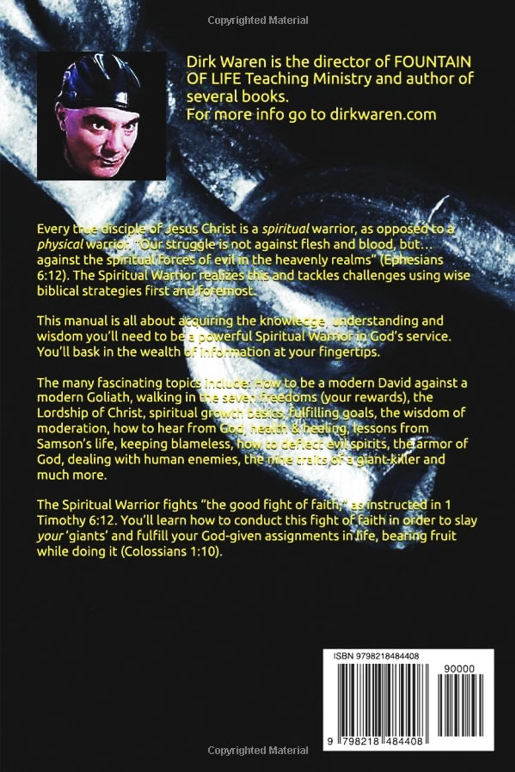
- The print book is available here for only $12.50 (303 pages)
- The Kindle eBook is available here for just 99¢!
Both links allow you to “look inside” the book.
Related Topics:
TEMPTATION, TRIALS and TESTS — What’s the Diff?
Spiritual Development — The Four Stages
Spiritual Growth is Like Climbing a Mountain
Spirituality — How to be Spirit-Controlled Rather than Flesh-Ruled
Should Believers Participate in FASTING?

Fasting is a spiritual discipline in which the individual goes without food for a period of time to, ideally, humble themselves and focus on spiritual things. It is denying the needs of the outer man to attend to the needs of the inner man.
The Messiah insinuated that the Church would fast after he was crucified:
14Then John’s disciples came and asked him, “How is it that we and the Pharisees fast often, but your disciples do not fast?”
15Jesus answered, “How can the guests of the bridegroom mourn while he is with them? The time will come when the bridegroom will be taken from them; then they will fast.”
Matthew 9:14-15
(Parallel accounts can be found in Mark 2:20 and Luke 5:35).
Christ also expected believers to fast, with these instructions:
16“When you fast, do not look somber as the hypocrites do, for they disfigure their faces to show others they are fasting. Truly I tell you, they have received their reward in full. 17But when you fast, put oil on your head and wash your face, 18so that it will not be obvious to others that you are fasting, but only to your Father, who is unseen; and your Father, who sees what is done in secret, will reward you.
Matthew 6:16-18
So it’s assumed that believers will fast, but it’s a personal matter between the believer and his/her Creator. And notice that nothing is said about how long or how often one should fast. Furthermore, believers are not commanded to fast anywhere. Hence, you have to be led of the Holy Spirit regarding both, keeping in mind that the Spirit is the believer’s counselor and teacher (John 16:13 & John 14:26). This of course requires relationship, which develops as you mature spiritually.
What Are the Benefits of Fasting?
There are several profitable things about fasting assuming it’s not used to manipulate God into answering prayer or devolves into a legalistic work that fuels religious arrogance (Luke 18:12):
- It’s a way of humbling yourself before the LORD and humility attracts God’s grace (James 4:10, 1 Peter 5:6, Psalm 35:13 & Ezra 8:21).
- It helps you focus on the needs of the inner man and honestly look at areas that need improvement (Matthew 4:4 & 2 Corinthians 13:5).
- It naturally provides extra time to devote to God and the things of God since you’re not preoccupied with preparing & consuming food.
- By coming nearer to the LORD in this manner, the LORD comes nearer to you and you will be blessed because of it, one way or another (James 4:8 & Hebrews 11:6). It’s an axiom.
- It thus increases faith (2 Corinthians 10:15).
- It keeps the flesh under via the practice of self-control, which is a fruit of the spirit (2 Timothy 1:7, 1 Corinthians 9:25 & Proverbs 16:32).
- It gives a needed break to your digestive system, not to mention cleans out your system (stomach/bowels).
- It naturally helps prevent you from becoming massively overweight — which isn’t healthy — since fasting shrinks your stomach and so you won’t need as much food to feel full.
If you’re not used to fasting, I suggest starting with skipping a meal or a one-day fast once a week for a few weeks — assuming your medical condition can handle it — and then be led of the Spirit from there. You can consider a two-day fast now & then; then maybe an occasional three-day fast or even longer. Be led of the Spirit.
Be sure to keep fasting a positive discipline in your life and don’t allow it to become physically harmful or bog you down in religious drudgery. Get plenty of rest when you fast. Speaking of which, I don’t recommend fasting when your work demands a lot of pressing activity (since it would naturally require regular sustenance to be effective on the job).
For a list of fasts featured in the Bible and their lengths, see this article.
Important Closing Words
Again, the Scriptures expect that New Covenant believers will fast, but nothing is said about how long or how often; and neither is fasting commanded. Whether you fast or not, how often and how long, is between you and your personal Counselor (John 16:13 & John 14:26). Every believer’s situation is different.
Speaking of which, I know strong believers filled with the Word & wisdom who don’t fast on a regular basis, although they have fasted on particular occasions in the past and will fast if the LORD leads them to do so. I know other believers who fast on a regular basis, e.g. weekly.
One devout woman my wife knows said she fasted for 40 days to concentrate on a spiritual breakthrough regarding her husband, and she was victorious, but I can’t in good conscious recommend taking such a looong fast — 40 days — since 43-70 days without food is the point that people will die of starvation, depending on their weight and state of health. Meanwhile people can only survive without water for about 3-7 days, sometimes a few days longer.
Sure Moses did it, but he was on his face in the supernatural presence of the Almighty on Mount Sinai (Exodus 34:28 & Deuteronomy 9:18). So please don’t consider an extraordinarily looong fast without the very certain confirmation of your divine guide and helper, the Holy Spirit.
A mighty minister who flowed in the gifts of the Spirit and has positively influenced people all around the globe for decades said he was bent on taking extremely long fasts when he was a young man in Christ and suffered some health problems due to it (he had a history of medical issues going back to when he was a kid). He recovered quickly, thankfully, but the Lord instructed him to never again put his physical health at risk by engaging in dubiously long fasts. He said the Spirit counseled him from then on to live what he called the “fasted life,” which was to never eat to the point of being full. This worked for him and his global calling.
I point this out because how often you fast and how long you fast — not to mention what precise kind of fast you take — is between you and the Lord, corresponding to your unique situation and calling. Whatever you decide, make sure the peace of Christ rules in your heart (Colossians 3:15). In other words, don’t do anything you don’t have a peace about.
Lastly, fasting is not the all-and-end-all spiritual discipline and so believers have to be careful to not allow it to become a legalistic ascetic practice, which fuels religious arrogance (Colossians 2:23 & Luke 18:12). If you fast, keep it between yourself and your Heavenly Father, as Christ plainly instructed (Matthew 6:16-18).
And, please, don’t allow any spiritual discipline to go to your head and think you’re better than others since “God opposes the proud but shows favor to the humble” (James 4:6). Actually, as noted above, one of the purposes of fasting is to humble oneself before the LORD (Psalm 35:13 & Ezra 8:21).
NOTE: Matthew 17:21 is not covered here because it cannot be found in the earliest, most reliable manuscripts of Scripture, which explains why some versions of the Bible don’t include it, such as the New International Version (although the NIV does include it in the footnotes). How do we explain this verse’s inclusion in later manuscripts? Evidently an overzealous scribe foolishly added it to the text at some point, evidently due to Mark 9:29 (below), perhaps thinking he could make God’s Word better (Proverbs 30:6).
Mark 9:29 features a similar scenario to Matthew 17:21 (although not necessarily the same occasion) where “and fasting” was added in later manuscripts. This explains why these words are absent in translations based on earlier, more reliable manuscripts, like the NIV, ESV and BSB.
There are two other occasions in the New Testament where the word “fasting” was wrongly added to the text at some later point, Acts 10:30 and 1 Corinthians 7:5. Again, “fasting” is not included in the earliest, best manuscripts.
This article is available in book form as chapter 12 of…
- The print book is available here for only $12.50 (303 pages)
- The Kindle eBook is available here for just 99¢!
Both links allow you to “look inside” the book.
Related Topics:
How to Keep BALANCED in Every Area of Life
Religion and Christianity — What’s the Difference?
Spiritual Growth — The Four Stages
How You Can KNOW You Are Saved

For anyone struggling with assurance of salvation, here are a few relevant passages from God’s Word that will help:
“For God so loved the world that he gave his one and only Son, that whoever believes in him shall not perish but have eternal life.”
“Whoever believes in the Son has eternal life, but whoever rejects the Son will not see life, for God’s wrath remains on them.”
If you confess with your mouth, “Jesus is Lord,” and believe in your heart that God raised him from the dead, you will be saved. For it is with your heart that you believe and are justified, and it is with your mouth that you profess your faith and are saved.
That last passage promises “you will be saved” if you do this.
For details on receiving eternal salvation see this article.
For info on growing spiritually once you are saved see this article.
Related Topics:
How to Walk FREE OF THE FLESH by being Spirit-Controlled
HEBREWS / ISRAELITES / JEWS — Why Did God Choose Them?

The LORD chose Abraham because he was an extraordinary man of faith (Romans 4:11). Abraham originally hailed from Ur of the Chaldeans, a city of moon worshippers in the lower Mesopotamian region near the mouth of the Euphrates River (Genesis 11:28), not far from modern-day Baghdad. This is today southeastern Iraq, which is the center of what we know as the Middle East.
God called Abram and his wife Sarai — later renamed Abraham & Sarah — to leave the moon worshipping culture of Ur and travel some 900 miles West to Canaan (650 miles due West), which was eventually the Promised Land of the Hebrews, aka Israel (Genesis 12:1). The LORD would not give this land over to them until the sin of the Canaanites had reached its full measure thus incurring God’s judgment with the land, in essence, spewing them out (Genesis 15:16; Leviticus 18:28).
Semites, Hebrews, Israelites, Jews
Noah’s son Shem produced the Semitic peoples (Genesis 10:21-31), which includes Moabites, Assyrians/Chaldeans, Arabs and Hebrews, amongst others.
Abram (Abraham) is plainly referred to as a Hebrew in the Bible (Genesis 14:13), which is Ibri (ib-REE) in the Hebrew language and stems from Shem’s great grandson Eber (Genesis 10:21; 11:14-17). Abraham sprang from Eber’s line six generations later.
Abraham’s grandson, Jacob, was renamed Israel by the LORD (Genesis 32:28) and Jacob’s twelve sons were the progenitors of the twelve tribes of Israel who were naturally called Israelites. These were God’s “chosen ones” (1 Chronicles 16:13).
By the time of the Babylonian exile, the Hebrews or Israelites were referred to as Jews, which is simply a shortening of Judah, the main southern tribe of Israel (2 Kings 25:25). Judah became the name of the southern kingdom when Israel split into two nations (1 Kings 12:16-17).
After the northern kingdom was taken into exile by the Assyrians in two phases in 740 BC and 711 BC (1 Chronicles 5:26; 2 Kings 17:5-6), Judah — the southern kingdom — was all that was left of Israel for well over a hundred years. The Babylonian conquest of Judah occurred with several deportations of Judeans between approximately 607-586 BC (2 Kings 24–25).
Both David and Jesus Christ were incidentally from the tribe of Judah (Matthew 1:1). The Greek word for Jew is Ioudaios (ee-oo-DAH-yos) and is used in reference to Hebraic people some 185 times in the New Testament.
While Abraham was Hebrew, he wasn’t an Israelite or Jew because the Israelites wouldn’t exist until the time of his twelve great grandsons, one of which was Judah wherein — again — the term Jew originated much later.
Abraham Was a Gentile
Gentile in the Hebrew is goy (GO-ee) while in the Greek it’s ethnos (ETH-nos), both of which refers to the “nations” or non-Israelites. The Greek word hellén (HEL-layn) technically refers to Greeks, but often figuratively refers to Gentiles — non-Jews around the globe (e.g. Romans 2:9-10).
God’s chosen nation in the Old Covenant was the Israelites (Exodus 6:7, 19:5; Deuteronomy 7:6). Abraham was technically a Gentile since the Israelites/Jews did not exist yet. While Abraham was the physical forefather of the Israelites/Jews in the inferior Old Covenant, he’s more importantly the father of all believers in the superior New Covenant (Romans 4:11 & Hebrews 8:6). This can be observed here:
16Therefore, the promise comes by faith, so that it may be by grace and may be guaranteed to all Abraham’s offspring—not only to those who are of the law but also to those who have the faith of Abraham. He is the father of us all. 17As it is written: “I have made you a father of many nations.” c He is our father in the sight of God, in whom he believed—the God who gives life to the dead and calls into being things that were not.
18Against all hope, Abraham in hope believed and so became the father of many nations, just as it had been said to him, “So shall your offspring be.” d
Romans 4:16-18
Notice the LORD’s original intention for Abraham:
“No longer will you be called Abram; your name will be Abraham, for I have made you a father of many nations.”
The name ‘Abram‘ means “Exalted father” whereas ‘Abraham‘ means “father of a multitude” or “father of many nations.” God made one nation through the loins of Abraham, Israel, but many nations through the faith of Abraham, which is one global spiritual nation regardless of sectarian tag, i.e. the Church of Jesus Christ (1 Peter 2:9).
Physical Israelites vs. Spiritual Jews
This explains why the Scriptures say that “not all who are descended from Israel are Israel” (Romans 9:6). The same was pointed out by Christ when he told the unbelieving Jews — who prided themselves on being children of Abraham — that, if they were truly Abraham’s offspring, they’d do the things Abraham did, which they didn’t (John 8:39). Thus the Lord told them frankly that the devil was their father (John 8:44).
In short, there are two kinds of Israel:
- The ethnic variety, meaning people physically descended from Abraham.
- The faith-oriented variety, meaning people who have the spirit of faith, i.e. those who turn to God in faith as their father of faith did (Romans 4:17).
There are some people of the first definition who are not of the second (Revelation 3:9). Yet there are some of the second definition who are also of the first, like Paul. Today, you’ll often hear the latter referred to as Messianic Jews.
Those of the second definition are truly “Abraham’s seed” or “Abraham’s offspring” and are thus spiritual Jews, as it is written:
If you belong to Christ, then you are Abraham’s seed, and heirs according to the promise.
In other words, it is not the children by physical descent who are God’s children, but it is the children of the promise who are regarded as Abraham’s offspring.
28A person is not a Jew who is one only outwardly, nor is circumcision merely outward and physical. 29No, a person is a Jew who is one inwardly; and circumcision is circumcision of the heart, by the Spirit, not by the written code. Such a person’s praise is not from other people, but from God.
Romans 2:28-29
This isn’t just a New Testament phenomenon as it can also be observed in the Old Testament. For instance, Numbers 13-14 details how Moses sent twelve Hebrews from each tribe into the Promised Land in preparation to take it, but ten came back with a spirit of fear, discouraging the masses, while two had a spirit of faith — Joshua and Caleb (Numbers 14:6-9). The ten doubters were dyed-in-the-wool Hebrews, but they weren’t children of Abraham because they didn’t have a spirit of faith. Joshua and Caleb, by contrast, were Abraham’s true offspring, not just in flesh, but in spirit as well.
For anyone who argues that Gentile believers are not spiritual Jews, you can observe further scriptural proof here.
Why Did God Choose the Israelites/Jews to Reveal the Truth?
The Bible makes it clear that God did not choose Abraham’s descendants — the Israelites/Jews — because they were superior to anyone else on Earth (Deuteronomy 9:4-6). However a couple of obvious things contributed to the LORD’s choice:
- Their capacity to develop an advanced written language.
- Their capacity to preserve vital documents from generation to generation, both of which were necessary for us to have God’s Word today (Romans 3:2, 9:4; Deuteronomy 4:8).
Another obvious reason the Creator chose this people and the corresponding locale — the proverbial “cradle of civilization” — is because it was the geographical center of the continents, which used to be one supercontinent, Gondwana, and, later, Pangaea before splitting into separate land masses (Genesis 10:25).
Being centrally located, the truths of Judeo-Christianity would more easily spread to the four corners of the Earth and reach:
- The people of the Mediterranean, Europe and northern Asia,
- The people of sub-Saharan Africa,
- The people of the Far East,
- And, eventually, the people of the Western Hemisphere, who are not actually native to the Americas since their progenitors came from East Asia via Beringia to settle in the “New World.”
This illustrates that…
From the Beginning, God’s Plan of Redemption Included ALL Peoples
This can be observed in comparing Matthew’s genealogy of Christ with Luke’s version. Matthew traces Christ’s heritage back to Abraham (Matthew 1:1-17) whereas Luke traces it all the way back to Adam (Luke 3:23-38).
The reason for this difference is that Matthew wrote his account primarily for Hebraic readers while Luke, believed to be a Gentile, wrote primarily to Gentiles with the hope that they would learn that God’s love & truth reach beyond the Israelites/Jews to the entire world. With Luke’s list going all the way back to Adam, the first man (Genesis 2:7; 1 Corinthians 15:45), it illustrates that the Messiah came for all humanity since every skin-color sprang from Adam’s loins (Romans 3:29-30).
This shows that there is, in essence, only one race, the human race. And since Earth used to be one continent, Gondwana and, later, Pangaea, we’re all native to the same continent, the same Earth, regardless of the fact that the land mass eventually split into several pieces, including thousands of islands (Isaiah 51:5; 66:19).
Secondly, observe what God said when he called Abram, aka Abraham:
1The LORD had said to Abram, “Go from your country, your people and your father’s household to the land I will show you.
2“I will make you into a great nation,
and I will bless you;
I will make your name great,
and you will be a blessing.
3I will bless those who bless you,
and whoever curses you I will curse;
and all peoples on earth
will be blessed through you.”
Genesis 12:1-3
The Almighty would use Abraham, the father of faith (Romans 4:11), to express his heart and purpose for all peoples of Earth (Galatians 3:8). God’s desire was to redeem humanity from the depths they had fallen after Adam’s sin. Through Abraham, the LORD would send the Messiah to fulfill the awesome plan of redemption for the whole world.
Closing Word
Let me close by stressing something emphasized in the Scriptures:
There is neither Jew nor Gentile, neither slave nor free, nor is there male and female, for you are all one in Christ Jesus.”
“Jew” refers to the Israelites descended from Abraham while “Gentile” in this context refers to all non-Jewish people. In other words, there is no white, black, brown, yellow or red in Christ Jesus. Believers are all brothers and sisters — spiritual family — in the body of Christ. There’s no place for racism, which of course doesn’t mean you can’t take healthy pride in your physical heritage and culture. Please notice I said healthy pride à la Galatians 6:4, not carnal pride.
The world is obsessed with skin-color and race/racism while believers should be focused on the heart of the individual. It’s why Paul said:
16So from now on we regard no one from a worldly point of view. Though we once regarded Christ in this way, we do so no longer. 17Therefore, if anyone is in Christ, the new creation has come: The old has gone, the new is here!
2 Corinthians 5:16-17
Regarding a person from a worldly point of view means to focus on what’s on the outside, including skin-color. God isn’t like this. The LORD looks to the inside of a person — the heart — as observed when Samuel was trying to discern which one of Jesse’s sons God chose as the next king of Israel:
6When they arrived, Samuel saw Eliab and thought, “Surely the Lord’s anointed stands here before the Lord.”
7But the Lord said to Samuel, “Do not consider his appearance or his height, for I have rejected him. The Lord does not look at the things people look at. People look at the outward appearance, but the Lord looks at the heart.”
1 Samuel 16:6-7
Related Topics:
REDEMPTION — God’s Plan of Liberation for Humanity & Creation
The Five Earths of the Bible (and the Eight Ages)
What Are THE BASICS of Christianity?
Insights for Today From the BOOK OF RUTH

The short book of Ruth details the account of Naomi’s family moving from Bethlehem in famine-stricken Israel to Moab, which was a 7-10 day trip to the Southeast by foot (which you can get a visual of here). The two sons married Moabite women but, unfortunately, Naomi’s husband and sons soon died and thus Naomi & her two daughters-in-law were left without husbands.
While disillusioned, Naomi heard that food was available in Israel again and set out to return, but encouraged her daughters-in-law to stay in Moab. Orpah chose to stay, but Ruth insisted on sticking with her desperate mother-in-law and accompanied her to Bethlehem.
What are some key insights believers today can get from this moving story? Remember, the very purpose of these Old Testament accounts is to teach us, as verified by Romans 15:4 and 1 Corinthians 10:11. Here are ten insights to chew on:
- Bethlehem literally means “place of bread,” but unfortunately there was no bread (food) there and so Naomi & family felt compelled to leave Bethlehem and go to Moab for sustenance. Quoting the Old Testament, Christ said “Man shall not live on bread alone, but on every word that comes from the mouth of God” (Matthew 4:4; Deuteronomy 8:3). People will leave Church assemblies if there’s not enough spiritual food there to live on. They’ll go elsewhere to find sustenance. In some cases they’ll unwisely turn to the world for succor, like bars, alcohol, drugs (illegal or legal), psychologists & psychiatrists, psychics, sexual immorality, ‘gay‘ culture, government idolatry, etc. In short, if there’s no bread in the Church fellowship they’re naturally going to look elsewhere for sustenance, even turning to the world in some sad cases.
- “The wages of sin is death” (Romans 6:23) and so going to Moab (the world) for succor results in heartbreak and disillusionment. Cruel Moab can destroy your marriage and steal the lives of your children. The world will rob you of your life-passion and leave you embittered. It will “steal, kill and destroy” but, thankfully, the LORD “gives life and life to the full” (John 10:10).
- When Naomi “heard” that the LORD had come to the aid of his people in Israel and that there was food there, she dropped everything to return home for sustenance. The prodigals—i.e. people who leave the Church to find possible sustenance in the world (Luke 15:11-32)—will come back when they are desperate enough and hear there is spiritual bread available.
- The prodigals probably won’t come back alone. Ruth accompanied Naomi to Bethlehem—the house of bread—a place she’s never been to before. In other words, the prodigals will bring those from the world—the unsaved—who’ve never been to a genuine Church assembly and experienced the abundant spiritual bread thereof (John 6:35 & 6:63). These are hungry people, longing for true spiritual sustenance since the cruel world has left them empty and bereft.
- Unfortunately, some, like Orpah, won’t come because the reputation of the Church has been so sullied by lifeless legalists and the impotence of human religion. They thus choose to live and die in “Moab,” the world (Ruth 1:8-14).
- Thankfully, there are those who are utterly sick of the world and hunger for truth, like Ruth (Matthew 5:6). They’re willing to leave everything they know and go to “the house of bread” merely because it’s rumored there’s spiritual succor there.
- Yet Ruth didn’t stick with Naomi merely due to a rumor, but also because of (1) a noble sense of loyalty to her deceased husband and, therefore, his mother; and (2) despite losing her husband and witnessing Naomi’s disillusionment, Ruth discerned from her time with this flawed family that they had something she didn’t have, spiritually speaking. She discerned that they were a “golden connection” to something better, perhaps even the abundant life she so desired (John 10:10).
- Loyalty is underrated. Note Ruth’s moving declaration of loyalty to her embittered mother-in-law:
16“Don’t urge me to leave you or to turn back from you. Where you go I will go, and where you stay I will stay. Your people will be my people and your God my God. 17Where you die I will die, and there I will be buried. May the Lord deal with me, be it ever so severely, if even death separates you and me.”
Ruth 1:16-17
- Ruth’s moving loyalty and her passion to obtain spiritual bread by leaving everything she knew behind pays off as she meets & marries Naomi’s relative, Boaz, and they have a son, Obed, who was the father of Jesse, the father of the great King David, which placed a Gentile in the lineage of the King of Kings (Luke 3:23-38). In short, those who refuse to starve to death in a spiritual desert, but wisely take advantage of the “golden connections” the Creator provides will be placed in the line of royalty! See 2 Peter 2:9, Revelation 1:6 & 5:10.
- By calling a Moabite to be in the lineage of the coming Messiah, the LORD illustrated that the New Covenant would apply to all people of every skin-color around the globe and not just to the Israelites/Jews. You can get amazing insights on this here.
This article is available in book form as (part of) chapter 24 in…
- The print book is available here for only $12.50 (303 pages)
- The Kindle eBook is available here for just 99¢!
Both links allow you to “look inside” the book.
Related Topics:
Religion and Christianity — What’s the Difference?
SPIRITUAL GROWTH Is Like Climbing a Mountain
Does Christianity Weaken People or EMPOWER?
Legalism — Understanding Its Many Forms
What Are THE BASICS of Christianity?
Is the LORD a “JEALOUS GOD”?

The Bible plainly describes the LORD as a jealous God:
4“You shall not make for yourself an image in the form of anything in heaven above or on the earth beneath or in the waters below. 5You shall not bow down to them or worship them; for I, the LORD your God, am a jealous God, punishing the children for the sin of the parents to the third and fourth generation of those who hate me, 6but showing love to a thousand generations of those who love me and keep my commandments.
Exodus 20:4-5
But isn’t jealousy a work of the flesh according to Galatians 5:19-21? It is, but “God is light; in him there is no darkness at all” (1 John 1:5), which shows that God’s jealousy is not carnal in nature. You see, the LORD has a healthy jealously for his beloved people: God views those in covenant with Him as a marital partner, which can be observed in the LORD’s comments here:
6During the reign of King Josiah, the LORD said to me, “Have you seen what faithless Israel has done? She has gone up on every high hill and under every spreading tree and has committed adultery there. 7I thought that after she had done all this she would return to me but she did not, and her unfaithful sister Judah saw it. 8I gave faithless Israel her certificate of divorce and sent her away because of all her adulteries. Yet I saw that her unfaithful sister Judah had no fear; she also went out and committed adultery. 9Because Israel’s immorality mattered so little to her, she defiled the land and committed adultery with stone and wood. 10In spite of all this, her unfaithful sister Judah did not return to me with all her heart, but only in pretense,” declares the LORD.
Jeremiah 3:6-10
Our Creator considered it adultery when Israel & Judah followed after pagan non-gods made of stone and wood and thus viewed them as unfaithful.
Paul had the same godly jealousy in regards to the misled Corinthian believers, an assembly he started:
2I am jealous for you with a godly jealousy. I promised you to one husband, to Christ, so that I might present you as a pure virgin to him. 3But I am afraid that just as Eve was deceived by the serpent’s cunning, your minds may somehow be led astray from your sincere and pure devotion to Christ.
2 Corinthians 11:2-3
Here the Corinthians weren’t being unfaithful by worshipping idols made of stone or wood, but by following false teachers who were leading them astray from their pure devotion to Christ.
Godly Jealousy vs. Carnal Jealousy
Whether a person is experiencing godly jealousy or carnal jealousy comes down to whether or not they are walking in the spirit or walking in the flesh:
16So I say, walk by the Spirit, and you will not gratify the desires of the flesh. 17For the flesh desires what is contrary to the Spirit, and the Spirit what is contrary to the flesh. They are in conflict with each other, so that you are not to do whatever you want. 18But if you are led by the Spirit, you are not under the law.
19The acts of the flesh are obvious: sexual immorality, impurity and debauchery; 20idolatry and witchcraft; hatred, discord, jealousy, fits of rage, selfish ambition, dissensions, factions 21and envy; drunkenness, orgies, and the like. I warn you, as I did before, that those who live like this will not inherit the kingdom of God.
22But the fruit of the Spirit is love, joy, peace, forbearance, kindness, goodness, faithfulness, 23gentleness and self-control. Against such things there is no law. 24Those who belong to Christ Jesus have crucified the flesh with its passions and desires. 25Since we live by the Spirit, let us keep in step with the Spirit. 26Let us not become conceited, provoking and envying each other.
Galatians 5:16-26
It’s similar with the emotion of anger, which can be righteous and productive (Mark 3:5, Mark 11:15-18 & Acts 13:8-12) or foolish and destructive (Proverbs 29:11 & 29:22).
Related Topics:
How to Walk FREE OF THE FLESH by being Spirit-Controlled
Is There Such a Thing as RIGHTEOUS ANGER?
Was Jesus WHITE, BLACK or YELLOW When He Was on Earth?

Some depictions of the Messiah are too Caucasian-like, such as blue-eyed Jeffrey Hunter playing the role in the 1961 film King of Kings. You’ll also come across sincere believers claiming that Jesus was black in the sub-Saharan sense when he was on Earth. I’m sure there are others who insist he was Far East Asian. So what was his skin-color according the Holy Scriptures. Let’s start with the fact that…
The Eternal LORD Transcends Skin-Color
The Son has existed from eternity since he’s God and everything was created through him, including every race of people, as observed here:
1In the beginning was the Word, and the Word was with God, and the Word was God. 2He was with God in the beginning. 3Through him all things were made; without him nothing was made that has been made. 4In him was life, and that life was the light of all mankind.
John 1:1-4
This helps explain this prophetic verse from the Old Testament:
For to us a child is born, to us a son is given, and the government will be on his shoulders. And he will be called Wonderful Counselor, Mighty God, Everlasting Father, Prince of Peace.
While the child Jesus was born to us when Christ was incarnated (Philippians 2:5-11), the Son of God was given since he had already existed from time immemorial, i.e. forever.
What Race/Ethnicity Was Jesus Christ on Earth?
As far as the physical stock of Yeshua goes, he sprang from the lineage of Abraham (Matthew 1:2; Luke 3:34) and Abraham was a Hebrew from the Near East, not a European, sub-Saharan black or Far East Asian. For proof, consider his land and language:
- Abraham originally hailed from Ur of the Chaldeans, a city in the lower Mesopotamian region close to the coastline near the mouth of the Euphrates River (Genesis 11:28). This is today southeastern Iraq, which is the center of what is we know as the Middle East.
- Of course God called Abram & Sarai — Abraham & Sarah — to leave Ur and travel some 900 miles West to Canaan (650 miles due West), which would soon become the Promised Land of the Hebrews, aka Israel (Genesis 12:1). The LORD would not give this land over to them until the sin of the Canaanites had reached its full measure thus incurring God’s judgment with the land, in essence, spewing them out (Genesis 15:16; Leviticus 18:28).
- Abraham named his sons Ishaq (Isaac) and Ishmael, which are Hebraic names.
- Speaking of which, Abram (Abraham) is plainly referred to as a Hebrew in the Bible (Genesis 14:13), which is Ibri (ib-REE) in the Hebrew language and stems from Shem’s great grandson Eber (Genesis 10:21 & 11:14-17). Abraham came from Eber’s line, six generations later.
For details on Abraham and the Israelites/Jews that sprang from his loins, see this article.
Why Did God Choose This Location to Reveal the Truth?
While the LORD chose Abraham because he was an extraordinary man of faith (Romans 4:11), the Bible makes it clear that God did not choose his descendants because they were superior to anyone else on Earth (Deuteronomy 9:4-6), although I’m sure their capacity to 1. develop an advanced written language and 2. preserve vital documents from generation to generation was a factor, both of which were necessary for us to have God’s Word today (Romans 3:2, 9:4; Deuteronomy 4:8).
Another obvious reason the Creator chose this people and the corresponding general location — the proverbial “cradle of civilization” — is because it was the geographical center of the continents, which used to be one supercontinent, Pangaea or Gondwana, before it split into separate land masses (Genesis 10:25).
Being centrally located, the truths of Judeo-Christianity would more easily spread to the four corners of the Earth and reach:
- The people of the Mediterranean, Europe and northern Asia,
- The people of sub-Saharan Africa,
- The people of the Far East,
- And, eventually, the people of the Western Hemisphere, who are not actually native to the Americas since their progenitors came from East Asia via Beringia to settle in the “New World.”
This shows that…
From the Beginning, God’s Plan of Redemption Included ALL Peoples
This can be observed in comparing Matthew’s genealogy of Christ with Luke’s version. Matthew traces Christ’s heritage back to Abraham (Matthew 1:1-17) whereas Luke traces it all the way back to Adam (Luke 3:23-38).
The reason for this difference is that Matthew wrote his account primarily for Hebraic readers while Luke, believed to be a Gentile (a non-Jew), wrote primarily to Gentiles with the hope that they would learn that God’s love & truth reach beyond the Hebrews to the entire world. With Luke’s list going all the way back to Adam, the first man (Genesis 2:7; 1 Corinthians 15:45), it illustrates that the Messiah came for all humanity since every skin-color sprang from Adam’s loins (Romans 3:29-30).
This shows that there is, in essence, only one race, the human race. And since Earth used to be one continent, Pangaea, we’re all native to the same continent, the same Earth, regardless of the fact that the land mass eventually split into several pieces, including thousands of islands (Isaiah 51:5 & 66:19).
Secondly, observe what God said when he called Abram, aka Abraham:
1The LORD had said to Abram, “Go from your country, your people and your father’s household to the land I will show you.
2“I will make you into a great nation,
and I will bless you;
I will make your name great,
and you will be a blessing.
3I will bless those who bless you,
and whoever curses you I will curse;
and all peoples on earth
will be blessed through you.”
Genesis 12:1-3
The Almighty would use Abraham, the father of faith (Romans 4:11), to express his heart and purpose for all peoples of Earth (Galatians 3:8). God’s desire was to redeem humanity from the depths they had fallen after Adam’s sin. Through Abraham, the LORD would send the Messiah to fulfill his awesome plan of redemption for the whole world.
Closing Word
Let me close by stressing something emphasized in the Scriptures:
There is neither Jew nor Gentile, neither slave nor free, nor is there male and female, for you are all one in Christ Jesus.”
“Jew” refers to the Israelite people descended from Abraham while “Gentile” in this context refers to all non-Hebrew people. In other words, there is no white, black, brown, yellow or red in Christ Jesus. Believers are all brothers and sisters — spiritual family — in the body of Christ. There’s no place for racism, which of course doesn’t mean you can’t take healthy pride in your physical heritage and culture. Please notice I said healthy pride à la Galatians 6:4, not carnal pride.
The world is obsessed with skin-color and race/racism while believers should be focused on the heart of the individual. It’s why Paul said:
16So from now on we regard no one from a worldly point of view. Though we once regarded Christ in this way, we do so no longer. 17Therefore, if anyone is in Christ, the new creation has come: The old has gone, the new is here!
2 Corinthians 5:16-17
Regarding a person from a worldly point of view means to focus on what’s on the outside, including skin-color. God isn’t like this. The LORD looks to the inside of a person — the heart — as observed when Samuel was trying to discern which one of Jesse’s sons God chose as the next king of Israel:
6When they arrived, Samuel saw Eliab and thought, “Surely the Lord’s anointed stands here before the Lord.”
7But the Lord said to Samuel, “Do not consider his appearance or his height, for I have rejected him. The Lord does not look at the things people look at. People look at the outward appearance, but the Lord looks at the heart.”
1 Samuel 16:6-7
Related Topics:
REDEMPTION — God’s Plan of Liberation for Humanity & Creation