
What Does It Mean That THE SEA GAVE UP THE DEAD?

Let’s read the passage in question with focus on verse 13:
11Then I saw a great white throne and him who was seated on it. The earth and the heavens fled from his presence, and there was no place for them. 12And I saw the dead, great and small, standing before the throne, and books were opened. Another book was opened, which is the book of life. The dead were judged according to what they had done as recorded in the books. 13The sea gave up the dead that were in it, and death and Hades gave up the dead that were in them, and each person was judged according to what they had done. 14Then death and Hades were thrown into the lake of fire. The lake of fire is the second death. 15Anyone whose name was not found written in the book of life was thrown into the lake of fire.
Revelation 20:11-20
Both the bodies and souls of the unredeemed will be resurrected to stand before the LORD at the Great White Throne Judgment. There are a couple of interpretations of verse 13.
Here’s one:
- “Death… gave up the dead” would refer to all bodies resurrected from graves/tombs.
- “Hades gave up the dead” would refer to all souls resurrected from Hades, aka Sheol.
- “The sea gave up the dead that were in it” suggests this resurrection extends even to those who lost their lives in the waters of the Earth, whether oceans, seas, lakes or rivers. This would include the multitudes who perished in the global flood of Noah’s day (1 Peter 3:20 & Genesis 7:23). In other words, no unsaved person throughout history would be exempt from standing before God for judgment.
The other interpretation is this:
- “Sea” is figurative of this turbulent fallen world and therefore refers to the resurrection of all unredeemed people who died throughout history.
- Death and Sheol (Hades) are spoken of synonymously in the Scriptures, as observed in Psalm 6:5, Psalm 89:48, Proverbs 5:5, Proverbs 7:27, Proverbs 9:18, Isaiah 38:18-19 and many other passages. Why? Because, when unredeemed people suffer death, their dead soul is housed in Sheol (Hades) until resurrection on Judgment Day.
- So verse 13 is simply a way of saying every unsaved person will be resurrected to face Divine judgment, both body and soul (Matthew 10:28).
I favor the second interpretation.
Related Topics:
Sheol / Hades: The “Intermediate State” of the Unsaved Dead
IMMORTALITY — Only Available Through the Gospel
DEATH — Does It Mean “Separation” as Religionists Claim? (No)
RICH MAN & LAZARUS: Fantastical Parable or Literal Account?
The Believer’s “Intermediate State” (between Physical Death and Bodily resurrection)
Hell (Human Damnation) — Questions and Answers
Eternal Life (“Heaven”): Questions & Answers
What Does Being BORN OF WATER AND OF THE SPIRIT Mean?

Let’s read the passage in question:
3Jesus replied, “Very truly I tell you, no one can see the kingdom of God unless they are born again. ”
4“How can someone be born when they are old?” Nicodemus asked. “Surely they cannot enter a second time into their mother’s womb to be born!”
5Jesus answered, “Very truly I tell you, no one can enter the kingdom of God unless they are born of water and the Spirit. 6Flesh gives birth to flesh, but the Spirit gives birth to spirit.
John 3:3-5
Christ was talking about spiritual regeneration as observed by his explanation in verse 6 of what he meant by being “born again”: “Flesh gives birth to flesh, but the Spirit gives birth to spirit.” So why did he say in verse 5 that “no one can enter the kingdom of God unless they are born of water and the Spirit”? In short, what does being “born of water” have to do with with spiritual rebirth?
He wasn’t talking about water baptism since we know from Scripture that a believer can be spiritually born-again and receive the baptism of the Holy Spirit before undergoing the ceremony of water baptism. The first recorded Gentile believers is Exhibit A (Acts 10:43-48), as are plain passages like Romans 3:23-25, John 3:16, Acts 16:31 and Ephesians 2:8-9. Remember, being baptized in water is simply a public testimony of the believer’s baptism into Christ, which refers to spiritual regeneration, as observed by Galatians 3:26-27 and Romans 6:3.
Like Christ, Paul also linked water to spiritual rebirth and this helps us understand what the Lord meant:
He saved us, not because of righteous things we had done, but because of his mercy. He saved us through the washing of rebirth and renewal by the Holy Spirit
As you can see, inward regeneration involves 1. the “washing of (spiritual) rebirth” and the corresponding 2. “renewal by the Holy Spirit.”
A deeper interpretation is that the Lord used “water” in reference to the seed of the Word of God (Ephesians 5:25-26). In other words, being “born of water” means being born-again via the Word of God.
You see, believers are spiritually reborn of the Holy Spirit — as Jesus said “Spirit gives birth to spirit” (verse 6) — but this is only possible due to the the seed of the Living Word of God, Christ (1 Peter 1:23). In 1 John 3:9 ‘seed’ is translated from sperma, which is the Greek word for sperm. In other words, all true believers are spiritually reborn through the Holy Spirit via the sperm of Christ. Yeshua prayed to the Father, “Sanctify them by the truth; your word is truth” (John 17:17). And Christ is both the living Word of God (John 1:1) and the Truth (John 14:6).
Related Topics:
The Six Basic Doctrines of Christianity
SPIRITUAL REBIRTH: Is Being “Born Again” Biblical?
How You Can KNOW You Are Saved
What Does “the Spirit, the Water and the Blood Testify” Mean?
What Are the SEVEN SPIRITS OF GOD From Revelation?

In John’s apocalyptic vision there are several curious references to the “seven spirits of God”:
John, To the seven churches in the province of Asia: Grace and peace to you from him who is, and who was, and who is to come, and from the seven spirits before his throne,
“To the angel of the church in Sardis write: These are the words of him who holds the seven spirits of God and the seven stars. I know your deeds; you have a reputation of being alive, but you are dead.”
From the throne came flashes of lightning, rumblings and peals of thunder. In front of the throne, seven lamps were blazing. These are the seven spirits of God.
Then I saw a Lamb, looking as if it had been slain, standing at the center of the throne, encircled by the four living creatures and the elders. The Lamb had seven horns and seven eyes, which are the seven spirits of God sent out into all the earth.
This phrase is no doubt a reference to the Holy Spirit with the number seven figuratively illustrating fullness and perfection. Since the “Lamb” is a symbol of Christ, the “seven lamps” of 4:5 and the “seven horns,” “seven eyes” and “seven spirits of God” of 5:6 can only denote the fullness and power upon the Lamb and before the throne. On Earth, Christ was indwelt & anointed by the Holy Spirit before entering public ministry for 3.5 years (Matthew 3:16-17; John 1:32), speaking of which….
Literally, the Holy Spirit is described in Scripture as having seven characteristics:
1A shoot will come up from the stump of Jesse;
from his roots a Branch will bear fruit.
2The Spirit of the LORD will rest on him [Christ]—
the Spirit of wisdom and of understanding,
the Spirit of counsel and of might,
the Spirit of the knowledge and fear of the LORD—
3and he will delight in the fear of the LORD.
Isaiah 11:1-3
This refers to the Messiah being empowered by the Holy Ghost (Matthew 3:16), showing that the Spirit is:
- of the LORD
- of wisdom
- of understanding
- of counsel
- of might
- of the knowledge of the LORD
- of the fear of the LORD
Related Topics:
Is the Holy Spirit God or a Divine Force?
What Is the HOLY SPIRIT’S ROLE in Human Redemption?
What Is the UNPARDONABLE SIN (Blasphemy Against the Holy Spirit)?
Does God Have a Feminine side?
What Are THE BASICS of Christianity?
Did the Crucified Thief Go to Paradise THAT DAY?

When the Messiah was crucified, two thieves were crucified simultaneously with him:
One of the criminals who hung there hurled insults at him: “Aren’t you the Messiah? Save yourself and us!”
40 But the other criminal rebuked him. “Don’t you fear God,” he said, “since you are under the same sentence? 41 We are punished justly, for we are getting what our deeds deserve. But this man has done nothing wrong.”
42 Then he said, “Jesus, remember me when you come into your kingdom.”
43 Jesus answered him, “Truly I tell you, today you will be with me in paradise.”
Luke 23:39-43
Christ obviously discerned a repentant spirit in this thief, along with faith for salvation (Acts 20:21). As such, he was promising the former criminal paradise when he was resurrected at his Second Coming (Daniel 12:1-2 & Matthew 19:28-30). Some argue that Jesus told the man he’d be with him in paradise that very day, yet he said no such thing because Christ didn’t go to “paradise” the day he died since we know his dead soul laid in Sheol for three days until he was resurrected (Matthew 12:40). This obviously was not “paradise,” but rather the penalty of sin—death—which Jesus experienced in our place as our substitutionary death (1 Peter 2:24).
So what “paradise” was Christ referring to and when would he and this repentant thief experience it? The Greek word is only used three times in Scripture. Other than Jesus’ statement in Luke 23:43 (above), Paul referred to “paradise” as currently being in Heaven in 2 Corinthians 12:4, which is substantiated by Revelation 2:7. Since the latter verse states that the tree of life is in this paradise, it’s likely a reference to the Garden of Eden (see Genesis 2:9 and 3:22-24), which was evidently removed from this fallen earth after Adam’s banishment, to be replaced one day when God makes the Earth and Universe new—new in the sense of removing the stain of evil and death, as well as other changes, like making worthless desert landscapes blossom and bloom (Revelation 21:1-4). Again, we know Jesus didn’t go to paradise that day, but to Sheol. He was dead and resurrected three days later. Forty days after that Jesus ascended to Heaven where this paradise is located.
When Jesus was resurrected from the dead he triumphed over the powers of darkness (Colossians 2:15). Paul said of this, “he was delivered over to death for our sins and was raised to life for our justification” (Romans 4:25). The apostle was referring to the justification of all those who believe according to the new covenant, of course, but also to the holy people of the Old Testament period who had already passed away. In our new covenant believers don’t go to Sheol when they die because they’ve been born-again of the imperishable seed of Christ (1 Peter 1:3 & 1:23); as such, they bypass Sheol and go straight to Heaven to await their forthcoming bodily resurrection (Philippians 1:21-24 & 2 Corinthians 5:8). Death—Sheol—has no power over believers who are reborn of the seed of Christ by the Holy Spirit (1 Corinthians 15:55-57). For more glaring scriptural evidence go here.
Old Testament saints, on the other hand, had to go to Sheol when they physically died because Yeshua hadn’t yet died for their sins or been raised to life for their justification. This includes the repentant thief whom Jesus informed would be with him in paradise, which—as we’ve seen—is located in Heaven, not Sheol. Enoch, Elijah and Moses were the only exceptions in the Old Testament period because they were types and shadows of the resurrection of the redeemed (which you can read about here). After Christ was resurrected, righteous souls no longer had to go to Sheol because justification was made available.
All this renders Luke 23:43 nonsensical because Jesus said to the ex-thief, “Truly I tell you, today you will be with me in paradise.” The idea that Jesus went straight to paradise when he died—whether in Heaven or anywhere else—simply isn’t supported by the rest of Scripture. This violates the hermeneutical law “Scripture interprets Scripture.” The contradiction is easily solved, however, by simply placing a comma in the appropriate spot in the text. Keep in mind that there was no punctuation in the original Greek text; consequently, translators have to determine where punctuation marks go, like commas and so on. Also bear in mind that the Greek word for “today,” sémeron, literally means ‘this day’ or ‘now.’ With these facts in mind, the passage makes perfect sense simply by changing the placement of one comma in the English text like so: “Assuredly, I tell you this day, you will be with me in paradise.”
So Christ wasn’t telling the ex-thief that he’d be with him in paradise that very day; no, he was telling him that day he’d be with him in paradise, meaning the ex-thief would be with Jesus in paradise in Heaven when his soul was resurrected from Sheol, whether that occurred 43 days later when Jesus ascended (Ephesians 4:8) or — more likely — at Christ’s Second Coming (Matthew 19:28) is regardless. Keep in mind that time is of no significance when you’re dead in Sheol.
Those who disagree have to find scriptural support that the Messiah went straight to some paradise upon physical death, which they can’t do; so this is the appropriate way to read the verse. Of course, some cite Christ’s parable of the rich man and beggar, suggesting that “Abraham’s bosom” was a paradise, but the overwhelming evidence of Scripture disproves that theory.
This article was edited from chapter 9 of…

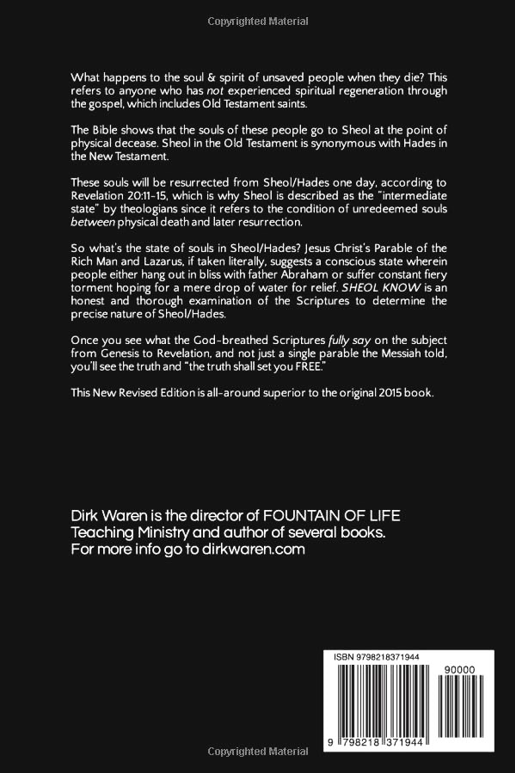
- You can purchase a print copy here for a low price, $10.49 (257 pages).
- Or get the Kindle eBook for only 99 cents!
The more affordable Condensed Version is available here for only $6.12 (153 pages); or get the eBook for just 99 cents. This version is good for people who aren’t interested in excessive details and just want the main scriptural facts. It makes a perfect gift to introduce people to the topic.
Related Topics:
Sheol / Hades: The “Intermediate State” of the Unsaved Dead
RICH MAN & LAZARUS: Fantastical Parable or Literal Account?
The Believer’s “Intermediate State” (between Physical Death and Bodily resurrection)
Hell (Human Damnation) — Questions and Answers
Hell (Lake of Fire): Eternal Torment or Everlasting Destruction?
Eternal Life (“Heaven”): Questions & Answers
Hell (Human Damnation) — Questions and Answers
Are Gentile Believers SPIRITUAL JEWS?

While Gentile believers are obviously not Jews in a physical sense, they are indeed spiritual Jews. Let’s consider the scriptural evidence for this from three angles…
“A Person Is a Jew Who Is One Inwardly“
God’s chosen nation in the Old Covenant was the Israelites, aka the Hebrews (Exodus 6:7, 19:5; Deuteronomy 7:6). While Abraham was the physical forefather of the Israelites/Jews in the inferior Old Covenant, he’s more importantly the father of all believers in the superior New Covenant (Romans 4:11; Hebrews 8:6). This can be observed here:
16Therefore, the promise comes by faith, so that it may be by grace and may be guaranteed to all Abraham’s offspring—not only to those who are of the law but also to those who have the faith of Abraham. He is the father of us all. 17As it is written: “I have made you a father of many nations.” He is our father in the sight of God, in whom he believed—the God who gives life to the dead and calls into being things that were not.
18Against all hope, Abraham in hope believed and so became the father of many nations, just as it had been said to him, “So shall your offspring be.”
Romans 4:16-18
Notice the LORD’s original intention for Abraham:
“No longer will you be called Abram; your name will be Abraham, for I have made you a father of many nations.”
The name ‘Abram‘ means “exalted father” whereas ‘Abraham‘ means “father of a multitude” or “father of many nations.” God made one nation through the loins of Abraham, Israel, but many nations through the faith of Abraham, which is one global spiritual nation regardless of sectarian tag, i.e. the Church of Jesus Christ (1 Peter 2:9).
This explains why the Scriptures say that “not all who are descended from Israel are Israel” (Romans 9:6). The same was pointed out by Christ when he told the unbelieving Jews — who prided themselves on being children of Abraham — that, if they were truly Abraham’s offspring, they’d do the things Abraham did, which they didn’t (John 8:39). Thus the Lord told them frankly that the devil was their father (John 8:44).
In short, there are two kinds of Israelites or Jews:
- The ethnic variety, meaning people physically descended from Abraham.
- The faith-oriented variety, meaning people who have the spirit of faith, i.e. those who turn to God in faith just as their father of faith did, Abraham (Romans 4:17).
There are some people of the first definition who are not of the second (Revelation 3:9). Yet there are some of the second definition who are also of the first, like Paul. Today, you’ll hear the latter people referred to as Messianic Jews.
Those of the second definition are truly “Abraham’s seed” or “Abraham’s offspring” and are thus spiritual Jews, as it is written:
If you belong to Christ, then you are Abraham’s seed, and heirs according to the promise.
In other words, it is not the children by physical descent who are God’s children, but it is the children of the promise who are regarded as Abraham’s offspring.
28A person is not a Jew who is one only outwardly, nor is circumcision merely outward and physical. 29No, a person is a Jew who is one inwardly; and circumcision is circumcision of the heart, by the Spirit, not by the written code. Such a person’s praise is not from other people, but from God.
Romans 2:28-29
This isn’t just a New Testament phenomenon as it can also be observed in the Old Testament. For instance, Numbers 13-14 details how Moses sent twelve Hebrews from each tribe into the Promised Land in preparation to take it, but ten came back with a spirit of fear, discouraging the masses, while two had a spirit of faith — Joshua and Caleb (Numbers 14:6-9). The ten doubters were dyed-in-the-wool Hebrews, physically speaking, but they weren’t children of Abraham because they didn’t have a spirit of faith. Joshua and Caleb, by contrast, were Abraham’s true offspring, not just in flesh, but in spirit as well.
All Believers — Whether Jew or Gentile — Are Spiritually Reborn of the Seed of Christ
All believers are spiritually regenerated of the seed of the Living Word of God, Christ (1 Peter 1:23). In 1 John 3:9 ‘seed’ is translated from sperma, which is the Greek word for sperm. In other words, all true believers are spiritually reborn of the sperm of Christ and, physically speaking, Yeshua was a Hebrew of the tribe of Judah (Matthew 1:1-16; Luke 3:23-38; Genesis 49:10; Isaiah 11:1). So, while Gentile believers are obviously not physical Jews, they are indeed spiritual Jews.
Consider Paul. Before he became the great apostle he was Saul, the great persecutor of the Church (e.g. Acts 8:3). Saul was a physical Jew, but not a spiritual Jew. Once Saul was born-again of the seed of Christ, however, he became a spiritual Jew, renamed Paul. If a Gentile man experiences the very same spiritual regeneration through Christ as Paul did, how would he not also be a spiritual Jew since both were reborn of the same spiritual seed? It’s as simple as 2+2=4.
Gentile Believers Are “Wild Olive Shoots” Grafted Into Israel
This can be observed here:
11Again I ask: Did they [the Hebrews] stumble so as to fall beyond recovery? Not at all! Rather, because of their transgression, salvation has come to the Gentiles to make Israel envious. 12But if their transgression means riches for the world, and their loss means riches for the Gentiles, how much greater riches will their full inclusion bring!
13I am talking to you Gentiles. Inasmuch as I am the apostle to the Gentiles, I take pride in my ministry 14in the hope that I may somehow arouse my own people to envy and save some of them. 15For if their rejection brought reconciliation to the world, what will their acceptance be but life from the dead? 16If the part of the dough offered as firstfruits is holy, then the whole batch is holy; if the root is holy, so are the branches.
17If some of the branches have been broken off, and you [Gentile believers], though a wild olive shoot, have been grafted in among the others and now share in the nourishing sap from the olive root, 18do not consider yourself to be superior to those other branches. If you do, consider this: You do not support the root, but the root supports you. 19You will say then, “Branches were broken off so that I could be grafted in.” 20Granted. But they were broken off because of unbelief, and you stand by faith. Do not be arrogant, but tremble. 21For if God did not spare the natural branches, he will not spare you either.
Romans 11:11-21
Paul was addressing believers in Rome (Romans 1:7) here wherein he relates Israel — God’s people in the Old Covenant — to an olive tree. Some of the “branches” of Israel had been broken off due to unbelief (verses 17 & 20) and Gentile believer were grafted in like wild shoots. Grafted into what? Israel. And Israel is made up of Hebrews, aka Jews. How is it that Gentiles are grafted into Israel? Through spiritual rebirth via the seed (sperm) of Christ. If Gentile believers are grafted into Israel through spiritual regeneration, that makes them Jews — not physically, of course, but spiritually.
Related Topics:
HEBREWS / ISRAELITES / JEWS — Why Did God Choose Them?
Hermeneutics — Proper Bible Interpretation
REDEMPTION — God’s Plan of Liberation for Humanity & Creation
Why Did God Allow THE BLACK DEATH and So Many to Die?

There are several examples of the Almighty bringing pestilence on certain peoples at certain times as a judgment against sin/rebellion (e.g. 2 Samuel 24:15 wherein 70,000 died). When God’s judgment falls upon the Earth during the future 7-year Tribulation there will be plagues (e.g. Revelation 6:8 & 18:8). But this doesn’t mean every outbreak in history is due to divine judgment.
The black plague — aka the bubonic plague — swept across Europe and northern Africa from 1346-1353, killing between 75-200 million people, which makes it the deadliest pandemic in human history. Was the black death a judgment from God or merely the consequence of life in a fallen world and unsanitary living practices/conditions? Or both? It’s one of those mysteries of life we can ask the LORD about when we come face to face (1 Corinthians 13:12).
One thing I know is that Europe was in the midst of the Dark Ages at the time, 164 years before the Protestant Reformation would begin. In other words, the true Church was small and completely underground at the time and a spirit of powerless religiosity with the superstitions thereof reigned across Europe. I point this out because the true gospel teaches healing by faith (e.g. Mark 5:34 & Mark 10:52) and people couldn’t very well be healed by faith during a deadly pandemic if such truths are not known or preached.
It didn’t help that the Catholic Church conveyed the Word of God in Latin at services and so the common person couldn’t even comprehend it, which you can read about here. (The absurdity of having masses in Latin wasn’t corrected until 1969). The Bible offers sound advice on sanitation, quarantining and diet, as observed in Leviticus 11-13, which was well over 3000 years before germs were discovered in recent centuries, but what good is such knowledge if people are unaware of it? As it is written, “my people are destroyed from lack of knowledge” (Hosea 4:6).
As far as the specific threat of plague goes, the Bible promises believers:
5You will not fear the terror of night,
nor the arrow that flies by day,
6nor the pestilence that stalks in the darkness,
nor the plague that destroys at midday…
9If you say, “The Lord is my refuge,”
and you make the Most High your dwelling,
10no harm will overtake you,
no disaster will come near your tent.
11For he will command his angels concerning you
to guard you in all your ways;
Psalm 91:5-6,9-11
Unfortunately, believers can’t very well appropriate such an awesome promise by faith during a pandemic if they don’t know about it or don’t know how to appropriate it in their lives on a daily basis thru simple spiritual warfare. In short, ignorance can kill you. Just as bad, the social spread of fear in such a dire situation naturally kills faith but, thankfully, faith counteracts fear for those who boldly challenge it.
Also, consider this: How is the common person dying of the black death in the 14th century much different from innocent people inadvertently being harassed by a psycho mass shooter today? It could understandably be argued that neither deserved such a fate. In his book Disappointment With God, Phillip Yancey described such things as God’s “megaphone of pain,” quoting C.S. Lewis:
We can ignore even pleasure. But pain insists upon being attended to. God whispers to us in our pleasures, speaks in our conscience, but shouts in our pains: it is his megaphone to rouse a deaf world.
In other words, the Sovereign LORD uses the various sufferings in this fallen world to get people’s attention and draw us to our Creator in humility/repentance and the salvation thereof — physical salvation as well as eternal salvation. David understood this, as observed in Psalm 119:71.
Christ addressed the topic when he ministered on Earth:
1Now there were some present at that time who told Jesus about the Galileans whose blood Pilate had mixed with their sacrifices. 2Jesus answered, “Do you think that these Galileans were worse sinners than all the other Galileans because they suffered this way? 3I tell you, no! But unless you repent, you too will all perish. 4Or those eighteen who died when the tower in Siloam fell on them—do you think they were more guilty than all the others living in Jerusalem? 5I tell you, no! But unless you repent, you too will all perish.”
Luke 13:1-5
- The Galileans spoken of in verse 2 were evidently worshippers offering a sacrifice at the Temple and unjustly murdered by Roman authorities on Pilate’s orders.
- The Tower of Siloam in verse 4 is evidently a reference to one of the towers guarding the aqueduct in lower Jerusalem (John 9:7), which accidently collapsed, killing several people.
Bottom line, the pain and calamities encountered in this fallen world should spur the fear of the LORD, which over-and-over is said to be the beginning of knowledge/understanding/wisdom in the Bible (e.g. Proverbs 9:10). Of course, such negative things can also spur the opposite in some people, resulting in bitterness and hatred toward life or the Creator and the corresponding rebellion/hedonism.
Keep in mind that, if this current world wasn’t totally messed up beyond fixing, there would be no need for a “new heavens and new earth, the home of righteousness” (2 Peter 3:13 & Revelation 21:1-4). Believers are encouraged to “look forward” to this coming eternal age wherein everything that’s glaringly wrong now will be made right. Read that again.
While it’s healthy to look forward to this new heavens and new earth, we can stay active in the meantime by doing our part to help the suffering in this fallen world one way or another, including teaching/preaching truths that will “set the captives free” and “heal the sick and brokenhearted.” Even something as small as giving someone an encouraging word or a hug is helpful. Or how about saving an animal, like a cat or dog?
Focusing on the countless great tragedies that have taken place throughout history is a dead-end street and one-way ticket to bitterness and mental illness. Instead of asking why God allowed this or that tragedy to happen, consider focusing on questions that might offer better answers, like: Why is this world so messed up? Is there a malevolent being or beings who have control to some degree and are working “behind the scenes”? What’s hindering the Almighty from legally saving people in tragic situations? How are some people effectively tapping into the power of God and miraculously being saved in deathly situations, like Paul when he was bit by a deadly viper (Acts 28:1-5)? I think we can learn something from the answers we discover.
The question “Why does a good God allow evil and suffering?” is a popular one. When talking to our neighbor a few years ago, this was the first question he asked when the conversation turned to deeper stuff beyond the weather and yardwork.
Consider this: Over and over in the Bible are statements that “the LORD is good” (e.g. Psalm 34:8). We see this verified in the opening pages of Genesis in which God creates the Earth and living things wherein Adam & Eve exist in a veritable paradise — no evil, no pain, no death, no grieving. This is likewise observed when the Creator’s plan of redemption is completed in the “new heavens and new earth” where “There will be no more death or mourning or crying or pain, for the old order of things has passed away” (Revelation 21:1-4). These bookend scenarios show the way God wants it to be on Earth — a condition in which immorality, corruption, suffering and death are nowhere to be found. Chew on that.
For more insights, see this article.
Related Topics:
How to “FEAR NOT” in Perilous Times
REDEMPTION — God’s Plan of Liberation for Humanity & Creation
Satan (the Devil) — Liar, Slanderer, Thief, Murderer
The Fall of Man (Humanity) and Slavery to Satan
The Five Earths of the Bible (and the Eight Ages)
Pointers on Finding THE RIGHT ASSEMBLY

You’re a believer and understandably want to connect with other genuine believers, not to mention learn from the Word of God and grow spiritually, as well as find opportunities to serve according to your gifting. Where do you go?
First, keep in mind the three basic essentials of what the believer needs in hooking up with an assembly:
- A place for productive fellowship with other believers and the encouraging relationships that develop (Romans 1:12).
- To learn from the Holy Scriptures, which the Bible calls the ministry of the Word (Acts 6:1-4).
- To participate in praise & worship with others.
Secondly, here are ten points to consider in your search:
- In light of the three essentials, try not to focus on the type of building/place where the gathering occurs. Over and over in the New Testament we observe evidence that the early church met in people’s mundane houses (e.g. Colossians 4:15 & Romans 16:5). Speaking of which…
- You might find a worthwhile fellowship that meets in a house, coffee shop or what have you. In other words, don’t limit your search to conventional churches.
- Look for a fellowship that honestly tries to teach truths from the Bible, which naturally enables the believer to grow spiritually and purges erroneous ideas about God and spirituality (2 Timothy 3:16). If an assembly doesn’t do this, keep looking.
- Colossians 3:15 gives a good word of advice: “Let the peace of Christ rule in your heart.” As you are looking for an assembly, let the peace of the LORD be the deciding factor. Do you feel at “home,” like you belong there? Look for “golden connections,” such as profound favor with key people. Go where you’re celebrated, not where you’re tolerated or disdained. Stay away from any ministry that shows red flags of abuse, e.g. manipulation. Abuse is the misuse of power.
- Some sects/groups should be removed from your list of possibilities out of hand due to false doctrine, cultish-ness, libertinism (e.g. being pro-“gay“) or legalism in one form or another, like being weighed down by unbiblical traditions. Some obvious examples include Jehovah’s False Witnesses, the Mormans, The United Church of Christ and Catholics.
- What options are available within reasonable driving distance from your home? If the fellowship is too far away it will get old fast. I speak from experience.
- If there’s a Christian individual you come into contact with and you have a good vibe about him or her (their “fruit”), consider visiting their assembly. In other words, look for “golden connections” to the fellowship God wants you to attend at this time.
- The reason assemblies try to appeal to the average citizen with modern accouterments is due to Paul’s statement “I have become all things to all people so that by all possible means I might save some” (1 Corinthians 9:22). It’s not a bad thing as long as the core truths & practices of Christendom are present.
- Keep a spirit of faith in your search by speaking in faith rather than doubt or unbelief. I say this because Christ instructed, “whatever you ask for in prayer, believe that you have received it and it will be yours” (Mark 11:22-24). You see, words have the power of life and death (Proverbs 18:21) and, as such, speaking negative words can cancel out your faith and you won’t receive what you’re praying for because faith is what God responds to (Hebrews 11:1, 11:6 & James 1:6-8).
- I wouldn’t limit your options to just those groups who officially adhere to a pet doctrine since that would drastically limit your choices, not to mention you could end up in an assembly that technically supports this perspective, but they’re woefully lacking in more important areas, like faith, spiritual growth, love, gifts of the Spirit and so forth.
Another thing to keep in mind is that, just because the Spirit leads you to a certain assembly, it’s possibly going to be a seasonal thing, even if it’s as long as ten years. In other words, it’s not necessarily a lifelong thing, although it could be. When you understand this, it sets you free. Usually, it’s just older believers who know their calling who will say things like “This is where I’m going to go & serve for the rest of my life, unless the Spirit leads me differently.”
The best fellowship I went to for ten years in my 20s officially embraced a doctrine or two that I now know are unbiblical, but they were otherwise exceptional in regards to outstanding teachings from the scriptures on walking free from sin, spiritual growth and faith, as well as gifts of the Spirit and cell groups i.e. a small group of members meeting at a house or what have you, which helps to really get to know the people thereof, as opposed to a large group meeting in the pews where you say “Hi” and “Bye,” but this is pretty much the extent of the (shallow) relationship. In short, look for an assembly that is spiritually healthy and will benefit your all-around spiritual growth and service.
While the LORD’s Way is perfect and God’s Word is flawless (Psalm 18:30), there’s no such thing as a perfect assembly or sect. People are imperfect and local churches are made up of people, so every assembly will be imperfect, one way or another. When you or I start attending, it’ll be even more imperfect. In short, remove from you mind that you’re going to find the perfect fellowship. It might be the perfectly fitting assembly that the LORD wants you to attend at this time, but it probably won’t be perfect in doctrine or practice.
Remember, no one agrees with anyone on everything. However, all believers regardless of their preferred ‘tag’ can meet at God’s Word since it’s the blueprint of authentic Christianity as long as it’s rightly-divided (1 Corinthians 4:6). If you cannot prove a pet belief through multiple clear passages, it’s likely not very biblical. For instance, someone I know cited Isaiah 19:19-20 to support his belief in so-called Christian pyramidology, curiously saying it was a non-negotiable item. It’s never a good idea to base a doctrine on a single, obscure verse in the Bible — milked for details that aren’t there — with zero additional support from the rest of the God-breathed Scriptures.
When Carol & I were attending and serving at a ministry in the 2000s I also attended a home-styled church group for a couple years on off-nights, and also taught there occasionally. So, even if you join a particular ministry, it’s not like you can’t visit other ministries and serve accordingly. Beware of groups that try to stifle your freedom and look down on, say, attending another group in your free time. That kind of controlling spirit is unhealthy.
Finding an assembly can be challenging and even frustrating. In 2003, Carol & I were led to check out a local church one Sunday. I went out back behind the garage that morning and actually argued with the LORD over the matter because I was weary of attending an assembly for like 2 years and eventually having to leave for one reason or another. But it worked out in this case because we stayed at this fellowship — which had two local facilities — for seven years and it’s where I had the opportunity to do more sermons than anywhere else, by far. Plus, we developed close relationships with several people.
Related Topics:
SECTARIANISM — What Is It? What’s Wrong With It?
Church of Christ — What Is It?
What Makes a Believer a “LEGITIMATE CHRISTIAN”?
Defining PSALMS, HYMNS and SPIRITUAL SONGS

When the apostle Paul was under house imprisonment in Rome, he mentioned “psalms, hymns and spiritual songs” in two separate passages that he wrote between the years 60-62 A.D.
Here’s the passage from Paul’s letter to the believers in Ephesus:
17Therefore do not be foolish, but understand what the Lord’s will is. 18Do not get drunk on wine, which leads to debauchery. Instead, be filled with the Spirit, 19speaking to one another with psalms, hymns, and songs from the Spirit. Sing and make music from your heart to the Lord, 20always giving thanks to God the Father for everything, in the name of our Lord Jesus Christ.
Ephesians 5:17-20
Observe how singing psalms, hymns and spiritual songs is linked to being filled with the spirit and thus being spirit-controlled rather than flesh-ruled and the benefits thereof (Galatians 5:16-23). The New Testament describes this in different ways. When believers are spirit-controlled:
- We “walk by the spirit” (Galatians 5:16),
- We “clothe ourselves with the Lord Jesus Christ” (Romans 13:14),
- We “participate in the divine nature” (2 Peter 1:4),
- We “put on the new self” (Colossians 3:10).
(For details on walking in the spirit go here).
How does singing psalms, hymns and spiritual songs apply to being spirit-controlled rather than flesh-ruled? Simple: Praise is celebration and includes thanksgiving, raving and boasting; whereas worship is adoration. Praise naturally attracts God’s presence and is in accordance with the law of respect: What you respect moves toward you while what you don’t respect moves away from you. Worship, on the other hand, is adoration or awe, and is the response to being in God’s presence. See Psalm 95:1-7 and Psalm 100 for verification.
(For more insights on praise & worship go here).
The passage from Ephesians somewhat parallels Paul’s instructions to the believers in Colossae:
Let the word of Christ dwell in you richly, teaching and admonishing one another in all wisdom, singing psalms and hymns and spiritual songs, with thankfulness in your hearts to God.
Colossians 3:16 (ESV)
Observe how this verse reveals two essentials for when believers meet together:
- Sharing/teaching the Word of God.
- Participating in Scripture-based praise & worship.
While psalms, hymns and spiritual songs are arguably interchangeable, what did Paul mean by each term in this particular context?
- ‘Psalms’ in both of these passages is psalmos in the Greek, which refers to the psalms contained in the book of Psalms, many of which involve praise & worship;
- ‘Hymns’ is humnos in the Greek and refers to established “sacred songs or songs of praise to God” in one’s culture;
- ‘Spiritual songs’ or ‘songs from the Spirit’ is pneumatikos ódé in the Greek, referring to songs given to believers present by the Spirit, whether at the time of the assembly or prior.
In one fellowship I was involved in for a decade the bulk of the songs we sang were written by the praise & worship leader. These would be spiritual songs, which would likely become hymns over time.
Related Topics:
Praise & Worship—What’s the Difference? Why are they Important?
Support for PRAISE & WORSHIP in the Bible
Can Christians Listen to Music other than Praise & Worship?
Is Christianity a “RELATIONSHIP With God”?
Support for PRAISE & WORSHIP in the Bible
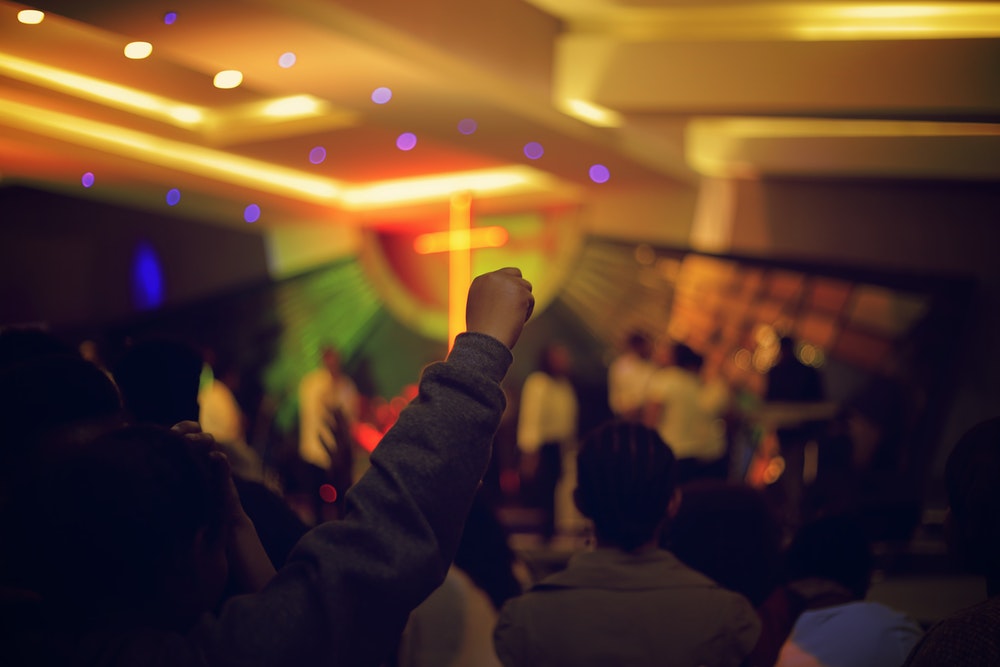
You hear a lot about praise & worship in Christian circles, but what support does the Bible actually provide for praise & worship being a regular part of the believer’s life?
Let’s start with the New Testament since we’re under the New Covenant. The New Testament consists of four categories of literature:
- The Gospels: Matthew, Mark, Luke and John.
- The Book of Church History: Acts.
- The Epistles (Letters): Romans, 1 Corinthians, 2 Corinthians, Galatians, Ephesians, Philippians, Colossians, 1 Thessalonians, 2 Thessalonians, 1 Timothy, 2 Timothy, Titus, Philemon, Hebrews, James, 1 Peter, 2 Peter, 1 John, 2 John, 3 John and Jude.
- The Book of Prophetic Vision: Revelation
Fittingly, each of these genres address praise & worship one way or another, as follows…
Praise & Worship in the Gospels
The following parallel verses reveal that Christ & his disciples sang praise & worship songs together.
When they had sung a hymn, they went out to the Mount of Olives.
When they had sung a hymn, they went out to the Mount of Olives.
In addition, Christ explained the nature of worship in the New Covenant era:
23“Yet a time is coming and has now come when the true worshipers will worship the Father in the Spirit and in truth, for they are the kind of worshipers the Father seeks. 24God is spirit, and his worshipers must worship in the Spirit and in truth.”
John 4:23-24
Also, notice what the disciples/apostles did when Christ ascended to Heaven:
52Then they worshiped him and returned to Jerusalem with great joy. 53And they stayed continually at the temple, praising God.
Luke 24:52-53
Praise & Worship in the Book of Acts
Despite heavy persecution due to exorcizing a demon from a slave girl, Paul and Silas practiced praise & worship even in the dungeon of a prison:
22The crowd joined in the attack against Paul and Silas, and the magistrates ordered that they be stripped and beaten with rods. 23And after striking them with many blows, they threw them into prison and ordered the jailer to guard them securely. 24On receiving this order, he placed them in the inner cell and fastened their feet in the stocks.
25About midnight Paul and Silas were praying and singing hymns to God, and the other prisoners were listening to them. 26Suddenly a strong earthquake shook the foundations of the prison. At once all the doors flew open and everyone’s chains came loose.
Acts 16:23-26
Truly, praise attracts God’s presence and the life-giving power thereof! This is in accordance with the law of respect: What you respect moves toward you while what you don’t respect moves away from you. Worship, on the other hand, is adoration or awe, and is the response to being in God’s presence. See Psalm 95:1-7 and Psalm 100 for verification.
Praise & Worship in the Epistles
The apostle Paul encouraged singing “psalms, hymns and spiritual songs” in two separate passages that he wrote when he was under house imprisonment in Rome between the years 60-62 A.D.
Here’s the passage from his letter to the believers in Ephesus:
17Therefore do not be foolish, but understand what the Lord’s will is. 18Do not get drunk on wine, which leads to debauchery. Instead, be filled with the Spirit, 19speaking to one another with psalms, hymns, and songs from the Spirit. Sing and make music from your heart to the Lord, 20always giving thanks to God the Father for everything, in the name of our Lord Jesus Christ.
Ephesians 5:17-20
Observe how singing psalms, hymns and spiritual songs is linked to being filled with the spirit and thus being spirit-controlled rather than flesh-ruled and the benefits thereof (Galatians 5:16-23). You can read details about how to walk in the spirit here.
The passage from Ephesians somewhat parallels Paul’s instructions to the believers in Colossae:
Let the word of Christ dwell in you richly, teaching and admonishing one another in all wisdom, singing psalms and hymns and spiritual songs, with thankfulness in your hearts to God.
Colossians 3:16 (ESV)
Observe how this verse reveals two essentials for when believers meet together:
- Sharing/teaching the truths of the Word of God.
- Participating in Scripture-based praise & worship.
This explains why these are the two prominent practices at Christian services.
While psalms, hymns and spiritual songs are arguably interchangeable, what did Paul mean by each term in this particular context?
- ‘Psalms’ in both of these passages is psalmos in the Greek, which refers to the psalms contained in the book of Psalms, many of which involve praise & worship;
- ‘Hymns’ is humnos in the Greek and refers to established “sacred songs or songs of praise to God” in one’s culture;
- ‘Spiritual songs’ or ‘songs from the Spirit’ is pneumatikos ódé in the Greek, referring to songs given to believers present by the Spirit, whether at the time of the assembly or prior.
In one assembly I was involved in for a decade the bulk of the songs we sang were written by the praise & worship leader. These would be spiritual songs, which would likely become hymns over time.
Praise & Worship in the Book of Revelation
The prophetic epistle, Revelation, contains several passages relevant to praise & worship. For instance, the following three reveal how angelic beings in Heaven regularly practice praise & worship:
Each of the four living creatures had six wings and was covered with eyes all around, even under its wings. Day and night they never stop saying:
“ ‘Holy, holy, holy
is the Lord God Almighty,’
who was, and is, and is to come.”
10the twenty-four elders fall down before him who sits on the throne and worship him who lives for ever and ever. They lay their crowns before the throne and say:
11“You are worthy, our Lord and God,
to receive glory and honor and power,
for you created all things,
and by your will they were created
and have their being.”
Revelation 4:10-11
12In a loud voice they were saying:
“Worthy is the Lamb, who was slain,
to receive power and wealth and wisdom and strength
and honor and glory and praise!”
13Then I heard every creature in heaven and on earth and under the earth and on the sea, and all that is in them, saying:
“To him who sits on the throne and to the Lamb
be praise and honor and glory and power,
for ever and ever!”
14The four living creatures said, “Amen,” and the elders fell down and worshiped.
Revelation 5:12-14
There are similar passages later in Revelation, like 11:15-18 and 19:1-8.
Believers can also be observed participating in praise & worship in Heaven:
9After this I looked, and there before me was a great multitude that no one could count, from every nation, tribe, people and language, standing before the throne and before the Lamb. They were wearing white robes and were holding palm branches in their hands. 10And they cried out in a loud voice:
“Salvation belongs to our God,
who sits on the throne,
and to the Lamb.”
11All the angels were standing around the throne and around the elders and the four living creatures. They fell down on their faces before the throne and worshiped God, 12saying:
“Amen!
Praise and glory
and wisdom and thanks and honor
and power and strength
be to our God for ever and ever.
Amen!”
13Then one of the elders asked me, “These in white robes—who are they, and where did they come from?”
14I answered, “Sir, you know.”
And he said, “These are they who have come out of the great tribulation; they have washed their robes and made them white in the blood of the Lamb.
Revelation 7:9-14
2And I saw what looked like a sea of glass glowing with fire and, standing beside the sea, those who had been victorious over the beast and its image and over the number of its name. They held harps given them by God 3and sang the song of God’s servant Moses and of the Lamb:
“Great and marvelous are your deeds,
Lord God Almighty.
Just and true are your ways,
King of the nations.
4Who will not fear you, Lord,
and bring glory to your name?
For you alone are holy.
All nations will come
and worship before you,
for your righteous acts have been revealed.”
Revelation 15:2-4
As you can see, praise & worship is repeatedly addressed in every genre of literature in the New Testament.
Old Testament Passages on Praise & Worship
All of the above passages from the New Testament are laid on the foundation of what is written in the Old Testament about praise & worship, which includes the book of Psalms. This book just so happens to be the largest book in the Bible by far. It contains no less than 150 songs (the lyrics anyway), most of which feature praise & worship, at least partially. Psalm 100 is a well-known example.
Other relevant verses in the Old Testament include Exodus 15:1-2, Deuteronomy 32, Judges 5, Isaiah 5:1, 26 & 42:10 and the book Song of Songs, which is an epic love song, figuratively referring to the love of God and the saints (believers).
I’d say that’s more than enough support for praise & worship being a part of the believer’s life, how about you?
Related Topics:
Praise & Worship—What’s the Difference? Why are they Important?
Defining PSALMS, HYMNS and SPIRITUAL SONGS